



CCSD code G5100: Bypass of duodenum billing guide
CCSD code G5100 bills a bypass that leaves the duodenum in place CCSD code G5100...

Last Updated: Oct 16, 2026

CPT code 11055 covers paring or cutting of a single benign hyperkeratotic lesion (one corn or callus) using a scalpel or curette.
Use CPT 11056 for 2-4 lesions and CPT 11057 for more than 4 lesions – billing the wrong code for the lesion count is one of the most common denial triggers.
Medicare requires Q modifiers and documented Class Findings when CPT 11055 is billed for diabetic or vascular patients – missing these leads to claim rejection.
Pabau’s claims management software and digital forms streamline CPT 11055 documentation, modifier capture, and ICD-10 pairing to reduce billing errors at the point of care.
CPT code 11055 is a procedure code for paring or cutting a single benign hyperkeratotic lesion (one corn or callus) using a scalpel or curette. It is among the most frequently billed skin procedure codes in podiatry and dermatology, and among the most denied when lesion count, ICD-10 pairing, or Medicare modifiers are wrong.
The American Medical Association’s CPT code set defines CPT code 11055 as: Paring or cutting of benign hyperkeratotic lesion (e.g., corn or callus); single lesion. That single-lesion qualifier is the most important detail in the descriptor – it defines the billing unit and determines which code in the 11055-11057 series is correct.
A benign hyperkeratotic lesion is an area of abnormally thickened skin produced by repeated pressure or friction. Corns (clavus) and calluses (callosities) are the two most common presentations. The clinician removes the excess keratinized tissue using a scalpel blade, curette, or similar surgical instrument. No anesthesia is typically required, and the area is inspected after paring to confirm adequate tissue removal.
CPT code 11055 applies regardless of the anatomical site – feet, hands, and other pressure-bearing surfaces are all within scope – but the overwhelming majority of claims are filed for plantar lesions by podiatrists. Good documentation should specify the location, the instrument used, and the clinical indication for treatment.
The 11055-11057 series is structured around lesion count. Select the code that matches the total number of benign hyperkeratotic lesions pared or cut during the visit – not the number of anatomical sites, not the number of feet treated.
| CPT Code | Lesion Count | Clinical Description |
|---|---|---|
| 11055 | 1 lesion | Single benign hyperkeratotic lesion (corn or callus) |
| 11056 | 2-4 lesions | Two to four benign hyperkeratotic lesions |
| 11057 | More than 4 lesions | More than four benign hyperkeratotic lesions |
Each code in this series is mutually exclusive – bill only the one that matches the total lesion count for the encounter. Billing 11055 and 11056 together for the same visit is incorrect and will trigger a bundling edit under the National Correct Coding Initiative (NCCI). If a patient presents with three calluses treated at the same appointment, CPT 11056 is the correct single code for that encounter.
Accurate lesion counting also affects downstream medical billing. Practices that document lesion count at the point of care – in the clinical note, before the claim is generated – catch code selection errors before they reach the clearinghouse. Practices that rely on billing staff to infer the lesion count from incomplete notes face higher denial rates on the entire 11055-11057 series.
CPT code 11055 requires a supporting diagnosis code that establishes medical necessity. Selecting the wrong ICD-10 code – or failing to include one – is a leading cause of denials for this procedure.
The most common diagnosis code paired with CPT code 11055 is L84 (Corns and callosities). L84 is the direct match for the procedure descriptor and is appropriate for most straightforward corn or callus presentations in otherwise healthy patients.
When the patient has diabetes or peripheral vascular disease, additional diagnosis codes are required – and they change the Medicare billing rules entirely. For a diabetic patient with peripheral angiopathy, the claim should include:
This combination, along with the appropriate Q modifier (see below), shifts the claim from a routine foot care denial to a covered medically necessary service under Medicare’s Class Findings criteria. The E11.51 + L84 pairing establishes medical necessity for routine foot care in a diabetic patient, and Medicare Administrative Contractors such as Palmetto GBA set out the qualifying diagnoses and documentation in their Local Coverage Determinations. Use the CDC/NCHS ICD-10-CM web tool to verify current-year code validity before submitting.
Accurate ICD-10 pairing also supports compliant patient record documentation for audit purposes. When payers request records to support a CPT 11055 claim, the clinical note must link the diagnosis to the procedure performed.
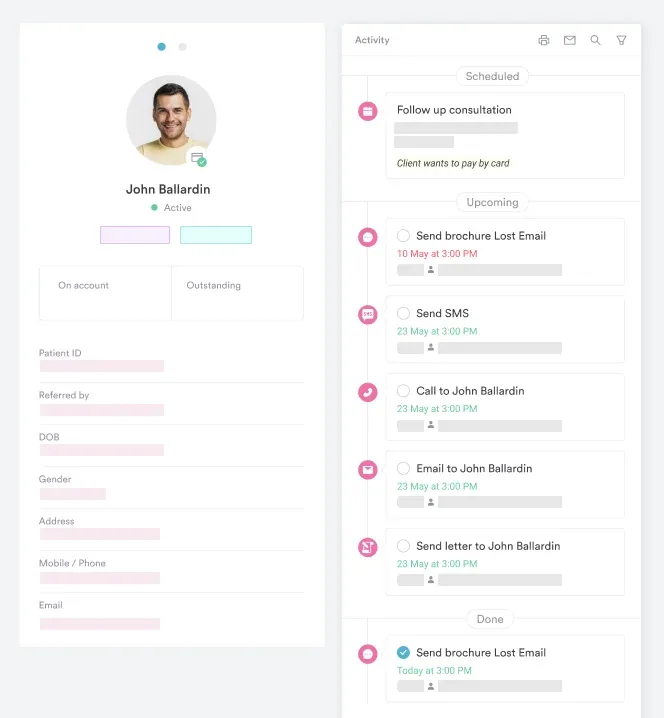
Practices performing these procedures often chart them in a plastic surgery EMR with before-and-after photos attached.
Medicare’s coverage rules for CPT code 11055 depend on whether the procedure is classified as routine foot care or medically necessary lesion treatment. This distinction determines whether the claim pays or denies – and it catches many practices off guard.
Medicare does not cover routine foot care – including corn and callus paring – for patients without a qualifying systemic condition. For a standard, healthy patient, CPT code 11055 will be denied as non-covered under Medicare Part B. Coverage applies when the patient has a documented systemic condition that creates a risk of complications from routine foot care, such as:
The clinical documentation must establish that the patient’s systemic condition makes self-care or non-professional care hazardous. Palmetto GBA and other Medicare Administrative Contractors (MACs) publish Local Coverage Determinations (LCDs) specifying the exact qualifying diagnoses and documentation requirements for this code.
Reimbursement for CPT code 11055 varies by geographic location, practice setting, and the Medicare Physician Fee Schedule (MPFS) year. The CMS Physician Fee Schedule lookup tool allows providers to check the current non-facility and facility payment rates by locality. The same tool lists the work, practice expense, and malpractice RVUs for the code, which you then adjust by your locality’s geographic practice cost index.
Never cite a fixed national payment rate in documentation or patient communications – rates change annually and vary significantly by MAC jurisdiction. Always verify the current-year rate through the CMS fee schedule or your MAC’s published allowable amounts.
Medicare generally covers routine foot care procedures in the 11055-11057 series – along with nail codes 11719-11721 and G0127 – no more than once every 60 days. Billing CPT code 11055 more frequently than this window is a common denial trigger; claims that exceed it are rejected as not medically necessary unless the note documents a specific reason for the shorter interval. Track each patient’s last date of service so staff can flag visits that fall inside the 60-day window before the claim goes out. Confirm the exact limit in your MAC’s Local Coverage billing and coding article for routine foot care, as some contractors phrase it as a maximum number of treatments per year. Missing a provider identifier or a diagnosis code sends a reimbursement claim straight back, so a reimbursement receipt lists both.
Run a quarterly audit of your CPT 11055 claims against your MAC’s published LCD. Compare your denial rate for this code against the national average for podiatry practices. A denial rate above 15% on this code typically signals a documentation or modifier problem – not a coverage exclusion.
Correct modifier use is what separates a paid CPT 11055 claim from a denied one – particularly for Medicare patients with qualifying systemic conditions.
Medicare requires a Class Findings Q modifier when billing CPT code 11055 for patients with qualifying systemic conditions. The Q modifier signals to the MAC that the procedure is medically necessary, not routine foot care. The applicable modifiers are:
The Q modifier appended to CPT code 11055 must be supported by documented Class Findings in the clinical note. Appending a Q modifier without the corresponding documentation is a compliance risk that can trigger post-payment audits. The modifier alone is not sufficient – the note must describe the qualifying vascular or neurological findings.
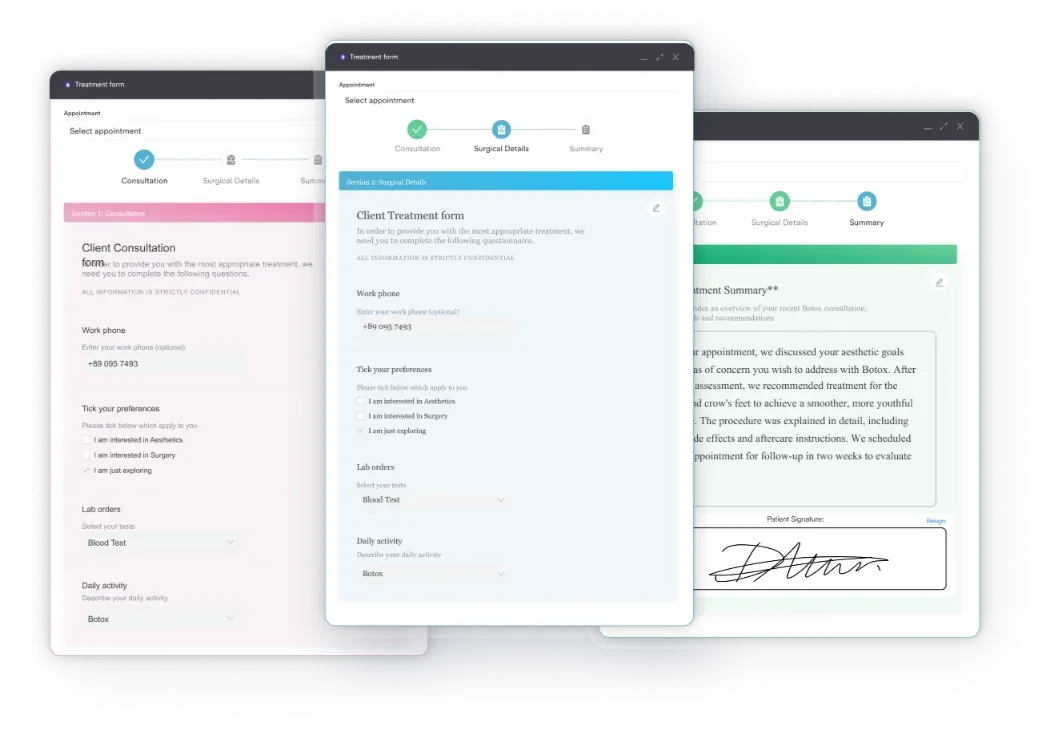
For practices managing high volumes of diabetic foot patients, integrating structured digital intake forms that capture Class Findings at every visit reduces the risk of missing this documentation at the time of claim submission.
When CPT code 11055 is billed for a single lesion on each foot at the same visit, modifier -50 (bilateral procedure) may apply – but only if the payer accepts it for this code and the two lesions are truly separate sites. Some MACs prefer separate line items with the TA-T9 toe modifiers rather than modifier -50 for foot procedures. Always verify with your MAC’s policy before applying bilateral modifiers to skin paring codes.
For services provided by a podiatric assistant or under supervision arrangements, check whether modifier -52 (reduced services) or -GY (non-covered service by statute) applies based on the specific payer rules.
Global surgery rules apply to CPT code 11055, so an evaluation and management (E/M) service billed on the same day is not separately payable unless it is a significant, separately identifiable service. When that threshold is met, append modifier -25 to the E/M code – not to 11055 – and document a distinct chief complaint, examination, and medical decision-making that stand apart from the paring procedure. Per CMS routine foot care guidance, same-day E/M with skin paring is a frequent audit target, so the note must clearly support the separate service.

Pabau’s claims management tools help podiatry and dermatology practices capture the right codes, modifiers, and ICD-10 pairs at the point of documentation – before the claim is submitted. See how it works for your practice.

Insufficient documentation is the root cause of most CPT 11055 denials that reach post-payment audit. Payers need to reconstruct the medical necessity of the procedure from the note alone – if that’s not possible, the claim is vulnerable.
A compliant note for CPT code 11055 should include all of the following elements:
Practices that use templated note structures for skin paring procedures – built into their dermatology EMR software – consistently produce more complete documentation than practices relying on free-text notes. The template prompts the clinician to address each required element before closing the encounter.
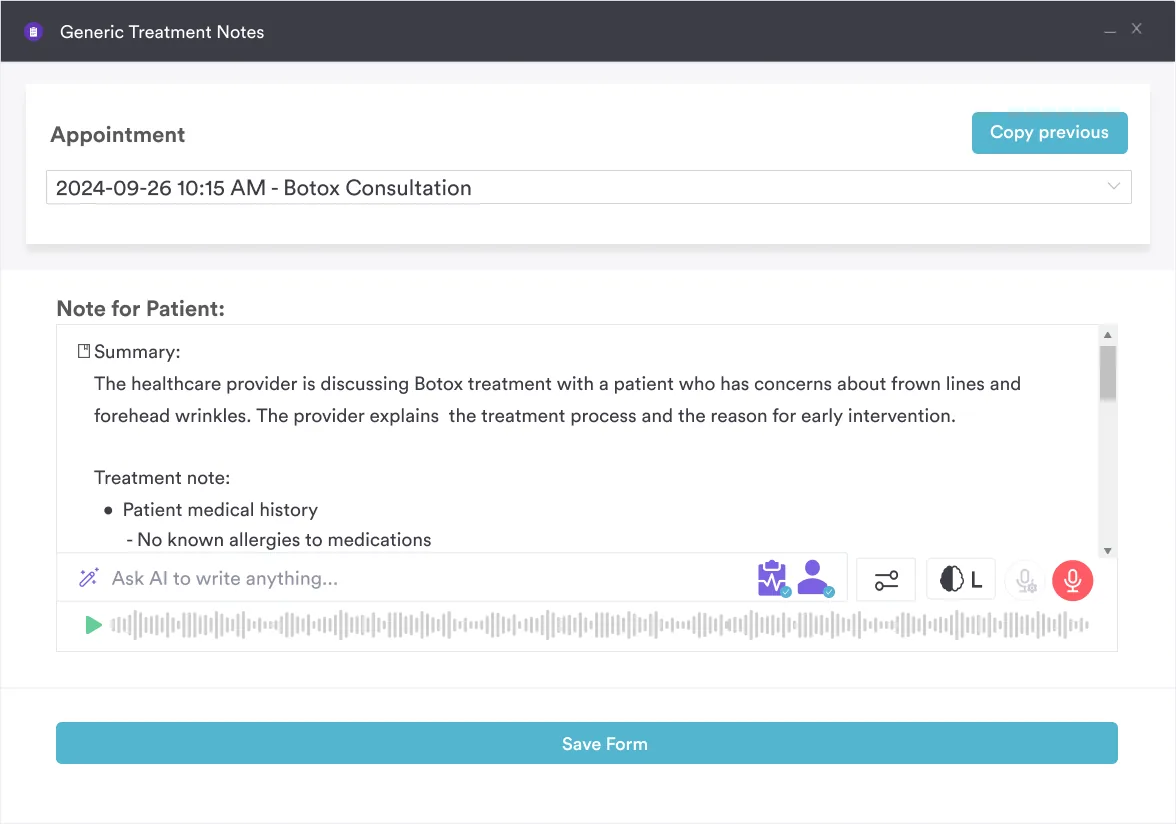
AI-assisted documentation tools, such as Pabau’s AI medical scribe, can generate structured notes from verbal documentation during the encounter, reducing the risk that lesion counts, procedure details, or qualifying findings are omitted from the record.
Podiatry encounters frequently involve both nail debridement and skin lesion paring on the same visit. Whether these services can be billed together depends on the specific codes and the payer.
CPT code 11055 can be billed with nail debridement codes 11720 (1-5 nails) and 11721 (6 or more nails) in many circumstances, because they represent distinct procedures performed on different anatomical structures. Skin paring addresses hyperkeratotic lesions; nail debridement addresses thickened or dystrophic nails. They are not inherently bundled by the NCCI.
However, a few important caveats apply:
For plantar keratosis cases where both a callus and nail involvement are present, documenting the medical necessity for each service separately in the clinical note is the most reliable approach. This supports separate billing and protects the claim in the event of a medical records request. Practices using automated billing workflow tools can configure alerts that flag encounters where both 11055 and 11720/11721 are selected, prompting the coder to verify that both are fully documented before submission.
Flag all CPT 11055 + 11720/11721 combination claims for secondary review before submission. Check that each procedure has its own documented clinical indication and that the note does not describe a single continuous procedure – payers interpret that as one billable service.
Most denials for CPT code 11055 fall into a small number of recurring patterns. Identifying which pattern applies to your denials is the fastest route to a lower denial rate.
Practices that track denial reasons by CPT code through their podiatry practice management platform can isolate which error type accounts for most of their 11055 denials and build a targeted correction workflow. A 90-day denial audit specific to this code typically surfaces the dominant error pattern within 20-30 reviewed claims.
For practices seeing recurring modifier errors, the solution is usually upstream: adding Q modifier capture to the clinical note template rather than expecting billing staff to infer the modifier from an incomplete note. The compliance management tools built into modern practice management systems can include mandatory fields for Class Findings documentation in podiatry note templates, ensuring the modifier decision is made at the clinical encounter, not during claim preparation.
Medicare’s coverage criteria for CPT code 11055 are the most restrictive in the payer landscape. Most commercial payers take a broader view of medical necessity for skin lesion paring, and many cover the procedure for patients without a systemic qualifying condition – provided the lesion causes documented functional impairment or pain.
Key differences to know across payer types:
Verifying benefits and coverage policy for CPT code 11055 before the appointment – particularly for Medicare patients – is the most effective way to prevent billing surprises. Practices using HIPAA-compliant patient management workflows can integrate eligibility verification into the scheduling process so that coverage questions are resolved before the patient arrives.
For practices that treat both dermatology and podiatry patients. A payer mix analysis that breaks out 11055 claims by insurance type reveals where denial risk is concentrated and where pre-authorization protocols may be worth adding.
Most CPT 11055 billing errors originate in the clinical documentation phase, not the billing phase. By the time the claim reaches the clearinghouse, the lesion count is already recorded, the Q modifier decision has already been missed, and the Class Findings either are or aren’t in the note. Correcting errors at that stage requires rework, appeals, and delayed revenue.
Pabau supports podiatry and dermatology practices in building the documentation workflow that prevents these errors at the source. The same discipline supports accurate coding on adjacent podiatry procedures such as orthotic management.
Pabau’s claims management software sits downstream of the clinical note, with billing workflows that support ICD-10 pairing verification and modifier capture before submission. Practices using Pabau for claims management report fewer front-end rejections on high-volume procedure codes like CPT 11055 because the code, modifier, and diagnosis are validated together before the claim leaves the practice.
For practices that want a broader view of their coding accuracy across the CPT range, Pabau’s reporting tools – accessible through Insights+ – provide denial rate breakdowns by CPT code, helping billing teams identify which codes are underperforming and prioritize their audit effort.
CPT code 11055 is a high-volume, low-complexity procedure code that generates a disproportionate share of podiatry and dermatology denials – almost always because of incomplete documentation, wrong lesion count selection, or missing Medicare Q modifiers. The clinical work is straightforward; the billing risk is in the details.
Pabau’s digital clinical forms and claims management workflow help practices capture lesion counts, Class Findings, and ICD-10 pairs at the point of care – before the claim is submitted. To see how Pabau handles CPT billing for podiatry and dermatology practices, book a demo.

Coding a genetic diagnostic test? CCSD code 0514G billing guide covers the myotonic dystrophy gene test and the documentation and consent UK insurers expect on the claim.
Billing an initial hospital inpatient visit? CPT code 99222 billing guide covers the initial hospital inpatient visit that requires moderate medical decision making, the middle code in its series.
Looking to reduce claim denials across your CPT portfolio? CPT coding reference guides for other high-volume codes are available in the Pabau procedure codes library.
CPT code 11055 is a procedure code for paring or cutting of a single benign hyperkeratotic lesion, such as a corn or callus, typically using a scalpel or curette. It is part of the 11055-11057 series, which covers hyperkeratotic lesion paring by lesion count – 11055 for one lesion, 11056 for two to four, and 11057 for more than four.
The only difference is the number of benign hyperkeratotic lesions treated: 11055 covers a single lesion, 11056 covers two to four lesions, and 11057 covers more than four lesions. Bill the one code that matches the total lesion count for the visit – never bill multiple codes from this series for the same encounter.
L84 (Corns and callosities) is the primary ICD-10 code paired with CPT code 11055 for standard presentations. For diabetic patients with peripheral angiopathy, pair E11.51 with L84 as a secondary diagnosis, and append the appropriate Q modifier for Medicare claims.
Medicare covers CPT code 11055 only when the patient has a qualifying systemic condition – such as diabetes, peripheral vascular disease, or peripheral neuropathy – and the clinical note documents the required Class Findings. Without a qualifying condition, Medicare classifies the procedure as routine foot care and denies the claim.
Yes, in most cases CPT code 11055 and CPT 11720 (nail debridement, 1-5 nails) can be billed together on the same date of service, because they represent distinct procedures on different anatomical structures. Each must be independently documented and medically necessary. Some MACs and commercial payers have specific rules – verify with your payer before submitting both codes.
For Medicare diabetic or vascular patients, Q7, Q8, or Q9 modifiers are required to document Class Findings and establish medical necessity. For bilateral same-day procedures, modifier -50 may apply depending on your MAC’s policy – some MACs prefer separate line items with TA-T9 toe modifiers. Always verify modifier requirements with your specific payer before submission.
CPT 11055 covers exactly one benign hyperkeratotic lesion. If two or more lesions are treated at the same visit, use CPT 11056 (two to four lesions) or CPT 11057 (more than four lesions). Billing CPT 11055 when multiple lesions were treated is a code selection error that results in underpayment or denial.



