



HCPCS code E0198: Water pressure pad billing guide
HCPCS code E0198 is a water pad for a standard mattress HCPCS code E0198 is the ...

Last Updated: Oct 13, 2026

CPT Code 01742 covers anesthesia for open or surgical arthroscopic procedures of the elbow, including osteotomy of the humerus.
This code carries 5 base units as assigned by the ASA and CMS. Total reimbursement is calculated using base units plus time units, multiplied by the anesthesia conversion factor.
Valid modifiers include AA, AD, QK, QX, QY, and QZ for provider role, plus P1-P6 physical status modifiers. Missing a modifier is the most common denial trigger.
Practice management software like Pabau helps anesthesia practices capture pre-anesthesia evaluations, time-stamped anesthesia records, and post-anesthesia notes in a single structured workflow.
CPT Code 01742 is the anesthesia code for open or surgical arthroscopic procedures of the elbow, specifically osteotomy of the humerus. It carries 5 base units, billed using the time-based anesthesia formula that applies across the 01710-01782 range.
CPT Code 01742 is the correct anesthesia code when general or regional anesthesia is administered for open or surgical arthroscopic procedures of the elbow, specifically osteotomy of the humerus.
The full official descriptor, maintained by the American Medical Association (AMA), reads: Anesthesia for open or surgical arthroscopic procedures of the elbow; osteotomy of humerus.
Providers who bill this code include anesthesiologists (personally performing or medically directing the case), CRNAs (Certified Registered Nurse Anesthetists) billing independently or under medical direction, and anesthesiologist assistants.
The correct modifier distinguishes which provider type is billing, so provider role documentation must be established before claim submission.
Anesthesia reimbursement does not follow the standard fee-schedule model. Instead, payers calculate payment using a formula that combines a fixed procedure value with the actual time spent providing anesthesia. Coders who understand this formula can spot billing errors before claims go out.
Pabau’s claims management software supports structured anesthesia claim workflows by capturing both the procedure code and the time-stamp data needed for accurate calculation.
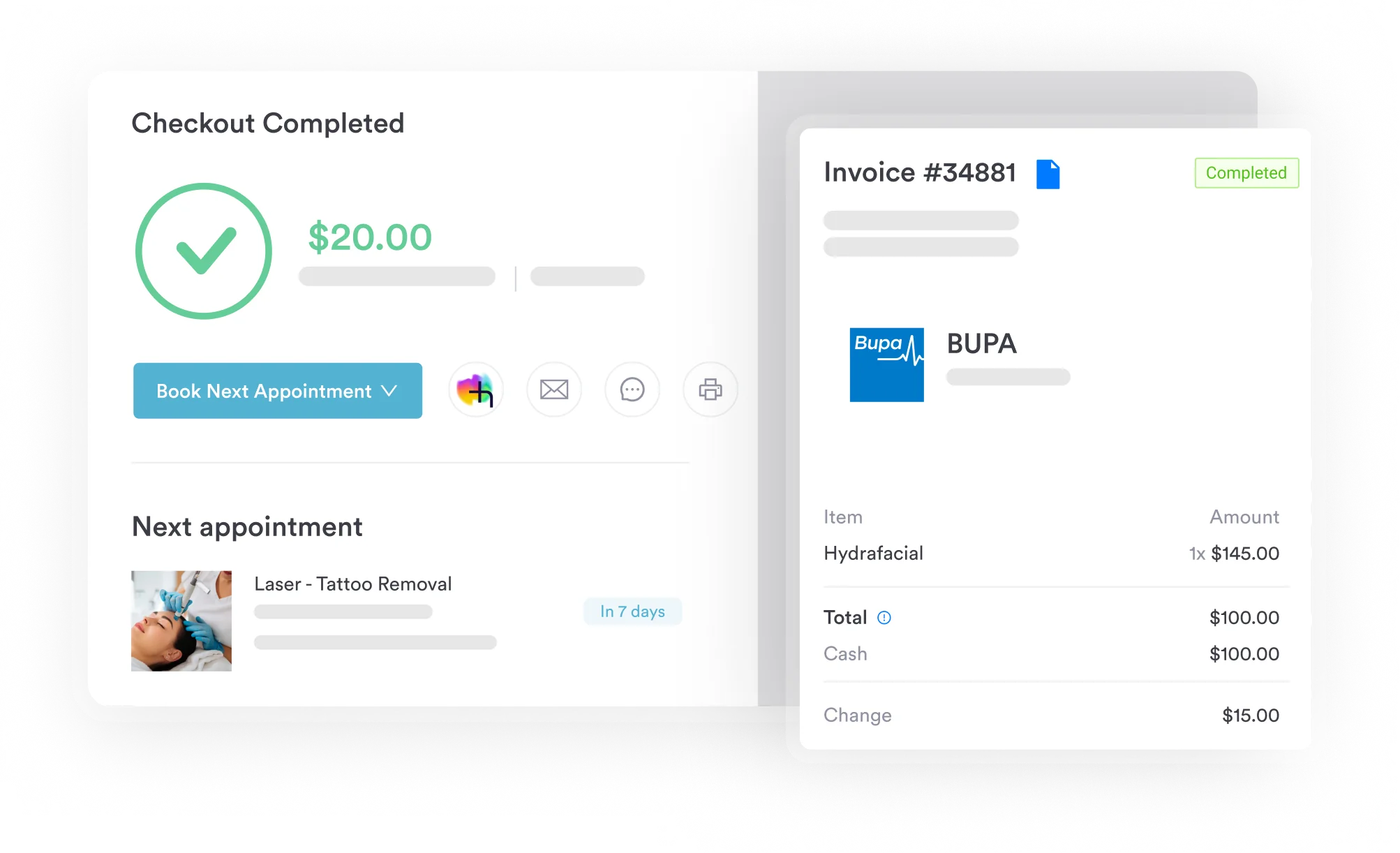
The anesthesia billing formula: (Base Units + Time Units + Modifying Units) x Anesthesia Conversion Factor = Allowed Amount
CPT 01742 carries 5 base units, as assigned by the American Society of Anesthesiologists (ASA) Relative Value Guide and adopted by CMS. Base units reflect the complexity and risk of the specific procedure, independent of how long the case takes. They do not change based on the patient or the duration of anesthesia.
Time units are calculated from the documented start and stop times in the anesthesia record. The standard CMS convention is 1 time unit per 15 minutes, though some commercial payers use 10-minute intervals. Always confirm the payer’s interval before calculating.
A 60-minute case at the standard 15-minute interval adds 4 time units to the base 5, giving a total of 9 units before modifying units.
Worked example for CPT Code 01742 with a 90-minute case at the CMS standard:
Every anesthesia claim for CPT Code 01742 requires at least one modifier indicating the role of the anesthesia provider. Omitting this modifier is the single most preventable denial reason in anesthesia billing.
Physical status modifiers reflect the patient’s ASA classification at the time of anesthesia. These are clinical determinations made by the anesthesia provider, not the coder. CMS does not separately reimburse physical status modifiers, but they are required for accurate claim submission and some commercial payers add value for P3 and above. Auditors read the note before the code, so the documentation level has to support what was submitted.
Qualifying circumstances are add-on codes that may be reported alongside CPT 01742 when specific clinical conditions apply. They are not billable alone and do not replace the base anesthesia code.

Pabau brings together pre-anesthesia evaluations, time-stamped intraoperative records, and post-anesthesia notes in one platform, so your billing team has everything they need to submit clean claims without chasing documentation.

Comparing practice management systems for medical teams is worth the effort before anesthesia time-unit billing becomes a spreadsheet job.
Medicare reimburses anesthesia services using a locality-specific anesthesia conversion factor (ACF) published annually by CMS. Because CPT Code 01742 carries 5 base units, a typical 60-minute case generates 9 total units (5 base + 4 time units).
The final allowed amount equals those 9 units multiplied by the ACF for the practice’s Medicare Administrative Contractor (MAC) locality.
Commercial payers set their own ACF rates, which are typically higher than Medicare rates. Rates change annually, so confirm current figures before submitting a claim.
Medical necessity for CPT Code 01742 must be supported by a diagnosis code that matches the clinical indication for the elbow procedure. Mismatched diagnosis codes are a frequent reason for medical necessity denials.
The table below lists the ICD-10-CM codes most commonly documented alongside 01742 claims.
CPT Code 01742 sits within a defined section covering anesthesia for upper arm and elbow procedures. Coders often need to compare adjacent codes when the operative note describes a procedure that could map to more than one code. The same challenge that comes up between anesthesia codes 01440 and 01500 for lower-extremity vascular procedures.
The table below provides a crosswalk of the full 01710-01782 range to help with code selection.
The key differentiator for CPT Code 01742 vs. 01740 is the specific procedure: 01742 applies only when the operative report documents osteotomy of the humerus. If osteotomy is not documented, 01740 (4 base units) is the correct code. Upcoding to 01742 without documented osteotomy creates audit risk.
Anesthesia claims face a higher documentation burden than most other CPT categories. Payers require evidence that the anesthesia was both medically necessary and personally provided by the billed provider.
For CPT Code 01742, the anesthesia record must clearly reflect the elbow procedure and confirm the humerus osteotomy occurred.
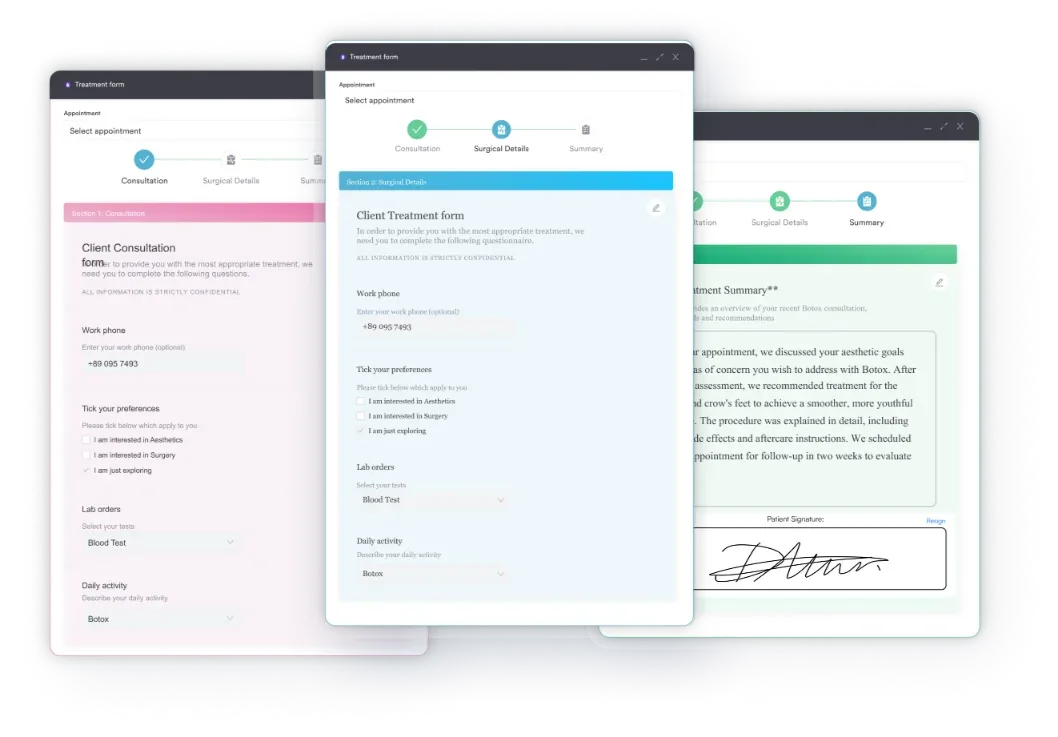
Using digital intake forms alongside structured clinical records keeps the pre-anesthesia evaluation, operative note, and post-anesthesia record consistent with each other, which is what payers check first when a claim is flagged.
This section covers the denial patterns that recur most often on CPT Code 01742 claims. Catching these before submission is faster than working a denial.
Practices using HIPAA-compliant clinic software can configure claim validation rules that flag a missing modifier before submission, cutting the manual review burden on billing staff.
Connecting that validation to broader practice management software keeps the operative note, anesthesia record, and claim in the same system, so nothing has to be rekeyed by hand.
Run a modifier audit on your CPT 01742 claims quarterly. Pull every claim submitted without a denial code and check whether QX-modifier cases have matching QK documentation on the anesthesiologist’s corresponding claim. Payers increasingly cross-reference both claims in a medically directed arrangement. A mismatch on either side triggers a retroactive denial.
CPT Code 01742 is a higher-complexity anesthesia code that rewards attention to detail: 5 base units, a time-based billing formula, and a strict modifier and documentation requirement set. The most expensive errors, missing modifiers and incorrect time units, are entirely preventable with the right workflows in place.
Pabau’s IVF CPT codes reference and its broader claims management tools help practices connect clinical documentation directly to billing outputs, so what happened in the OR matches what appears on the claim. To see how Pabau supports anesthesia and surgical billing workflows, book a demo.

Billing non-therapeutic foster care placements? foster care billing guide covers the monthly unit for non-therapeutic care and when to use the S codes instead.
Billing anesthesia for a different orthopedic procedure? 01340 covers anesthesia for closed treatment of a distal femur fracture, with its own base units and modifier rules.
CPT Code 01742 covers anesthesia services for open or surgical arthroscopic procedures of the elbow, specifically when osteotomy of the humerus is performed. It applies when general or regional anesthesia is administered for these elbow procedures, and is not appropriate for procedures that do not include a documented humerus osteotomy.
CPT 01742 carries 5 base units, as assigned by the American Society of Anesthesiologists (ASA) Relative Value Guide and adopted by CMS. These 5 base units are combined with time units and the locality-specific anesthesia conversion factor to calculate the total allowed reimbursement amount.
Yes, a CRNA can bill CPT Code 01742 independently in states that have opted out of the federal physician supervision requirement. In those states, modifier QZ is appended to indicate the CRNA performed the service without medical direction. In non-opt-out states, CRNA services require physician medical direction, and modifier QX is used instead, with a corresponding QK or QY claim from the directing anesthesiologist. Scope-of-practice rules vary by state.
Medicare does not publish a single national rate for CPT 01742 because the anesthesia conversion factor varies by MAC locality. The allowed amount equals total units (base units + time units) multiplied by the locality-specific anesthesia conversion factor. Verify current rates using the CMS Physician Fee Schedule lookup tool, as rates are updated annually.
CPT 01742 (5 base units) applies specifically when osteotomy of the humerus is performed. CPT 01740 (4 base units) covers other open or surgical arthroscopic procedures of the elbow that do not include humerus osteotomy. The operative report must document the osteotomy for 01742 to be the correct code selection.
Required documentation includes a pre-anesthesia evaluation, the intraoperative anesthesia record with legible start and stop times, the surgeon’s operative report confirming elbow osteotomy of the humerus, a post-anesthesia note, and the anesthesia provider’s credentials matching the modifier on the claim.



