



HCPCS code E0198: Water pressure pad billing guide
HCPCS code E0198 is a water pad for a standard mattress HCPCS code E0198 is the ...

Last Updated: Oct 13, 2026

CPT code 01112 describes anesthesia for bone marrow aspiration and/or biopsy at the anterior or posterior iliac crest, grouped under Anesthesia for Procedures on the Pelvis (Except Hip).
CPT code 01112 carries 5.0 base units on the VA Community Care national schedule. Payers vary the conversion factor (dollars per unit) rather than the base unit value, so confirm rates against the current fee schedule.
The short description for CPT code 01112 was changed effective January 1, 2026; verify the updated descriptor against your payer’s current fee schedule before submitting claims.
Pabau’s claims management software helps anesthesia practices track time-based billing, apply physical status modifiers, and reduce claim denials.
CPT code 01112 is the procedural code used to report anesthesia services rendered during bone marrow aspiration and/or biopsy, specifically at the anterior or posterior iliac crest. It falls within the pelvic anesthesia code range 01112-01173, which the American Medical Association (AMA) maintains under “Anesthesia for Procedures on the Pelvis (Except Hip).”
The full descriptor as reported by the VA Community Care Table H and verified through AAPC Codify reads: Anesthesia for bone marrow aspiration and/or biopsy, anterior or posterior iliac crest.
The abbreviated short description used in electronic claim submission and payer fee schedules was updated effective January 1, 2026. Verify the current short descriptor against your payer’s fee schedule or the CMS Physician Fee Schedule lookup before submitting claims.
| Code | Full Descriptor | Category | Code Type |
|---|---|---|---|
| 01112 | Anesthesia for bone marrow aspiration and/or biopsy, anterior or posterior iliac crest | Anesthesia for Procedures on the Pelvis (Except Hip) | CPT / HCPCS Level I |
CPT code 01112 is also recognized as a HCPCS Level I code, meaning it can be submitted on hospital outpatient claims (UB-04) in addition to the standard professional claim (CMS-1500). Anesthesia providers billing in outpatient hospital settings should confirm APC (Ambulatory Payment Classification) assignment with their MAC before the first claim submission.
Searching for the bone marrow aspiration CPT code and landing on this page? Check the billing role first. CPT 01112 is the anesthesia code — it’s billed by the anesthesiologist or CRNA, and it doesn’t cover the aspiration or biopsy itself.
The physician performing the procedure bills a separate bone marrow biopsy CPT code: 38220 for aspiration only, 38221 for biopsy only, or 38222 when both are done at the same site during the same encounter. CPT guidelines block reporting 38222 alongside 38220 or 38221 for that same site, since 38222 already includes both.
38220 and 38221 can be billed together only when performed at separate sites or separate encounters — aspiration and biopsy from contralateral iliac bones, for example — using modifier 59. Bilateral procedures use modifier 50 instead, and pathology interpretation of the specimen is billed under a different code, 88305, by the reviewing pathologist.
A single bone marrow encounter can generate three separate line items: the proceduralist’s 38220, 38221, or 38222; the anesthesiologist’s 01112; and the pathologist’s 88305 — three providers, three codes, one visit.
Base units are the fixed relative value assigned to an anesthesia code, representing the inherent complexity of the procedure. They differ from time units, which are calculated from total anesthesia time. Together, base units and time units form the core of the anesthesia billing formula: (Base Units + Time Units + Qualifying Circumstances) x Conversion Factor.

The verified base unit value for CPT code 01112 from primary sources is 5.0, drawn from the VA Community Care nationwide schedule:
| Payer / Source | Base Units | Source | Effective Date |
|---|---|---|---|
| VA Community Care (Table H) | 5.0 | VA Nationwide Base Units (v3-27) | Verified |
Base units for 01112 are standardized at 5.0, but the conversion factor that turns units into dollars varies by payer and locality. The VA uses a national relative-value framework. State Medicaid programs and commercial insurers apply their own conversion factors based on local budgets and contracts.
Always pull base units and the conversion factor directly from the payer’s current fee schedule, or use the FastRVU 2026 RVU lookup tool to verify current Medicare values before submitting claims.
Commercial insurers and managed care organizations set their own base unit tables, often referencing the American Society of Anesthesiologists (ASA) Relative Value Guide (RVG) as a starting point. Your contract with each payer will specify whether ASA units or a modified schedule applies.
Most payers calculate one time unit per 15 minutes of anesthesia time. Document start time (when the anesthesiologist assumes care) and end time (when the patient is transferred to post-anesthesia care) in the anesthesia record. Time must be continuous and supported by the anesthesia record. Gaps, inconsistencies, or missing clock times are the leading cause of anesthesia time-unit claim denials.
Correct modifier use determines whether CPT code 01112 is priced at full value, reduced, or denied. There are three modifier categories to apply: Physical status, qualifying circumstances, and provider type.
The ASA physical status modifier reflects the patient’s preoperative condition. It must appear on every anesthesia claim. Omitting it leaves reimbursement on the table with many commercial payers and triggers a modifier error with Medicare.
Bone marrow aspiration and biopsy patients frequently present with underlying hematologic malignancies or systemic conditions, making P2 and P3 the most common modifiers on CPT 01112 claims. Document the patient’s ASA physical status classification in the pre-anesthesia evaluation note, not just in the billing system.
Qualifying circumstances codes (99100-99140) add units when the anesthesia is provided under unusual conditions. They are billed as separate line items alongside CPT code 01112, not as modifiers.
Code 99100 is the most frequently applicable qualifying circumstance for bone marrow procedures, given the age profile of oncology patients. Confirm payer-specific payment policies before billing 99116 or 99135, as some commercial insurers bundle these.
The billing entity determines which provider modifier applies. Medicare and most commercial payers require one of the following on every anesthesia claim:
Matching the provider modifier to the actual service arrangement is critical. A QK modifier on a case where the anesthesiologist was present for induction and emergence only (without meeting the seven TEFRA requirements) is a compliance risk and a common Medicare audit trigger. Review your HIPAA compliance documentation practices to ensure supervision records match what is billed.
Flag bone marrow aspiration cases for physical status review before claim submission. Oncology patients with active malignancies often qualify for P3 or P4, and the additional units go unclaimed when billing staff default to P1 or P2 without checking the pre-anesthesia evaluation note.
Anesthesia claims for CPT code 01112 require a specific documentation trail. Unlike surgical procedure codes where documentation focuses on the procedure itself, anesthesia billing documentation must support time, complexity, and provider involvement — all three independently.
For patient intake software, the key control is a pre-anesthesia form that captures ASA classification as a structured field rather than free text. Free-text ASA classification in a PDF creates extraction errors when billing staff manually transcribe it into the practice management system.

Pabau’s medical records management supports structured documentation that reduces transcription risk, keeping anesthesia time entries, modifier justification, and procedure details in a single auditable record.
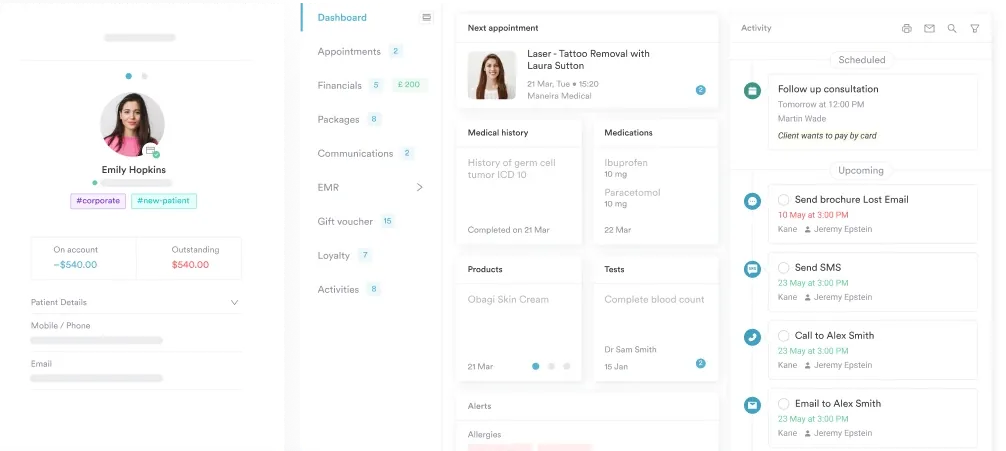

Pabau helps anesthesia and surgical practices maintain accurate clinical records, apply the right modifiers, and reduce claim errors with structured digital workflows.

Reimbursement for CPT code 01112 is never a fixed dollar amount. It varies by payer, geographic location, conversion factor, physical status modifier, and anesthesia time. The formula that drives payment is:
Allowed Amount = (Base Units + Time Units + Qualifying Circumstances Units) x Conversion Factor
The conversion factor is the dollar value assigned to one anesthesia unit. Medicare publishes an annual anesthesia conversion factor through the Physician Fee Schedule. For 2026 values, use the CMS Physician Fee Schedule lookup to retrieve the locality-specific conversion factor for your practice location.
Medicare processes anesthesia claims through a time-based formula. The anesthesia conversion factor differs from the standard Medicare Physician Fee Schedule conversion factor used for evaluation and management codes. Verify you are using the anesthesia-specific conversion factor, not the general MPFS rate, when calculating expected reimbursement.
Medicaid reimbursement for CPT code 01112 varies by state. Base units are standardized at 5.0, but each state Medicaid program sets its own anesthesia conversion factor, so the allowed dollar amount differs from state to state. Do not compare reimbursement across states without applying the corresponding conversion factor.
Commercial payers typically negotiate anesthesia conversion factors as part of provider contracts. These factors are confidential and often vary by region, specialty, and contract year.
If your expected reimbursement consistently falls short of projections on CPT 01112 claims, request a fee schedule audit from your contracting team and compare your negotiated conversion factor against the Medicare floor. FastRVU’s 2026 RVU lookup gives you the Medicare benchmark to use as a baseline.
CPT code 01112 sits at the start of the pelvic anesthesia range. Understanding adjacent codes helps coders select the correct code when the procedure site or surgical scope changes.
| CPT code | Description | VA Base Units |
|---|---|---|
| 01112 | Anesthesia for bone marrow aspiration and/or biopsy, anterior or posterior iliac crest | 5.0 |
| 01120 | Anesthesia for procedures on bony pelvis | 6.0 |
| 01130 | Anesthesia for body cast application or revision | 3.0 |
| 01140 | Anesthesia for interpelvi-abdominal amputation | 15.0 |
| 01150 | Anesthesia for radical surgery for tumor of pelvis (except hindquarter amputation) | 8.0 |
| 01160 | Anesthesia for closed procedures on pelvis | 5.0 |
| 01170 | Anesthesia for open procedures on pelvis | 7.0 |
| 01173 | Anesthesia for fracture repair of pelvis | 7.0 |
The most common code selection error in this range is using CPT 01120 (anesthesia for bony pelvis procedures) in place of 01112 when the procedure is specifically a bone marrow aspiration or biopsy at the iliac crest.
Code 01120 applies to broader bony pelvis procedures (fractures, open pelvic surgery when no more specific code applies) and carries different base unit values. When the surgical documentation explicitly states bone marrow aspiration or biopsy at the iliac crest, use 01112.
For practices that manage coaching CPT codes, maintaining a specialty-specific crosswalk document that maps procedure types to correct anesthesia codes reduces selection errors and supports audit readiness. The AAPC Codify platform provides code descriptors and related code searches for the full 01112-01173 range.
Build a quick-reference card that maps your facility’s most common bone marrow and pelvic procedures to the correct anesthesia CPT code, physical status modifier, and qualifying circumstances code. Review it quarterly against payer fee schedule updates to catch base unit or descriptor changes before they affect claim accuracy.
Anesthesia claims for bone marrow procedures have a distinct denial pattern. Unlike evaluation and management denials, which often come down to documentation level, anesthesia denials cluster around time and modifier issues.
Practices using automated billing workflows can set pre-submission checks that flag claims missing modifier combinations or time documentation before the claim reaches the clearinghouse. Catching denials before submission costs seconds; working a denied claim costs staff time that compounds across volume.
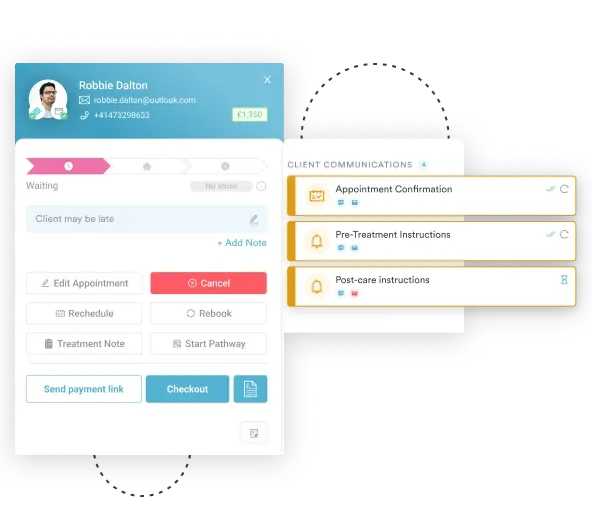
For practices managing high-volume patient records alongside billing, integrating clinical documentation with the claim workflow ensures the pre-anesthesia evaluation note, the intraoperative record, and the claim are always in sync. Teams using practice scheduling software with linked billing can also track procedure-to-claim turnaround times, which directly affects days in accounts receivable.
CPT code 01112 is a specific, verifiable code with clear criteria — but payer variability in base unit values and the time-based nature of anesthesia billing mean errors accumulate quickly when documentation and modifier selection are treated as afterthoughts.
The biggest leaks on this code are missing physical status modifiers, undocumented anesthesia time, and code selection errors when the procedure site overlaps with the 01120 range.
Pabau’s claims management tools support structured anesthesia documentation workflows that keep pre-anesthesia evaluations, intraoperative records, and claim data aligned. To see how Pabau keeps anesthesia time, modifier, and documentation data aligned for cleaner 01112 claims, book a demo with the team.

Billing a medial canthopexy repair? Medial canthopexy billing guide covers repair that tightens or repositions the medial canthal tendon, classified in the musculoskeletal head section rather than eyelid repair.
Billing a nasal septal fracture? Nasal septal fracture billing guide covers closed treatment of a fractured septum without a surgical incision, whether or not splints or packing are used.
Billing an orbital blowout fracture? Orbital blowout fracture billing guide covers the combined repair approach, where access route rather than implant status determines the correct code.
CPT code 01112 is the anesthesia procedure code for bone marrow aspiration and/or biopsy at the anterior or posterior iliac crest, grouped within the Anesthesia for Procedures on the Pelvis (Except Hip) range (01112-01173) maintained by the AMA. It covers anesthesia services provided during this procedure, reported using time-based billing with payer-specific base units.
The procedure itself is billed under 38220 (aspiration only), 38221 (biopsy only), or 38222 (both, same site and encounter) — not 01112, which is a separate anesthesia code billed by the anesthesiologist. If a pathologist reviews the specimen, that is billed separately too, under 88305.
CPT code 01112 carries 5.0 base units on the VA Community Care national schedule, consistent with the ASA Relative Value Guide that most payers reference. Payers vary the conversion factor (dollars per unit) rather than the base unit value. Always confirm base units and the conversion factor from the current payer fee schedule before submitting a claim.
Every CPT 01112 claim requires a physical status modifier (P1-P6) reflecting the patient’s ASA classification, and a provider type modifier (AA, QK, QX, QZ, or QY) identifying the anesthesia service arrangement. Qualifying circumstances codes (99100-99140) are billed as separate line items when applicable, such as 99100 for patients over age 70.
The short description for CPT code 01112 was updated effective January 1, 2026, according to FindACode’s code change notice. The full clinical descriptor remains the same. Verify the updated short descriptor against your payer’s current fee schedule or the CMS Physician Fee Schedule lookup to ensure your billing system reflects the new text and does not trigger descriptor-mismatch edits.
Use CPT 01112 when the documented procedure is specifically a bone marrow aspiration and/or biopsy at the anterior or posterior iliac crest. Use CPT 01120 for anesthesia covering broader bony pelvis procedures where no more specific code applies. The key distinction is the procedure site and purpose: Iliac crest bone marrow access maps to 01112; general bony pelvis surgery maps to 01120.



