

CPT Code 30801: Superficial turbinate ablation billing guide
CPT Code 30801: Official descriptor and procedure overview The American Medical ...

Last Updated: Nov 27, 2026
W1870 is the CCSD code for drainage of petrous apex for sepsis. Surgeons use it when they open the apex of the petrous temporal bone and drain pus or infected tissue. The usual causes are petrous apicitis and Gradenigo syndrome.
The code sits in CCSD chapter 5.2.0, Middle Ear and Mastoid, and is billed to UK private insurers. The operative note must confirm infection at the apex itself, not only in the mastoid.
Let Pabau's smart automation suggest the right codes, reduce claim denials, and keep your practice compliant—effortlessly.
Automate repetitive tasks and focus on what matters most—your patients.
Reduce coding errors and ensure compliance with the latest regulations.
Clean claims, fewer denials, and faster reimbursements.
Powerful insights and reporting to help your practice thrive.
HIPAA compliant SOC 2 certified GDPR-compliant Trusted by 4,000+ clinics worldwide

CCSD code W1870 covers drainage of the petrous apex for sepsis and is billed to UK private insurers, never on NHS claims.
Petrous apicitis and Gradenigo syndrome are the main indications. The operative note must confirm active infection at the apex to support the claim.
Most UK private insurers require prior authorization before an elective W1870 procedure goes ahead.
Mastoidectomy has its own codes: D1010, D1020, D1040 and D1060. When it shares an anesthetic with W1870, the insurer’s multiple-procedure rules set the payment.
Pabau, a practice management platform, sends UK claims through Healthcode and Bupa and tracks each authorization code on the patient’s case.
CCSD code W1870 is the procedure code for drainage of the petrous apex for sepsis. The CCSD Schedule holds the standard procedure codes for UK private healthcare and is run by the Clinical Coding and Schedule Development group. W1870 sits in CCSD chapter 5.2.0 Middle Ear and Mastoid (ear, nose and throat).
W1870 applies only to private practice billing. NHS trusts use OPCS-4 procedure codes and Healthcare Resource Groups for tariff purposes, so W1870 never goes on an NHS claim. UK private insurers use CCSD codes to process claims, and the CCSD private billing reference lists other codes in the schedule.
The descriptor requires the procedure to be performed for sepsis. Active petrous apex infection must be confirmed clinically and documented in the operative record. Drainage for a non-infectious indication, such as a mucocele without active infection, doesn’t meet the descriptor. It may need a different code or a query to the insurer’s coding team.
Petrous apex drainage is a skull base procedure that targets the air cells within the apex of the petrous temporal bone. The region is bounded medially by the clivus and posteriorly by the posterior cranial fossa. Access is technically demanding because the apex sits medial to the cochlea, the internal carotid artery and the jugular bulb.
Four principal approaches are used, depending on hearing status and the anatomical extent of disease:
During the operation, the surgeon confirms purulent material or infected tissue within the apex, drains the collection, irrigates and may leave a drain in place. Record the approach, the intraoperative findings and confirmation of pus or infected tissue. Without them, a W1870 claim will not withstand audit.
Gradenigo syndrome is the classic triad of otorrhea, retro-orbital pain from trigeminal involvement, and ipsilateral abducens nerve palsy. It results from petrous apicitis reaching the tip of the petrous apex. It is one of the most clearly defined indications for W1870, because all three components point to active petrous sepsis with intracranial extension.
With Gradenigo syndrome as the indication, coders face a multi-diagnosis claim. W1870 is the primary procedure code. Companion ICD-10 codes capture the petrous apicitis and each neurological complication present.
The abducens palsy is coded separately under H49.2 (sixth nerve palsy). The retro-orbital pain is captured through the underlying diagnosis rather than as a standalone code. Document the triad in the operative note and the pre-operative clinical letter. The insurer then has no reason to ask whether the procedure was for sepsis.
W1870 is used when a patient needs surgical drainage of the petrous apex because of confirmed or suspected sepsis. The operative indication must be documented before the procedure and confirmed during it. Drainage, debridement or sequestrectomy of infected bone outside the petrous apex has its own orthopaedic code, W1800.
The clinical notes must state which of these indications applies. Vague documentation such as “ear infection”, with no confirmed petrous apex involvement, will not support W1870 and is a primary audit trigger.
UK private insurers check the CCSD procedure code against the ICD-10 diagnosis code when they adjudicate a claim. The NHS Classifications Browser holds the UK ICD-10 fifth edition code set for reference. The table below lists codes commonly submitted alongside W1870.
Record the ICD-10 code that best matches the confirmed diagnosis, not the code for the symptom. Payers cross-reference the CCSD and ICD-10 pairing. A sepsis-based procedure code paired with a non-infectious diagnosis code commonly triggers a query letter.
Mastoidectomy codes in the D-series and petrosectomy codes in the V-series sit close to W1870 in purpose. Coders must tell W1870 apart from them to avoid unbundling errors and upcoding accusations.
The choice comes down to where the surgeon worked and why, as the decision diagram below shows.
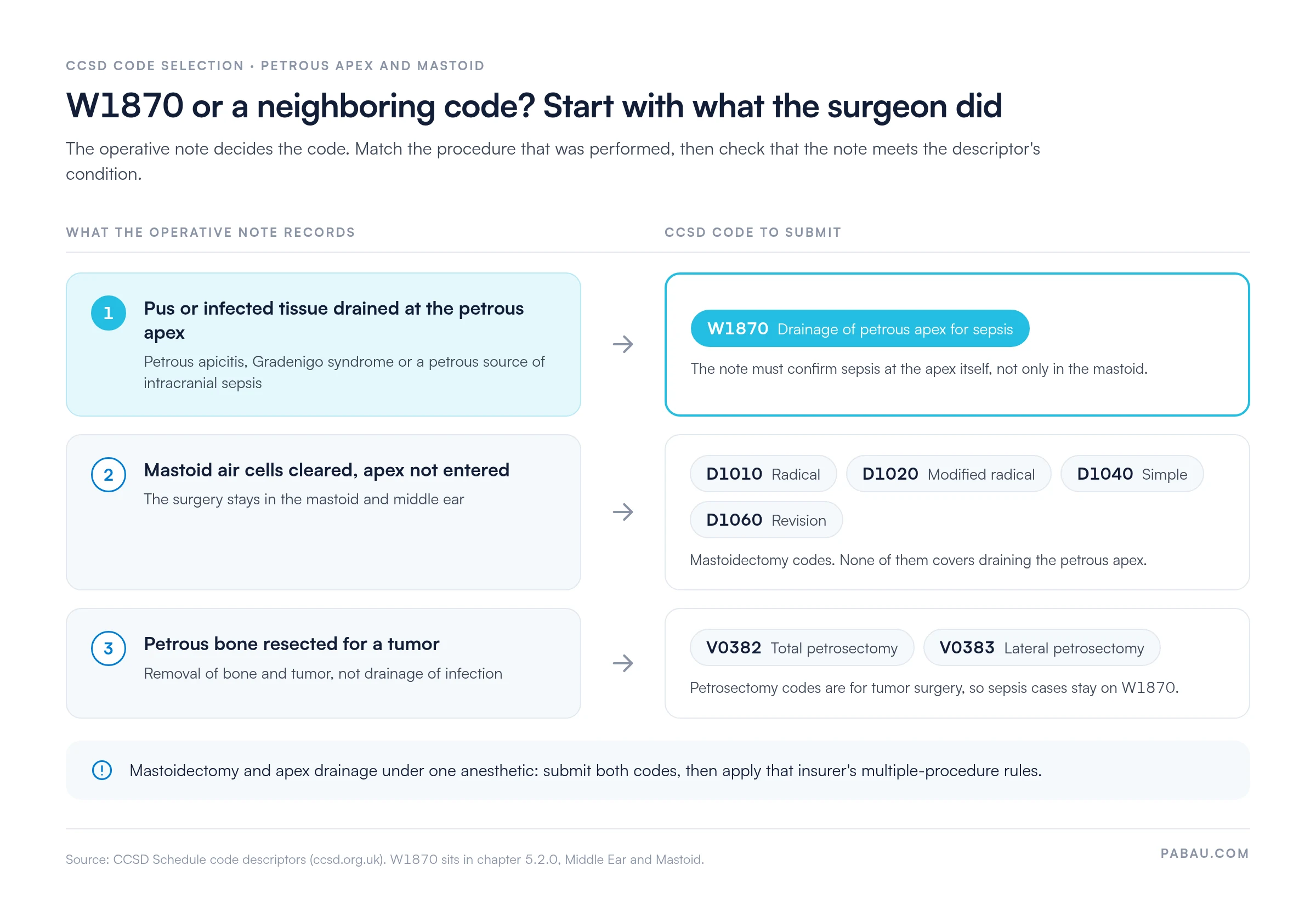
When mastoidectomy and petrous apex drainage happen in one operation under one anesthetic, they are not billed as two independent episodes. The insurer’s multiple-procedure rules apply, as covered in the billing errors section below. Report the mastoidectomy as D1010, D1040 or whichever code matches the operative note.
The CCSD schedule links W1870 to V0382 and V0383 in its coding principles. Check the insurer’s list of unacceptable combinations before you report either petrosectomy code with W1870.
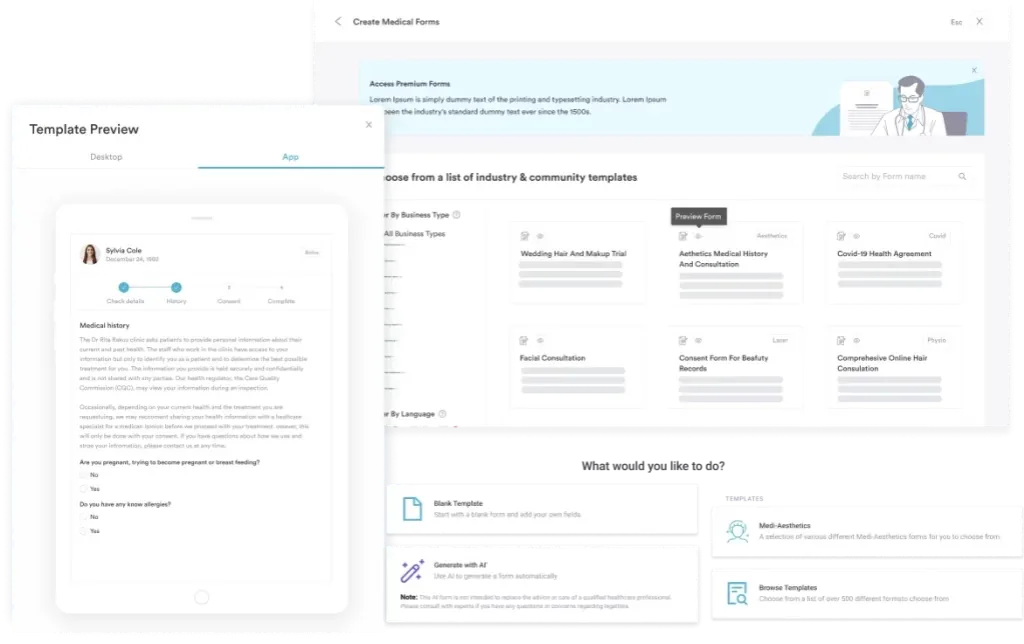
An operative note that does not document active infection at the petrous apex is a common reason for W1870 claims to be queried or denied. A digital operative note template that prompts for each required element makes an omission less likely under time pressure.
The operative record must contain all of the following to support a defensible W1870 claim:
Keep the imaging reports, clinical letters and signed operative note together in the patient record. A query letter can then be answered from the file, without a search through paper records.
W1870 is a high-acuity skull base procedure. Most UK private insurers require prior authorization before an elective procedure goes ahead. Authorization policies change, so verify current requirements with each payer before booking. The overview below reflects general practice as of 2026, and each insurer’s provider portal has the current criteria.
Use the Bupa CCSD billing guide alongside the official Bupa code search portal to check current W1870 authorization requirements for Bupa patients. For Aviva, the Aviva fee schedule details which procedure categories need pre-approval.
W1870 draws scrutiny because it is a high-value code for a rare, complex procedure. The table below lists six frequent denial triggers and how to resolve each one.
Multiple-procedure rules apply when W1870 shares an anesthetic episode with a mastoidectomy (D1010, D1020, D1040 or D1060). The same goes for a cochlear implant or another skull base procedure. Each insurer sets its own reduction for the second and any later procedure, in its fee schedule and in the consultant’s recognition agreement. Verify the percentages with each payer’s current schedule before submission.
The dominant code is usually the procedure with the greatest surgical complexity and operating time. Where W1870 and a radical mastoidectomy are equally complex, the insurer’s clinical team may decide dominance from the operative note’s time allocation. Document the operative duration and sequence explicitly.
Before you submit a combined W1870 and mastoidectomy claim, open that insurer’s own fee schedule. The Healix schedule, for example, lists each code’s anesthetic fee and its unacceptable code combinations. Its billing principles sit in a separate guideline, so apply its rules rather than another insurer’s.
W1870 is a prolonged, technically demanding procedure, and operating time varies with the approach and the extent of disease. The anesthetist bills separately, and each insurer’s schedule sets the anesthetic fee for W1870. Confirm that fee with your billing team before admission, along with how the insurer counts time increments.
When a neurosurgeon or second ENT surgeon assists, that surgeon bills an assistant fee. The insurer’s recognition terms set it, so check the rate with each payer rather than assume a fixed share. Document the assistant’s role in the operative note. Some insurers require separate authorization for a named assistant surgeon on complex skull base cases.
A structured submission workflow lowers the risk of denial and speeds payment for this complex claim type. Work through the seven steps below in order.
In many ENT practices, the operative note sits in one system, the authorization reference in an email and the claim in an insurer portal. When a query letter arrives weeks later, someone has to rebuild the case from all three.
Pabau sends UK insurance claims through Healthcode and Bupa from the patient record. The authorization code, dates and sessions are tracked on the case, with a warning when one is missing. Pabau’s end-to-end claims management then shows where each claim stands, from pending to paid.
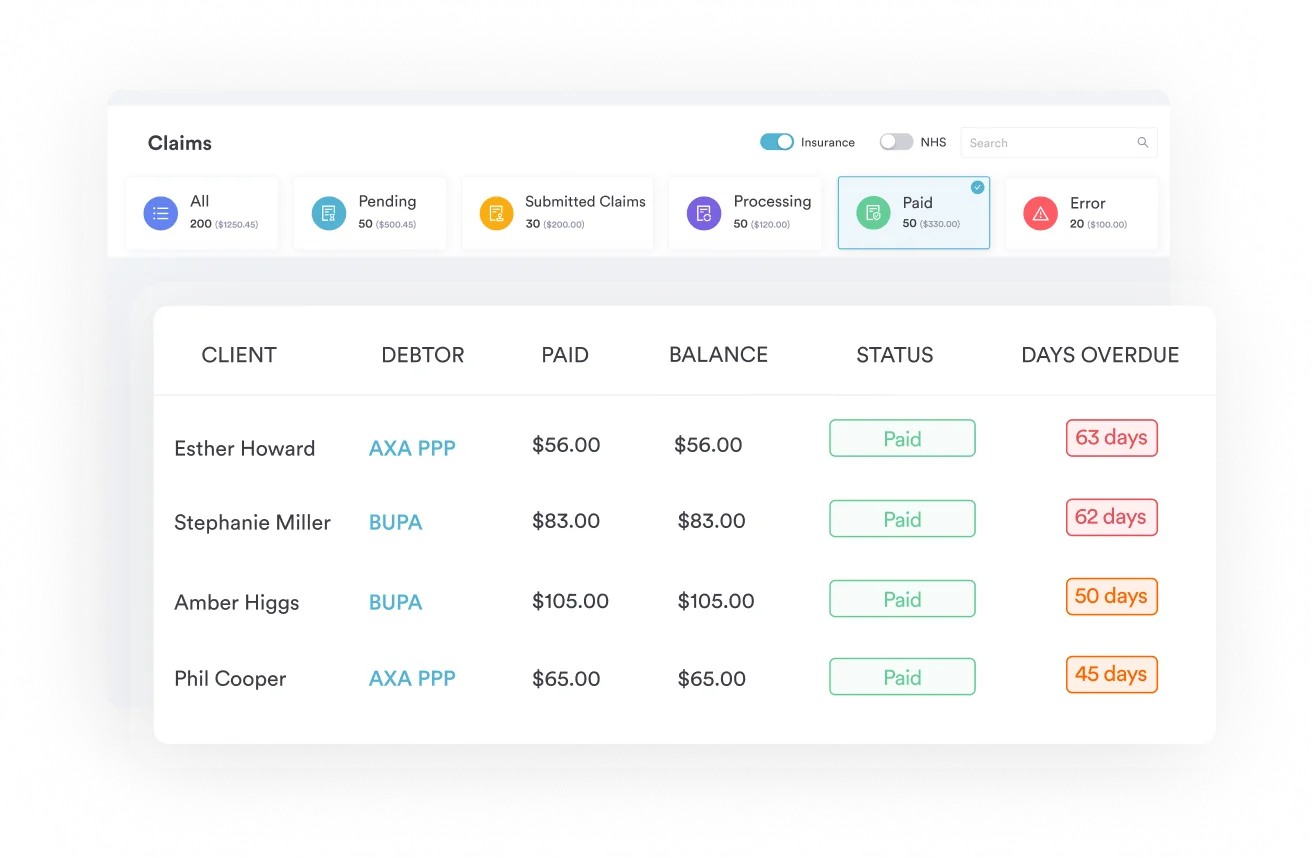
The result is a W1870 claim that leaves the practice with its authorization reference and operative note already attached. When an insurer queries it, the answer is on the case.

Pabau helps UK private ENT consultants track prior authorization codes, store operative documentation and submit CCSD claims with the records insurers need.

W1870 gets paid when the operative note proves three facts: Sepsis at the petrous apex, the approach used and what was drained. Write those into the note before the patient leaves the operating room, and secure authorization before any elective case. Those two habits remove the usual grounds for a query on this code.
Where mastoidectomy and apex drainage happen together, code both and let the insurer’s multiple-procedure rules set the payment. Book a demo to see how Pabau keeps the operative note, the authorization and the W1870 claim on one patient record.

Need a Bupa billing reference for your ENT practice? Bupa CCSD codes guide covers Bupa-specific procedure code requirements and submission standards for UK private consultants.
Looking for Bupa fee schedule guidance? Bupa procedure codes fee schedule explains current fee information and coding rules for private ENT billing.
Coding a repeat mastoid operation? CCSD code D1060 covers revision of mastoidectomy, including meatoplasty.
Want to lighten the load on your billing team? Claims management software helps private practices track claim status, attach operative documentation and answer insurer queries from one dashboard.
CCSD code W1870 covers surgical drainage of the petrous apex for sepsis in UK private healthcare billing. It applies when an ENT surgeon opens the petrous part of the temporal bone to drain an active infection or purulent collection. Petrous apicitis or Gradenigo syndrome is the usual cause. It is not an NHS tariff code.
H70.2 (petrositis) is the most common ICD-10 pairing for W1870. H70.0 (acute mastoiditis) applies when the petrous apicitis arises from acute mastoiditis. H71 covers cholesteatoma with secondary infection, and G00.9 is added when bacterial meningitis is confirmed. Always pair W1870 with the ICD-10 code that most precisely reflects the confirmed diagnosis.
Yes, in almost all cases. Bupa and AXA Health both require prior authorization for inpatient skull base and intracranial procedures, which includes W1870. For emergencies, insurers generally accept notification within 24 to 48 hours and authorize retrospectively. Verify current requirements with the insurer before booking, as policies change.
Four reasons come up most often. The first is a missing prior authorization for an elective case. The second is an operative note that does not confirm sepsis at the petrous apex. The third is an ICD-10 code for a non-infectious condition. The fourth is billing a concurrent mastoidectomy as a separate full episode instead of applying the insurer’s multiple-procedure rules.
Mastoidectomy codes (D1010 radical, D1020 modified radical) target the mastoid air cell system behind the ear. They do not access or drain the petrous apex. W1870 requires surgical entry into the petrous bone, medial to the cochlea, to drain infection at the apex. When both procedures happen under one anesthetic, the insurer’s multiple-procedure rules apply instead of full billing for each code.
Gradenigo syndrome is the triad of otorrhea, retro-orbital pain and ipsilateral abducens nerve palsy, caused by petrous apicitis. It is a classic indication for W1870. The abducens palsy is coded separately under H49.2, and the underlying infection is captured with H70.2 (petrositis). Document each part of the triad in the pre-operative clinical letter and the operative note.
W1870 is a CCSD code used only in UK private healthcare billing. NHS trusts code procedures with OPCS-4 and use Healthcare Resource Groups for tariff purposes. An equivalent NHS procedure takes the relevant OPCS-4 code, not a CCSD code. Submitting W1870 on an NHS claim is incorrect and will be rejected.




