CCSD Code M1310: Percutaneous fine needle biopsy of kidney lesion
CCSD Code M1310: Definition and clinical description CCSD Code M1310 describes a...

Last Updated: Nov 25, 2026
D1010 is the CCSD code for radical mastoidectomy (including meatoplasty). The surgeon takes down the posterior canal wall, removes the remaining ossicles and widens the ear canal opening, leaving one open cavity.
The meatoplasty is part of the code, so it is never claimed as a separate line. D1010 sits in chapter 5 of the CCSD schedule, ear, nose and throat, in group 5.2.0, middle ear and mastoid.
Let Pabau's smart automation suggest the right codes, reduce claim denials, and keep your practice compliant—effortlessly.
Automate repetitive tasks and focus on what matters most—your patients.
Reduce coding errors and ensure compliance with the latest regulations.
Clean claims, fewer denials, and faster reimbursements.
Powerful insights and reporting to help your practice thrive.
HIPAA compliant SOC 2 certified GDPR-compliant Trusted by 4,000+ clinics worldwide

CCSD Code D1010 covers radical mastoidectomy including meatoplasty. The meatoplasty is part of the code, so it never goes on the claim as a separate line.
D1010 sits in chapter 5 (ear, nose and throat) of the CCSD schedule, in group 5.2.0, middle ear and mastoid.
The CCSD principles list D0340, D1020, D1040, D1060 and D1240 as unacceptable combinations with D1010. Each insurer decides whether it adopts them.
UK private insurers such as Bupa expect D1010 to be authorized before surgery. Check each insurer’s pre-authorization rules for the patient’s policy.
Pabau, a practice management platform, records insurance policies, cases and authorization codes, and sends UK claims through Healthcode and BUPA.
CCSD Code D1010 is the UK private healthcare code for radical mastoidectomy (including meatoplasty). It belongs to the CCSD Schedule, the standard set of procedure codes for UK private healthcare.
The surgeon removes the mastoid air cells, takes down the posterior canal wall and removes the ossicles. Then the surgeon enlarges the opening of the ear canal, so the mastoid, middle ear and canal form one open cavity.
The words “including meatoplasty” matter for billing. The meatoplasty is part of D1010, so it isn’t claimed as a separate procedure on the same claim.
The Clinical Coding and Schedule Development (CCSD) Group maintains the procedure schedule that UK private insurers use, including Bupa. D1010 sits in chapter 5, ear, nose and throat, in group 5.2.0, middle ear and mastoid.
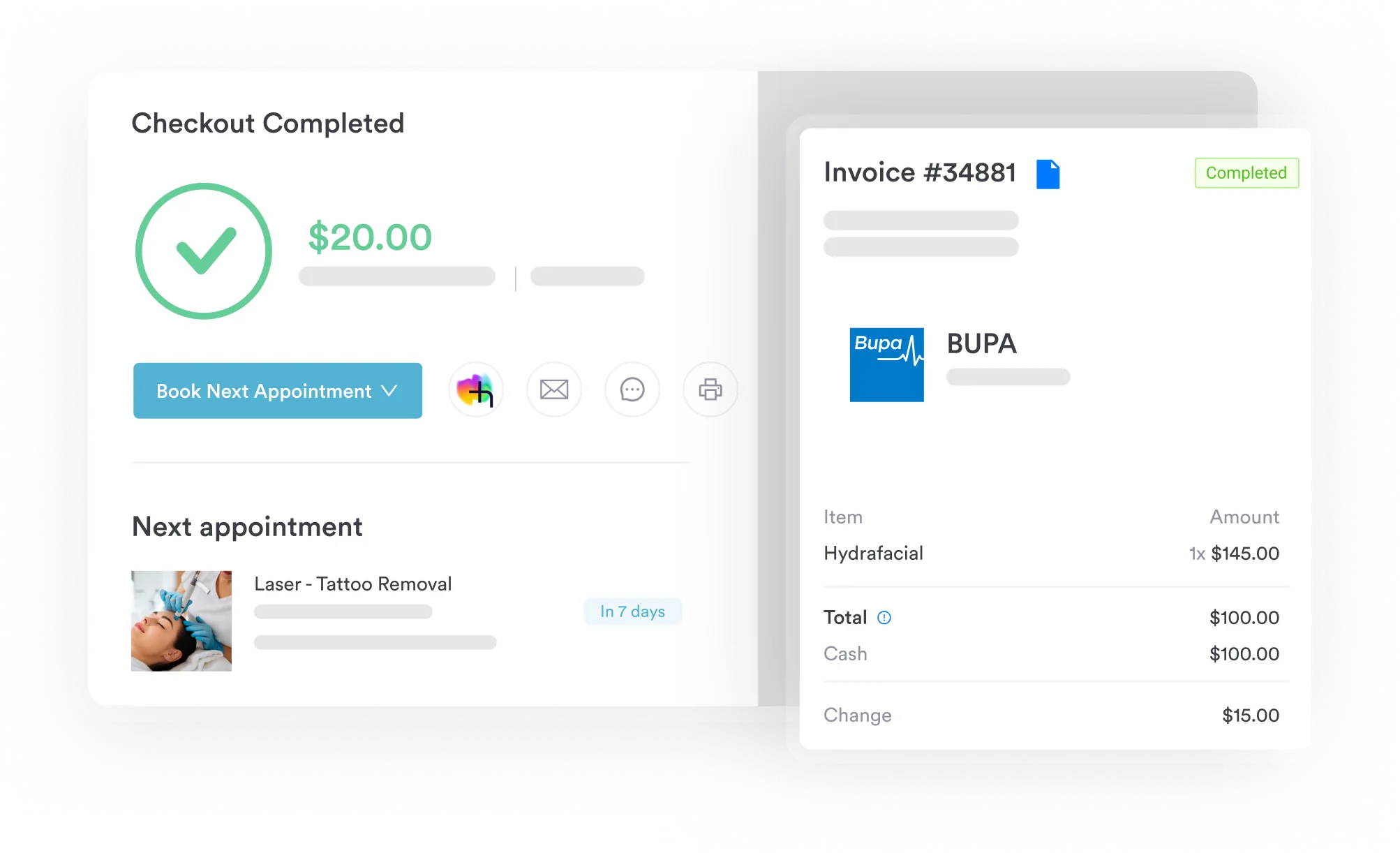
The CCSD Group doesn’t set fees, so each insurer decides its own benefit for the code. A D1010 claim carries the CCSD code, the ICD-10 diagnosis code, the patient’s policy number and the insurer’s authorization number.
Radical and modified radical mastoidectomy are both canal-wall-down operations. The difference is the ossicles. A radical mastoidectomy removes the ossicular chain, while a modified radical mastoidectomy preserves what it can of it.
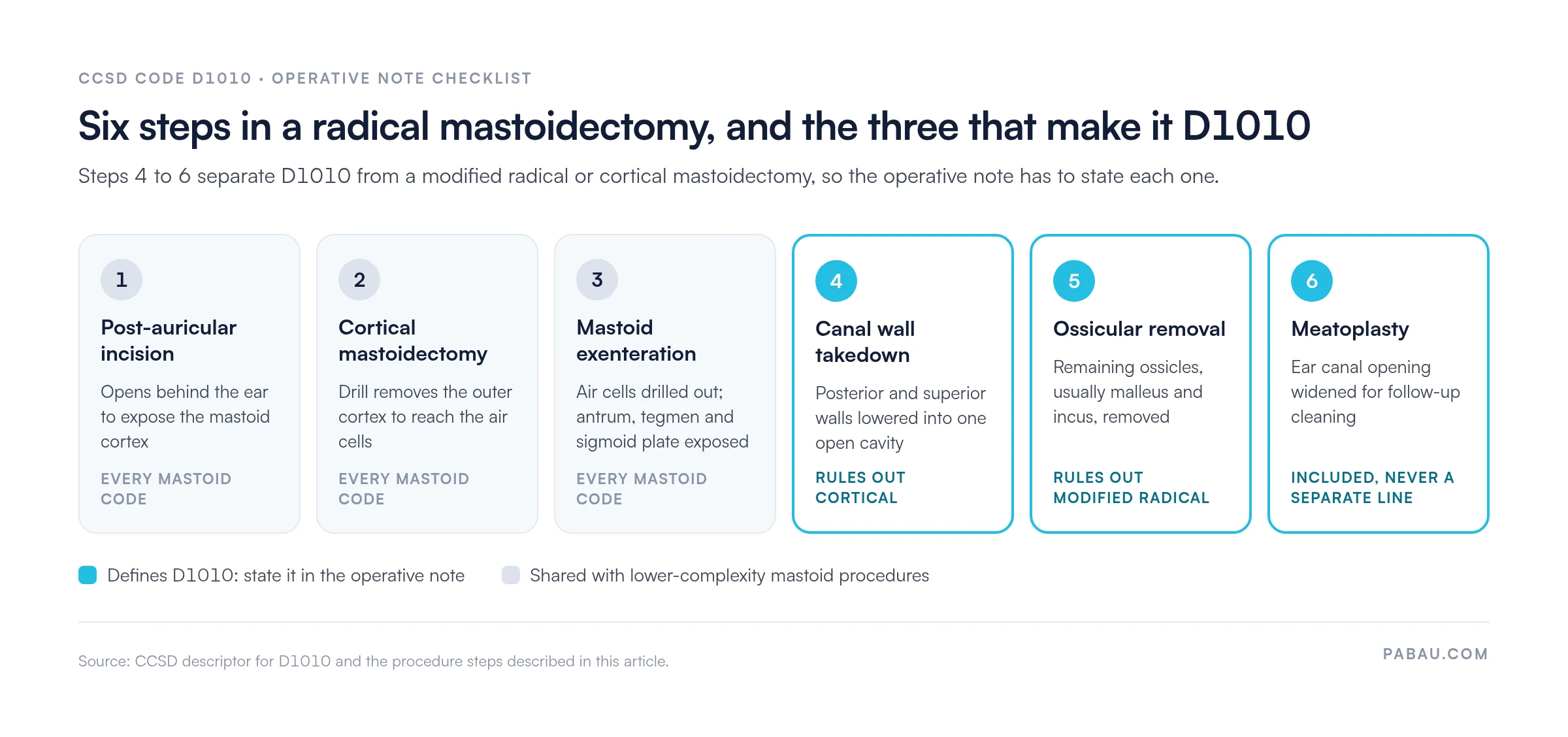
Knowing what the surgeon does during a D1010 operation helps billing staff check that the operative notes support the code. The procedure follows a consistent sequence.
The operative notes should confirm each of these steps. Steps 4 to 6 carry the most weight, because they set D1010 apart from the lower-value mastoid codes. A note that says only “mastoidectomy performed” gives the insurer grounds to query the claim or pay it at a lower-value code.
CCSD Code D1010 is used when the extent of disease, or a failed earlier operation, makes a radical canal-wall-down approach necessary. The main indications are:
The referral letter and clinical notes should link the patient’s presentation to one of these indications. A general statement that the patient “has chronic ear disease” leaves the insurer room to question the code.
Mastoidectomy procedures differ by canal wall status, ossicular preservation and extent of exenteration. Picking the wrong one is a common source of queried D1010 claims. A simple mastoidectomy is coded D1040, and a revision mastoidectomy has its own code, D1060.
The operative notes must say whether the canal wall was taken down and whether the ossicles were removed or preserved. Without that wording, the insurer can’t confirm D1010 over a lower-complexity mastoid code.
D1010 bundles the meatoplasty into the main procedure. Insurers treat a separate meatoplasty line on the same claim, such as D0340, as unbundling. They may reject or recoup the claim.
The CCSD principles list D0340, D1020, D1040, D1060 and D1240 as unacceptable combinations with D1010. Insurers decide whether to adopt the CCSD principles, so confirm the rules with the patient’s insurer. Pabau’s CCSD code library lists the neighboring codes.
Procedures that D1010 doesn’t include may carry a separate code, subject to the insurer’s rules:
When adding a code, the surgeon should document why each extra procedure was needed and that it went beyond D1010. Insurers may ask for the operative notes before paying a multi-code claim.
UK private insurers expect a specific ICD-10 diagnosis code on every D1010 claim. The diagnosis must justify a radical operation. The WHO ICD-10 browser gives the definition of each code below.
UK insurers work from the WHO edition of ICD-10, so check each code there rather than in a US ICD-10-CM lookup, which differs in places. Confirm the code with the insurer if a claim comes back for a diagnosis query.
D1010 is a major ear operation, and UK private insurers such as Bupa expect it to be authorized before surgery. The patient usually contacts their insurer with the CCSD code and the diagnosis, and the insurer issues an authorization number.
The insurer may ask for supporting documents before it authorizes the operation:
Requirements and timings differ by insurer and policy, so check each insurer’s pre-authorization rules. For emergency surgery, contact the insurer as soon as possible. A claim without a valid authorization number is likely to be rejected.
A clear operative note is the most effective way to prevent a D1010 claim query. It should confirm each element that separates a radical mastoidectomy from a less complex procedure:
Before submitting a D1010 claim, check that the operative note states three things separately: canal wall takedown, ossicular removal and meatoplasty. A note that says only “mastoidectomy” invites a query about which procedure was performed.
The CCSD schedule doesn’t use CPT-style modifiers. Each insurer sets its own rules for assistant fees, bilateral surgery and emergency operations, so check its terms before surgery. The table covers frequent rejection triggers and the fix for each.
Bupa publishes the benefit maximum it pays for each CCSD code, and the Bupa procedure codes and fee schedule guide explains how to read it. Logging each rejection against its cause shortens the time to a corrected resubmission.
Before resubmitting a rejected D1010 claim, ask the insurer for the reason in writing. Answer each point it raises and attach the relevant pages of the operative note.
A D1010 claim depends on several pieces arriving together: the authorization number, the operative note, the audiogram and imaging, and the right ICD-10 code. When those sit in email threads, insurer portals and spreadsheets, one missing piece holds up the surgeon’s fee.
In Pabau, claims management software records the patient’s insurance policy, the case and the authorization code on the patient record. Prior authorization is tracked on the case, and UK claims go out through Healthcode and BUPA.
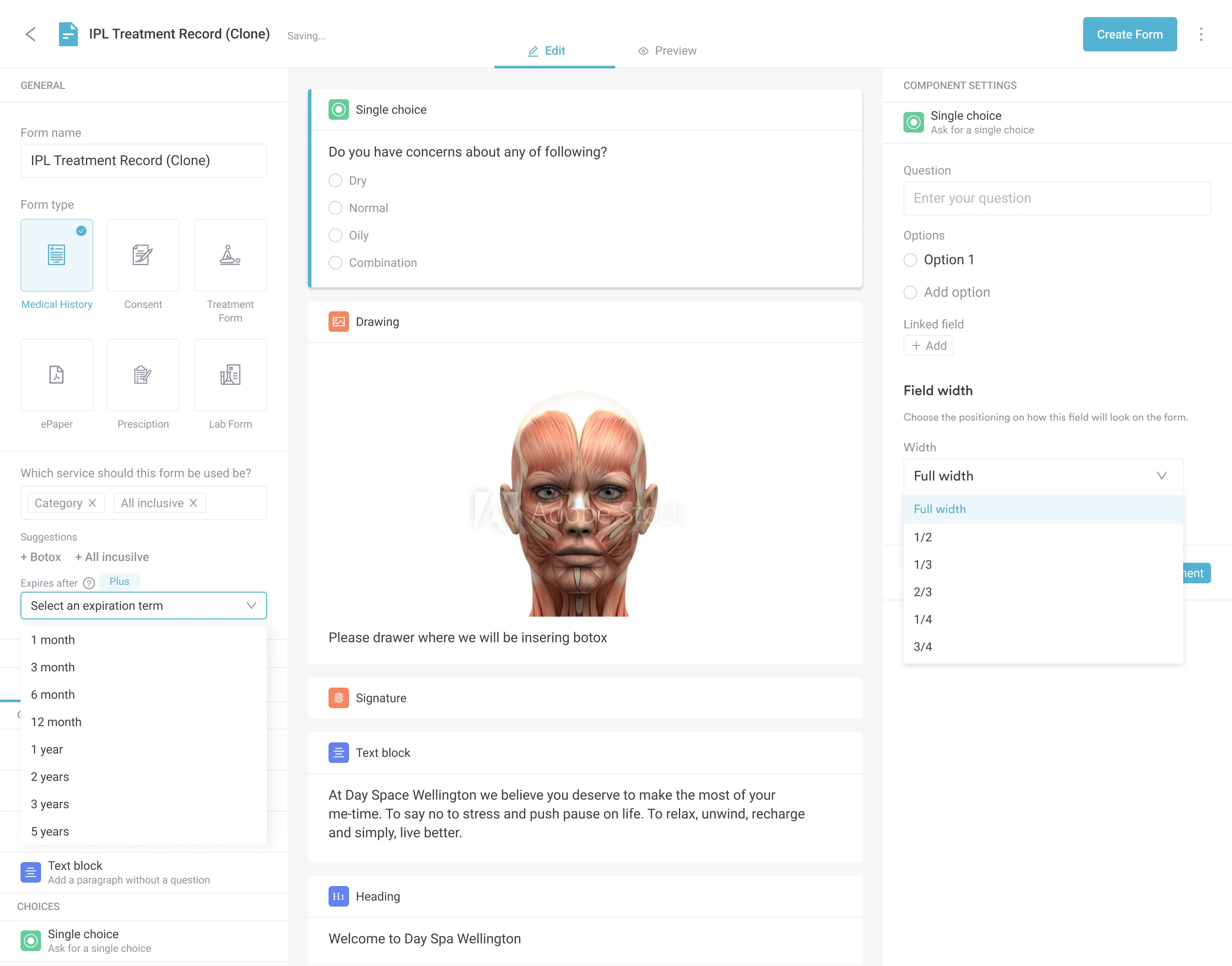
With Pabau’s online intake forms, patients complete their history and consent forms before the consultation. Your team then has the documents an insurer may ask for in one record.
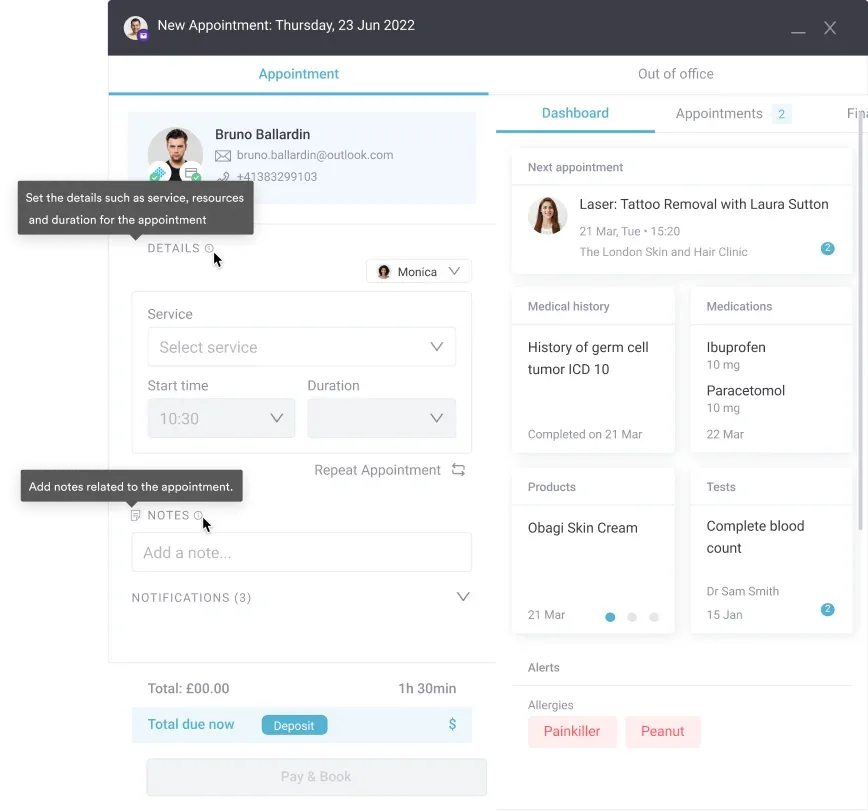
Your billing team can see which D1010 claims are paid and which need a resubmission, without chasing each insurer by email.

Pabau records insurance policies, cases and authorization codes, with UK claims sent through Healthcode and BUPA. See how ENT practices track every claim from authorization to payment.

CCSD Code D1010 only holds up when the operative note confirms canal wall takedown, ossicular removal and meatoplasty. Leave one out, and a UK insurer can query the claim or pay it at a lower-value code.
Secure the insurer’s authorization before surgery, and keep the meatoplasty off the claim as a separate line. Pair D1010 with the most specific ICD-10 code, and check the insurer’s rules on the CCSD unacceptable combinations.
Pabau sends UK insurance claims through Healthcode and BUPA and keeps each claim’s authorization code on the case. Book a demo to see how it fits your billing workflow for ENT surgery.

Need a broader CCSD billing reference? Bupa CCSD procedure codes covers how CCSD codes are structured and how UK insurers apply them.
Managing surgical claims across several insurers? Pabau claims management software records insurance policies, cases and authorization codes, with UK claims sent through Healthcode and BUPA.
Checking what Bupa pays for a CCSD code? The Bupa procedure codes and fee schedule guide explains how Bupa sets its benefit maximums.
Coding a revision operation instead? CCSD code D1060 covers revision mastoidectomy and its claim requirements.
CCSD Code D1010 is the UK private healthcare code for radical mastoidectomy (including meatoplasty). CCSD stands for Clinical Coding and Schedule Development, the group that maintains the procedure schedule UK private insurers such as Bupa use. D1010 sits in chapter 5, ear, nose and throat, in group 5.2.0, middle ear and mastoid. The code covers the whole operation, including the meatoplasty.
No. The meatoplasty is part of the D1010 descriptor, so billing it as a separate line on the same claim is unbundling. Insurers treat it as unbundling and may reject or recoup the claim. The CCSD principles also list D0340, soft tissue meatoplasty, as an unacceptable combination with D1010. Record the meatoplasty in the operative note, but don’t add a separate code for it.
Both are canal-wall-down operations, so the difference lies in the ossicles. A radical mastoidectomy (D1010) removes the ossicular chain and leaves the middle ear fully open to the canal. A modified radical mastoidectomy preserves what it can of the ossicles, which supports better hearing. They take different CCSD codes, so the operative note must state the ossicular status.
The CCSD schedule doesn’t use CPT-style modifiers, and each insurer sets its own rules for bilateral surgery. Ask the patient’s insurer how it wants a bilateral D1010 claimed before surgery, and include both sides in the authorization request. Don’t apply US CPT bilateral rules. The operative note should record the findings for each ear and why both were operated in one session.
H71 (cholesteatoma of the middle ear) and H66.2 (chronic atticoantral suppurative otitis media) are the strongest pairings for D1010. They match the indications that justify a radical canal-wall-down operation. H70.1 (chronic mastoiditis) and H66.1 (chronic tubotympanic suppurative otitis media) can also support it when the notes explain why the disease needed a radical approach. Avoid low-acuity codes such as H65 (nonsuppurative otitis media). Check each code against the WHO ICD-10 edition your insurer uses.