CCSD Code S5322: Injection of therapeutic substance into keloid scar
CCSD Code S5322: definition and clinical description CCSD Code S5322 is the proc...

Last Updated: Nov 13, 2026
N2880 is the CCSD code for repair of injury to penis. UK private medical insurers use it when a urologist operates after trauma. Examples are closing a ruptured tunica albuginea after a penile fracture or repairing a deep laceration.
N2880 sits in chapter 12 of the CCSD schedule, under Genitalia. Bupa rates it as an intermediate procedure in complexity band 5. When the injury ends in amputation, the code is N2610 or N2620 instead.
Let Pabau's smart automation suggest the right codes, reduce claim denials, and keep your practice compliant—effortlessly.
Automate repetitive tasks and focus on what matters most—your patients.
Reduce coding errors and ensure compliance with the latest regulations.
Clean claims, fewer denials, and faster reimbursements.
Powerful insights and reporting to help your practice thrive.
HIPAA compliant SOC 2 certified GDPR-compliant Trusted by 4,000+ clinics worldwide

CCSD code N2880 covers operative repair of an injured penis, such as a penile fracture or a deep laceration.
N2880 sits in chapter 12 of the CCSD schedule, under Genitalia. Bupa rates it as an intermediate procedure in complexity band 5.
Most UK private medical insurance excludes emergency admissions, so confirm cover and get an authorisation number before a private repair goes ahead.
Amputation is coded N2610 or N2620, Peyronie’s surgery is N2780 and avulsion or degloving repair is N2840. A formal urethral repair needs its own code.
Pabau sends CCSD claims through Healthcode with the authorisation number pulled from the patient record.
CCSD code N2880 is the UK private-insurance procedure code for repair of injury to penis. It comes from the CCSD procedure schedule, the standard code set for UK private healthcare.
A urologist bills it after operating to restore penile structure following trauma. The commonest example is closing a ruptured tunica albuginea after a penile fracture.
The Clinical Coding and Schedule Development Group maintains the CCSD codes on behalf of UK private medical insurers. Its members are Aviva, AXA Health, Bupa and Vitality. Cigna, WPA and other insurers use the same codes.
N2880 sits in chapter 12, Urinary system and male reproductive organs, under Genitalia. Bupa’s code search rates it as an intermediate (INTER) procedure in complexity band 5. Claims go to the insurer electronically through Healthcode, or through the insurer’s own portal.
N2880 applies whenever a surgeon formally repairs the penis after an injury. Three presentations account for most claims.
The code does not split by injury type or complexity, so a laceration closure and a tunica repair both bill as N2880. The operation note therefore has to show what was repaired, because the code alone cannot.
N2880 covers repair only. These procedures sit outside it and take their own codes.
Knowing the usual steps helps billing staff check that the operation note supports N2880, and spot any second procedure that needs its own code.
UK insurers expect the diagnosis on the claim as a WHO ICD-10 code, which is the version used in the UK. The US ICD-10-CM codes, with their extra characters, do not apply here. These codes match the usual penile injury presentations.
Code the diagnosis from the operative findings, not the admission note. A contusion code on its own invites a query about why surgery was needed.
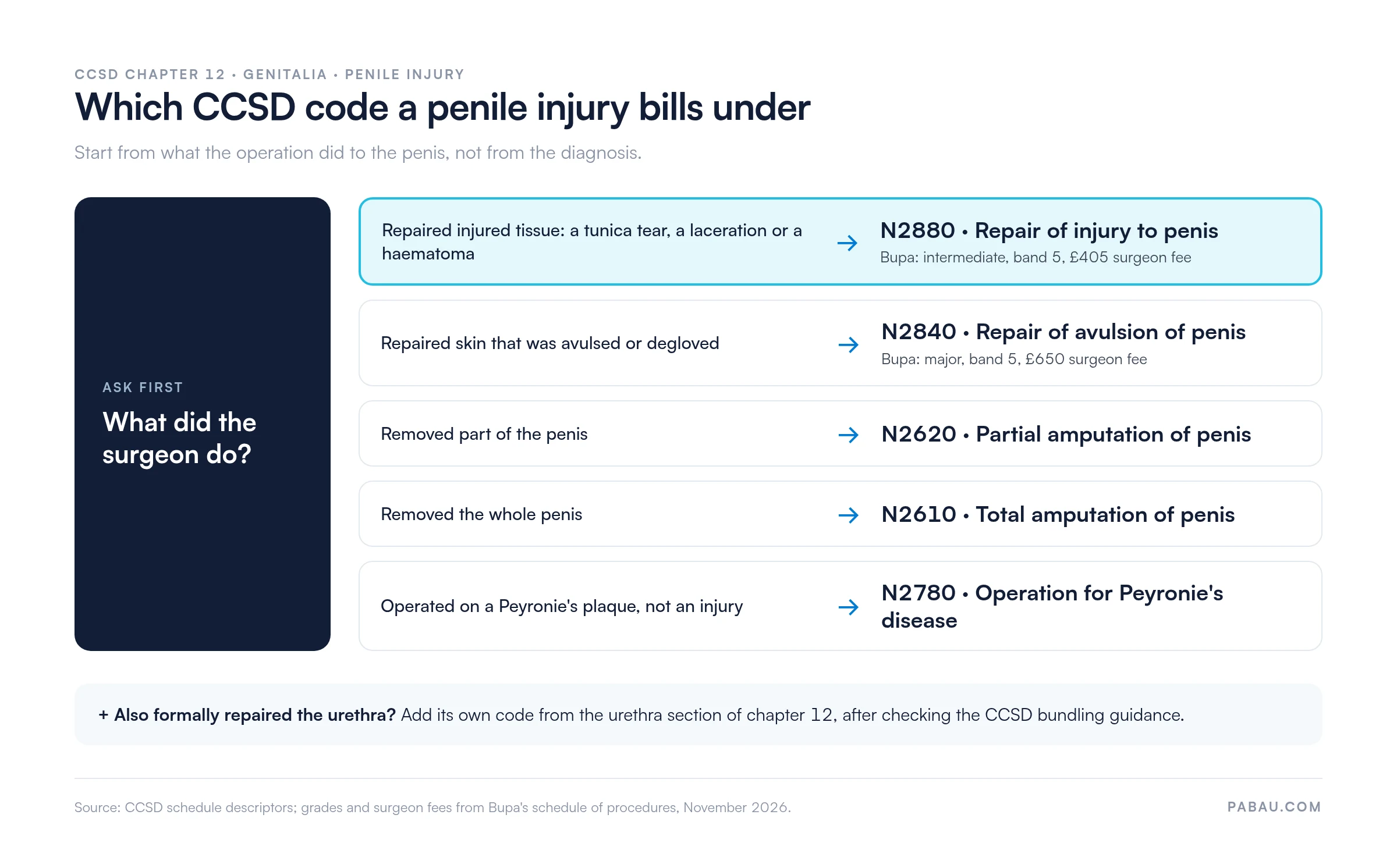
Several codes sit close to N2880 in chapter 12. Picking the wrong one, or missing a second procedure, leads to underpayment or a rejected claim. Cutting out a lesion, rather than repairing an injury, is coded N2710. Rebuilding a penis in a planned operation, often one stage of several, is coded N2820.
Read as a decision, the choice comes down to one question: what did the operation do to the penis? The chart follows that question to the code.
Insurers audit N2880 against the operation note. A note that says only “penile repair” will be queried. Make sure the record contains each element below.
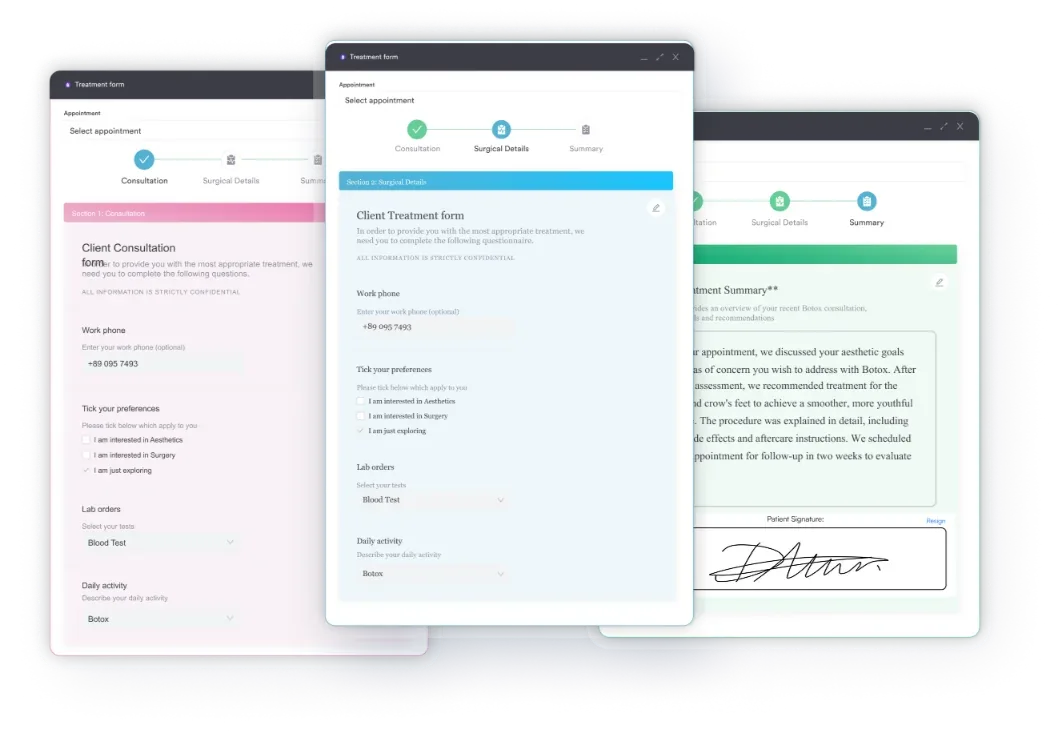
Structured operation and consent forms make these fields hard to skip. When the note is complete at the point of care, the claim does not wait on an addendum.
For a planned private repair, the patient contacts their insurer before admission and receives an authorisation number. The insurer usually wants the CCSD code, the diagnosis, the consultant and the hospital. Some policies also need a GP referral on file.
Penile fracture is usually an emergency, and most UK private medical insurance policies exclude emergency admissions. Many acute repairs therefore happen in NHS hospitals. When a patient is treated privately, confirm with the insurer that the policy covers the admission before surgery if you can.
If surgery cannot wait, contact the insurer as soon as possible after admission and ask whether retrospective authorisation is available. Without an authorisation number, the claim is likely to be rejected and the bill falls to the patient.
Each insurer sets its own fee for a CCSD code. Bupa’s schedule lists N2880 at £405 for the surgeon, as an intermediate procedure in complexity band 5. Other insurers publish their own figures, and the Bupa procedure codes and fee schedule explains how Bupa’s grades work.
If your fee is above the insurer’s rate, the patient pays the difference. Tell them in writing before treatment, because the CMA’s private healthcare order requires consultants to give patients fee information in advance.
N2880 rejections follow a few predictable patterns. Each one has a standard fix.
Review rejected N2880 claims each month by rejection reason. When the same reason keeps coming back, change the workflow that causes it rather than fixing each claim by hand.
N2880 on the surgeon’s claim pays the surgeon only. The anaesthetist and the hospital each bill the insurer separately.
The anaesthetist claims against the same CCSD procedure code, and the insurer pays them its anaesthetist fee for N2880. The hospital sends its own account for theatre time, consumables and nursing care at its contracted rates. Each account needs the same authorisation number.
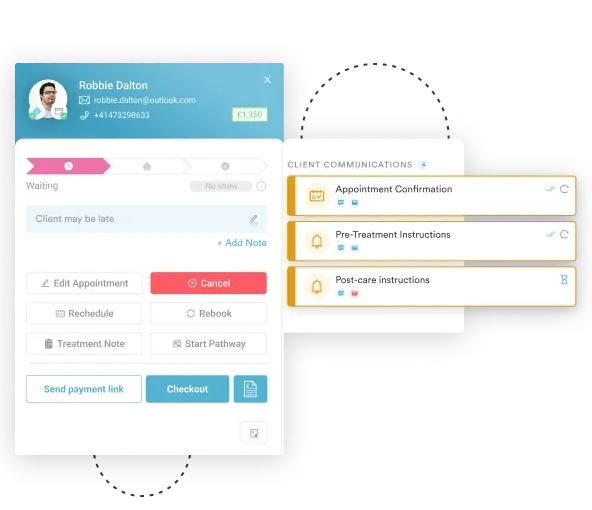
In many urology practices, the authorisation number sits in an email and the code sits on a billing sheet. They meet only when someone keys the claim into Healthcode by hand. Most missing-field rejections start there.
Pabau, the practice management platform we build, records the CCSD code, the diagnosis and the authorisation number against the episode. Its claims management software then pulls them from the patient record and sends the claim through Healthcode. Required fields are checked before the claim can go.
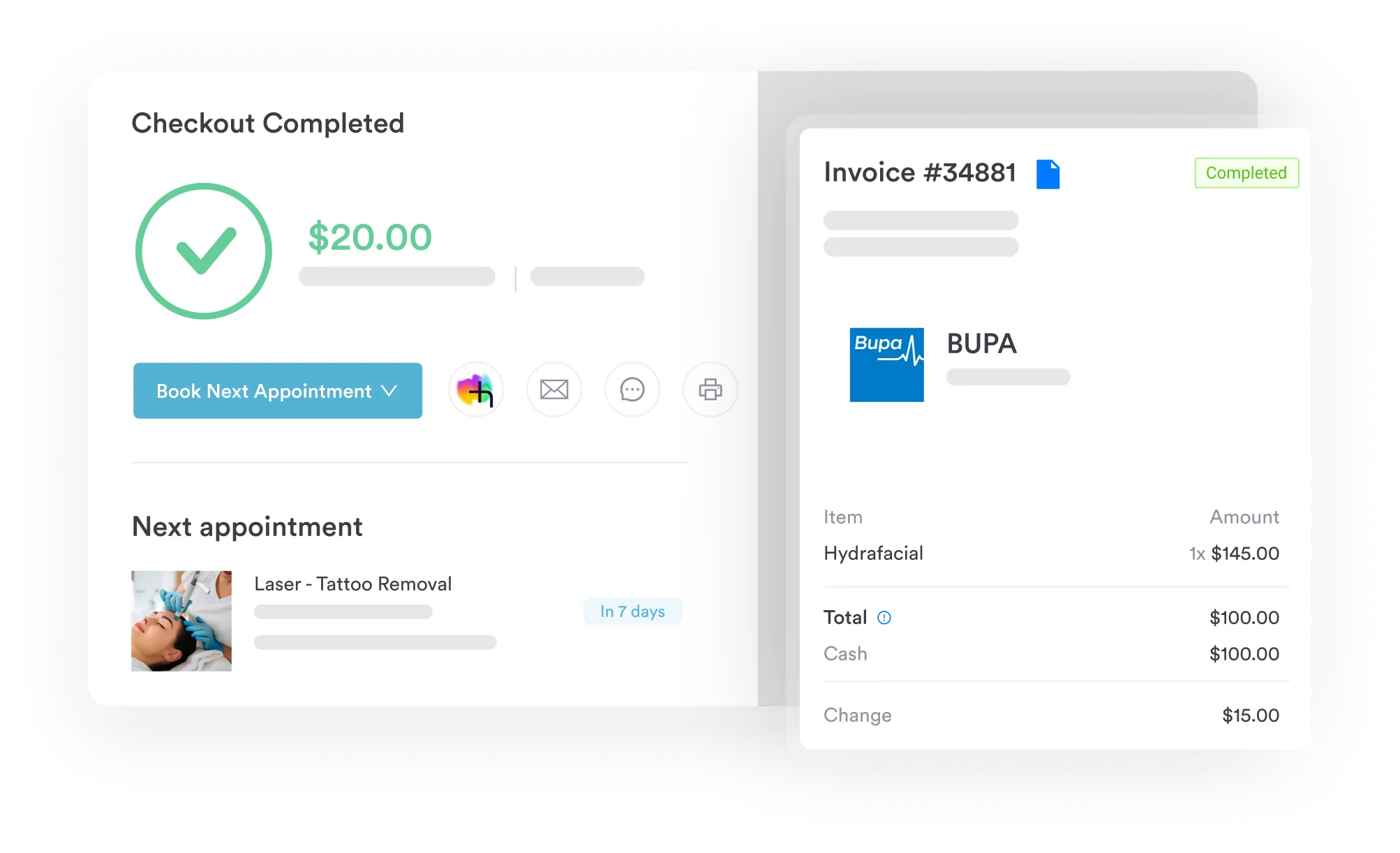
Once the claim is submitted, its status shows in the same system. Your team can answer insurer queries without logging in to each portal, and payment arrives sooner.

Pabau records the CCSD code, diagnosis and authorisation number against each episode and sends claims through Healthcode. Your team sees each claim’s status in one place.

N2880 is simple to choose once the operation note is clear. If the penis was repaired, it is N2880. If it was removed, it is N2610 or N2620. Avulsed skin is N2840, and a Peyronie’s plaque is N2780.
The harder part is cover. Penile fracture is an emergency, and most private policies exclude emergencies, so settle authorisation before the claim is built. Book a demo to see how Pabau keeps the code, diagnosis and authorisation number together on every Healthcode claim.

Need the wider Bupa CCSD picture? Bupa CCSD codes covers how Bupa applies the CCSD schedule for recognised providers.
Billing tunica surgery for a plaque instead? CCSD code N2780 covers the operation for Peyronie’s disease.
CCSD code N2880 covers operative repair of an injured penis. Typical cases are penile fracture, deep lacerations and blunt trauma that needs surgical exploration. One code covers every level of complexity. Avulsion or degloving repair takes a separate code, N2840.
All the main UK private medical insurers use CCSD codes, including Aviva, AXA Health, Bupa, Vitality, Cigna and WPA. Most accept claims electronically through Healthcode.
Yes. Repair of a ruptured tunica albuginea after a penile fracture is the commonest reason to bill N2880. Penile fracture has no open wound, so pair it with a closed-injury code such as S39.8.
Often not. Most UK private medical insurance policies exclude emergency admissions, so many acute repairs take place in the NHS. Check the patient’s policy and get an authorisation number before a private repair where you can.
Bupa’s schedule lists N2880 at £405 for the surgeon, as an intermediate procedure in complexity band 5. Other insurers set their own fees, and the patient pays any difference above the insurer’s rate.
No. N2880 covers repair only. Total amputation is N2610 and partial amputation is N2620. Check the current CCSD schedule for any reconstruction after amputation.