ICD-10 Code Z74.8: Other problems related to care provider dependency
ICD-10 Code Z74.8: Definition and code details ICD-10 Code Z74.8 is the billable...

Last Updated: Oct 19, 2026
Billable Code Specific Code
O04.7 is the billable ICD-10-CM code for embolism following (induced) termination of pregnancy.
Let Pabau's smart automation suggest the right codes, reduce claim denials, and keep your practice compliant—effortlessly.
Automate repetitive tasks and focus on what matters most—your patients.
Reduce coding errors and ensure compliance with the latest regulations.
Clean claims, fewer denials, and faster reimbursements.
Powerful insights and reporting to help your practice thrive.
HIPAA compliant SOC 2 certified GDPR-compliant Trusted by 4,000+ clinics worldwide

ICD-10 Code O04.7 describes embolism following induced termination of pregnancy and is a billable, specific diagnosis code valid for FY 2026 claims.
The parent code O04 is non-billable; coders must always select a specific child code such as O04.7 rather than submitting the header code.
O04.7 covers air, amniotic fluid, blood-clot, fat, pulmonary, pyaemic, septic, and soap embolism following induced termination; septic or septicopyemic embolism cross-references to O04.7, not O04.87.
Pabau’s claims management software supports accurate ICD-10 documentation workflows for OB/GYN and women’s health practices, reducing submission errors.
ICD-10 Code O04.7 is the billable diagnosis code for embolism following (induced) termination of pregnancy. Medical coders in OB/GYN practice management settings assign this code when a patient develops an embolic complication after an induced termination procedure, and it is valid for use on all HIPAA-covered claims submitted from October 1, 2015 through the current fiscal year 2026.
The code sits within ICD-10-CM Chapter 15 (Pregnancy, childbirth and the puerperium), under the block O00-O08 (Pregnancy with abortive outcome), in the subcategory O04 (Complications following induced termination of pregnancy). The CDC/NCHS ICD-10-CM web tool lists O04.7 with a maternity diagnosis flag applicable to patients aged 12-55 years, and a female-only diagnosis flag.
Embolism in this context describes the obstruction of a blood vessel by a foreign body or clot introduced into the circulation. The ICD-10-CM tabular list specifies that O04.7 includes the following embolism types when they follow an induced termination:
One common documentation error involves septic or septicopyemic embolism. Although the term “septic embolism” appears in the O04.7 inclusion list, a coder encountering documented sepsis following induced termination should verify whether the clinical picture describes sepsis as the primary condition. Sepsis following induced termination maps to O04.87, while septic embolism (an embolic event with a septic character) maps to O04.7. The distinction matters for claim accuracy and is flagged in the annotation back-references under O04.87 in the ICD-10-CM index.
O04.7 is a billable and specific ICD-10-CM diagnosis code. Payers will accept it on a claim without requiring a more granular child code below it. The parent code O04 (Complications following induced termination of pregnancy) is non-billable; submitting O04 alone on a claim will result in a rejection because it lacks the specificity required under CMS ICD-10-CM coding guidelines.
The full code hierarchy for O04.7 is as follows:
There is also an important Type 2 Excludes note at the O04 category level. The code Z33.2 (Encounter for elective termination of pregnancy) is listed as a Type 2 Excludes entry. A Type 2 Excludes note means the excluded condition is not part of O04, but both codes may be used together on the same claim when the clinical scenario supports it. Coders documenting a patient who presents with an embolic complication following a previously recorded elective termination encounter may assign both Z33.2 and O04.7 if clinically appropriate.
Verify the billability status of every O04 child code before submission. O04.8 (other and unspecified complications) is itself a header with non-billable status; coders must drill down to O04.80, O04.81, O04.82, or O04.87 as appropriate. Using a claims management tool that validates ICD-10 specificity at the point of entry catches these errors before they reach the clearinghouse.
O04.7 is one of several specific complication codes under the O04 category. Selecting the correct code requires careful reading of the physician’s documentation. The table below summarises the key sibling codes and how they differ from O04.7.
The most frequent coding confusion involves O04.7 and O04.87. Sepsis following induced termination (O04.87) describes systemic infection meeting the clinical criteria for sepsis. Embolism following induced termination (O04.7) describes vascular obstruction, which can have a septic character (septic embolism) but is mechanistically distinct. When documentation records both a septic embolism and systemic sepsis, coders should query the attending physician to clarify the primary condition before assigning a single code. For sexual health clinic software users and OB/GYN practices billing these complications, the specificity of physician documentation is the deciding factor. Medicare billing rules for this code differ from commercial payer rules, including the documentation asked for. The billing cycle for one claim can run weeks, and most of that time is spent waiting on a payer.
Valid assignment of O04.7 depends on the medical record containing three documentation elements: (1) confirmation that the termination was induced (not spontaneous), (2) physician documentation of an embolic complication post-procedure, and (3) specification of the embolism type where possible. Missing any of these elements creates a risk of query, audit, or denial.
The AAPC Codify ICD-10-CM reference notes that O04.7 carries both maternity and female-only diagnosis flags, meaning it will generate an edit on claims submitted for male patients or patients outside the 12-55 age range. Coders should confirm patient demographics match these clinical parameters before submission.
The attending physician’s note should document:
When documentation is ambiguous, coders should not assume the embolism type. Querying the physician to add specificity is preferable to defaulting to O04.80 (unspecified complications), which carries lower specificity and may affect reimbursement under certain Medicaid and managed-care contracts. For practices that rely on digital intake forms and structured clinical note templates, embedding prompts for complication type and embolism category reduces ambiguous documentation at the point of care.
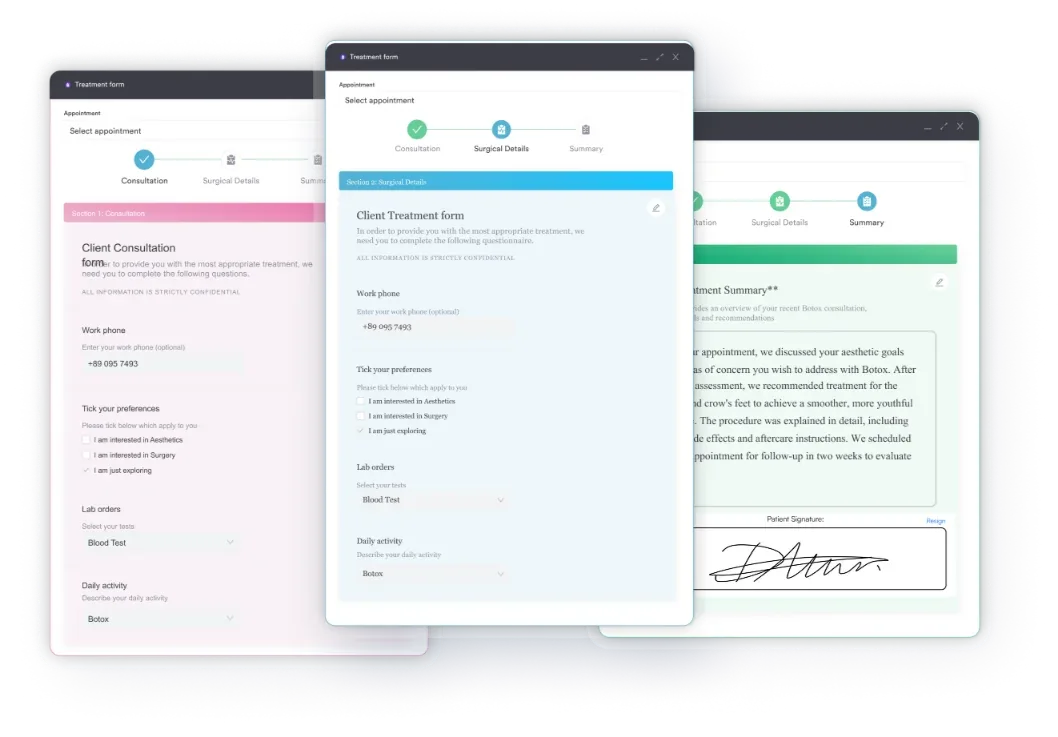

Pabau helps practices capture structured clinical notes, flag coding errors before submission, and manage claims workflows from a single platform.

ICD-10-CM coding guidelines for Chapter 15 require that codes from this chapter are used only for conditions directly related to or aggravated by the pregnancy. O04.7 satisfies this condition by definition: the embolism is a direct complication of the induced termination procedure. Sequencing O04.7 as the principal diagnosis is appropriate when the embolic complication is the primary reason for the encounter (for example, a patient admitted following an outpatient procedure who develops a pulmonary embolism requiring inpatient management).
When the patient presents for post-termination follow-up and the embolism is an incidental finding being monitored, sequencing may differ. Coders should apply the CMS ICD-10-CM official coding guidelines for outpatient versus inpatient encounters. The general rule for outpatient coding is to sequence the condition chiefly responsible for the visit; inpatient encounters follow the Uniform Hospital Discharge Data Set (UHDDS) principal diagnosis definition. Accurate HIPAA-compliant documentation practices require that the documented reason for the encounter is consistent with the code assigned.
Additional codes may be required alongside O04.7 when other complications coexist, and on the claim the diagnosis is paired with the CPT code for the procedure performed. Per ICD-10-CM guidelines, if a patient has both an embolism (O04.7) and renal failure (O04.82) following the same induced termination, both codes should be assigned with O04.7 sequenced first if the embolism is the dominant complication. Multiple complication codes under O04 may be assigned for a single encounter as long as each is supported by clinical documentation. Review ICD-10 coding reference guides for additional sequencing framework examples across other diagnostic categories.
When the procedure was a first-trimester surgical termination, that CPT code is usually 59840, induced abortion by dilation and curettage.
US coders use ICD-10-CM, maintained jointly by the National Center for Health Statistics (NCHS) and CMS, which is a clinical modification of the international ICD-10 system published by the World Health Organization. The two versions share a common structure but differ in code detail and terminology.
In the WHO ICD-10 (2019 version), the equivalent code O04.7 carries the description “Medical abortion: complete or unspecified, complicated by embolism.” This reflects the WHO’s terminology choice (“medical abortion” for induced termination) rather than the ICD-10-CM language (“induced termination of pregnancy”). The clinical conditions described are equivalent, but US facilities must always use ICD-10-CM codes, not WHO ICD-10 codes, when submitting claims under HIPAA. The claims management software used by a practice should be configured to reference the current ICD-10-CM tabular list, not the international WHO release.
Effective dates also differ between systems. The WHO publishes periodic revisions to ICD-10, while CMS issues annual ICD-10-CM updates effective October 1 each year. For FY 2026, O04.7 remains a valid, active code with no changes to its description or hierarchy. Practices can verify the current status using the CDC/NCHS ICD-10-CM web tool and cross-checking against other active ICD-10 codes to confirm annual updates have been applied. Patient record documentation for patient record management should always reflect the code set year in which the service was rendered.
Run an annual audit of all ICD-10 codes in your charge master or fee schedule each October 1. CMS code updates can retire, split, or revise codes, and submitting a retired code generates an immediate denial. A practice management system with automated code-set updates removes this manual verification step entirely.
Accurate use of ICD-10 Code O04.7 requires coders to confirm the induced nature of the termination, identify the specific embolism type from physician documentation, and apply correct sequencing when concurrent complications are present. The distinction between O04.7 (embolic complication) and O04.87 (sepsis) is the single most important differentiation in this code family.
Pabau’s claims management software helps OB/GYN and women’s health practices build structured documentation templates that prompt for the specificity ICD-10-CM requires. To see how Pabau supports accurate coding workflows from clinical note to claim submission, book a demo.

Coding a follow-up pedal cycle collision? V51.2XXD pedal cycle code covers a person outside a pick-up truck or van hurt in a nontraffic collision with a pedal cycle.
Coding a vehicle collision sequela visit? heavy transport sequela code covers the billable sequela code for an occupant hurt in a nontraffic heavy transport vehicle collision.
Coding a subsequent encounter after a collision? traffic collision subsequent encounter code explains the billability, 7th character rules, and how this code differs from the nontraffic version.
ICD-10 Code O04.7 is a billable diagnosis code for embolism following (induced) termination of pregnancy. It is classified under Chapter 15 of ICD-10-CM (Pregnancy, childbirth and the puerperium) and covers air, amniotic fluid, blood-clot, fat, pulmonary, pyaemic, septic, and soap embolism occurring as a complication of an induced termination procedure.
Yes, O04.7 is a billable and specific ICD-10-CM code valid for FY 2026 claims. Its parent code O04 is non-billable; coders must always use O04.7 or another specific child code rather than submitting the header code O04 alone.
The parent category is O04 (Complications following induced termination of pregnancy), which is non-billable. Above that sit block O00-O08 (Pregnancy with abortive outcome) and Chapter 15 (O00-O9A, Pregnancy, childbirth and the puerperium). For claim submission, O04.7 is the required level of specificity.
O04.87 covers systemic sepsis following induced termination, where the clinical picture meets sepsis criteria. O04.7 covers embolic complications, including septic embolism (a vascular obstruction with septic characteristics). Septic embolism cross-references to O04.7, not O04.87; however, if documentation supports both conditions, a physician query is recommended before assigning a single code.
Yes. Z33.2 (Encounter for elective termination of pregnancy) appears under a Type 2 Excludes note at the O04 category level. A Type 2 Excludes note means the codes are not part of each other but may be assigned together when clinically appropriate, so both O04.7 and Z33.2 can be reported on the same claim if the patient’s record supports it.