ICD-10 Code V28.01XD: E-bike driver noncollision accident, nontraffic, subsequent encounter
ICD-10 Code V28.01XD: Definition and billable status ICD-10 Code V28.01XD is the...

Last Updated: Oct 20, 2026
Billable Code Specific Code
M83.0 is the billable ICD-10-CM code for puerperal osteomalacia.
Let Pabau's smart automation suggest the right codes, reduce claim denials, and keep your practice compliant—effortlessly.
Automate repetitive tasks and focus on what matters most—your patients.
Reduce coding errors and ensure compliance with the latest regulations.
Clean claims, fewer denials, and faster reimbursements.
Powerful insights and reporting to help your practice thrive.
HIPAA compliant SOC 2 certified GDPR-compliant Trusted by 4,000+ clinics worldwide

ICD-10 Code M83.0 is the billable diagnosis code for puerperal osteomalacia, the bone softening that develops in the postpartum period.
M83.0 is specific and billable in the 2026 ICD-10-CM edition, effective October 1, 2025. Always match the date of service to the correct code year.
Vitamin D and calcium deficiency must be documented and co-coded (E55.9, E83.51) to support medical necessity and reduce claim denials.
M83 carries Excludes1 notes only, so rickets, renal osteodystrophy, and vitamin D-resistant osteomalacia are coded elsewhere.
Pabau’s claims management software helps practitioners link accurate ICD-10 codes to treatment plans and reduce coding errors at submission.
Puerperal osteomalacia is a metabolic bone condition in which bones soften because mineralization is defective during the postpartum period. Osteoporosis reduces bone density, while osteomalacia reflects inadequate calcium and phosphate deposition into the bone matrix. According to the WHO ICD-10 browser, M83.0 sits among adult-onset osteomalacia disorders caused by nutritional or metabolic insufficiency. Eligibility, referral status and time thresholds all sit inside the Medicare Benefits Schedule descriptor rather than the code itself. Revenue cycle management treats coding, submission and collection as one process rather than three handoffs.
The puerperal period, typically the six weeks following delivery, creates unique physiological demands. Lactation accelerates calcium transfer to breast milk, and postpartum hormonal shifts reduce renal calcium reabsorption. When dietary vitamin D and calcium intake is already low, those demands can trigger or worsen bone demineralization.
Clinicians working in OB/GYN practices see this condition most often in patients with limited sun exposure, low dietary calcium, or malabsorptive gastrointestinal conditions.
Parent code M83 (Adult osteomalacia) is non-billable, so a claim must carry a specific subcode. ICD-10-CM organizes adult osteomalacia into eight subcodes based on etiology and patient population. Choosing the most specific one reduces claim rejections, just as it does for neighboring musculoskeletal codes such as codes such as M96.3.
M83.0 is the correct choice whenever the physician’s documentation links the bone softening to the puerperal period. If the osteomalacia predates delivery or follows malabsorption, such as Crohn’s disease or celiac disease, M83.2 fits better. Use M83.9 only when documentation genuinely cannot identify the etiology, and ask the treating clinician for specificity before you submit.
Applying M83.0 correctly requires the official ICD-10-CM guidelines maintained jointly by CMS and the National Center for Health Statistics. These guidelines govern sequencing, excludes notes, and co-coding obligations that decide whether a claim is accepted.
HIPAA-compliant documentation practices matter here too, because diagnosis codes travel on covered entity transactions.
The M83 category carries Excludes1 notes only. Each one names a condition that cannot be reported with M83.0:
M83 carries no excludes note referencing osteoporosis. The two conditions can still occur in the same patient, so report both codes when the physician documents both diagnoses.
M83.0 works as a principal or secondary diagnosis depending on the encounter. When the visit’s primary purpose is evaluating or treating puerperal osteomalacia, sequence M83.0 first. Sometimes bone pain or a fracture is the presenting complaint and osteomalacia is the confirmed cause. Code the pain or fracture first, then add M83.0 as the underlying etiology.
Always follow the physician’s documentation. Never infer a puerperal relationship from lab values alone, without an explicit clinical link to the postpartum period.
Flag charts for coder review whenever lab orders show low 25-hydroxyvitamin D and the patient is within six weeks postpartum. M83.0 cannot be assigned without physician documentation tying that deficiency to the puerperal period. Prompt the provider to specify the connection before the claim goes out.
Payers reviewing M83.0 claims look for three things. They want confirmation of the puerperal period and laboratory evidence of defective mineralization. They also want physician attribution of the bone condition to the postpartum context. Missing any one of them raises denial risk. Digital intake forms that capture the delivery date and postpartum symptom history lighten the load on the coding workflow.
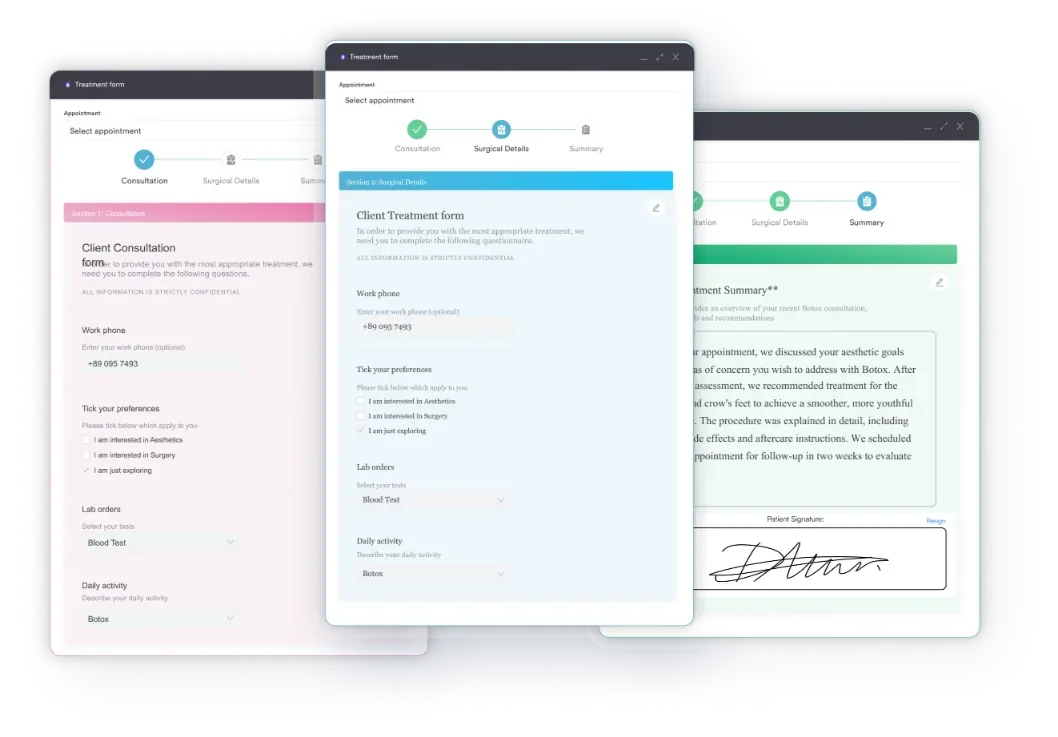
Delivery records already sitting in the chart, such as a completed Apgar score chart, confirm the delivery date without a separate query. Well-structured notes also become the foundation of any appeal if the claim is denied. Structured clinical forms with postpartum history fields and lab capture reduce the odds of incomplete charts reaching the billing team.
Knowing the clinical drivers of M83.0 helps coders and clinicians spot which postpartum patients need screening. It also shows which co-conditions belong in the chart and on the claim. The pathophysiology centers on the failure of calcium phosphate crystals to deposit adequately in the osteoid matrix.
Nutritional workups of this kind often start outside obstetrics, in functional medicine practices that already track vitamin D repletion over months.
Coders and clinicians frequently confuse osteomalacia with osteoporosis, because both involve bone fragility. The two are pathophysiologically distinct, carry different ICD-10 codes, and often call for different treatment. Miscoding one as the other creates audit risk and denial exposure. The table below compares the three most commonly confused bone conditions in ICD-10-CM.
A practical rule: if the note says “bone softening” or “defective mineralization” and the patient is inside the postpartum window, M83.0 applies. If it says “bone density loss” or leads with a low T-score on DXA, look toward the M80-M81 osteoporosis range. Nothing in the M83 excludes notes blocks the pairing, so report both codes when both diagnoses are documented.
M83.0 is rarely the only code on a claim. ICD-10-CM guidelines ask coders to capture every condition that affects the encounter or needs treatment at the visit. For puerperal osteomalacia, the underlying nutritional and metabolic contributors almost always warrant additional codes.
Per the AAPC ICD-10-CM reference, secondary codes should reflect all conditions affecting clinical management. That habit pays off across comorbid coding, including trauma codes such as S23.110A.
Never add these codes without physician documentation supporting each condition. Co-coding E55.9 alongside M83.0 is clinically logical in most puerperal osteomalacia cases. It still requires an explicit lab value and a physician mention, not coder inference.
Audit M83.0 claims submitted without a secondary nutritional code such as E55.9 or E83.51. Payers query these often for medical necessity. A chart carrying both the M83.0 principal diagnosis and the documented deficiency code cuts follow-up work sharply.
Coding errors on musculoskeletal claims are rarely random. They cluster around missing documentation. The physician never linked the timing, or the lab values were captured but never carried into the problem list. Sometimes secondary codes were added inconsistently across encounters. Practice management software like Pabau closes those loops inside one record.
Pabau’s claims management software lets billing teams attach ICD-10 diagnosis codes directly to treatment plans. Every coded encounter then reflects the documentation captured at the visit.
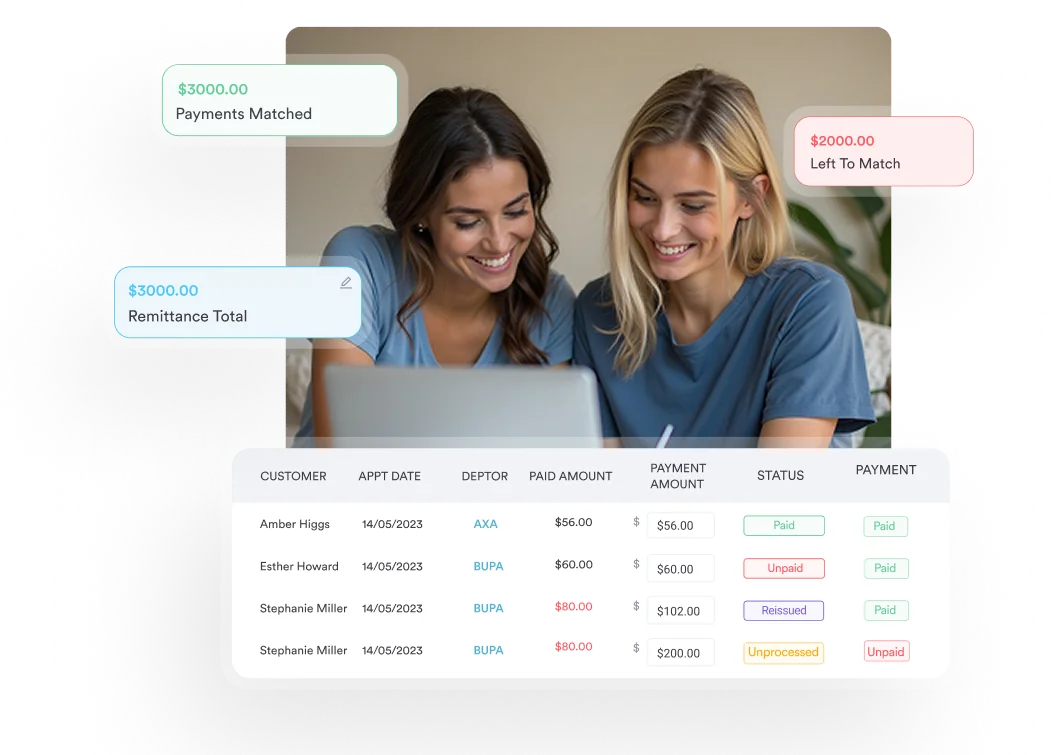
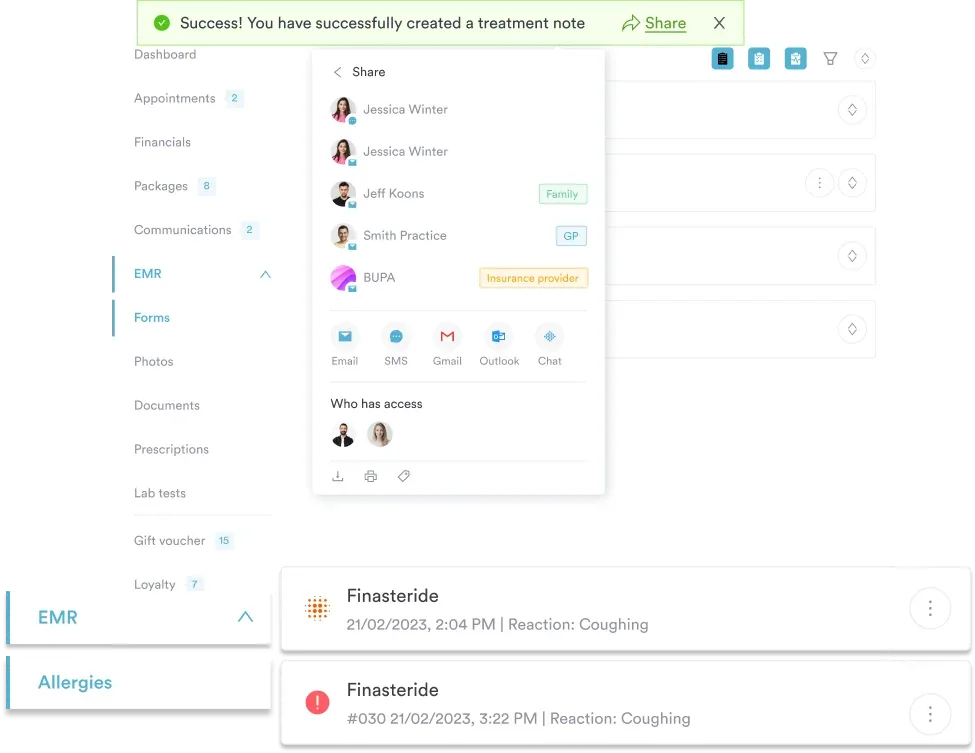
Clinical notes built in Pabau carry structured diagnosis fields that feed the billing workflow. Take a postpartum patient with documented vitamin D deficiency and bone pain. She reaches the billing queue with M83.0 and E55.9 already attached to her encounter record.
Pabau’s clinical documentation tools keep a longitudinal record of lab results and physician notes. Coders can trace the chart when a payer asks for support. For teams building compliance management tools around ICD-10 work, coding tied to structured records lowers audit exposure.

Pabau helps postpartum and OB/GYN practices link accurate ICD-10 diagnoses to treatment plans, capture complete clinical documentation, and submit cleaner claims. See how it works for your team.

M83.0 is one of those codes that stands or falls on a single sentence in the chart. If the physician ties the bone softening to the postpartum period, the claim is straightforward. If nobody writes that link down, no lab panel will rescue it, and M83.9 invites the audit you were trying to avoid.
So treat the query as part of coding, not as a favor to billing. Ask for the attribution while the patient is still in the postpartum window, and add E55.9 or E83.51 where the labs and the note agree. The trade-off is a short conversation now instead of an appeal in six weeks.
Book a demo to see how Pabau keeps postpartum documentation and ICD-10 coding in the same record, ready for the payer’s next question.

Coding a scaphoid wrist fracture? scaphoid wrist fracture coding S62.011A codes a displaced distal pole scaphoid fracture of the right wrist at the first encounter.
Coding a healed scaphoid fracture? scaphoid fracture sequela coding S62.032S covers the sequela of a displaced scaphoid fracture in the left wrist once healing is complete.
Coding a wrist fracture that failed to heal? trapezoid fracture nonunion coding S62.185K covers a nondisplaced trapezoid fracture with nonunion, used only once failed healing is documented.
Coding a metacarpal fracture that healed wrong? metacarpal fracture malunion coding S62.202P covers a left first metacarpal fracture that healed with malunion, confirmed at a follow-up visit.
ICD-10 Code M83.0 is the billable diagnosis code for puerperal osteomalacia, a metabolic bone condition involving defective mineralization in the postpartum period. It is used when a physician has documented bone softening inside the puerperal timeframe. Laboratory evidence of vitamin D or calcium deficiency supports the claim.
Yes. M83.0 is a billable and specific ICD-10-CM code as of the 2026 edition, effective October 1, 2025. It can be used as a principal or secondary diagnosis for dates of service on or after that date. Its parent code, M83, is not billable and cannot be submitted on a claim.
M83.0 is specific to the puerperal period and requires documentation linking the bone softening to the postpartum context. M83.9 is the unspecified fallback for cases where documentation identifies no cause or timeframe. Prefer M83.0 whenever the physician’s note establishes a postpartum connection, because M83.9 raises audit risk and signals thin clinical detail.
M83.0 claims need a physician diagnosis statement linking osteomalacia to the puerperal period, a documented delivery date, laboratory findings, documented symptoms, and a treatment plan. The labs usually include serum 25-hydroxyvitamin D, calcium, and alkaline phosphatase. Payers may also request imaging. Lab values alone, without physician attribution to the postpartum period, are insufficient.
Additional codes are not mandatory, but they are strongly recommended when documented. E55.9 for vitamin D deficiency and E83.51 for hypocalcemia are the most common secondary codes reported with M83.0. They establish medical necessity and reduce denial risk. Code only what the physician has documented, never lab values alone.
Osteomalacia (M83.0) involves defective mineralization: the bone matrix exists but lacks adequate calcium phosphate deposition, so the bone is soft. Osteoporosis (M80-M81) involves reduced bone mass, where mineral content is proportionally normal but there is less bone. The codes are not interchangeable. A patient can have both, so report both codes when the physician documents both diagnoses.