

ICD-10 Code S42.444P: Medial epicondyle fracture, right humerus
ICD-10 Code S42.444P: full descriptor and code validity ICD-10 Code S42.444P car...

Last Updated: Oct 13, 2026
Billable Code Specific Code
S23.110A is the billable ICD-10-CM code for subluxation of T1/T2 thoracic vertebra, initial encounter.
That word "traumatic" is where claims go wrong. Chiropractors and osteopaths use "subluxation" every day to describe a segment that moves poorly. That finding is a different thing, and it does not belong under S23.110A.
So the code hinges on two questions. Was there an injury? And is the patient still in active treatment? Answer of the coding follows, as the CMS ICD-10 coding guidelines set out.
Let Pabau's smart automation suggest the right codes, reduce claim denials, and keep your practice compliant—effortlessly.
Automate repetitive tasks and focus on what matters most—your patients.
Reduce coding errors and ensure compliance with the latest regulations.
Clean claims, fewer denials, and faster reimbursements.
Powerful insights and reporting to help your practice thrive.
HIPAA compliant SOC 2 certified GDPR-compliant Trusted by 4,000+ clinics worldwide

S23.110A is the billable ICD-10-CM code for a traumatic T1/T2 subluxation at an initial encounter.
The code is not new. It has been active since October 1, 2015, and stays current in FY2026.
A traumatic subluxation needs S23.110A. A chiropractic subluxation finding without trauma belongs under M99.12 or M99.02.
The 7th character A means active treatment, so it can cover several visits, not only the first one.
Your note must state the T1/T2 level, the injury type, the mechanism, and the encounter type.
A subluxation is partial. The T1 and T2 joint surfaces stay in contact, but their alignment is off. A dislocation is complete separation, and it carries its own code.
T1 and T2 sit at the cervicothoracic junction. The mobile neck meets the rib-braced thoracic cage there, so the segment takes a lot of load. Falls, tackles, and long hours over a desk all show up at this level.
Patients usually arrive with sharp upper back pain and limited rotation. Referred pain into the shoulder or arm is common too. Imaging is what separates a subluxation from a full dislocation. A positive Wright test points somewhere else, toward thoracic outlet involvement. Coding sits in the middle of the revenue cycle, between registration and payment posting.
Chiropractic and osteopathic notes use “subluxation” for a segment that moves poorly. No trauma sits behind it. ICD-10-CM keeps those findings in the musculoskeletal chapter, well away from the injury chapter.
That split goes back to ICD-9. The old 739 series became M99.0-, while the old 839 series became S13, S23, and S33. Payers still read the two families that way, so the trauma question decides everything.
Every code under S23.1 needs a 7th character. Without one, S23.110 is only a placeholder, and no payer will accept it. Three characters are valid here, and each describes a different point in the episode of care.
Any visit where you are actively treating the injury counts. It is not limited to the patient’s first appointment anywhere, which surprises a lot of new coders.
Section I.C.19 of the ICD-10-CM Official Guidelines frames it that way. Say a patient switches to a new chiropractor three weeks after a fall. That visit is still an initial encounter, as long as active treatment carries on.
Move to D once care becomes routine follow-up. Save S for a lasting effect treated after the injury itself has healed.
Review the 7th character at every billing cycle. A patient can move from A to D partway through a course of care. Billing A after that switch is an audit risk. Note the change in the chart on the day it happens.
An occupational therapy platform keeps assessments, home programs, and progress notes for these injuries in one record.
The code sits at the end of a short chain. Reading it top to bottom helps you spot when a neighboring code fits the chart better.
The parent code S23.11 holds both subluxation and dislocation at this level. Imaging is usually what tells them apart. The CDC ICD-10-CM web tool lets you walk the same chain on screen before you submit.
Category S23 carries an Excludes2 note. It names two injuries that are coded outside S23, even when they show up in the same patient.
Excludes2 does not stop you using both codes. If your patient has a T1/T2 subluxation and a sternoclavicular sprain, code each one and document each one.
Subcategory S23.1 carries a “Code also” instruction. Two associated injuries get their own code whenever the chart documents them.
The note does not tell you which code leads. Follow your payer’s sequencing rules and put the condition that drove the encounter first.
External cause codes sit in a second family. Reporting them is a payer and state matter rather than a national rule, and a code from V00-Y99 records the mechanism behind the injury. A patient struck while on the outside of a bus, for example, takes a transport code such as V72.7XXA.
S23.110A has close relatives at other levels and other encounter types. Picking a neighbor by mistake is easy, because several descriptors differ by a single digit.
A patient can have both a T1/T2 subluxation and a thoracic ligament sprain. In that case S23.110A and S23.3XXA can travel on one claim, as long as each has its own documented finding. The AAPC code lookup is a quick way to confirm a pairing.
Fractures are a separate family altogether. A burst fracture at T2 belongs in S22.0-. Nonunion later in that episode shifts the character again.
Payers look for four things in the note. Miss one and you invite a denial or a request for records.
Practices handling a steady flow of spinal injury claims usually fix this at intake rather than at appeal. That happens while the patient is still in the room.

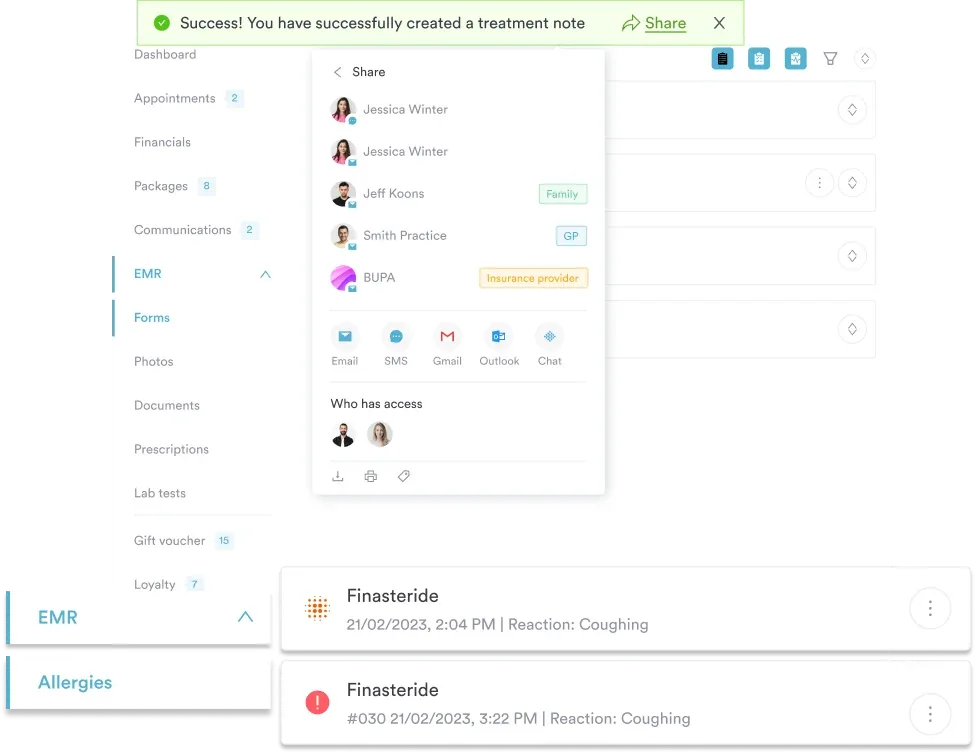
One more rule catches teams out. The treating clinician owns the diagnosis, so the coder cannot infer T1/T2 from context. If the note does not say it, the coder has to query it. Structured note fields in patient record software stop that query happening at all.
Knowing the route helps you see where S23.110A claims stall. Five steps sit between the treatment room and the remittance.
Step two is where most of the money is won or lost. Everything after it simply carries the coder’s decision forward.
Software helps at the submission step rather than the coding one.
The coding judgment still belongs to your clinician and coder.
Four settings account for most S23.110A claims. Each one runs into a different documentation risk.
New practices feel this most keenly, because coding habits set early tend to stick. Anyone opening a physiotherapy clinic should agree the trauma test and the level rule before the first patient walks in.
Clinicians rarely write the code descriptor word for word. All of these phrases map to S23.110A once trauma is documented.
None of them map to S23.100A, because each one names the level. If a synonym turns up without a level, query the provider first. Keeping a medical coding cheat sheet at the desk speeds that check up.
Specificity also shapes what payers see in the data, a point ResDAC’s Medicare files guide explains well. Regular self-audits catch the drift early.
Build a one-page crosswalk from your providers’ wording to the codes it supports. For spinal work, make level, injury type, trauma, and encounter status mandatory columns. Coders stop guessing, and provider queries drop.
Plenty of practices split this work across three places. The clinical note lives in one system, the intake form in another, and the claim in a third. Details get retyped, and the level or the encounter type slips somewhere along the way.
Practice management software like Pabau keeps them together. Treatment notes, images, forms, and the diagnosis all sit on one patient record. Nothing has to be copied between systems, so what the clinician wrote is what the coder reads.
When the claim goes out, your biller works from that same record. Fewer records requests land on your desk, and the ones that do take minutes rather than an afternoon.
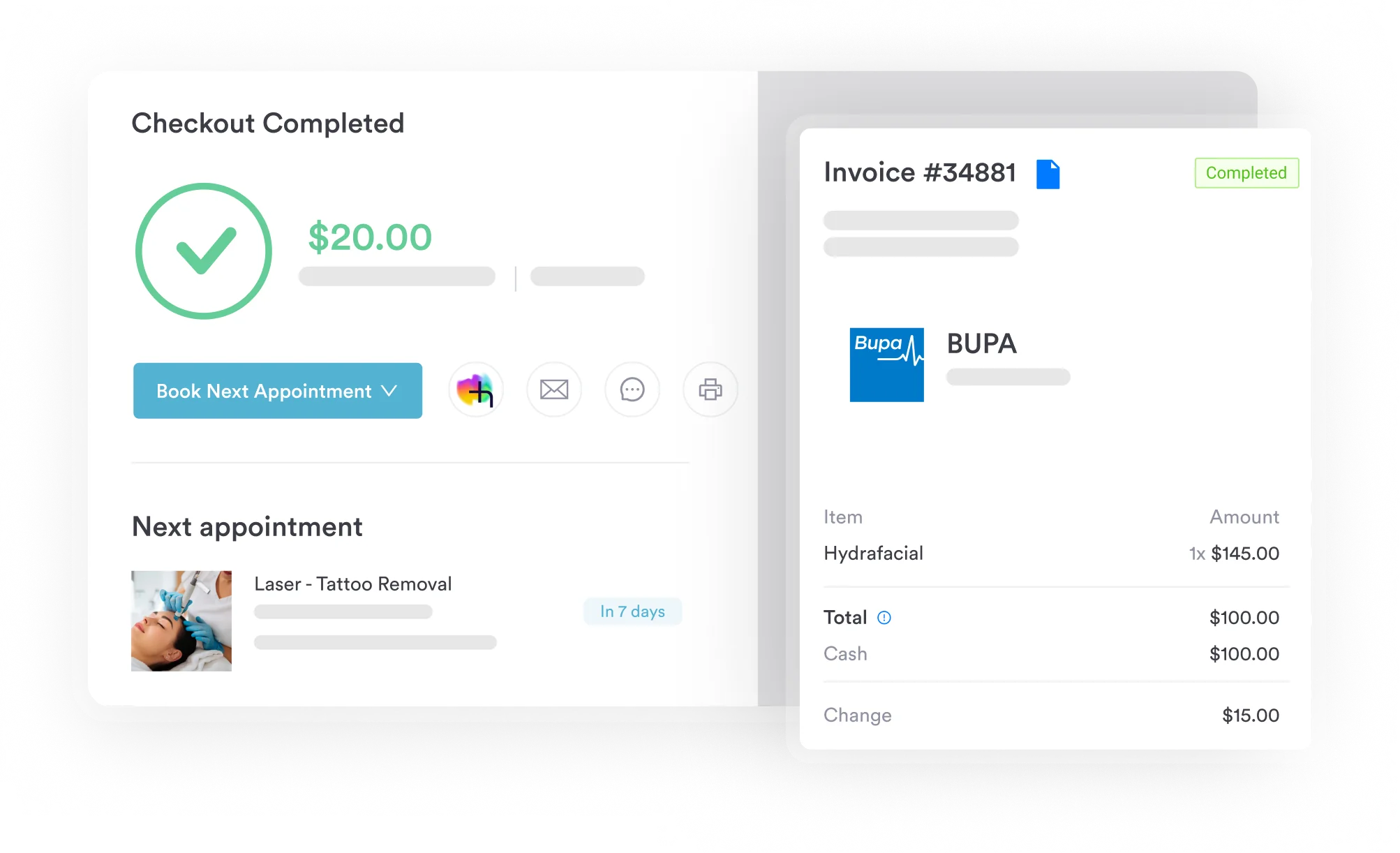

Pabau holds the treatment note, the intake form, and the claim on a single patient record. Your coder reads exactly what the clinician wrote, so codes like S23.110A go out supported.

S23.110A is a simple code once you settle the trauma question. Ask it first, every time. A documented injury at T1/T2 fits the code, and a biomechanical finding does not.
The rest comes down to habit. Name the level and the injury type. Record what you treated. Then keep the 7th character in step with the episode of care. Do that and these claims stop coming back.
Want your notes and your claims working from the same record? Book a demo to see how Pabau supports chiropractic, physical therapy, and orthopedic billing.

Coding a dislocation rather than a subluxation? ICD-10 code S53.116D shows how the same 7th-character logic plays out at another joint.
Need a 7th character beyond A, D, and S? ICD-10 code S52.692R walks through the healing-status characters that fracture codes use.
Billing anesthesia for a bariatric procedure? CPT code 00797 guide Covers the definition, modifier stacking, and base unit assignment for gastric restrictive procedure anesthesia.
Coding anesthesia for a lower abdomen procedure? CPT code 00800 guide Covers the base unit value and reimbursement formula for lower anterior abdominal wall anesthesia.
Billing anesthesia for a panniculectomy? CPT code 00802 guide Covers the modifier, base unit, and time documentation needed for panniculectomy anesthesia claims.
Not always. ICD-10-CM sets no national requirement for external cause reporting, so it depends on your payer and state. When the mechanism is known, a code from V00-Y99 strengthens the injury story. It also supports the trauma requirement behind S23.110A.
In chiropractic, spinal manipulation codes 98940 to 98942 are the common pairing. Thoracic counts as one of the five spinal regions those codes measure. Physical therapy claims more often carry 97140 for manual therapy. Whichever you bill, the diagnosis has to support it.
Yes, provided the exam documents a traumatic subluxation and the mechanism is clear. Imaging helps, but it is not mandatory. Without documented trauma, a normal image plus a motion finding points to M99.12 or M99.02 instead.
No. Category S23 excludes the sternoclavicular joint, which goes to S43.2- or S43.6-. Rib fractures sit in S22.3- and S22.4-. A strain of a thorax muscle or tendon belongs in S29.01-.
There is no fixed time limit. The 7th character A holds for as long as active treatment continues. Once visits become routine follow-up, switch to S23.110D and note the change in the chart.




