ICD-10 code S61.201A: Open wound of left index finger without nail damage
ICD-10 code S61.201A covers a left index finger wound of unstated type ICD-10 co...

Last Updated: Oct 16, 2026
Billable Code Specific Code
M04.2 is the billable ICD-10-CM code for cryopyrin-associated periodic syndromes.
Rare autoinflammatory disorders are among the most challenging diagnostic codes to document correctly. Most practices see only a handful of CAPS patients per year, which means coding errors go undetected until a denial lands on the desk. ICD-10 Code M04.2 covers a well-defined group of conditions, and getting it right from intake to claim submission saves significant rework for rheumatology and immunology teams.
Let Pabau's smart automation suggest the right codes, reduce claim denials, and keep your practice compliant—effortlessly.
Automate repetitive tasks and focus on what matters most—your patients.
Reduce coding errors and ensure compliance with the latest regulations.
Clean claims, fewer denials, and faster reimbursements.
Powerful insights and reporting to help your practice thrive.
HIPAA compliant SOC 2 certified GDPR-compliant Trusted by 4,000+ clinics worldwide

ICD-10 Code M04.2 (Cryopyrin-Associated Periodic Syndromes) is a billable, specific ICD-10-CM diagnosis code valid for FY 2026 reimbursement.
M04.2 covers three distinct CAPS subtypes: Familial Cold Autoinflammatory Syndrome (FCAS), Muckle-Wells Syndrome (MWS), and NOMID/CINCA.
Never assign M04 (parent code) when M04.2 applies; always use the most specific child code available per ICD-10-CM coding guidelines.
Pabau’s claims management software supports accurate diagnostic code entry and documentation workflows for rare autoinflammatory conditions.
ICD-10 Code M04.2 is the billable diagnosis code for Cryopyrin-Associated Periodic Syndromes (CAPS), a group of rare inherited autoinflammatory disorders caused by gain-of-function mutations in the NLRP3 gene. The NLRP3 gene encodes the cryopyrin protein, a critical component of the inflammasome complex. When this complex is overactivated, it triggers excessive interleukin-1 beta (IL-1β) production and leads to systemic inflammation.
Beyond the genetic cause, CAPS affects multiple organ systems simultaneously. Patients typically present with recurrent fever episodes, urticarial rash, musculoskeletal pain, conjunctivitis, and fatigue. The severity spectrum ranges from mild cold-triggered episodes to life-threatening neonatal-onset multiorgan disease.
Structurally, the code sits within the M04 Autoinflammatory Syndromes block, itself part of the broader M00-M99 Diseases of the Musculoskeletal System and Connective Tissue chapter. As classified by the WHO ICD-10 international classification, M04.2 falls under the autoinflammatory syndromes range, with the clinical modification applied in the United States tracked through ICD-10-CM maintained by the Centers for Medicare and Medicaid Services (CMS) and the National Center for Health Statistics (NCHS).
In practice, M04.2 became effective for FY 2026 on October 1, 2025, continuing unchanged from prior fiscal years. Medicare, Medicaid, and commercial payers accept it for reimbursement.
Understanding where M04.2 sits within the broader ICD-10-CM hierarchy prevents the most common coding error: using the parent M04 code when a specific child code applies.
Additionally, the parent code M04 carries a note that it should not be used when a more specific child code applies. Any claim submitted with M04 alone, rather than M04.2, M04.1, M04.8, or M04.9, will likely face a medical necessity or specificity rejection from payers who require the most specific code available. Coders familiar with autistic disorder diagnostic coding will recognize the same hierarchy principle at work here.
The M04 block also carries a Type 2 Excludes note for Crohn’s disease (K50). A Type 2 Excludes means both conditions can coexist and clinicians may use both codes simultaneously on a claim when appropriate.
M04.2 is the single ICD-10-CM code that covers three distinct CAPS subtypes. Each represents a different severity tier of the same underlying NLRP3 gene mutation spectrum.
FCAS is the mildest CAPS subtype. Symptoms are triggered by generalized cold exposure rather than localized contact. Patients develop urticarial rash, fever, arthralgia, and conjunctivitis within hours of cold exposure. FCAS was historically termed “familial cold urticaria,” and the official tabular list includes that synonym under M04.2.
By contrast, MWS represents the intermediate severity tier. In addition to recurrent fever and urticarial rash, patients develop progressive sensorineural hearing loss and are at significant risk for AA amyloidosis affecting the kidneys. Episodes are not reliably cold-triggered, which distinguishes MWS clinically from FCAS.
At the most severe end of the spectrum, Neonatal-Onset Multisystem Inflammatory Disease (NOMID) and Chronic Infantile Neurological, Cutaneous, and Articular (CINCA) syndrome represent the same condition under two names. NOMID is the American designation; CINCA is the European equivalent. This is the most severe CAPS subtype, presenting at birth with persistent urticarial rash, central nervous system inflammation (chronic aseptic meningitis), and destructive arthropathy. ICD-10-CM coding conventions explicitly place both NOMID and CINCA under M04.2. A rejected electronic claim never reaches adjudication, so it does not appear in denial reporting.
When a patient has a confirmed NLRP3 mutation but the specific CAPS subtype has not yet been clinically classified, document the mutation finding in the clinical notes and assign M04.2 with a qualifier note. Avoid defaulting to M04.9 (unspecified) if genetic confirmation of cryopyrin-related disease is already in the record.
Sports medicine software helps teams link each injury code to treatment progress and return-to-play timelines.
Misassigning codes within the M04 block is the primary coding risk for autoinflammatory syndrome encounters. The clinical distinctions between codes are meaningful, and payers with medical necessity edits will flag mismatches between the diagnosis and the documented clinical picture.
M04.1 covers Periodic Fever Syndromes, a group of autoinflammatory conditions defined by episodic rather than persistent fever. These include TRAPS (tumor necrosis factor receptor-associated periodic syndrome), Familial Mediterranean Fever, and Hyper-IgD syndrome (mevalonate kinase deficiency). PFAPA falls under M04.8, not M04.1. The key distinction: PFAPA and TRAPS do not involve NLRP3 mutations and do not affect cryopyrin regulation. If a patient has FCAS or MWS, M04.2 is correct; if the patient has PFAPA or TRAPS, M04.1 applies.
Practices managing rare immunological conditions alongside situational anxiety ICD-10 classification in the same patient record should note that comorbid mental health diagnoses can be coded simultaneously without exclusion conflicts for M04.2.
M04.9 (Autoinflammatory Syndrome, Unspecified) is the fallback code for patients where clinical workup has not yet identified the specific syndrome type. Once diagnostic criteria or genetic testing results support CAPS classification, the coder must move to M04.2. Retaining M04.9 after the clinician confirms a CAPS diagnosis is a coding error that may delay prior authorization for IL-1 inhibitor biologics, since payers often require the specific subtype code to process specialty drug authorizations.
| Code | Conditions Covered | Key Differentiator |
|---|---|---|
| M04.1 | Familial Mediterranean Fever, TRAPS, Hyper-IgD syndrome (mevalonate kinase deficiency) | Periodic fever; no NLRP3 mutation |
| M04.2 | FCAS, MWS, NOMID/CINCA | NLRP3 gain-of-function; cryopyrin dysregulation |
| M04.8 | Blau syndrome, DIRA, Majeed syndrome, PFAPA, PAPA syndrome | Other specific autoinflammatory syndromes not in M04.1 or M04.2 |
| M04.9 | Unspecified autoinflammatory syndrome | Use only when specific type not yet determined |

Pabau helps rheumatology and immunology practices capture diagnosis codes, manage clinical notes, and submit clean claims – all from one platform. See how our claims management software reduces denials for complex specialty codes.

Insufficient documentation is the leading cause of claim denials and audit exposure for rare disease codes. For ICD-10 Code M04.2, the clinical record must support both the diagnosis and the specific CAPS subtype being coded. This is especially important when IL-1 inhibitor biologics are prescribed, as payers require detailed prior authorization documentation tied to the diagnosis code.
Practices using digital intake forms can build autoinflammatory symptom history templates directly into the patient onboarding workflow, capturing the episodic fever pattern, cold-trigger history, and family history fields that coders need for clean M04.2 claims.

Furthermore, detailed documentation also protects against retrospective audits. Rare disease codes like M04.2 draw scrutiny precisely because they are uncommon and carry high-cost biologic associations. A thorough clinical record stored in structured patient records creates an auditable evidence trail linking the diagnosis to the treatment plan and the submitted code.
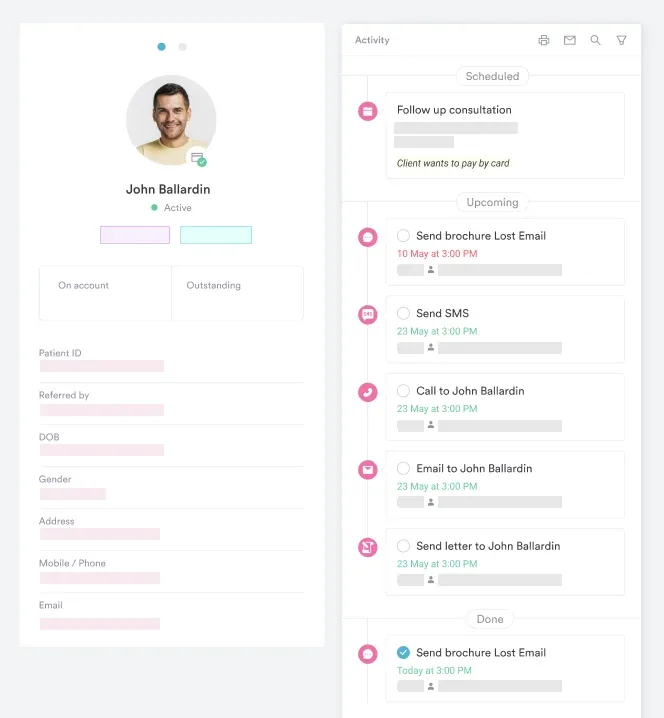
For practices managing complex ICD-10 documentation across multiple specialties, including documentation challenges like those seen with intraparenchymal hemorrhage ICD-10 documentation, the principle is consistent: specificity in the clinical note drives specificity in the code.
The same rule governs procedure codes. Billing 21925 for a deep back biopsy requires the operative note to confirm dissection below the subcutaneous layer, or payers downcode it.
Run a periodic audit of all M04.x claims submitted over the prior 12 months. Flag any encounters coded as M04.9 where the clinical notes mention FCAS, Muckle-Wells, NOMID, or CINCA by name. These represent straightforward corrections to M04.2 that improve claim accuracy and reduce authorization delays for biologic therapies.
Medicare, Medicaid, and commercial payers recognise M04.2 as a valid diagnosis code. It is used as a primary or secondary diagnosis code depending on the encounter context. Several billing considerations are specific to CAPS coding.
Specifically, when the patient presents for management of their CAPS condition, M04.2 is the principal diagnosis. When the visit primarily addresses a complication (such as sensorineural hearing loss or renal amyloidosis in MWS), the complication code leads and the coder lists M04.2 as a secondary code to explain the underlying cause.
The Type 2 Excludes note on the M04 parent block for Crohn’s disease (K50) means both codes can be submitted together when a patient carries both diagnoses. This is a useful distinction for gastroenterology-immunology co-management patients. Neither code excludes the other; both may appear on the same claim.
Canakinumab (Ilaris), rilonacept (Arcalyst), and anakinra (Kineret) are the primary biologic agents used in CAPS management. Payers require prior authorization for these drugs, and the authorization request must include the M04.2 code along with clinical documentation supporting the CAPS diagnosis and subtype. Submitting M04.9 instead of M04.2 on a prior authorization request for a CAPS-indicated biologic commonly triggers an initial authorization denial.
The CDC/NCHS ICD-10-CM coding tool provides the official tabular list entry for M04.2, including applicable includes notes and any coding instructions that apply to the current fiscal year. Cross-referencing this tool before submitting claims confirms that no additional notes or use-additional-code instructions have been added in the current FY update cycle.
Practices can also verify M04.2 coding rules and crosswalk data through the AAPC Codify ICD-10-CM lookup, which provides synonym lists, includes notes, and related code references in a searchable format. Using claims management software that integrates diagnostic code validation reduces the risk of these errors reaching payer submission.
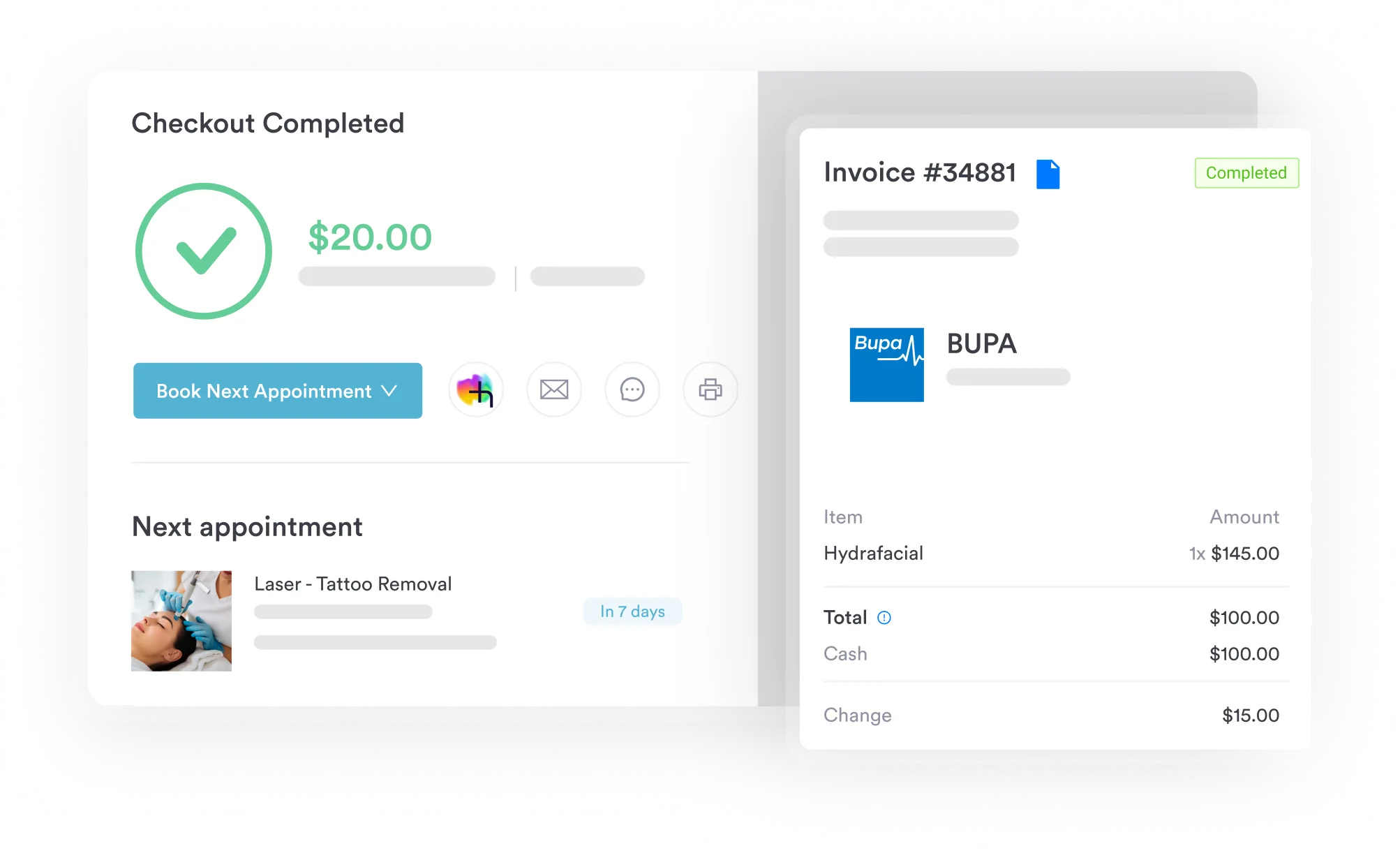
For practices building out their rare disease coding workflows, automated billing workflows can flag encounters with autoinflammatory diagnosis codes for secondary review before claim submission, catching subtype specificity issues before they become denials. Practices in functional medicine treating complex inflammatory presentations may encounter M04.2 less frequently but benefit equally from structured code validation workflows.
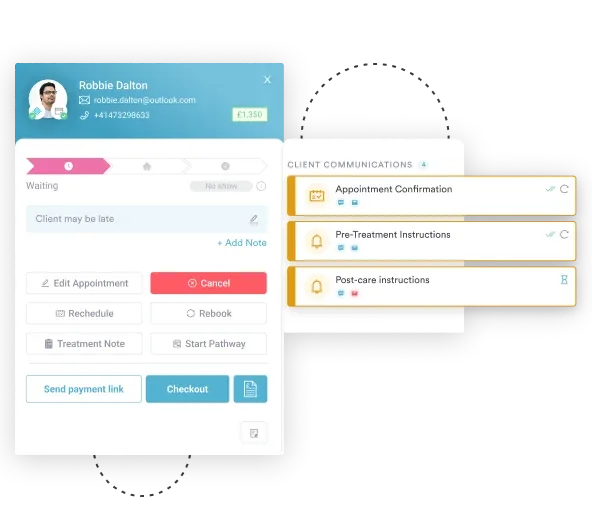
For a broader view of how patient care management workflows support accurate coding across complex diagnoses.
CAPS coding errors tend to cluster at one decision point: using M04.9 (unspecified) instead of M04.2 once a CAPS subtype has been confirmed. Closing that gap requires structured documentation at the clinical level and a validation step before claim submission.
Pabau’s claims management software supports diagnostic code workflows for specialty practices, including documentation templates, structured patient records, and pre-submission validation. To see how Pabau handles complex diagnostic coding for rheumatology and immunology teams, book a demo.

Documenting an enthesopathy with no site match? Enthesopathy Guide covers when this catch-all code applies for soft tissue enthesis disorders.
Coding a tendon disorder without a named site? Enthesopathy, unspecified covers the code hierarchy and documentation requirements for M77.9.
Coding fat layer inflammation with no documented cause? Panniculitis, unspecified guide covers when coders default to this code instead of a more specific one.
ICD-10 Code M04.2 is the billable ICD-10-CM diagnosis code for Cryopyrin-Associated Periodic Syndromes (CAPS), a group of rare inherited autoinflammatory disorders caused by NLRP3 gene mutations. It covers three subtypes: Familial Cold Autoinflammatory Syndrome (FCAS), Muckle-Wells Syndrome (MWS), and NOMID/CINCA. The code is valid for FY 2026 claims and was effective October 1, 2025.
Yes, M04.2 is a fully billable, specific ICD-10-CM diagnosis code accepted for Medicare, Medicaid, and commercial payer claims. The parent code M04 is not billable on its own; coders must use M04.2 (or another specific child code) to meet payer specificity requirements.
M04.2 includes Familial Cold Autoinflammatory Syndrome (FCAS, formerly called familial cold urticaria), Muckle-Wells Syndrome (MWS), and Neonatal-Onset Multisystem Inflammatory Disease (NOMID), also known as CINCA syndrome. All three conditions result from gain-of-function mutations in the NLRP3 gene and are collectively termed cryopyrinopathies.
M04.1 covers periodic fever syndromes (such as PFAPA and TRAPS) that are not caused by NLRP3 mutations. M04.9 is the unspecified autoinflammatory syndrome code, used only when the specific type has not yet been determined. Once a CAPS subtype is clinically or genetically confirmed, the coder must assign M04.2 rather than retain M04.9.
The clinical record must include an explicit CAPS diagnosis by the treating clinician, documented symptom history (recurrent fever, urticarial rash, and associated features), confirmation of NLRP3 mutation or clinical criteria, the specific CAPS subtype (FCAS, MWS, or NOMID/CINCA), and, if applicable, the clinical indication for any IL-1 inhibitor biologic prescribed. Payers require this specificity to process both claims and prior authorization requests for CAPS-indicated biologics.