ICD-10 code S61.201A: Open wound of left index finger without nail damage
ICD-10 code S61.201A covers a left index finger wound of unstated type ICD-10 co...

Last Updated: Oct 16, 2026
Billable Code Specific Code
O61.1 is the billable ICD-10-CM code for failed instrumental induction of labor.
Most O61 coding errors come from one decision. Oxytocin and prostaglandin failures belong to O61.0. O61.1 is reserved for methods that act on the cervix or the membranes, such as amniotomy, a Foley balloon catheter, or a membrane sweep.
The OB/GYN EMR software your practice runs should capture that method by name in the encounter record. Once it is there, the code selection follows without a query.
Let Pabau's smart automation suggest the right codes, reduce claim denials, and keep your practice compliant—effortlessly.
Automate repetitive tasks and focus on what matters most—your patients.
Reduce coding errors and ensure compliance with the latest regulations.
Clean claims, fewer denials, and faster reimbursements.
Powerful insights and reporting to help your practice thrive.
HIPAA compliant SOC 2 certified GDPR-compliant Trusted by 4,000+ clinics worldwide

ICD-10 Code O61.1 is a billable ICD-10-CM diagnosis code for failed instrumental induction of labor, valid from October 1, 2025.
The code carries two inclusion terms, failed mechanical induction of labor and failed surgical induction of labor.
O61.0 covers failed medical induction with drugs like oxytocin, while O61.1 covers failed mechanical and surgical methods.
Two demographic edits apply, so O61.1 is valid only for female patients aged 12 through 55.
Practice management software like Pabau builds each claim from the invoice and patient record, then checks the insurer details before you send it.
ICD-10 Code O61.1 is defined in the ICD-10-CM tabular list as “Failed instrumental induction of labor.” It is a billable, specific code valid for reimbursement claim submission. The 2026 edition took effect on October 1, 2025 and runs through September 30, 2026, per CMS annual ICD-10-CM update schedules. Adjustment and remark codes on the ERA separate a contractual write-off from a genuine denial.
Two demographic edits sit on the code. It is valid for female patients only, and it falls inside the maternity age range of 12 through 55 years. A claim submitted outside either boundary rejects on a clinical edit rather than a coverage rule.
Failed instrumental induction of labor means a mechanical or surgical method was used to start labor and did not establish it. These methods act physically on the cervix or the membranes. They do not rely on drugs to stimulate contractions.
The American College of Obstetricians and Gynecologists treats induction as failed when adequate uterine activity cannot be established. That judgment follows a proper trial of the chosen method. Cervical change and fetal descent that stall despite correct technique point the same way.
The threshold for failure varies by method and by institutional protocol. The coding criterion is simpler. The provider has to document that the instrumental method did not achieve active labor.
The methods below sit inside the scope of O61.1 when they fail to start labor. Check current AHA Coding Clinic guidance for newer techniques that are not listed here.
Oxytocin infusion and prostaglandin agents are pharmacologic. Their failure codes to O61.0, not O61.1. This is the most common coding error in the O61 category.
Coders often treat O61.0 and O61.1 as interchangeable. The two codes describe different clinical events. The method attempted decides which one applies, which makes the provider’s note on technique the deciding document.
When a provider attempts both methods in sequence, both O61.0 and O61.1 may be reported. Sequence the code that reflects the reason for the encounter first, per UHDDS principal diagnosis rules. A patient care management record that logs each attempt in order settles which method came first.
Category O61 groups every failed induction scenario under one parent code. Selecting the most specific subcode available is a core ICD-10-CM rule. The CDC/NCHS ICD-10-CM web tool carries the authoritative tabular list for verifying current descriptors.
O61.9 is the code of last resort. Coding best practice from AHIMA and AAPC is to query the provider before defaulting to an unspecified code. Payers also scrutinize unspecified obstetric codes, so the query usually pays for itself.
Claims management software will not make that call for you. It builds the claim from the invoice and the patient record, then checks that insurer details such as membership and authorization numbers are present. Code selection stays with the coder.
The ICD-10-CM tabular list and the official guidelines carry a handful of instructions that govern ICD-10 Code O61.1. Applying them keeps claims out of the rejection and audit queues. A medical coding cheat sheet puts the CPT, ICD-10-CM and HCPCS structures side by side for a faster reference check.
The tabular list gives O61.1 two inclusion terms of its own. Neither the O61 category nor the O61.1 subcode carries an Excludes1 or Excludes2 note.
Annual updates can add or revise these instructions. Check the AAPC ICD-10-CM code lookup or the official CMS tabular list before you submit.
O61.1 carries two demographic edits from the ICD-10-CM tabular list, not from any single payer policy. The code is valid for female patients only, and only for patients aged 12 through 55. EHR and billing systems that enforce these edits will reject a claim that breaks either one.
No trimester restriction applies. O61.1 holds across the antepartum and intrapartum periods whenever an instrumental induction is attempted.
Before you code O61.1, check that the provider’s note names the instrumental method and states the outcome. Language like ‘induction failed’ with no method should trigger a query. A query costs less time than re-billing a rejected claim.
Incomplete documentation is the main reason O61.1 claims get denied or challenged on audit. The elements below have to appear in the record to support the code. Digital clinical forms that capture induction data in structured fields keep them from going missing.
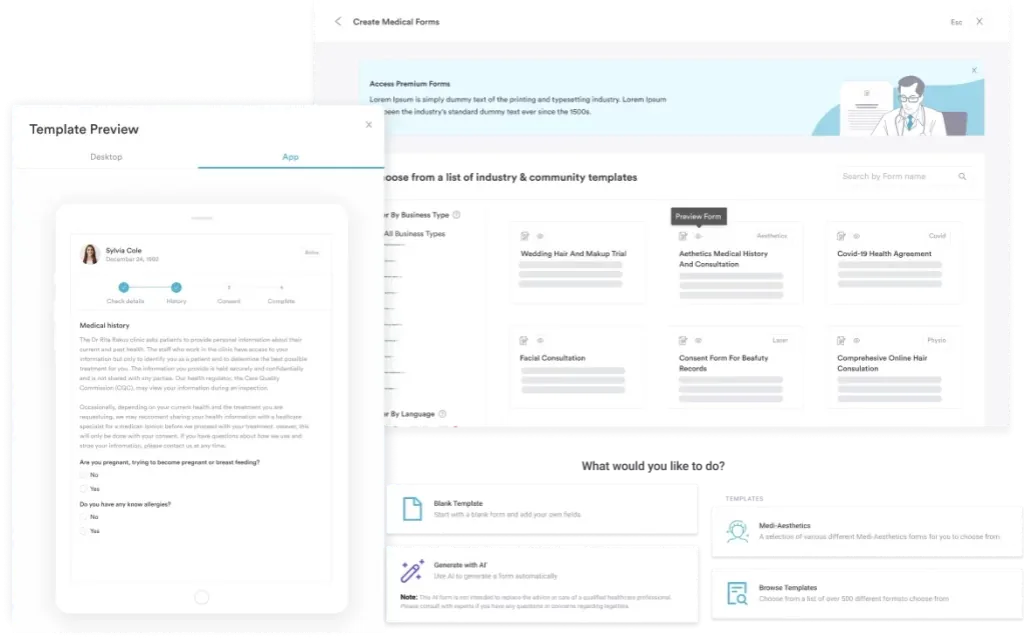
Structured documentation forms that prompt for each element in turn stop the post-discharge query cycle before it starts. Mirror the coding criteria in the template and the coder gets a complete record the first time.
O61.1 rarely stands alone on an obstetric claim. The pathway from a failed instrumental induction usually produces further billable diagnoses and procedures that need their own codes.
Sequencing depends on the reason for the encounter. In an inpatient admission where the patient delivers by cesarean after the induction fails, the delivery is usually the principal diagnosis. O61.1 then becomes an additional code that explains a complication of that encounter.
On the procedure side, the global obstetric care packages are CPT code 59400 for vaginal delivery and CPT code 59510 for cesarean delivery.
Check the diagnosis side as well. Labor that started and then obstructed takes O66.9, not a failed induction code. A blood pressure chart in the record supports a gestational hypertension indication when that is what prompted the induction.
O61.1 is valid for claim submission under the 2026 edition. It carries no Medicare frequency limit and no National Coverage Determination of its own. What you get paid depends on the procedure codes, the delivery outcome, and the setting.
The WHO ICD-10 browser shows the international descriptor for O61.1. That wording can differ from the US clinical modification, so do not assume it maps to CMS billing requirements.
Run a code history check before you requery historical claims. O61.1 has been in ICD-10-CM since US adoption, with no descriptor change through the 2026 edition. A denial that cites an invalid code is more likely a demographic edit or a sequencing problem.
O61.1 entered ICD-10-CM at US adoption and has been stable through every annual update since. The descriptor “Failed instrumental induction of labor” has not changed across the editions reviewed through 2026.
Watch the CMS annual update files each October. The O61 category has held steady, but obstetric coding does get revised when ACOG guidance changes or ICD-11 alignment work lands. Update alerts from AHIMA or AAPC catch those changes without a full tabular review.
Accurate O61.1 coding rests on two things. The right clinical detail has to be in the chart, and the billing workflow has to carry it through to the claim. Pabau’s clinical record management ties the induction method, the outcome, and the follow-up decision into one encounter record.
Pabau Scribe, our AI scribe, writes the note during or straight after the encounter. The clinical detail lands in the record while the practitioner still remembers the trial, rather than days later at billing time.
The same record serves a solo practice and a multi-provider group practice. Esteem Life Medical Group runs its record keeping this way to stay ready for inspection.
Pabau supports OB/GYN and fertility practices on one platform, so the record follows the patient across the whole care pathway.

Pabau’s clinical records and digital forms keep the induction method, the outcome, and the follow-up decision in one encounter record. Your coder gets what the claim needs without a query.

The O61.1 decision comes down to one documented fact. Was the failed method pharmacologic or instrumental? Get that into the note, add the delivery outcome and indication codes, and the claim holds up.
If a clean O61.1 claim keeps coming back, look at the demographic edits before the code itself. The female-only rule and the 12 to 55 age range catch more claims than a descriptor problem ever will.
The trade-off worth remembering is time. A provider query takes minutes, and a resubmitted obstetric claim takes weeks. Book a demo to see how Pabau keeps induction documentation billing-ready in an obstetric workflow.

Coding maternal distress during labor? O75.0 sets out the documentation the diagnosis needs and how it sequences on a delivery claim.
Need the code for a fetal heart rate abnormality? O76 explains when the finding is reportable and what the record has to show.
Documenting an obstetric laceration after delivery? O70.4 covers the degree classification and the repair coding that goes with it.
Coding another women’s health procedure? CPT code 19316 covers mastopexy billing, the modifiers that apply, and the 2026 rates.
Coding a routine viral screening visit? other viral disease screening code covers the Z code needed for a routine hepatitis screening with no symptoms or prior diagnosis.
ICD-10 Code O61.1 is a billable ICD-10-CM diagnosis code for failed instrumental induction of labor. It applies when a mechanical or surgical method fails to establish active labor. Examples include amniotomy, a Foley catheter balloon, and a membrane sweep. The code is valid for female patients aged 12 through 55 under the 2026 edition.
O61.0 covers failed medical induction, which means failure of pharmacologic agents such as oxytocin or prostaglandins. O61.1 covers failed instrumental induction, which means failure of mechanical or surgical methods. The method documented by the provider decides which code applies.
Yes. O61.1 is a billable, specific ICD-10-CM code valid for reimbursement claim submission. The parent code O61 is not billable on its own. Always select the most specific subcode rather than the category code.
The 2026 edition of O61.1 took effect on October 1, 2025 and runs through September 30, 2026. That matches the CMS annual ICD-10-CM release schedule. The descriptor and the applicability rules have not changed across recent editions.
O61.1 carries two demographic edits. It is valid only for female patients, and only for patients aged 12 through 55. A male sex marker on the record will reject the claim. So will a patient outside that age band, even when the code and documentation are correct.