ICD-10 code T87.52: Necrosis of amputation stump, left upper extremity
ICD-10 code T87.52 at a glance: Left arm, not left leg ICD-10 code T87.52 is the...

Last Updated: Oct 26, 2026
Billable Code Specific Code
H91.3 is the billable ICD-10-CM code for deaf nonspeaking, not elsewhere classified.
H91.3 does not distinguish between congenital and acquired onset. Both scenarios are valid under the code when the clinical record documents the deaf-nonspeaking presentation.
The code belongs to ICD-10-CM Chapter 8: Diseases of the ear and mastoid process (H60-H95), within the block H90-H94 (Other disorders of ear), under category H91 (Other and unspecified hearing loss). It is a single terminal code with no laterality extensions, unlike most of the H90 range which differentiates right, left, and bilateral involvement.
Let Pabau's smart automation suggest the right codes, reduce claim denials, and keep your practice compliant—effortlessly.
Automate repetitive tasks and focus on what matters most—your patients.
Reduce coding errors and ensure compliance with the latest regulations.
Clean claims, fewer denials, and faster reimbursements.
Powerful insights and reporting to help your practice thrive.
HIPAA compliant SOC 2 certified GDPR-compliant Trusted by 4,000+ clinics worldwide

ICD-10 code H91.3 is a billable diagnosis code for deaf nonspeaking, not elsewhere classified, valid for 2026 claims.
H91.3 sits under category H91 (Other and unspecified hearing loss) in Chapter 8 of ICD-10-CM. It has no laterality subcode.
The historical term deaf mutism maps directly to H91.3. Prefer the current preferred terminology deaf nonspeaking in clinical documentation.
Pabau’s claims management software helps audiology and ENT practices submit H91.3 claims with complete documentation attached.
Older documentation and ICD-9 crosswalk references use the term “deaf mutism.” Current ICD-10-CM editions use “deaf nonspeaking” as the preferred terminology. The change reflects the broader shift in clinical and community language away from the term “mute,” which many Deaf community members find stigmatizing.
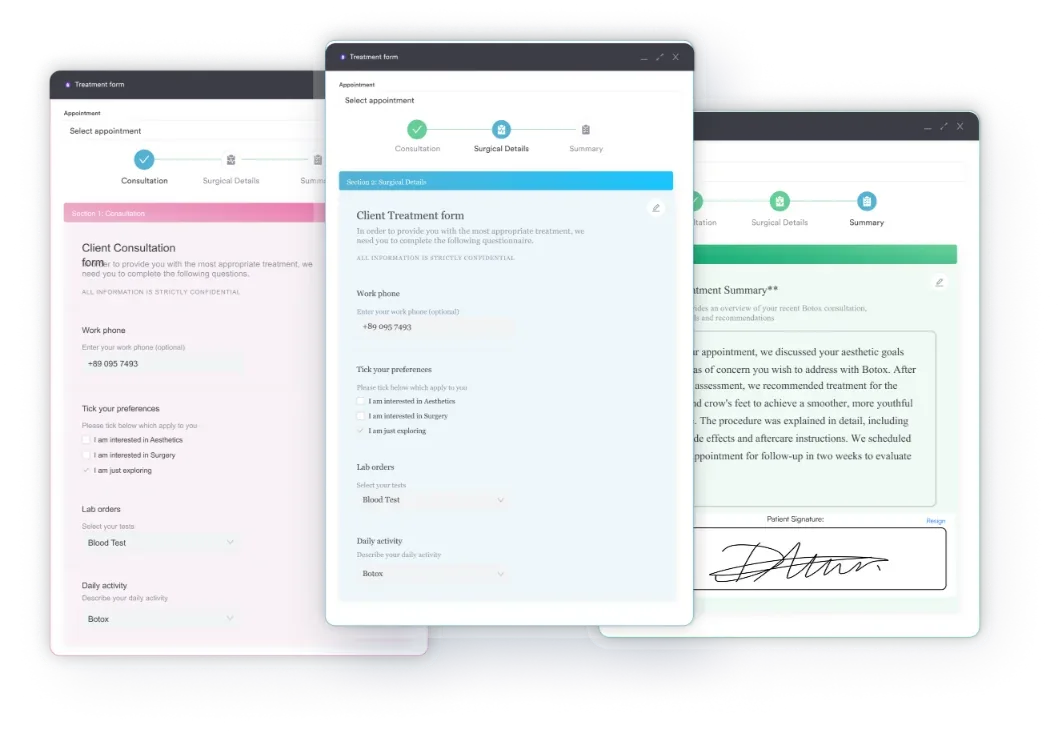
For clinical notes, consent forms, and insurance submissions, use deaf nonspeaking consistently. Pabau’s digital forms allow practices to update intake language across all templates from a single workflow, so terminology stays current without manual revisions.
ICD-10 code H91.3 is a billable, specific code valid for 2026 diagnosis submission according to the CDC/NCHS ICD-10-CM tool. A billable code carries enough clinical specificity to be used as the principal or secondary diagnosis on a claim without requiring a more granular subcode.
H91.3 has no subcategory extensions, so it functions as both the category code and the billable code.
Payers generally accept H91.3 as a valid diagnosis for audiology evaluations, hearing aid fittings, and speech-language therapy sessions where the patient’s deaf-nonspeaking status is clinically relevant. Using H91.3 accurately on claims helps practices avoid the automatic downcoding that some payers apply when they receive unspecified hearing loss codes.
Practices that manage audiology billing through claims management software can attach supporting documentation directly to claims before submission, so fewer claims get denied for missing detail.
Several ICD-10-CM Official Guidelines principles govern correct application of H91.3. Key rules include the following:
Accurate sequencing reduces claim edits. Practices using structured clinical records that capture encounter reason at point of care make sequencing decisions faster and more defensible during audits.
Eye and ear complaints flow through busy general practices, where medical practice management software keeps referrals moving.
Choosing between H91.3 and adjacent codes depends on what the clinical documentation establishes about the nature and cause of hearing loss. The table below compares the most common alternatives:
The critical distinction between H91.3 and H91.9 (unspecified hearing loss) is the nonspeaking component. H91.9 documents a patient with unexplained hearing loss. H91.3 adds the clinical finding that the patient also does not use spoken language.
This distinction affects both the clinical picture and, in some cases, payer coverage determinations for augmentative and alternative communication (AAC) services. Practices managing patients with complex communication profiles benefit from understanding how related neurodevelopmental ICD-10 codes interact with hearing diagnoses on multi-problem claims.
Before assigning H91.3, document explicitly in the clinical note why no more specific code from H90.x applies. A single sentence stating the audiological assessment did not establish a specific type or laterality of hearing loss is enough to justify the NEC classification and protects against payer queries.
Strong documentation is the front line of reimbursement for any NEC code. For H91.3, payers and auditors expect clinical records to address three areas:
Structured intake and assessment templates streamline this documentation. Practices on Pabau can configure digital intake forms to capture communication mode, audiometric history, and prior diagnoses in a consistent format across all audiology and SLP encounters.
Pabau Scribe, our AI scribe, can auto-populate structured SOAP notes from consultation audio, cutting transcription time while keeping the clinical detail payers require.

Pabau helps audiology and speech-language pathology practices capture the audiometric findings, nonspeaking-status notes, and NEC rationale that H91.3 claims require, then submit them with complete supporting documentation attached.

Practices migrating legacy records or working with older data sets need the ICD-9 to ICD-10 mapping. ICD-9-CM code 389.7 (Deaf, nonspeaking, not elsewhere classifiable) translates directly to ICD-10-CM H91.3, a one-to-one crosswalk with no fractured mapping or combination code requirements.
The ICD-9 terminology “not elsewhere classifiable” is equivalent to the ICD-10 “not elsewhere classified.” Both qualifiers serve the same purpose: They flag a condition that doesn’t fit a more specific code in the system.
For research, quality reporting, or prior-period audits, the CMS ICD-10 codes page provides downloadable GEMs (General Equivalence Mappings) that document the full ICD-9 to ICD-10 crosswalk for audit trail purposes. Practices supporting multi-specialty billing.
When converting historical patient records, flag any encounter previously coded as 389.7 for a clinical review before applying H91.3 automatically. Confirm the current clinical picture still matches the deaf-nonspeaking presentation and that no more specific H90.x code now applies based on updated audiometric findings.
Submitting H91.3 successfully requires attention to a few payer-specific patterns that affect audiology and SLP claims.
Practices managing claims where secondary diagnoses support primary diagnoses benefit from documentation workflows that flag missing secondary codes before claims are submitted. Pabau’s automated workflows can trigger pre-submission documentation checklists, prompting staff to confirm all supporting codes are present before a claim leaves the practice.
Staying current with ICD-10-CM updates is an ongoing requirement for audiology and SLP billing staff. Several resources support accurate coding for H91.3 and the broader H91 category. The CDC/NCHS ICD-10-CM web tool provides the official code lookup with annual updates, Tabular List notes, and index entries.
The WHO ICD-10 browser gives context on the international classification hierarchy. ASHA publishes an annual audiology-specific ICD-10 code list as a PDF, covering the most frequently used codes for audiologists and SLPs, including the H91 range. These resources, combined with structured clinical documentation, form the foundation of a defensible coding workflow.
For practices that want to centralize their coding reference workflow, Pabau’s client management tools allow care teams to attach coding guidance notes directly to service types, so the right ICD-10 codes stay visible at point of care instead of buried in memory or a separate lookup tab.
Related ICD-10 coding for neurological conditions that may co-occur with hearing impairments is also available in Pabau’s coding reference library.
ICD-10 code H91.3 is a precise, billable diagnosis code for patients who are deaf and nonspeaking when no more specific classification applies. Correct application requires three things: Confirmed hearing loss in the clinical record, documented nonspeaking status, and a brief rationale for the NEC classification. Done right, H91.3 supports clean claims for audiology evaluations, hearing assessments, and speech-language therapy encounters. A superbill form is not a claim form, but it carries the same data the patient insurer will ask for.
Pabau’s clinical documentation features, including structured digital forms and Pabau Scribe, help audiology and SLP practices capture exactly the information payers need. To see how Pabau supports hearing health and speech-language therapy practices, book a demo.

Managing speech therapy patients? Speech therapy practice management software covers how Pabau supports SLP workflows from intake to billing.
Coding bilateral mixed hearing loss? Bilateral mixed hearing loss coding guide explains how conductive and sensorineural components combine in a single mixed hearing loss diagnosis.
Coding a co-occurring autism diagnosis? ICD-10 code for autistic disorder covers the correct code, related autism spectrum codes, and documentation tips for accurate billing.
ICD-10 code H91.3 is a billable ICD-10-CM diagnosis code for deaf nonspeaking, not elsewhere classified. It is used when a patient is deaf and does not use spoken language as a primary communication mode, and the condition cannot be attributed to a more specific hearing loss category in ICD-10-CM. It falls under category H91 (Other and unspecified hearing loss) in Chapter 8.
“Not elsewhere classified” (NEC) means the condition does not fit any more specific code in the ICD-10-CM classification. For H91.3, it indicates the coder reviewed the H90-H94 range and found no code that more precisely captures the patient’s deaf-nonspeaking presentation, typically because the type or etiology of hearing loss is undocumented or does not match a defined category.
Yes. ICD-10 code H91.3 is a billable, specific diagnosis code valid for the 2026 code year. It can be used as a principal or secondary diagnosis on claims for audiology evaluations, hearing-related services, and speech-language therapy encounters where the deaf-nonspeaking condition is clinically relevant to the visit.
H90.3 is sensorineural hearing loss, bilateral, a more specific code used when the type and laterality of hearing loss are documented. H91.3 is used when the patient is deaf and nonspeaking but the specific type of hearing loss is not documented or not classifiable elsewhere. If audiometric testing establishes bilateral sensorineural loss, use H90.3. If the type is unknown or unspecified and the patient is nonspeaking, H91.3 applies.
Audiologists most commonly use codes from the H90 range (conductive and sensorineural hearing loss) for typed and lateralized hearing loss, and from H91 for other and unspecified conditions. H90.3 (sensorineural, bilateral), H90.41 (conductive, right ear), H91.2 (sudden idiopathic), H91.3 (deaf nonspeaking, NEC), and H91.9 (unspecified) are frequently used. ASHA’s annual audiology ICD-10-CM code list provides a specialty-specific reference updated each code year.
There isn’t one single code for every deaf patient. Use H91.3 when the patient is deaf, does not use spoken language, and no more specific type of hearing loss is documented. If audiometric testing confirms conductive, sensorineural, or mixed hearing loss with laterality, use the matching H90.x code instead, since ICD-10-CM’s Excludes1 note keeps H90 and H91 codes from being reported for the same diagnosis.
Yes. The older term “deaf and mute” (or “deaf-mute”) maps to ICD-10 code H91.3, deaf nonspeaking, not elsewhere classified. It is the direct crosswalk from ICD-9-CM code 389.7 and remains the correct code today, even though current clinical documentation should use “deaf nonspeaking” rather than “mute.”