HIPAA compliant texting: What you can send patients & how to communicate securely
HIPAA compliant texting is possible when a text holds no protected health inform...

Last Updated: Oct 16, 2026

A medical chart audit is a systematic review of patient records to verify documentation quality, coding accuracy, and billing compliance.
Audits reduce claim denials: practices with regular internal audits catch coding errors before payers do, protecting revenue before it’s lost.
A structured eight-step framework, similar to guidance published by the AAFP, is the clinical standard for running structured chart audits.
Practice management software like Pabau gives practices compliance tools and audit-ready client records to run structured internal audits without separate manual workflows.
A medical chart audit is a systematic review of patient records to assess whether documentation matches what was actually done and billed. It is the primary tool practices use to catch coding errors and fix incomplete documentation. It also prepares practices for payer scrutiny before an external auditor arrives.
According to the American Academy of Family Physicians (AAFP), structured chart audits are foundational to both billing compliance and quality improvement in outpatient settings. Practices that skip internal reviews tend to discover problems only when a Recovery Audit Contractor (RAC) or commercial payer initiates an external review.
This guide covers what a medical chart audit is, how to run one step by step, and what to look for in a checklist. It also covers how to respond to external audit requests and how to translate findings into lasting documentation improvements.
Not every audit serves the same purpose. The type you run determines your scope, your sample, and what you do with the results. Choosing HIPAA-compliant record systems for secure access also shapes which audit type applies to your setting.
The AAPC classifies audits along two axes: timing (prospective, retrospective, concurrent) and initiator (internal vs. external). Internal audits are practice-controlled, meaning you define the scope and act on findings before a payer does. External audits arrive from Medicare Administrative Contractors (MACs), Recovery Audit Contractors (RACs), or commercial payers, and carry repayment obligations if overpayments are identified.
The instinct to avoid audits is understandable. Practices that run regular internal reviews are almost always better positioned than those that don’t. That holds whether it’s a coding compliance review for a direct primary care practice, a quality improvement cycle, or preparation for med spa compliance obligations.
A multi-physician primary care group running quarterly internal audits will typically catch high-risk patterns well before a MAC or RAC review does. One common example is a provider who consistently codes E&M visits at the highest level without adequate documentation.
A structured eight-step framework for quality-focused chart auditing is one of the most widely cited processes in the clinical literature. It closely resembles guidance published by the AAFP. Here is how each step applies in practice, including a note on the primary care HIPAA checklist where that framing matters.
Run your audit sample before the quarter closes rather than after. Prospective sampling lets you catch providers who are consistently under-documenting before claims go out the door. That is far cheaper than a payer takeback or a denial management cycle.
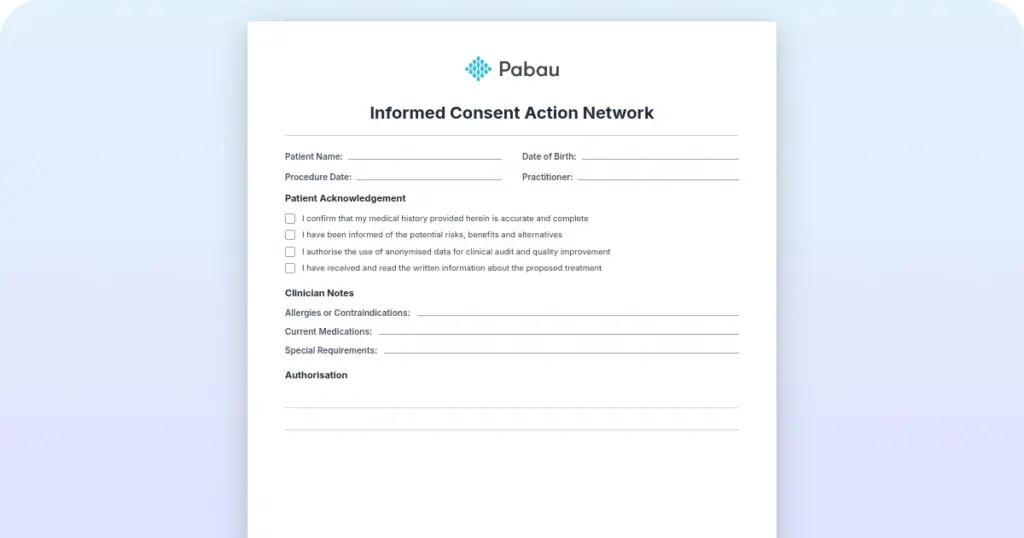
A structured checklist keeps reviewers consistent across providers and across audit cycles. The three core categories to cover in any medical chart audit are documentation completeness, coding accuracy, and compliance elements. Using digital forms to capture demographic information, intake, and consent reduces one of the most common documentation deficiencies before the chart is even opened.

Lab follow-up gaps surface often in this category. An ordered rheumatoid arthritis test with no documented interpretation or follow-up plan is a classic audit flag.
Review the medical spa compliance checklist for documentation requirements specific to aesthetic and elective care settings. Informed consent and treatment planning documentation carry particular weight there. Aesthetic and elective care settings often use liability waivers too, so knowing what makes a waiver enforceable matters at audit time.
Audit findings tend to cluster in predictable patterns. Knowing what to expect helps practices design targeted corrections rather than generic retraining. The table below maps the most common deficiencies to corrective actions that actually stick.
The distinction between internal and external audits is practical, not just definitional. Internal audits are practice-controlled quality tools. External audits are compliance events with financial consequences, especially for medico-legal practices handling expert-witness documentation. Understanding both prepares practices to manage physiotherapy clinic requirements and comparable regulated settings.
A practice running regular internal medical chart audits has a documented compliance history to reference if an external audit arrives. That track record can support an appeal or demonstrate good-faith compliance effort when responding to a CMS or commercial payer request. Practices extending that review to governance and internal controls can follow an LSA audit checklist.
Receiving an audit request from a MAC, RAC, or commercial payer is not an emergency. It is a documentation exercise with a deadline. Reviewing your practice’s HIPAA compliance protocols before responding ensures you handle record sharing correctly.
According to OIG compliance guidance, practices with written compliance programs are treated more favorably in enforcement contexts. This is especially true for programs that include periodic self-audits, compared with practices with no documented compliance activity.
A medical chart audit is only as useful as what happens after it. Practices that treat findings as a compliance checkbox miss the operational upside. The same data that reveals a coding pattern problem can power a clinical documentation improvement (CDI) program that reduces denials for the next 12 months.
The structure below works as a starting point for an internal billing compliance audit. Adapt it to your practice’s payer mix and the specific code sets under review.
Track results by provider across audit cycles. A provider whose E&M error rate drops from 40% to 8% over two quarters gives you quantitative evidence that your CDI program is working.
Most practice management platforms advertise compliance features. Fewer actually make the audit process operationally easier. That difference matters most when a practice needs to pull 30 records by provider and date range at short notice. That happens either for a scheduled internal audit or in response to a payer request. Good patient data security tools are the foundation here: you need to know who accessed which record and when.
Pabau’s compliance management software and client record management are built to support exactly this kind of structured review. The platform maintains a full audit trail, supports integration with other EHR systems, and uses automated consent workflows. This eliminates one of the most persistent audit deficiencies: missing or unsigned informed consent forms.
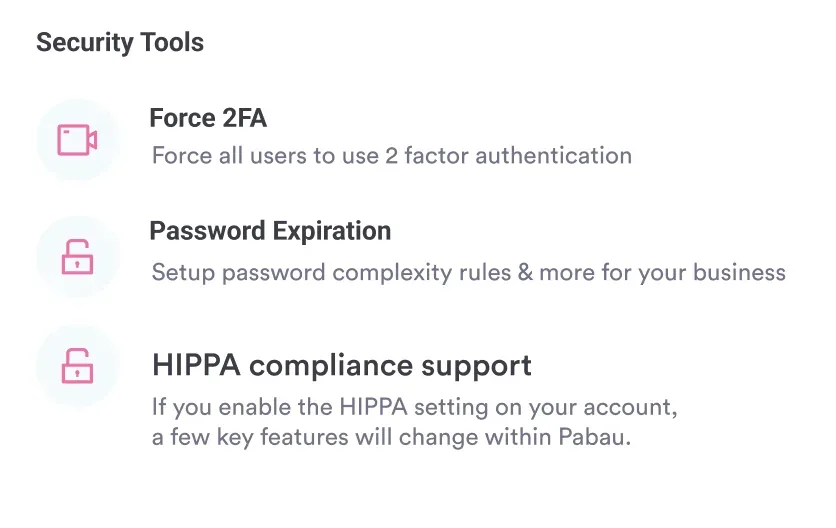
Three specific capabilities that directly support internal chart auditing:

Pabau gives practice managers audit-ready client records, automated consent workflows, and a complete EHR audit trail. See how it supports your internal compliance program.

Claim denials and payer takebacks rarely come as surprises to practices with an active internal audit program. Regular medical chart audits surface coding errors, documentation deficiencies, and compliance risks before they become revenue problems.
Pabau’s audit trail, automated consent capture, and structured client records give practice managers the tools to run consistent internal audits without building parallel spreadsheet workflows. If you want to see how it fits your compliance program, book a demo and we can walk through it.

Need a HIPAA waiver that holds up legally? HIPAA waiver form template lists the nine required elements most forms leave incomplete, with a free download.
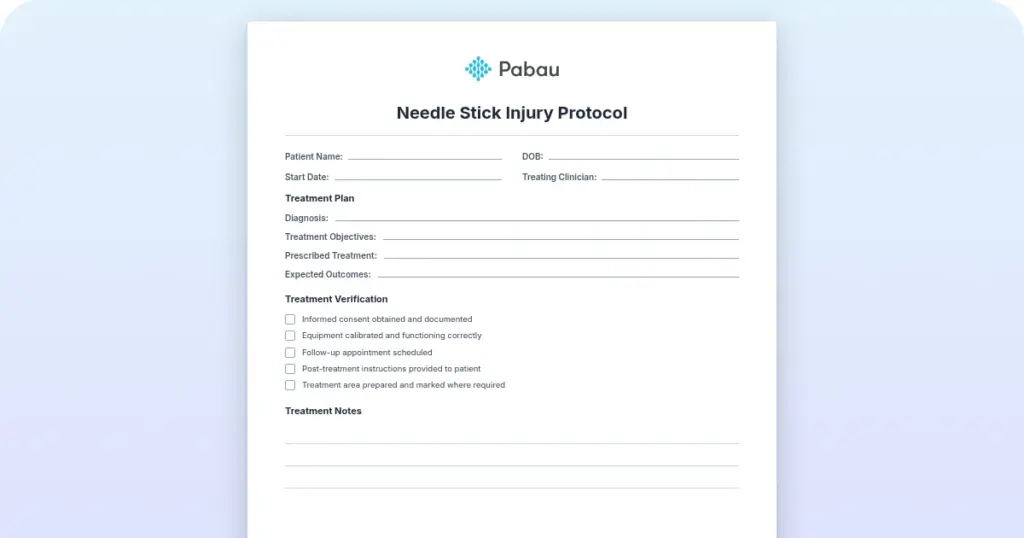
Need a form ready for the next incident? Incident form template covers witness accounts, injuries, corrective actions, and clinician sign-off in one form.
Worried an audit finding could trigger a HIPAA investigation? Handling a HIPAA violation investigation walks through the steps to take if a violation is reported or found.
A chart audit is a systematic review of patient medical records. It assesses whether clinical documentation is complete, whether billed codes match documented services, and whether the practice meets payer and regulatory requirements. It is a core component of any healthcare compliance program and quality improvement initiative.
Follow a structured eight-step framework similar to AAFP guidance. Start by defining your purpose and selecting clinical or billing indicators. Determine a statistically meaningful sample, a minimum of 10-20 records per provider for internal purposes, then collect data from EHR records. Analyze error patterns, identify corrective strategies, implement changes, and re-audit within 60-90 days to confirm improvement.
Medical audits fall into three timing categories (prospective, retrospective, concurrent) and two initiator categories (internal and external). External audits include government-initiated reviews by RACs, MACs, and OIG, as well as commercial payer-initiated chart reviews. Each type carries different scope, obligations, and consequences for the practice.
Most compliance experts recommend quarterly internal audits for active practices. New providers, providers with recent billing pattern changes, or practices responding to increased denial rates may benefit from monthly focused reviews until error rates stabilize. The OIG’s compliance program guidance supports risk-based audit frequency, meaning high-risk specialties or code sets warrant more frequent review.
A medical auditor checks whether the documented chief complaint, history of present illness, and exam findings support the billed E&M level. The auditor also verifies that ICD-10 diagnosis codes are specific enough and that consent forms are signed and on file. Modifier accuracy and a provider’s signature and date on the note complete the review.
A complete medical chart audit checklist covers three areas. Documentation completeness includes the chief complaint, HPI, exam, MDM, signature, and date. Coding accuracy covers the CPT and ICD-10 code match to the documented service, modifier review, and E&M level verification. Compliance elements include informed consent on file, ABN documentation for non-covered services, HIPAA acknowledgment, and payer-specific requirements.