Health appraisal form
A health appraisal form is a record a licensed provider signs to document someon...

2
Last Updated: Oct 13, 2026

Jane App vs SimplePractice: Jane App suits multidisciplinary and allied health clinics; SimplePractice is built specifically for mental health solo practitioners.
SimplePractice edges out on telehealth depth and built-in billing; Jane wins on scheduling complexity and plan inclusivity.
Jane’s insurance billing requires a paid clearinghouse add-on; SimplePractice includes billing features at lower entry-level pricing.
Pabau is a third option for aesthetic, wellness, and multi-location clinics that have outgrown both platforms.
Choosing the wrong practice management software costs more than the subscription fee. It costs you admin hours, frustrated clients, and billing headaches that compound every month. The Jane App vs SimplePractice decision is one of the most searched comparisons in the health and wellness space, and for good reason: both platforms serve overlapping but distinct audiences, and the wrong pick creates real operational friction.
This comparison is independent. Neither Jane nor SimplePractice commissioned it. We evaluated both platforms across scheduling, billing, telehealth, documentation, pricing, and scalability, and added Pabau, an all-in-one practice management system, as a third option for practices that have outgrown what either platform offers. If you run an aesthetic clinic, a wellness center, or a multi-location operation, that section is worth reading.
Jane App launched in Canada and has grown into a platform that serves physiotherapists, chiropractors, massage therapists, naturopaths, and a wide range of allied health professionals. Its scheduling architecture handles multiple practitioners, treatment rooms, and equipment simultaneously, which is why appointment-driven clinics with complex coordination needs tend to gravitate toward it. Jane also serves mental health practitioners, though that is not its primary focus. For practitioners in therapy practice management, understanding which platform fits the clinical workflow matters more than brand recognition.
SimplePractice launched in the United States and built its feature set almost exclusively around mental health professionals, including therapists, counselors, psychologists, and social workers. Its client intake experience, documentation templates, and billing tools are all tuned to that audience. The platform is highly intuitive out of the box, which is a significant advantage for solo practitioners who do not have a dedicated admin team.
The Jane App vs SimplePractice decision, at its core, is about specialty fit. If you are a mental health solo practitioner in the US, SimplePractice is the more natural home. If you run a multidisciplinary clinic, a physio practice, or a team-based allied health operation, Jane is likely a better structural fit. Practices weighing medical-focused EHRs instead can compare DrChrono vs Practice Fusion.
Outside North America the shortlist changes completely. The choice of practice software in Germany turns on KBV certification and statutory insurance billing.
Scheduling is where the gap between these two platforms is most visible. Jane App was purpose-built for busy, appointment-driven clinics that need to coordinate practitioners, rooms, and equipment at the same time. You can set availability by practitioner, block time by room, and manage complex booking configurations without workarounds.
SimplePractice handles scheduling well for a solo or small-group mental health context. Its calendar is clean, reminders are automated, and clients can self-schedule through the client portal. Where it falls short is in multi-resource coordination. A practice with four practitioners sharing three treatment rooms will hit friction quickly.
One practical note from the chiropractic community: some practitioners prefer SimplePractice specifically because patients can book as guests without creating a profile. Jane requires account creation, which adds a step for first-time clients.
For US-based practices that rely on insurance billing, this comparison matters most. SimplePractice includes insurance claims, electronic remittance advice (ERA) processing, and superbill generation within its core plans. Billing workflows are tightly integrated with the clinical record, which means less toggling between systems.
Jane’s approach to insurance billing is different. The platform supports billing workflows, but insurance claim submission requires a separate paid clearinghouse add-on. Practitioners in the r/therapists community have confirmed this setup. If you plan to submit insurance claims through Jane, factor the clearinghouse cost into your total monthly spend.
| Feature | Jane App | SimplePractice |
|---|---|---|
| Insurance claims | Via paid clearinghouse add-on | Built in |
| Superbill generation | Yes | Yes |
| ERA processing | Via clearinghouse | Built in |
| Private pay billing | Yes | Yes |
| Payment collection | Yes | Yes |
For cash-pay practices, both platforms handle billing adequately. The meaningful difference appears when insurance claims enter the picture. SimplePractice wins on billing integration for US insurance-heavy mental health practices. Jane is more affordable for allied health clinics where private pay dominates and the clearinghouse add-on may not be needed.
Credentialing is a separate decision from software. For a mental health practice still waiting on panels, outsourcing insurance credentialing shifts the math more than either platform’s claim tools.
Both platforms include built-in telehealth. SimplePractice goes further with features specifically useful for mental health virtual sessions: customizable waiting rooms, screen sharing for reviewing worksheets or documents with clients, and a polished client-facing experience. Practitioners who deliver therapy remotely tend to rate SimplePractice’s telehealth as more complete for that context.
Jane’s telehealth covers the core use case. Video sessions are integrated into the booking and clinical workflow, so appointments seamlessly transition from scheduled to virtual. For allied health practitioners who occasionally conduct telehealth consultations rather than running a primarily remote practice, Jane’s built-in video capability is sufficient. Pabau also offers integrated telehealth for practices that need video consultations alongside in-person care, particularly useful in aesthetic and wellness settings.

Pabau combines scheduling, billing, digital forms, and CRM into one platform built for aesthetic, wellness, and allied health operations. See how it compares.

SimplePractice has invested heavily in documentation tools. Its AI-driven features allow practitioners to pull information from prior notes into new session records quickly, which reduces repetitive data entry. The mental health note templates are well-designed and cover the documentation patterns therapists and counselors need most.
Jane’s documentation system is more flexible. It offers customizable SOAP notes, body charting for physical assessments, and a voice-to-text AI scribe that drafts session notes from a recording. That suits rehab caseloads, such as documenting recovery after a closed vs open reduction. Note templates can be built across disciplines, a natural fit for multidisciplinary clinics where a physiotherapist and a naturopath both document in entirely different formats. That flexibility is genuinely useful. The trade-off is that setup takes longer than loading a pre-built mental health template library.
For practices that need digital intake forms integrated with clinical notes, both platforms offer this functionality. SimplePractice’s intake forms are particularly polished from the client’s perspective, which contributes to its reputation for UX simplicity.
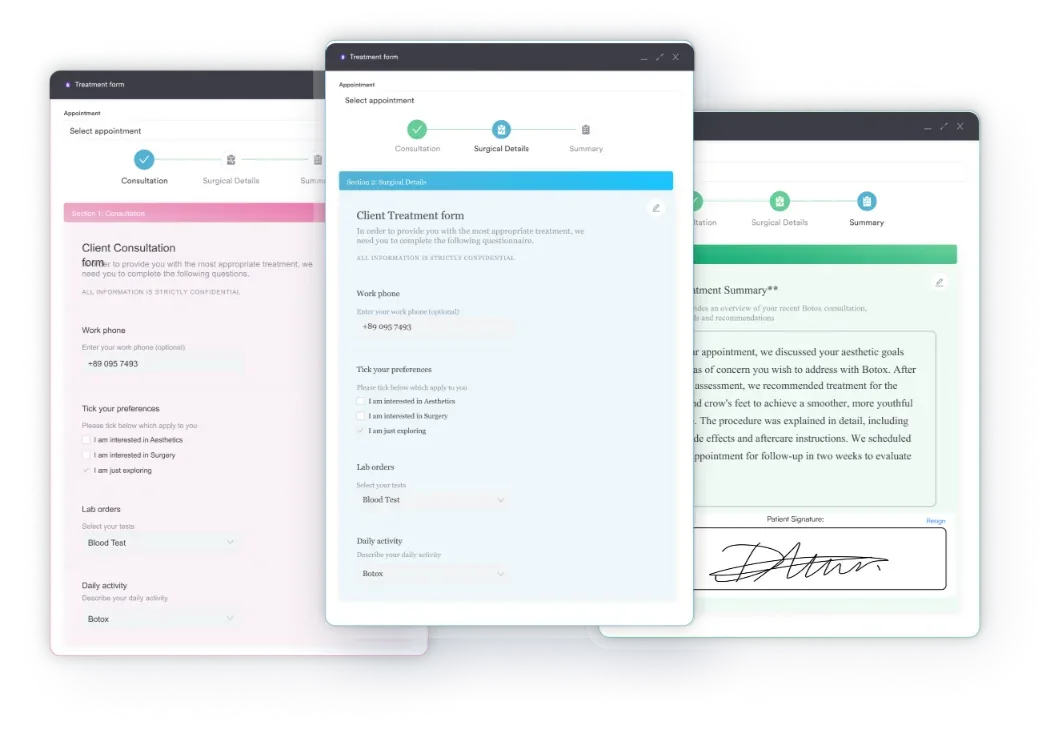
If you are evaluating documentation tools, ask each vendor for a demo specifically of your most common note type. A physio SOAP note has different structural requirements than a therapy progress note. Generic demos can obscure how much setup work lies ahead.
Mobile access is one of the sharpest divides between these two platforms, and it rarely surfaces in a feature checklist. SimplePractice ships native iOS and Android apps, so a practitioner can check the schedule, write a note, or message a client from a phone between sessions. Jane App has no native mobile app. It runs through a responsive mobile web browser instead, which works but means no home-screen app and no offline access the way a dedicated build offers.
For a solo therapist moving between treatment rooms or splitting time across two locations, that difference decides whether admin gets cleared on the move or waits until they are back at a desk. If mobile-first practice management matters to you, SimplePractice has the edge here. Practices in aesthetics and wellness that want the same on-the-go access can look at Pabau GO, our iOS app for practitioners, which puts the day’s schedule, client records, and pre-appointment forms on the phone.
Pricing is frequently cited as a differentiator in the Jane App vs SimplePractice comparison. Based on publicly available information at the time of writing, SimplePractice’s entry-level plan starts at a lower monthly price than Jane’s entry tier, making it more accessible for solo practitioners watching overhead carefully.
Jane includes more in its base plans. Unlimited file storage, unlimited support access, and free admin accounts are included across Jane’s plans, with no contracts and transparent monthly billing. For practices with multiple admin staff, this can offset Jane’s higher entry price quickly. Always verify current pricing directly on each platform’s pricing page before making a decision, as rates change regularly.
| Factor | Jane App | SimplePractice |
|---|---|---|
| Entry-level price (approx.) | From ~$54/month | From ~$49/month |
| Admin accounts | Free, unlimited | Additional cost per admin |
| File storage | Unlimited included | Included (limits vary by plan) |
| Contracts | None, monthly billing | None, monthly billing |
| Clearinghouse (insurance billing) | Paid add-on | Included |
| Free trial | Available | 30-day free trial |
The true cost comparison depends heavily on your practice setup. A solo therapist who bills insurance directly will likely find SimplePractice cheaper overall. A group practice with three admin staff and no insurance billing may find Jane’s total cost of ownership lower once admin seat costs are factored in.
According to Capterra reviewers, Jane App earns consistent praise for its scheduling sophistication. Practitioners running busy appointment-driven clinics describe it as the only platform that handles multi-practitioner, multi-room coordination without workarounds. One reviewer noted it “gets” that service practices in 2026 need more than a basic calendar.
The setup investment is real. Practitioners switching from simpler platforms often note that Jane’s depth comes with a steeper learning curve. The initial configuration, particularly for note templates and billing, takes more time than SimplePractice’s out-of-box experience.
According to Capterra reviewers, SimplePractice consistently ranks among the most intuitive EHR platforms for mental health practitioners. Client-facing features are polished: intake forms are easy to complete, the portal is clean, and booking is straightforward. Reviewers regularly mention that the platform reduces administrative stress rather than adding to it.
The mental health focus is a genuine limitation for practitioners outside that specialty. A chiropractor or physiotherapist using SimplePractice will find the templates and workflow assumptions misaligned with their clinical reality. Multi-practitioner group practices have also noted that the platform does not scale as naturally as Jane for complex team coordination.
The Jane App vs SimplePractice comparison assumes the reader works in mental health or allied health. A significant portion of practitioners evaluating this decision are actually running aesthetic clinics, wellness centers, medspas, or multi-location operations where neither Jane nor SimplePractice is an ideal fit. Both platforms were designed with therapy and allied health in mind. Neither was built for aesthetic medicine, IV therapy, multi-location medspa operations, or the broader wellness sector.
Pabau serves that audience directly. It combines scheduling, digital intake forms, clinical record management, billing, CRM, and marketing tools in one platform — the same combination that underpins attracting functional medicine patients and growth in adjacent wellness niches — with purpose-built features for aesthetic and wellness clinics such as injection plotting, before-and-after photo management, and prescription management. For group practices or multi-site operations that have outgrown what Jane or SimplePractice can offer, Pabau is a practical next step. You can explore Jane App alternatives including Pabau in more detail, or see the dedicated Pabau vs Jane App comparison page for a side-by-side breakdown. According to Capterra, Pabau holds a 4.7/5 rating from 600+ verified reviews. Pricing starts from $104/month.
Both platforms are well-built for specific use cases. The decision comes down to specialty, practice size, and billing model.
Before committing to any platform, run a parallel test. Take your three most common clinical workflows and step through them in each platform’s demo environment. Scheduling friction, note template setup, and billing integration gaps become visible quickly when you use real scenarios rather than feature checklists.
The Jane App vs SimplePractice comparison has a clear answer when you know your specialty and practice model. SimplePractice is the tighter fit for solo US-based mental health practitioners who need strong billing and polished telehealth. Jane is the stronger platform for multidisciplinary clinics and group practices with complex scheduling needs.
Neither platform serves aesthetic clinics, medspas, or multi-location wellness operations well. If that is your context, Pabau was built for it. Book a demo to see how Pabau handles the workflows that Jane and SimplePractice were not designed for.

Running a multidisciplinary or allied health practice? Therapy practice management software covers what to look for when choosing a platform across specialties.
Considering other options beyond Jane? Jane App alternatives reviews the full landscape of platforms worth evaluating.
Want a direct side-by-side with Pabau? Pabau vs Jane App breaks down features, pricing, and best-fit use cases in detail.
Jane App is better for group practices. Its multi-practitioner scheduling, room management, and free unlimited admin accounts are designed for team-based operations. SimplePractice works best for solo or very small group practices and does not scale as naturally to complex multi-resource coordination.
Jane App supports billing workflows but requires a separate paid clearinghouse add-on for insurance claim submission. If your practice depends on direct insurance billing, factor that additional cost into your total monthly spend before comparing Jane to SimplePractice.
Migration is limited. According to Jane’s own migration guide, SimplePractice currently only allows export of past appointment records, which means clinical notes, treatment history, and client documents may need to be manually transferred or re-entered when switching platforms.
Yes, SimplePractice is HIPAA compliant. The platform is designed for US-based mental health professionals and includes business associate agreement (BAA) provisions aligned with HHS HIPAA requirements. Jane App also maintains HIPAA compliance for US users and PIPEDA compliance for Canadian practitioners.
SimplePractice is generally considered easier to set up and use out of the box, particularly for solo practitioners. Jane App has more depth and flexibility, which comes with a steeper initial learning curve. Practices with dedicated admin support tend to adapt to Jane faster than solo operators managing their own setup.
It depends on your specialty. Jane App is the stronger option for multidisciplinary and allied health teams that need complex multi-room scheduling. For aesthetic clinics, medspas, and multi-location wellness businesses, Pabau is the better fit, since it adds injection plotting, before-and-after photo management, and CRM tools that neither platform was built for.
There is no single best EMR for private practice; the right choice tracks your specialty and practice model. Solo mental health practitioners tend to prefer SimplePractice for its built-in insurance billing, group and allied health practices lean toward Jane App for scheduling depth, and aesthetic or multi-location clinics get purpose-built workflows from Pabau.