









Fovea sign test: Technique, interpretation, and diagnostic accuracy
The fovea sign test detects foveal TFCC and ulnotriquetral tears via thumb pressure on the ulnar fovea. Technique, results, and accuracy.
Bland diet meal plan: Free 7-day template

Download your free bland diet meal plan A ready-to-use 7-day meal plan covering breakfast, lunch, dinner, and snacks. Includes patient-friendly foods-to-eat and foods-to-avoid lists, condition-specific variations for gastritis and post-surgical recovery, and practical dietary tips for managing digestive sensitivity. Download template Patients managing gastric irritation, post-surgical recovery, or food sensitivities often struggle to know which […]
Hip examination: A complete clinical guide for practitioners

Hip pain is one of the most common musculoskeletal complaints across all age groups. A misattributed diagnosis at the first clinical encounter can delay treatment by an average of several months. A rigorous hip examination identifies whether pain originates intra-articularly, from periarticular structures, or is referred from the lumbar spine or sacroiliac joint, and that […]
Trapezius tear test: How to perform and interpret results
Trapezius tear test: What it is and why it matters Most clinicians encounter trapezius pain complaints weekly. The challenge is determining severity fast enough to make good treatment decisions on the spot. The trapezius tear test gives you a structured, repeatable assessment that separates a minor strain from a partial or complete tear, without ordering […]
Mental state examination: Components, examples and documentation guide

Incomplete MSE documentation is one of the most common sources of clinical risk in psychiatric practice. When key domains are missed or recorded inconsistently, treatment decisions get made on partial information – and audit trails leave clinicians exposed. The mental state examination is a core component of every psychiatric and mental health assessment. You might […]
Danis-Weber classification: Ankle fracture types explained

Ankle fractures are among the most common orthopaedic injuries seen in emergency departments and outpatient practices. Most are misclassified at first contact. The Danis-Weber classification gives clinicians a fast, radiograph-based framework to characterize fibular fractures and guide initial management decisions, and it takes roughly ten seconds to apply once you know the anatomy. This guide […]
Cervical torsion test: How to perform and interpret it
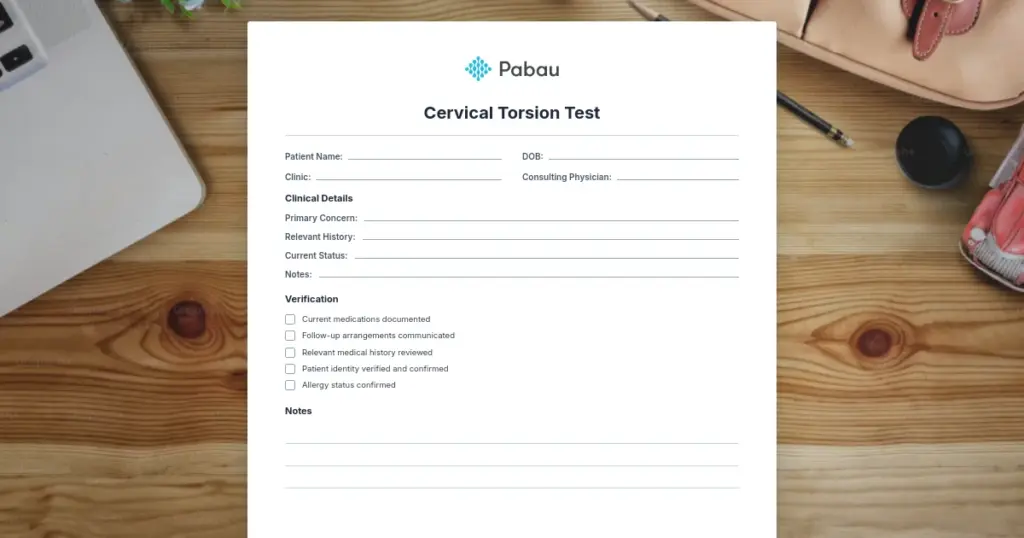
How to perform the cervical torsion test and read a positive result for cervicogenic dizziness: trunk-rotation steps, signs, limits.
Seated exercises: A complete guide for practices and patients
A complete guide to seated exercises for seniors, office workers, and wheelchair users, with upper body, core, leg, and back-pain routines plus a printable 10-minute plan practice teams can share with patients.
Articulation test: How to administer, score, and interpret results

An articulation test scores how accurately a client produces speech sounds. See how SLPs administer, score, and interpret results by age.
DMV medical evaluation form
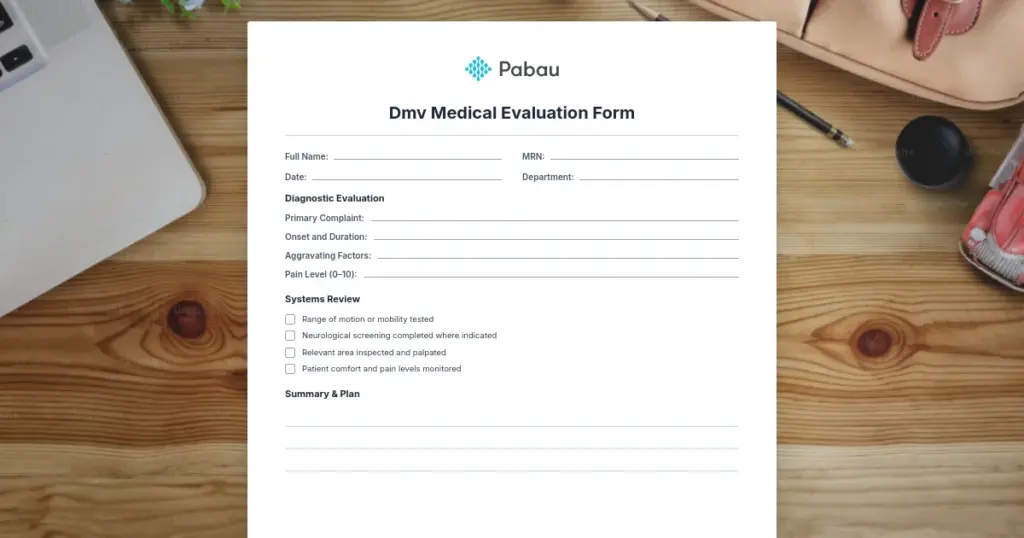
Download your free DMV medical evaluation form A ready-to-use medical assessment form covering patient history, neurological status, vision, medications, cognitive function, and physician certification required by state DMV agencies. Download template A patient asks for a note so they can keep driving, or the DMV mails your practice a form out of nowhere. Either way, […]