Scapular assistance test: Procedure, interpretation and free template
The scapular assistance test is a manual examination in which the clinician supp...

2
Last Updated: Oct 19, 2026

A DMV medical evaluation form is a standardized assessment that a state motor vehicle department uses to decide whether a driver can operate a vehicle safely when a medical condition is in question.
California uses two different forms for two different situations: the DS-326 covers private drivers referred for a medical concern, and the DL 51 is the state’s CDL and special-certificate exam form, tied to the federal FMCSA fitness standard; other states use their own equivalent forms.
The DS-326 is completed by a physician (MD/DO), physician assistant, or nurse practitioner/APRN; the DL 51 must be signed by an examiner on the FMCSA National Registry of Certified Medical Examiners.
Once the DMV requests a DS-326, the driver’s return window is about 24 days, or 10 days for a Priority Re-Examination; the DMV does not publish a fixed turnaround time for its own review.
A ready-to-use medical assessment form covering patient history, neurological status, vision, medications, cognitive function, and physician certification required by state DMV agencies.
Download templateA patient asks for a note so they can keep driving, or the DMV mails your practice a form out of nowhere. Either way, you now need to complete a DMV medical evaluation form, and get it right. An incomplete one just comes back to you, while the driver’s clock keeps running.
Here is where most clinicians trip up. California actually uses two different forms for two different situations. The DS-326 covers private drivers referred for a medical concern, and the DL 51 is the state’s CDL and special-certificate exam form, tied to the same federal fitness standard used for DOT physicals. Mixing the two up is the single most common mistake we see.
This guide walks through which form applies and who is legally allowed to sign it. It also covers what actually happens after you submit it, and where the process trips people up in practice.
A DMV medical evaluation form is a standardized assessment document that a healthcare professional completes when a state motor vehicle department questions a driver’s medical fitness. It records clinical findings, functional limitations, and the provider’s assessment of whether the individual can safely operate a motor vehicle.
California actually uses two different forms, and they are not interchangeable. The DS-326 (Driver Medical Evaluation) is the general form for private drivers, used when the DMV has referred someone for evaluation because of a reported medical condition or licensing concern.
The DL 51 (Medical Examination Report) is different. It is California’s CDL and special-certificate exam form, the state-side counterpart to the federal DOT physical, and it implements the federal FMCSA physical-qualification standard rather than a general private-driver standard.
The DMV requests a medical evaluation when it receives reports of medical conditions that may affect driving safety. Common triggers include:
Referrals may come from hospitals, family members, law enforcement, or the driver’s own healthcare provider.
The DS-326 and similar state forms assess several domains relevant to driving safety:
The form requires specific documentation of findings in each domain. Vague conclusions (“patient seems okay to drive”) are insufficient; regulators expect detailed clinical reasoning tied to objective findings.
Clinical form capture tools let staff complete assessments like this on a tablet during the session itself.
For the DS-326, California authorizes three provider types. Optometrists are not among them; that mix-up is common, but an optometrist’s sign-off belongs on a different DMV form, the disabled-placard application (REG 195), not the driver medical evaluation.
The DL 51 works differently. It implements the federal FMCSA physical-qualification standard for commercial and special-certificate drivers. Because of that, it must be completed by an examiner listed on the FMCSA National Registry of Certified Medical Examiners, the same registry that DOT physical examiners use.
A provider who is not on the National Registry cannot sign a DL 51, even if they are otherwise licensed to complete a DS-326.
Other states set their own restrictions. Always verify your state’s specific regulations before accepting a DMV referral.
The submission workflow follows a clear sequence.
First, obtain the official form from your state DMV website (not a third-party site, to ensure current version). Second, schedule the patient for a focused appointment lasting 30-60 minutes; allow time for detailed history, physical examination, and documentation. Third, complete all sections legibly. An annual physical exam checklist by age can help structure the history, vital signs, and screening steps this visit still needs.
Fourth, sign and date the form. Some states require notarization or specific ink signatures, not printed or electronically signed. Fifth, review the form for completeness before submitting. Incomplete or unsigned forms are rejected by the DMV, delaying the patient’s licensing decision.
Sixth, submit the original to the DMV Medical Unit via the address specified on the form. This is typically a PDF upload through the state DMV portal, or physical mail.
Before you submit, run through a quick check:
Keep a copy for the patient’s record and your practice files.
Certain conditions appear on nearly every DMV form.
Seizure disorders require documentation of seizure frequency, types, triggers, medication control, and any post-ictal confusion or loss of consciousness. Dementia assessment covers memory impairment, orientation, functional decline, and ability to recognize hazards. Vision impairment documentation includes corrected visual acuity in each eye, peripheral fields, and ability to respond to traffic signals. A GP practice managing chronic conditions needs the trend, not the latest reading alone.
Medication review for driving fitness is critical, especially for sedating drugs, anticonvulsants, or medications causing dizziness or tremor. Neurological disorders (Parkinson’s, MS, stroke) require assessment of motor control, coordination, and reaction time.
Mental health conditions affecting driving include severe depression, bipolar disorder, or psychosis with impaired judgment. Behavioral health and psychiatry practices often see these referrals first, since ongoing treatment records are usually the most complete source of history.
The form asks whether the condition or its treatment impairs driving ability, not whether the individual “deserves” to drive. That is a clinical, not a moral, determination.
Each state runs its own medical review program, with its own forms and its own timeline. California uses the DS-326 for private drivers and the DL 51 for CDL and special-certificate holders.
Once the DMV requests a DS-326, the driver typically has about 24 days to return it, or 10 days if it is flagged as a Priority Re-Examination. That means the deadline that matters day to day is the driver’s, not the DMV’s.
Other states run their own versions of this process. New York’s Medical Review Program uses physician-completed forms and a more formal appeal process if the DMV determines license suspension is necessary. Montana requires the fillable Form 20-1900, and North Carolina runs a separate medical review process with its own documentation requirements.
It is worth being precise about where federal rules fit in. Most state DMV medical evaluations, including the DS-326, are a state-only program with no federal standard behind them. The DL 51 is the exception.
The DL 51 implements the federal FMCSA physical-qualification standard (49 CFR Part 391) because it covers commercial and special-certificate drivers. That is why it has to be signed by an examiner on the FMCSA National Registry of Certified Medical Examiners, the same standard used for DOT physicals.
Always check your state DMV website for the current version of whichever form applies. An outdated form gets rejected.
Clinicians and patients often confuse DMV medical evaluations with DOT physicals. Both assess fitness to drive, but they serve different regulatory purposes and have distinct requirements.
If a patient mentions a DOT physical requirement, refer them to a provider on the FMCSA National Registry of Certified Medical Examiners rather than completing it yourself unless you hold that certification.
Once the DMV Medical Unit has the completed form, it makes one of four calls:
The DMV does not publish a fixed turnaround for how long that review takes, and no official DMV source commits to a set number of days on its end. The deadline that is fixed sits with the driver, not the DMV.
Once the DMV requests a DS-326, the driver generally has about 24 days to return it, or 10 days if it is flagged as a Priority Re-Examination. If a patient wants a status update on a submission that has already gone in, the DMV Medical Unit is the one to ask, not your practice.
The DMV notifies both the driver and the healthcare provider of the outcome. If the DMV suspends the license, the patient has appeal rights, and you may be asked for additional documentation or clarification during that appeal. Keeping your own copy of the submitted form, with the date it went out, makes that follow-up request much faster to answer.
Important: as the evaluating clinician, you are not responsible for the DMV’s licensing decision. Your role is to provide honest, thorough clinical documentation. The DMV makes the final call based on its own regulatory criteria, which can differ from your clinical judgment.
Practice management software like Pabau will not talk to the state DMV on your behalf. There is no live integration that routes a form to the DMV or tells your practice when the DMV has made a decision.
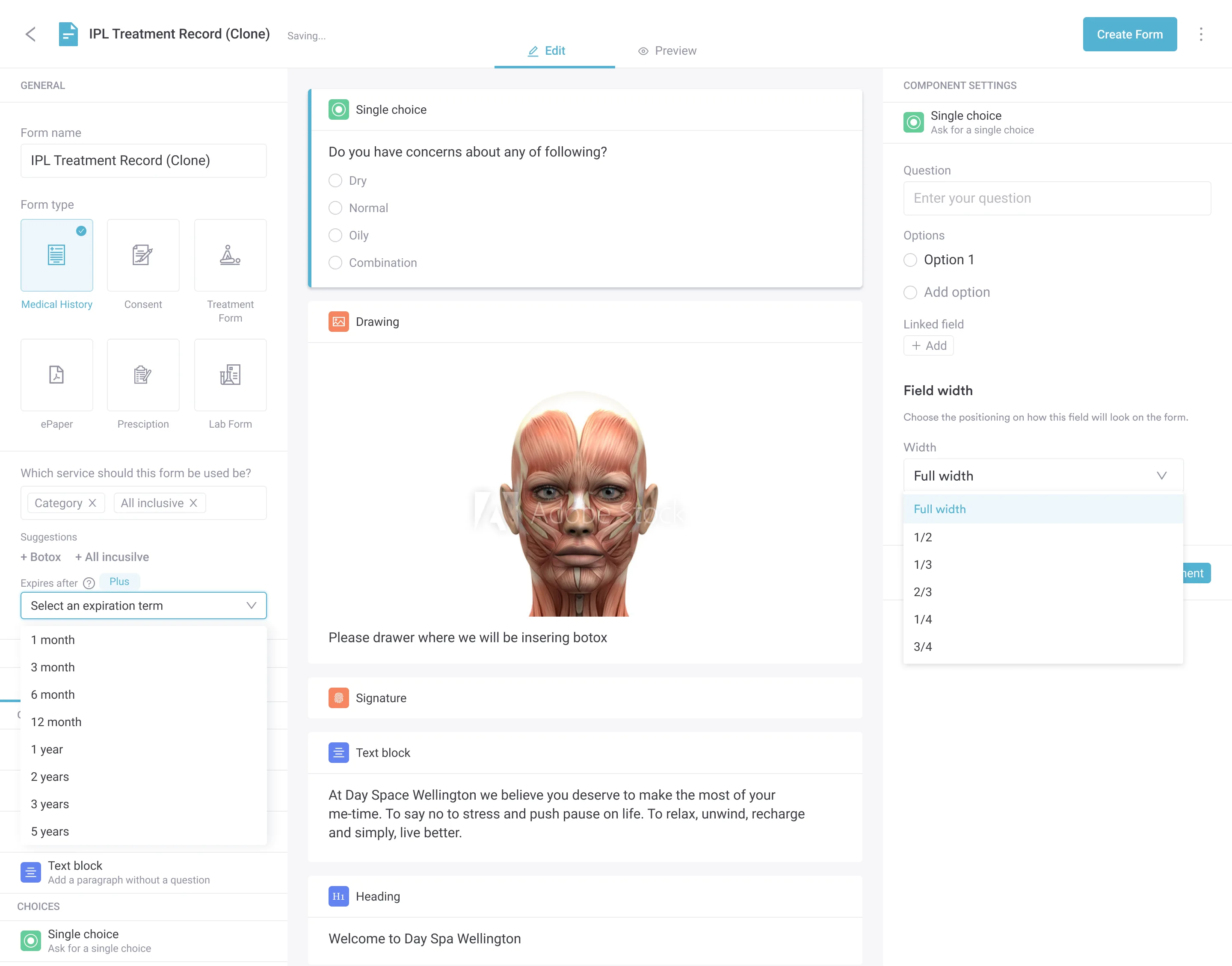
Pabau also does not ship a DS-326 or DL 51-specific template out of the box. What it can genuinely do is remove some of the paperwork friction around the appointment itself.
You can build a digital version of your state’s form as a custom intake or clinical form, so the patient’s history and your findings are captured in a structured, legible record instead of a scanned paper file.
Because every patient’s record lives in one place, with medication lists and prior evaluations already on file, there is no need to hunt through paper before the appointment.
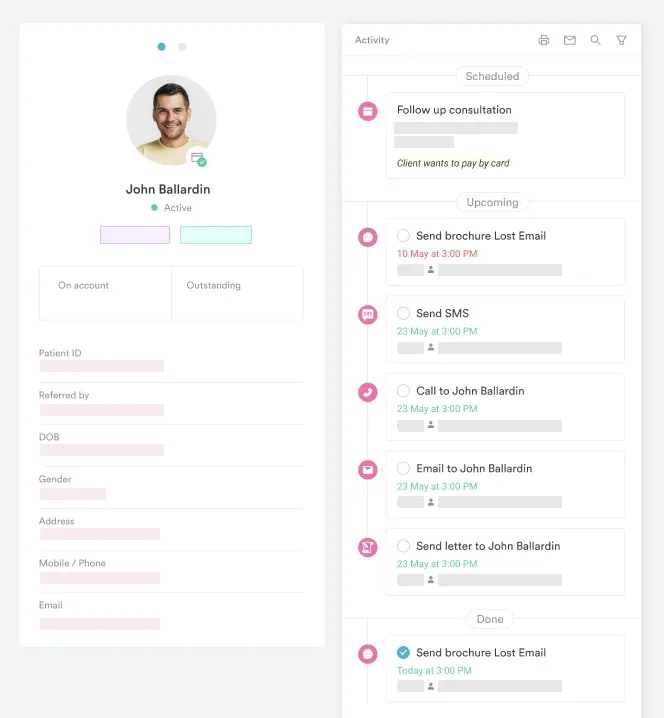
Where the workflow-automation builder helps is on your side of the process, not the DMV’s. Your practice can configure an internal task or reminder, for example to flag when a DMV form is due to go out, or to prompt staff to check with the patient if nothing has been heard back after a few weeks.
That is an internal follow-up your team sets up, not a live read on the DMV’s own status. It still fits within HIPAA-compliant documentation practices.
Before scheduling a DMV evaluation appointment, obtain the official form from your state DMV website and review its current version. Outdated forms are rejected, wasting the patient’s time and your clinical effort. Bookmark the form URL and check it quarterly for updates.
The DMV medical evaluation form exists to protect road safety without unnecessarily taking away a patient’s independence. Your job as the evaluating clinician is to document what you find, honestly and thoroughly, and let the DMV apply its own criteria to the decision.
Get the right form for the situation, get the right person to sign it, and keep your own copy. Do that, and the rest of the process runs the way it is supposed to.
If DMV paperwork, or any other recurring clinical form, keeps eating into appointment time, book a demo of Pabau to see how configurable digital forms and internal workflow reminders can take some of that admin off your plate.

Need to track neurological vital signs consistently? A neurological vital signs guide covers level of consciousness, pupillary response, and motor power for repeatable bedside assessment.
Assessing a much younger patient instead? A pediatric assessment guide starts with a 30-second PAT read, then age-specific vital ranges and a matched pain scale.
Assessing functional status for a life-limiting illness? The Palliative Performance Scale explains how clinicians read functional status to guide prognosis conversations and hospice referrals.
The DS-326 is California’s Driver Medical Evaluation form, used when a medical condition raises a question about someone’s fitness to drive. A physician, PA, or nurse practitioner completes it.
Only a physician (MD/DO), physician assistant, or nurse practitioner/APRN can sign the DS-326. Optometrists cannot; their sign-off belongs on a different DMV form, the disabled-placard application. Check your own state’s rules.
When it receives a report of a condition that may affect driving safety, such as a seizure disorder, dementia, stroke, vision impairment, or a severe neurological or mental health condition.
To your state DMV Medical Unit, via the address or portal printed on the form. California accepts a PDF upload or a mailed copy to the address on the DS-326.
Not quite. The DL 51 is California’s own form, but it follows the same federal FMCSA standard and must be signed by an examiner on the FMCSA National Registry, just like a DOT physical.
The driver generally has about 24 days to return a requested DS-326, or 10 days for a Priority Re-Examination. Missing it can lead to a license suspension.
Yes. It’s protected under California Vehicle Code Section 1808.5 and used only to decide licensing eligibility, not shared publicly.