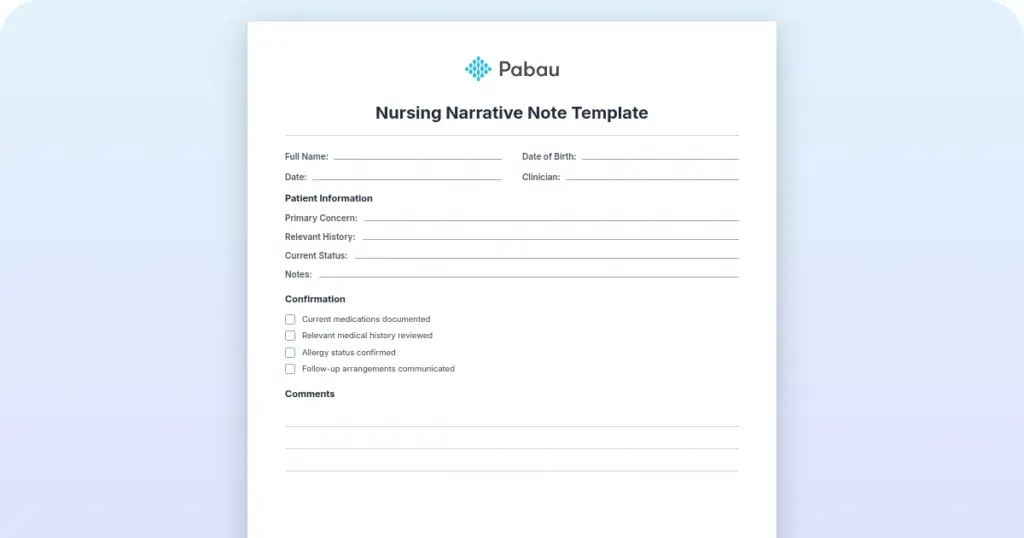
Nursing narrative note template
A nursing narrative note template is a structured PDF that guides you through re...

3
Last Updated: Oct 21, 2026

A bland diet meal plan is a structured eating guide featuring soft, low-fiber foods that are easy to digest and non-irritating to the GI tract.
The meal plan is recommended for patients recovering from GI surgery, managing gastritis, GERD, peptic ulcers, or experiencing nausea and vomiting.
Key guidelines include avoiding spicy, fried, and fatty foods, limiting fiber and caffeine, and eating small, frequent meals throughout the day.
Pabau’s digital forms and automated patient workflows help clinicians distribute and track bland diet meal plans, ensuring patient adherence and follow-up.
A ready-to-use 7-day meal plan covering breakfast, lunch, dinner, and snacks. Includes patient-friendly foods-to-eat and foods-to-avoid lists, condition-specific variations for gastritis and post-surgical recovery, and practical dietary tips for managing digestive sensitivity.
Download templatePatients managing gastric irritation, post-surgical recovery, or food sensitivities often struggle to know which foods are safe and which trigger symptoms. A structured bland diet meal plan removes the guesswork by providing specific guidance on permitted and restricted foods, meal timing, and portion sizes.
This guide explains what a bland diet meal plan is, when clinicians should recommend it, and how to use the downloadable template to support patient adherence and recovery.
A bland diet meal plan is a structured eating guide that emphasizes soft, easily digestible foods while avoiding items that irritate or inflame the gastrointestinal tract. The plan prioritizes low-fiber foods, eliminates spicy and fried items, and limits caffeine and alcohol to support healing and reduce digestive discomfort.
Unlike generic dietary advice, a bland diet template provides day-by-day structure with specific meal examples, portion guidance, and patient-friendly food lists. This scaffolding helps patients adhere to the diet consistently rather than making ad-hoc food choices that may trigger symptoms.
The plan is grounded in clinical nutrition principles endorsed by registered dietitian guidelines from the Academy of Nutrition and Dietetics and the American College of Gastroenterology.
It is commonly recommended for conditions including gastritis, peptic ulcers, gastroesophageal reflux disease (GERD), post-surgical recovery (particularly after abdominal or GI procedures), and acute gastroenteritis.
The downloadable template is designed for clinicians to customize and share with patients during or after consultation. Follow these five steps to integrate it into your patient care workflow:
The meal plan is most effective when paired with patient education on portion sizes, meal frequency (smaller, more frequent meals are often better tolerated), and hydration. Reassess the diet every 2-4 weeks. Most patients can begin reintroducing restricted foods after symptoms resolve. Weight management programs benefit from the same reassessment schedule, adjusting the plan as the patient’s tolerance and symptoms change.
Because this plan limits fiber, a high-fiber meal plan gives patients a structured way to build intake back up once symptoms settle.
A wellness practice platform turns templates like this into trackable client programs.

Pabau’s digital forms and patient portal let you send customized meal plans, track adherence, and document dietary progress without paper handouts.

The bland diet meal plan template is useful for any healthcare practitioner educating patients on dietary management of gastrointestinal conditions. Target audiences include:
Any practice using digital patient forms or a patient portal can instantly distribute the template and track whether patients have downloaded and reviewed it.
1. Consistency across patient consultations. A standardized template ensures every patient receives the same evidence-based guidance, reducing variability in clinical advice and supporting better outcomes.
2. Improved patient adherence. Patients with a detailed, day-by-day meal plan are significantly more likely to follow dietary guidance than those given generic instructions (“eat soft foods”). The specific meal examples remove ambiguity and reduce the mental load of meal planning during recovery.
3. Faster recovery and symptom relief. Structured dietary adherence minimizes gastric irritation, reduces inflammation, and shortens the timeline to symptom resolution. Patients see tangible improvement when following the plan, increasing trust in the clinician’s recommendations.
4. Audit and compliance readiness. Documented dietary guidance demonstrates that your practice is providing evidence-based patient education. This holds up during regulatory inspections and audits, and supports liability protection if complications arise.
5. Time efficiency. Reusing a template instead of writing individual meal plans for each patient saves significant clinical time while maintaining quality. Sharing plans through your patient portal eliminates printing, filing, and follow-up calls about lost handouts.
Schedule follow-up appointments 2-3 weeks after starting the bland diet to assess symptom improvement and adjust the meal plan if needed. Use automated patient reminders to prompt follow-ups and encourage patients to log any trigger foods in their patient portal notes for the next visit.
The foundation of a bland diet meal plan is simple: prioritize soft, low-fiber, non-irritating foods, and eliminate anything that triggers gastric discomfort. The MedlinePlus patient instructions provide a clinical reference that aligns with this template.
Individual tolerance varies — some do well with dairy, while others experience bloating. Encourage patients to track their symptoms and note which foods from the approved list trigger discomfort, then customize future meal plans accordingly.
A bland diet meal plan gives patients clear, structured guidance for managing gastrointestinal symptoms. Pairing the downloadable template with automated follow-up reminders lets clinicians track adherence, document dietary interventions, and support faster recovery from GI conditions or post-surgical healing.
The meal plan works best when paired with compassionate patient education, realistic timeline expectations, and consistent follow-up. As symptoms ease.
See how Pabau’s digital patient tools can streamline distribution and adherence tracking — book a demo.

Moving a patient onto a low-carb plan next? Our low carb food list groups proteins, vegetables, and fats by net carbs, with portion sizes for each target.
Need a plan for once symptoms improve? A macro diet plan gives patients a structured framework for reintroducing regular foods.
Have a patient managing high cholesterol? Our low cholesterol food list lists soluble-fiber foods that lower LDL, plus the ones to cut, in a printable handout.
A bland diet meal plan is a structured 7-day or longer eating guide that emphasizes soft, low-fiber, non-irritating foods. It is used to manage gastric inflammation, post-surgical recovery, nausea, vomiting, and conditions like GERD and gastritis. The template includes specific meal examples, foods to eat and avoid, and practical tips for patient adherence.
Duration varies by condition and individual recovery. For acute gastroenteritis, 4-7 days is typical. For post-surgical recovery, 2-4 weeks is common, with gradual reintroduction of restricted foods. Chronic conditions like gastritis may require longer adherence under physician supervision. Always tailor the timeline to the patient’s symptoms and clinical context.
Low-fat or fat-free dairy is generally tolerated (plain yogurt, low-fat milk, mild cheese). Full-fat dairy, ice cream, and high-fat cheese should be avoided initially, as they can trigger nausea or cramping. Encourage patients to test individual tolerance and report any symptoms during follow-up visits.
The BRAT diet (Bananas, Rice, Applesauce, Toast) is a subset of the bland diet, historically recommended for children with gastroenteritis. Modern guidelines, including the American College of Gastroenterology, support the broader bland diet, which includes more food variety to prevent nutritional shortfalls during longer recovery periods. The BRAT diet is more restrictive and is typically only used for 2-3 days. Note that modern pediatric guidance from the American Academy of Pediatrics (AAP) no longer specifically recommends the BRAT diet, favoring an early return to a regular, age-appropriate diet as tolerated.
The bland diet meal plan is NOT the same as a low-FODMAP, dairy-free, or gluten-free diet. Patients with specific allergies or intolerances (e.g., celiac disease, lactose intolerance, nut allergies) need customized versions of the template. Work with a registered dietitian to adapt the meal plan while maintaining bland diet principles.
Recommend the plan for patients with acute or chronic gastrointestinal conditions (gastritis, peptic ulcers, GERD, nausea, vomiting), post-abdominal or GI surgery recovery, acute gastroenteritis, or food sensitivities. Always assess the patient’s clinical context and confirm the plan aligns with any other prescribed dietary restrictions or medications.