Treatment summary
A treatment summary is a written record of what care was delivered during an epi...

1
Last Updated: Oct 16, 2026

Seated exercises, also called chair or sitting exercises, are low-impact movements done from a chair or wheelchair, suitable for seniors, office workers, wheelchair users, and anyone with limited mobility.
Done regularly, they improve circulation, muscle strength, joint flexibility, and cardiovascular health, and are recommended by the NHS and British Heart Foundation.
This guide includes dedicated routines for seniors, office workers, wheelchair users, and back pain, plus a printable 10-minute plan practice teams can share with patients.
Practice management software like Pabau lets physical therapy and rehabilitation teams send exercise plans, track adherence between visits, and automate follow-up from one system.
Only 24% of adults in the United States meet the federal guidelines for both aerobic and muscle-strengthening activity, according to the CDC’s National Health Interview Survey.
For people who spend most of the day sitting, whether at a desk, in a wheelchair, or recovering from injury, staying active is harder still. Seated exercises close a meaningful part of that shortfall without a gym, standing tolerance, or specialist equipment.
This guide covers seated exercises for the upper body, core, lower body, and cardiovascular fitness, plus dedicated routines for seniors, office workers, wheelchair users, and people managing back pain. It is written for physical therapists, rehabilitation practitioners, and practice teams who prescribe home exercise programs, as well as for anyone looking for a safe place to start.
By the end, you will have a ready-to-use 10-minute routine and clear guidance on when to refer a patient onward.
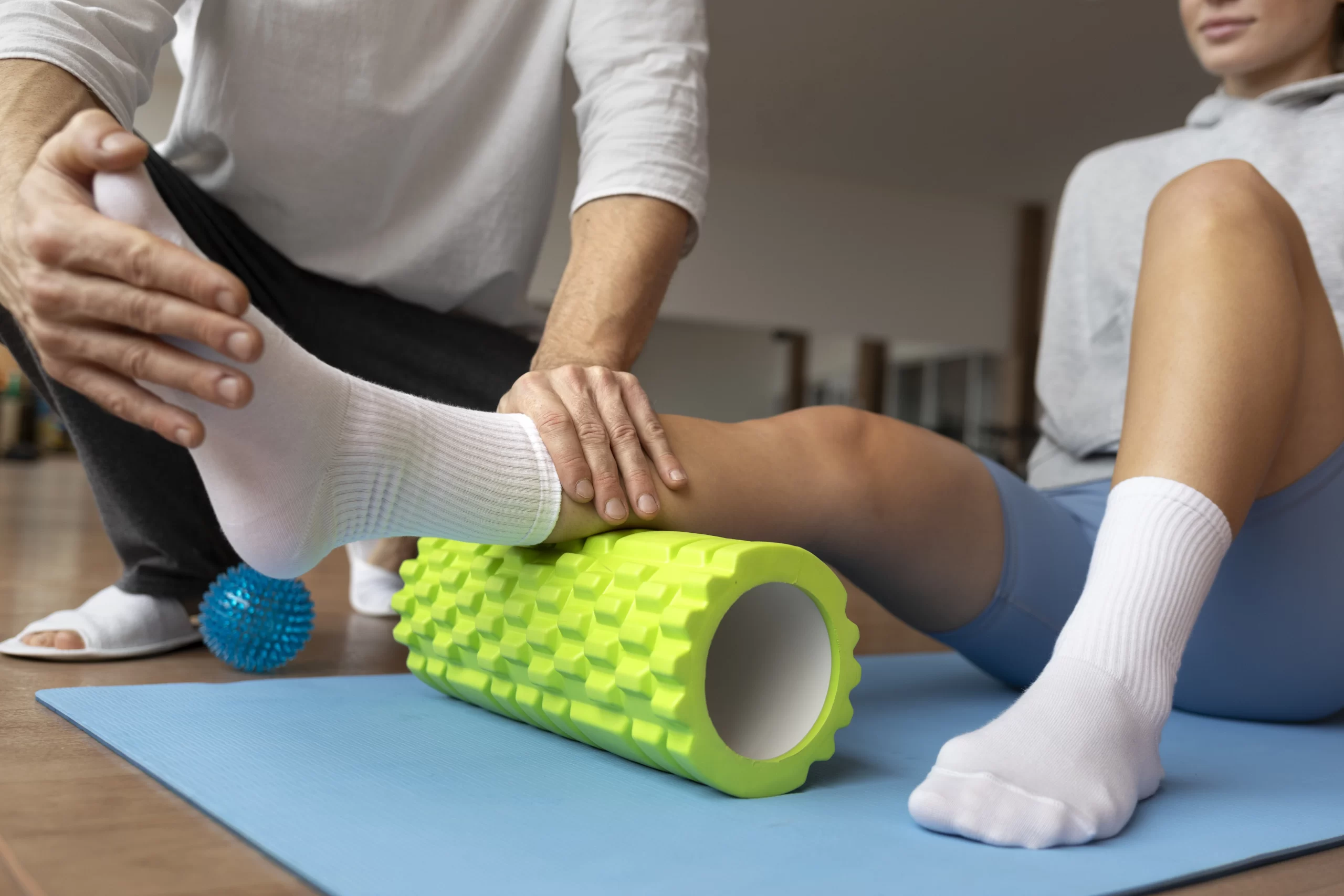
Seated exercises are structured movements performed while sitting in a chair or wheelchair. They work muscle groups across the whole body without asking the participant to stand, balance on one leg, or bear weight through the lower limb joints. That makes them genuinely accessible rather than a watered-down compromise.
The NHS recommends sitting exercises for anyone who hasn’t exercised in a while, including desk workers and older adults, citing benefits for flexibility, mobility, and muscle strength. Wheelchair users have their own fitness considerations, covered separately by the NHS. The British Heart Foundation frames a 10-minute chair-based routine as a clinically meaningful dose of activity for older people.
Practices supporting patient compliance with home exercise programs often see higher completion rates for seated workouts than for standing routines, largely because the barrier to starting is lower. A patient who says “I can’t exercise” will often do five minutes of ankle rotations from the sofa.
The evidence base for chair-based exercise is stronger than many patients expect. Here are the primary benefits, organized by health domain:
For teams focused on supporting patient compliance with rehabilitation plans, seated exercises are often the most practical prescription for the first weeks after injury or surgery, when weight-bearing activity is restricted.
Seated exercises suit a far wider audience than the senior-focused framing suggests. The key groups are:
Practices offering occupational therapy software and rehabilitation services often find that framing a program as “seated” removes a key psychological barrier for patients who feel overwhelmed by conventional fitness advice.
Before prescribing or starting seated exercises, a few practical steps cut injury risk sharply: pick a stable chair, set good posture, warm up, and build up gradually. Compliance requirements for home exercise programs often include a baseline assessment, and this section reflects that clinical standard.
Track the starting point. Note how many repetitions a patient can do comfortably on day one, then recheck every two weeks. Progress is motivating, and documented improvement supports ongoing treatment justification.
The best seated exercises for seniors combine leg strength, mobility, and gentle cardio, because lower-limb strength is the single biggest predictor of fall risk and functional independence. Start with light effort, prioritize control over speed, and build repetitions before adding any resistance.
Chair exercises for seniors work best as a short daily habit rather than an occasional long session. A practical starting set is seated marching for hip and thigh strength, seated leg raises for quadriceps strength, arm raises for shoulder function, and the seated cat-cow stretch for spinal mobility. Once control is solid, strength training for older adults builds on these same movements with added resistance.
These mobility exercises for the elderly map directly onto the daily tasks that keep someone independent: standing from a chair, reaching a high shelf, and walking without hesitation.

For older patients returning after illness or a hospital stay, the specific exercises appear in the upper body, core, and lower body sections below. The senior-specific principle is simply this: lower the entry point and the adherence follows.
Seated upper body exercises improve shoulder mobility, arm strength, and posture. Perform each move with controlled breathing: exhale on effort, inhale on return. Light dumbbells or a resistance band add load once the movement feels easy.
Sit tall with arms by your sides. Slowly raise both arms forward to shoulder height, palms facing down. Hold for two seconds, then lower. Do 10 to 12 repetitions for 2 to 3 sets. Targets the anterior deltoids and upper back.
Roll both shoulders forward in a circular motion for 10 repetitions, then reverse. This relieves tension across the trapezius and is an ideal warm-up for desk workers. No equipment needed.
Hold light dumbbells or water bottles at shoulder height, palms facing forward. Press overhead until the arms are extended, then lower. Perform 8 to 12 repetitions for 2 to 3 sets. This is the most effective single seated exercise with dumbbells for building shoulder and tricep strength.
Loop a resistance band around a fixed point at chest height. Hold one end in each hand, arms extended. Pull the band toward your torso, squeezing the shoulder blades together, then release slowly. Do 10 to 15 repetitions for 2 to 3 sets. These seated exercises with resistance bands strengthen the rhomboids and mid-trapezius, directly counteracting desk posture.
Seated core exercises and seated abdominal exercises are often underestimated. A stable, engaged core protects the lower back during every other seated movement and supports functional tasks like getting up from a chair.
Sit tall, feet flat. Breathe in deeply, then exhale and draw the navel toward the spine, holding for 5 to 10 seconds. Release. Repeat 10 times. This activates the deep transverse abdominis without spinal flexion, making it safe for post-surgical patients.
Sit upright, arms crossed over the chest. Rotate the upper body slowly to the right as far as comfortable, hold for two seconds, then return to center and rotate left. Perform 8 to 10 repetitions per side. Improves spinal rotation and oblique strength.
Hold the sides of the chair for support. Bring the right knee up toward the left elbow, rotating the torso to meet it, then alternate sides in a cycling motion. Perform 10 repetitions per side. This is one of the most effective seated abdominal exercises for building oblique strength without floor work.
Seated leg exercises target the muscles that predict fall risk and functional independence, which is why chair exercises for seniors lean heavily on the lower body. They also help desk-based office workers with tight hip flexors and weak glutes.
Sit upright, feet flat. Straighten one leg, hold for 3 to 5 seconds at hip height, then lower slowly. Perform 10 to 12 repetitions per leg for 2 to 3 sets. Targets the quadriceps and hip flexors, and a key move for maintaining knee extension strength in older adults.
Lift the right knee as high as comfortable, lower it, then lift the left. Alternate in a marching rhythm for 30 to 60 seconds. This is a low-intensity seated cardio option that also improves hip flexor mobility and coordination. The NHS includes a version of this move, called hip marching, as a sitting exercise for strengthening the hips and thighs and improving flexibility.
For calf raises: both feet flat, raise the heels as high as possible, hold one second, lower slowly. Repeat 15 times. For ankle rotations: lift one foot slightly off the floor, rotate the ankle in a full circle for 10 repetitions, then reverse and switch feet. Both improve circulation in the lower limb, which matters most for people with desk-based jobs or limited mobility.
The best exercises for sitting all day are short, frequent movement breaks that reverse the postures a desk locks you into: rounded shoulders, tight hip flexors, and a stiff lower back. Office chair exercises work best in 2 to 3 minute bursts every 60 to 90 minutes rather than one long session.
These desk exercises will not replace a structured workout, but for anyone chained to a screen they interrupt the static loading that causes most sitting-related aches.
Wheelchair users can build a full upper body workout and cardiovascular fitness through seated exercises, with no lower limb involvement required. General fitness guides tend to focus on standing exercise, so a dedicated wheelchair routine is harder to find elsewhere. Consult an occupational therapist or physical therapist first if you have upper limb conditions or a recent shoulder injury.
For teams working with this population, occupational therapy software that supports structured care planning makes it easier to document each exercise prescription and track progress over time.
Back pain is one of the most common reasons patients seek physical therapy, and several seated stretching exercises target the structures involved. Always advise patients to get a professional assessment for back pain before starting, because the right movements depend on the diagnosis.
Sit with feet flat and spine neutral. Gently tilt the pelvis forward, arching the lower back slightly, then tilt backward to flatten it. Alternate slowly for 10 repetitions. This mobilizes the lumbar spine and activates the deep stabilizers without loading the discs.
Hands on knees. Inhale and arch the back, lifting the chest (cow). Exhale and round the spine, dropping the head (cat). Repeat 8 to 10 times slowly. One of the most effective seated exercises for back pain, because it mobilizes every segment of the thoracic and lumbar spine.
Sit tall. Place the right hand on the left knee and the left hand on the back of the chair. Gently rotate left, looking over the shoulder. Hold 15 to 20 seconds, then repeat on the right. Relieves tightness in the paraspinal muscles and thoracic spine.
The table below is a complete full body seated workout that practice teams can share with patients as a printable or digital exercise plan. Timing is approximate and should be adjusted to fitness level.
According to the World Health Organization’s physical activity guidelines, even short bouts of movement count toward weekly activity targets. This 10-minute routine, done twice daily, accumulates 140 minutes per week, close to the minimum aerobic threshold for adults with limited mobility.
Because it is low-impact and repeatable, it also fits the pattern people searching for chair exercises for weight loss are after: frequent, sustainable movement they will keep doing.

Pabau lets you send personalized exercise plans, automated follow-up reminders, and digital intake forms so your patients stay on track with their rehabilitation program.

For physical therapy and rehabilitation practices, prescribing seated exercises is only part of the work. The harder part is patient care management between sessions: making sure patients actually do the exercises, documenting adherence, and adjusting the plan when progress stalls. Practice management software like Pabau brings those steps into one system.
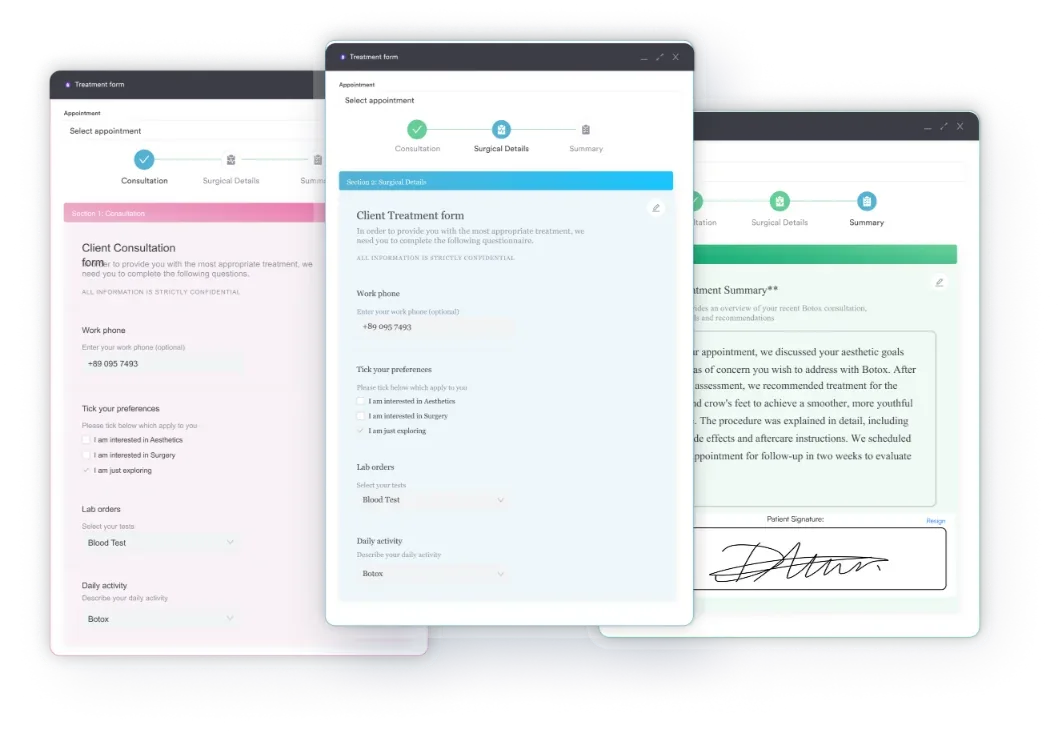
Pabau’s pre- and post-care instructions feature lets practitioners attach a structured exercise plan directly to the appointment record and send it automatically after each session. Patients receive their instructions by email or through the client portal, so there are no printed handouts to chase.
Digital intake forms capture baseline mobility scores and pain levels at the first appointment, giving clinicians a documented starting point to measure against. Combined with automated patient follow-up workflows, a practitioner can schedule a check-in message at the two-week mark without any manual effort.
Practices focused on patient engagement between appointments consistently report better outcomes from home exercise programs when automated touchpoints are in place. Structured follow-up keeps a program in front of the patient at the moments motivation tends to drop, rather than leaving them to self-manage between visits.
For teams building personalized treatment plans, Pabau’s client record stores exercise history alongside clinical notes, so every member of the care team sees the same picture. That matters in multi-disciplinary rehabilitation, where a physical therapist, an occupational therapist, and a physician all work with the same patient, and where physical therapy practice software that connects those records saves everyone from re-entering the same history more than once.
Seated exercises carry a low injury risk, but low is not zero. These precautions apply across all populations:
The American College of Sports Medicine recommends, in its physical activity guidelines, that people with chronic disease or multiple health conditions consult a qualified exercise professional before starting a new program. For practice teams, referring a patient to a physical therapist for a baseline assessment before unsupervised seated exercises reduces liability and improves outcomes.
Seated exercises remove the access barrier that stops many people from moving regularly. For clinicians, they are a practical first prescription for patients with limited mobility, back pain, post-surgical restrictions, or simply a desk-bound day.
Pabau’s pre- and post-care messaging and automated follow-up make it straightforward to prescribe, deliver, and track seated exercise programs at scale. To see how that fits your practice’s workflow, book a demo and we will walk you through it.

Need a structured physiotherapy workflow? Opening a physiotherapy clinic covers the compliance, staffing, and software setup steps for new practices.
Classifying an ankle fracture? Danis-Weber classification gives a fast, radiograph-based framework to characterize fibular fractures and guide initial management decisions.
Assessing wrist pain in the same session? Eichhoff’s test Eichhoff’s test outlines how to perform it, interpret findings, and avoid confusing it with Finkelstein’s test.
Seated exercises are structured movements performed while sitting in a chair or wheelchair, working muscle groups across the upper body, core, and lower body without standing or bearing weight through the legs. They are recommended by the NHS and British Heart Foundation for people with limited mobility, older adults, and desk-based workers.
The best chair exercises for seniors combine strength and mobility work: seated leg raises build quadricep strength to reduce fall risk, seated marching strengthens the hips and thighs while improving flexibility, arm raises maintain shoulder function, and the seated cat-cow stretch keeps the spine mobile. Start with two sets of 10 repetitions and build gradually.
Aim for at least 20 to 30 minutes of seated exercise per day, split across two or more sessions if needed. The WHO recommends 150 minutes of moderate activity per week for adults; a 10-minute routine done twice daily accumulates 140 minutes weekly, close to the minimum threshold for people with limited mobility.
Yes. Performed with resistance and progressive overload, chair-based movements build measurable strength, and regular sessions improve circulation, flexibility, and cardiovascular fitness. Seated leg raises, shoulder press, and resistance band rows all produce measurable strength gains with consistent practice, which is why the NHS and British Heart Foundation prescribe them for people with limited mobility.
Short, frequent movement breaks work best for desk-bound workers: shoulder rolls and seated rows to reset posture, torso twists to restore spinal rotation, and ankle rotations plus calf raises to keep blood moving in the legs. Two to three minutes every 60 to 90 minutes interrupts the static loading that causes most sitting-related aches.
Specific seated exercises, including pelvic tilts, the seated cat-cow stretch, and seated spinal twists, are commonly used in physical therapy for lumbar and thoracic back pain. Always get a professional assessment before starting, because the right movements depend on the underlying diagnosis, and loading the spine incorrectly can worsen certain conditions.
Wheelchair users can complete a full upper body workout with seated exercises: resistance band chest press, wheelchair push-ups, arm circles, and upper body marching all build strength and cardiovascular fitness without lower limb involvement. A physical therapist or occupational therapist can tailor these movements to any upper limb restrictions.