Pabau leads for multi-specialty and multi-location PT clinics needing unified scheduling, billing, AI documentation, and patient engagement in one platform.
WebPT and Prompt are the strongest PT-specific picks for US rehab clinics requiring Medicare-defensible documentation and advanced revenue cycle management.
SimplePractice and Noterro suit solo practitioners and small group practices with straightforward caseloads and lighter billing complexity.
Jane App and Cliniko offer the best international PT clinic options, with strong scheduling, clean UX, and solid telehealth support.
Choosing the wrong practice management software costs physical therapy clinics more than the subscription fee. Missed prior authorizations pile up. Documentation gaps trigger Medicare audits. Front desk staff spend hours reconciling scheduling and billing systems that don’t talk to each other. The software category has exploded with options, but most “best of” lists recycle the same four platforms without accounting for clinic size, specialty mix, or geographic market. This guide evaluates seven leading platforms across EMR quality, billing depth, scheduling, patient communication, and scalability – with real review data and honest trade-offs for each.
This comparison covers both PT-specialist tools and broader physiotherapy clinic management software platforms. Whether you run a solo outpatient practice, a multi-location sports medicine clinic, or a mixed-service facility combining PT with wellness or aesthetics, the right pick depends on which bottlenecks hurt your operation most.
Best Physical Therapy Practice Management Software: Quick Comparison
All seven platforms reviewed here handle core scheduling and documentation. Where they diverge is billing sophistication, AI tooling, international support, and scalability. Here’s how they stack up at a glance.
Name
Best For
Standout Feature
Starting Price
Rating
Pabau
Multi-specialty & multi-location clinics
AI Scribe + unified clinic OS
From $65/month
4.7/5 (600+)
WebPT
US rehab therapy groups
Medicare-defensible documentation
Contact for pricing
4.3/5
SimplePractice
Solo & small group PT practices
User-friendly client portal & telehealth
Contact for pricing
4.6/5
Prompt
US PT clinics with high billing volume
Built-in clearinghouse & RCM analytics
Contact for pricing
4.7/5
PtEverywhere
Independent PT practices eliminating admin
Single-database all-in-one platform
Contact for pricing
4.6/5
Noterro
Small therapy practices on a budget
Ease of use & clean scheduling UI
Contact for pricing
4.8/5
Jane App
Canadian & international PT clinics
Telehealth, scheduling & global billing
Contact for pricing
4.8/5
Pabau: Best Physical Therapy Practice Management Software for Multi-Specialty Clinics
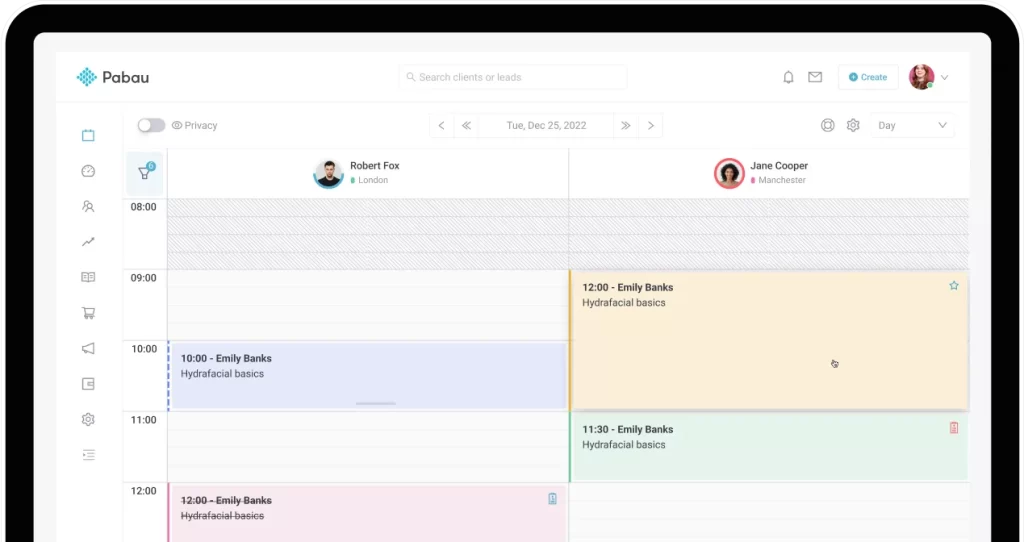
Pabau is an all-in-one clinic operating system built for healthcare practices that run more than one service line. For physical therapy clinics that combine PT with sports medicine, wellness treatments, occupational therapy, or aesthetic services, Pabau eliminates the need to stitch together separate scheduling, documentation, and billing tools. Its physical therapy EMR capabilities are part of a unified platform that covers the full patient lifecycle from first booking through discharge and recall.
Where PT-specific tools lock you into a single-specialty workflow, Pabau supports medical aesthetics, dermatology, longevity, women’s health, occupational therapy, and sports medicine alongside physical therapy – all from the same system. This matters for growing practices that need their software to scale with them, not constrain them. According to Capterra, Pabau holds a 4.7/5 rating across 600+ verified reviews.
Key Features
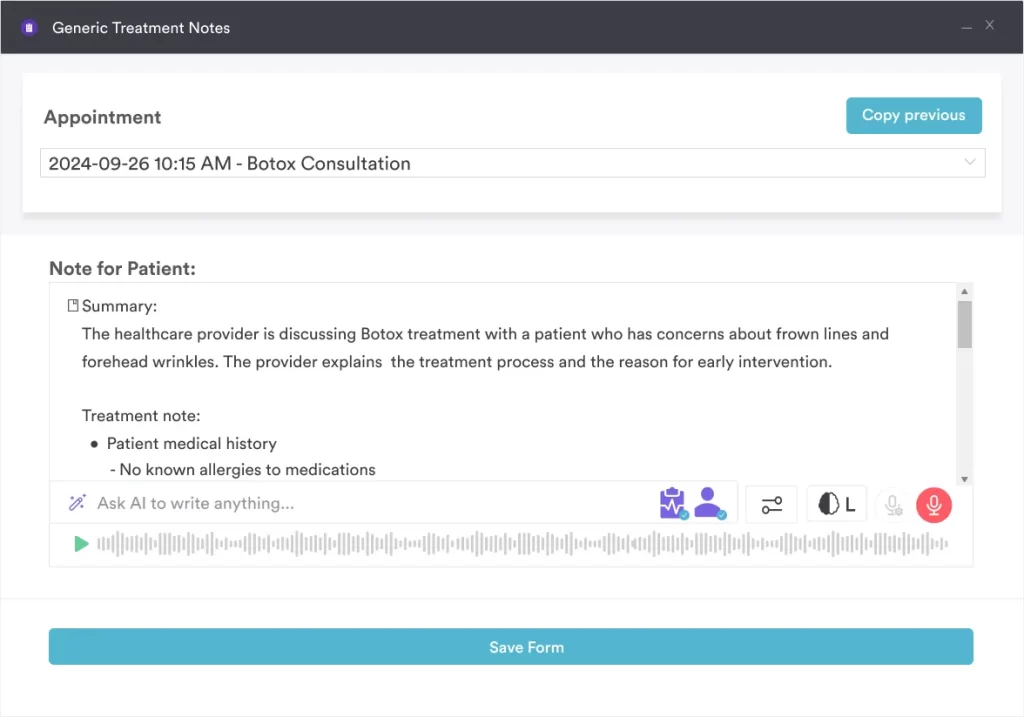
Pabau Scribe (AI medical scribe): real-time AI-assisted clinical note generation from consultations, reducing documentation time significantly for PT practitioners
Customizable clinical templates: SOAP notes, treatment plans, functional outcome measures, and assessment forms built for PT workflows
Digital intake forms: fully automated pre-appointment digital intake forms sent and signed before the patient arrives
Online booking with deposits: patient self-scheduling with automated reminders, waitlist management, and cancellation policies
Claims management: integrated insurance billing via claims management software with invoice and payment processing
Built-in telehealth:built-in telehealth for virtual PT consultations within the same platform, no third-party integration required
Automated workflows:automated workflows for recalls, post-care instructions, review requests, and patient re-engagement
Multi-location management: centralised reporting, staff scheduling, and cross-location booking for groups or franchise operations
Pricing
Plan
Price
Who It’s For
Key Features
Starter
From $65/month
Solo practitioners
Scheduling, forms, basic billing
Team / Medium
Custom pricing
Growing multi-practitioner clinics
Full EMR, telehealth, AI Scribe, automation
Enterprise
Custom pricing
Multi-location groups & franchises
Centralised reporting, multi-location, dedicated support
Where Pabau Shines
Multi-specialty flexibility: handles PT alongside aesthetics, sports medicine, wellness, and occupational therapy without separate systems
AI Scribe documentation: reduces charting time materially, letting therapists focus on patient care rather than note-writing
Patient experience automation: pre-care instructions, post-treatment follow-ups, recalls, and review requests run automatically without staff involvement
Multi-location scalability: centralized reporting and cross-location booking give growing groups a single operational view
Modern patient portal: patients book, sign forms, access records, and communicate via a clean digital experience that reduces front desk workload
Where Pabau Falls Short
Learning curve on setup: the platform’s breadth means initial configuration takes time; some users on Capterra note the onboarding period as intensive
US Medicare-specific compliance tooling: purpose-built PT platforms like WebPT have deeper defensible documentation features specifically designed for Medicare audits
Reporting depth: some reviewers flag that advanced analytics could be more granular for high-volume PT billing operations
Customer Reviews
According to Capterra reviewers, practitioners consistently praise Pabau’s ability to replace multiple disconnected tools: “All-in-one platform reducing need for multiple tools” and “Strong appointment and scheduling features” appear as recurring themes. Some users note an initial learning curve, though the onboarding support team is frequently cited positively.
Who Pabau Is Best For
PT clinics combining physical therapy with wellness, aesthetics, or sports medicine services
Multi-location or franchise PT groups needing centralised operations and reporting
Growing practices that want one platform to scale into, rather than switching systems again in two years
International PT clinics outside the US who need a flexible system without US-centric Medicare constraints
See how Pabau works for physical therapy clinics
Book a personalised walkthrough and see how Pabau handles scheduling, clinical documentation, billing, and patient communication in one connected system.
WebPT: Best Physical Therapy Practice Management Software for US Rehab Groups
WebPT is the most widely recognised name in physical therapy practice management software in the United States. Founded specifically for rehab therapy, it has built its reputation on documentation compliance, Medicare audit defense, and standardised PT evaluation workflows. For large US-based outpatient PT groups billing Medicare and working within strict regulatory frameworks, WebPT remains the benchmark.
Key Features
Standardised PT evaluation templates: built specifically for defensible documentation under Medicare and payer requirements
Automated compliance alerts: flags documentation gaps that could trigger claim denials or audit exposure
Integrated billing and RCM: end-to-end revenue cycle management with clearinghouse connectivity
SOAP note generation and flowsheets: structured clinical documentation tools optimised for outpatient PT workflows
Pricing
Plan
Price
Who It’s For
Key Features
All plans
Contact WebPT for pricing
US-based PT practices and groups
EMR, billing, scheduling, compliance tools
Where WebPT Shines
Medicare compliance depth: purpose-built documentation tools designed to withstand audit scrutiny
Industry trust: widely adopted across US PT groups; staff often arrive already trained on it
Where WebPT Falls Short
Higher price point: premium pricing relative to smaller or newer competitors, which can be a barrier for independent practices
Limited multi-specialty flexibility: optimised for rehab therapy, making it less adaptable for clinics running mixed service lines
Customer support: some Capterra reviewers report slower support response times compared to smaller platforms
Customer Reviews
WebPT holds a 4.3/5 on Capterra. Reviewers consistently highlight purpose-built rehab therapy workflows and Medicare compliance as strengths. Recurring concerns include pricing and the platform’s limited adaptability for non-PT specialties.
Who WebPT Is Best For
US outpatient PT groups with heavy Medicare billing and compliance requirements
Single-specialty rehab therapy practices that don’t need cross-specialty flexibility
SimplePractice: Best Physical Therapy Practice Management Software for Solo Practitioners
SimplePractice targets independent practitioners and small group practices across therapy disciplines. Physical therapists using it gain a polished, easy-to-navigate platform with a strong client portal, integrated telehealth, and a 30-day free trial (as confirmed on their physical therapy specialty page). The learning curve is minimal, which makes it popular among therapists transitioning from paper-based workflows.
For PT clinics with straightforward physical therapy clinic requirements and no complex insurance billing workflows, SimplePractice delivers strong value without unnecessary complexity. Where it struggles is billing depth – practices handling complex insurance claims or multi-location operations often hit its ceiling quickly.
Key Features
Client portal: patients self-schedule, complete intake forms, and access session notes through a clean digital interface
Native telehealth: HIPAA-compliant virtual sessions built directly into the platform
Insurance billing: claim submission and tracking, though complex payer workflows require workarounds
Customisable documentation templates: including PT-specific note formats
Pricing
Plan
Price
Who It’s For
Key Features
All plans
Contact SimplePractice; 30-day free trial available
Solo and small group therapists
Scheduling, telehealth, client portal, billing
Where SimplePractice Shines
Ease of use: one of the cleanest UX experiences in the category; setup time is minimal
Telehealth integration: seamless virtual session booking and delivery within the same system
Where SimplePractice Falls Short
Insurance billing limitations: complex insurance workflows and high-volume claims management require workarounds that slow operations
Scalability ceiling: not well-suited for multi-location PT groups or practices with diverse service lines
Customer Reviews
SimplePractice holds a 4.6/5 on Capterra. Reviewers praise its interface and telehealth quality. The most consistent criticism is limited customisation and billing constraints for practices with complex payer mixes.
Who SimplePractice Is Best For
Solo physical therapists or small group practices with straightforward billing needs
Practices prioritising a polished patient-facing digital experience with minimal setup effort
Prompt: Best Physical Therapy Practice Management Software for Revenue Cycle Depth
Prompt targets the billing-intensive side of PT practice management. Its built-in Office Ally clearinghouse integration (according to user testimonials on their platform) reduces external processing costs, and its analytics-driven approach to billing gives revenue cycle teams real-time visibility into claim status, denial rates, and collection performance. For practices where billing efficiency directly determines profitability, Prompt’s depth is hard to match.
Advanced billing analytics: denial tracking, collection rates, and financial performance dashboards purpose-built for PT RCM
PT-specific clinical documentation: evaluation templates and progress note formats aligned with insurance payer requirements
Scheduling and patient communications: appointment booking, reminders, and patient engagement tools
Pricing
Plan
Price
Who It’s For
Key Features
All plans
Contact Prompt for pricing (premium tier)
Mid-to-large US PT practices
EMR, billing, clearinghouse, analytics
Where Prompt Shines
Billing automation: rated as best-in-class for PT-specific revenue cycle management by multiple review sources
Analytics depth: financial reporting goes well beyond what most PT platforms offer
Where Prompt Falls Short
Steeper learning curve: the platform’s depth requires meaningful onboarding investment, which can slow new practices down initially
US-only focus: limited international support; not a viable option for PT clinics outside the United States
Customer Reviews
Prompt earns 4.7/5 on both Capterra and G2. Users repeatedly highlight billing automation and analytics as the platform’s defining strengths. The learning curve and premium pricing are the most cited downsides for smaller or newer practices.
Who Prompt Is Best For
US-based PT practices with significant insurance billing volume where RCM efficiency drives profitability
Practices that have outgrown lighter billing tools and need enterprise-grade analytics and clearinghouse integration
PtEverywhere: Best Physical Therapy Practice Management Software for Eliminating Double Entry
PtEverywhere is designed around a single-database architecture that keeps clinical, scheduling, billing, and patient communication data in one place. The pitch is simple: no CSVs to reconcile, no integrations to maintain, no double-entry across systems. For independent PT practices where a small admin team handles everything, that simplicity translates to real time savings. The platform is HIPAA-compliant (as stated on their website) and specifically built for physical therapy clinic workflows.
Key Features
Single-database platform: clinical, financial, and engagement data unified in one system with no integration overhead
Strong mobile app: practitioners can document and manage schedules from iOS and Android
Patient communication tools: automated review requests and patient messaging built into the workflow
Online scheduling: patient self-booking with automated appointment reminders
Zero-duplication architecture: single source of truth eliminates the reconciliation overhead common when using multiple tools
Mobile-first design: practitioners treating patients in different rooms or locations can document on the go
Where PtEverywhere Falls Short
Smaller ecosystem: fewer third-party integrations than larger platforms; practices with specific external system requirements may hit limitations
Reporting basics: some Capterra reviewers flag that analytics and reporting features are less sophisticated than competitors
Customer Reviews
PtEverywhere holds 4.6/5 on Capterra. Reviewers most often praise the unified data model and patient communication features. Reporting depth and integration breadth are the most frequently noted limitations.
Who PtEverywhere Is Best For
Independent PT practitioners who want an all-in-one system with minimal integration complexity
Practices where admin team size makes double-entry a real operational cost
Noterro: Best Physical Therapy Practice Management Software for Budget-Conscious Small Practices
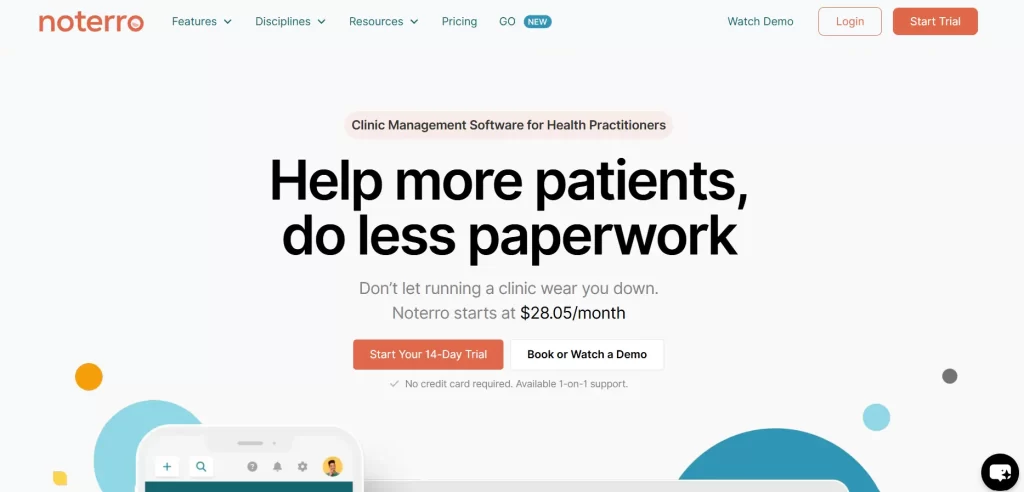
Noterro carved out a loyal user base among smaller therapy practices by keeping things simple. Scheduling, documentation, and basic billing work smoothly in a clean interface that doesn’t overwhelm a one-to-three practitioner team. Its 4.8/5 Capterra rating reflects genuine user satisfaction from practices that value usability over feature depth.
The trade-off is clear: Noterro lacks the advanced billing automation, analytics depth, or multi-location management that growing practices need. It’s a starter tool, not a scale-up platform. Practices that outgrow it – typically when billing complexity or headcount increases – face a migration that would have been avoided with a more scalable initial choice.
Key Features
Clean scheduling interface: simple calendar management with patient self-booking
Basic clinical documentation: SOAP notes and customisable templates for therapy practices
Patient intake forms: digital forms completed before appointments
Invoicing and basic billing: payment collection and invoice management
Pricing
Plan
Price
Who It’s For
Key Features
All plans
Contact Noterro for pricing
Small therapy practices
Scheduling, documentation, basic billing
Where Noterro Shines
Highest ease-of-use rating: consistently cited as one of the most intuitive platforms in the category
Quick onboarding: practices can be operational within hours, not days
Where Noterro Falls Short
Limited billing features: not suitable for practices with complex insurance workflows or high claim volumes
No multi-location management: designed for single-location practices only
Customer Reviews
Noterro leads this comparison with a 4.8/5 on Capterra. Users love the simplicity and clean interface. The most common feedback is that advanced features found on larger platforms are absent.
Who Noterro Is Best For
Small therapy practices with 1-3 practitioners and straightforward billing needs
Practices transitioning from paper records who want minimal setup friction
Jane App: Best Physical Therapy Practice Management Software for International Clinics
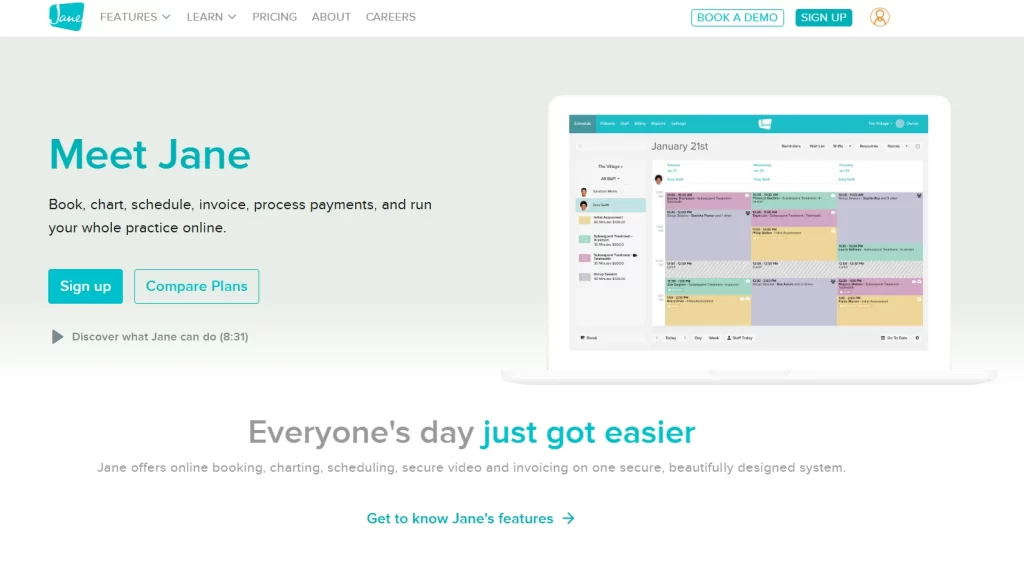
Jane App is a Canadian-built platform with strong adoption across North America, the UK, and Australia. For how Pabau compares to Jane App in a detailed head-to-head, the key difference is billing depth in US markets – Jane’s insurance billing is less robust than US-native platforms, but for clinics in Canada, the UK, or Australia, its billing framework works well. Its scheduling, telehealth, and patient experience tools are among the best in the category.
Key Features
Online scheduling: patient self-booking with automated reminders and waitlist management
Clinical charting: customisable note templates for PT and allied health disciplines
Billing and invoicing: invoice generation and payment collection; Canadian insurance billing natively supported
Pricing
Plan
Price
Who It’s For
Key Features
All plans
Contact Jane App for pricing (higher for solo practitioners per reviewers)
Canadian and international PT clinics
Scheduling, telehealth, charting, invoicing
Where Jane App Shines
International market support: purpose-built for Canadian healthcare billing; strong adoption in Australia and the UK
User experience: excellent onboarding and one of the highest user satisfaction scores in the category
Where Jane App Falls Short
US insurance billing: less robust than US-native platforms for complex Medicare and commercial payer workflows
Analytics limitations: advanced financial analytics are less developed than Prompt or WebPT
Customer Reviews
Jane App holds 4.8/5 on both Capterra and G2. Exceptional user experience and onboarding quality are the defining themes across reviews. US-based reviewers occasionally note that insurance billing workflows require more manual effort than US-native alternatives.
Who Jane App Is Best For
Canadian PT clinics needing provincial billing support alongside strong scheduling and telehealth
International PT practices in Australia, the UK, or other markets where US-centric billing compliance is irrelevant
Cliniko: Best Physical Therapy Practice Management Software for Allied Health Practices
Cliniko is a popular choice among allied health practitioners, particularly in Australia and the UK. Physical therapists, osteopaths, and occupational therapists use it for its clean appointment management, treatment note templates, and invoicing. For how Pabau compares to Cliniko, the distinction is depth of automation and multi-location capabilities – Cliniko excels in simplicity, Pabau in scale.
Key Features
Appointment scheduling: calendar management with online booking for patients
Treatment notes: customisable documentation templates for PT and allied health
Invoicing and billing: invoice creation, payment processing, and basic billing management
Patient records: health history, treatment notes, and clinical documentation in one place
Pricing
Plan
Price
Who It’s For
Key Features
All plans
Contact Cliniko for pricing
Allied health practices in AU/UK/international
Scheduling, notes, invoicing, patient records
Where Cliniko Shines
Allied health focus: used broadly by physiotherapists, osteopaths, and OTs across international markets
Simplicity: clean UX with low onboarding friction for smaller practices
Where Cliniko Falls Short
Limited automation: recall workflows, marketing automation, and advanced patient communication tools are less developed than Pabau or WebPT
US billing: not designed for US insurance billing or Medicare compliance workflows
Customer Reviews
Cliniko is well-regarded among international allied health practitioners for its simplicity and reliability. Practitioners in Australia and the UK represent its core user base, and the platform’s clean interface is frequently cited positively in community discussions.
Who Cliniko Is Best For
Allied health and physiotherapy practices in Australia, the UK, and other international markets
Practices wanting a straightforward system with low complexity and minimal setup time
How to Choose the Best Physical Therapy Practice Management Software
The right platform depends on five dimensions. Most practices prioritise two or three – knowing which matter most to your operation eliminates most of the comparison work.
Billing complexity: if you bill Medicare, Medicaid, and commercial insurers at high volume, you need WebPT or Prompt. If billing is simpler – cash pay, private insurance, or basic Medicare – lighter tools work fine.
Specialty mix: single-specialty PT-only clinics can use any platform here. Mixed-service clinics combining PT with wellness, aesthetics, or sports medicine need a multi-specialty system. Pabau is purpose-built for this.
Geographic market: US Medicare compliance drives WebPT and Prompt’s value. Canadian clinics should prioritise Jane App. UK and Australian practices often choose Cliniko or Pabau. Check compliance requirements for physiotherapy clinics in your jurisdiction before committing.
Scale and growth trajectory: solo practitioners and two-to-three person teams can use SimplePractice or Noterro effectively. Practices planning multi-location expansion should evaluate Pabau or WebPT from day one – migrating later is costly. Read more about opening a physiotherapy clinic and what operational systems you’ll need as you grow.
Patient experience priorities: if patient-facing digital experience (online booking, portal, automated follow-ups) is a competitive differentiator in your market, Pabau and Jane App lead on this dimension. Traditional PT groups competing on clinical outcomes rather than convenience can deprioritise it.
For a broader view of operational software choices across healthcare, this guide to medical practice management software covers the decision framework in detail. If your clinic combines physical therapy with other disciplines, Pabau’s multi-specialty platform is the broadest option that grows as your service mix evolves.
Pro Tip
Run a 30-day documentation audit before switching platforms. Count how many minutes per session your therapists spend on charting, how many claim denials you receive monthly, and how many manual front desk tasks are involved in booking and follow-up. These three numbers define exactly which platform gap you’re solving – and whether a specialist tool or an all-in-one system serves you better.
Expert Picks
Need a complete guide to PT clinic operations?Opening a Physical Therapy Clinic covers the operational, legal, and software requirements for launching a PT practice.
Looking for a return-to-sport protocol to pair with your documentation system?Return to Running Protocol for Physical Therapy provides a structured clinical framework for sports rehab discharge planning.
Want to understand how AI documentation tools work in clinical settings?Benefits of AI Scribe for Physicians explains how AI-assisted note generation changes documentation workflows across specialties.
Conclusion
Most PT clinics lose time and revenue not because they lack clinical skill, but because their software forces workarounds: billing teams reconciling exports, therapists documenting after hours, front desk staff manually chasing reminders. The right platform eliminates those gaps.
For US single-specialty rehab groups, WebPT’s compliance depth or Prompt’s billing automation are the strongest picks. For solo practitioners, SimplePractice or Noterro keep operations clean without unnecessary complexity. For international clinics, Jane App or Cliniko fit the market. For multi-specialty and multi-location PT clinics that need one system to handle scheduling, AI-assisted documentation, billing, and patient communication across every service line, Pabau is the broadest and most scalable option available. Book a demo to see how Pabau handles physical therapy clinic workflows end to end.
Frequently Asked Questions
What is the best EMR for physical therapy practices?
For US-based single-specialty PT practices, WebPT and Prompt are the most purpose-built EMR options, with strong Medicare compliance documentation and billing automation respectively. For multi-specialty or international PT clinics, Pabau’s flexible EMR with AI Scribe and multi-location management is a stronger fit. Jane App leads for Canadian and international markets.
What features should physical therapy practice management software include?
At minimum: SOAP note and PT evaluation templates, insurance billing and claim submission, online patient scheduling, HIPAA-compliant patient records, and automated appointment reminders. Growing practices should also require telehealth, outcomes tracking, multi-location management, and reporting dashboards that surface denial rates and collection performance.
How much does physical therapy practice management software cost?
Pricing varies widely by platform and practice size. Pabau starts from $65/month for solo practitioners. Enterprise PT-specialist platforms like WebPT and Prompt typically require custom quotes and tend to sit at a premium price point. SimplePractice and Noterro offer more accessible pricing for small practices, though exact figures require contacting each vendor directly as of 2026.
What is the difference between PT EMR and practice management software?
A PT EMR (electronic medical record) focuses on clinical documentation: SOAP notes, evaluation templates, treatment plans, and functional outcome measures. Practice management software covers the operational layer: scheduling, billing, insurance claims, patient communication, and reporting. Modern platforms like Pabau, WebPT, and Prompt combine both into a single system, eliminating the need for separate tools and the data duplication that comes with them.
Is cloud-based physical therapy software better than on-premise?
All seven platforms in this comparison are cloud-based, which reflects the industry standard. Cloud-based systems offer automatic updates, access from any device, lower IT maintenance overhead, and easier multi-location access. The HHS HIPAA Security Rule applies to both models; cloud platforms generally have stronger built-in security infrastructure than on-premise installations maintained by smaller practices.