How to Choose AI Clinical Notes Software for Your Practice in 2026
Documentation burnout is one of the top reasons clinicians leave private practic...

April 17, 2026


Buy now, pay later is now available in Pabau

Pabau’s Echo AI generates clinical notes ai documentation across multiple specialties including aesthetics, physiotherapy, and private GP, not just mental health.
SimplePractice Note Taker is built specifically for therapists and supports SOAP, DAP, and BIRP formats with a clinician-review requirement before notes are locked.
Pabau connects clinical notes ai to scheduling, billing, and client records in one platform, while SimplePractice optimises for therapy-first workflows with strong telehealth integration.
Compliance differs by geography: SimplePractice is HIPAA-focused for US therapists; Pabau addresses both GDPR and HIPAA requirements for UK, EU, and international clinics.
Documentation burnout is one of the top reasons clinicians leave private practice. The average practitioner spends between 34 and 55 percent of their work day on clinical documentation in electronic health records, with clinical note-writing consuming a disproportionate share of that time. Clinical notes AI has moved from a niche experiment to a practical workflow tool, and two platforms now sit at the centre of that conversation for private clinics: Pabau and SimplePractice.
This comparison is written for clinic owners and practice managers evaluating which platform’s clinical notes AI capability better fits their documentation workflow, compliance requirements, and specialty mix. We cover how each tool generates notes, what formats it supports, how it connects to the rest of the practice, and where each platform falls short.
Both platforms have built clinical notes AI directly into their practice management suites rather than relying on third-party ambient scribe add-ons. The philosophy is similar: capture what happens in a session, structure it into a usable note format, and hand it to the clinician for review. The implementation, however, reflects two very different clinical audiences.
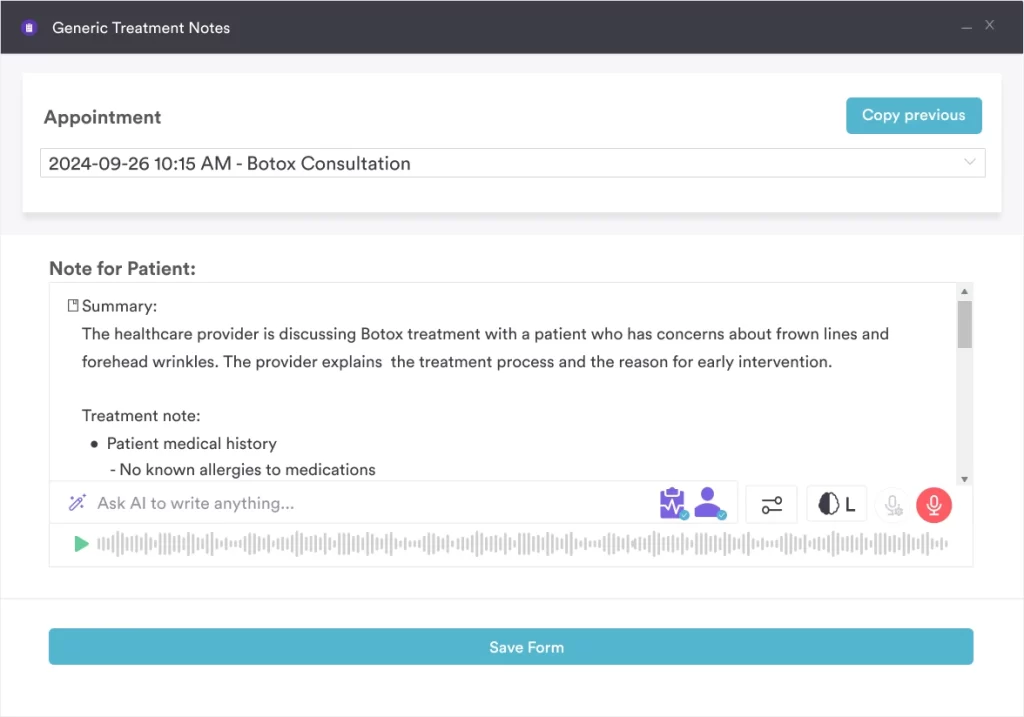
Pabau’s AI documentation feature, branded as Echo AI, is designed for multi-specialty clinics. A dermatology clinic, a physiotherapy practice, and an aesthetic medical spa can all use the same platform and expect the AI to produce notes relevant to their workflows. SimplePractice’s Note Taker was developed with input from over 1,000 therapists and is purpose-built for mental health and behavioural health sessions. That context shapes everything from the note formats available to how compliance is handled.
According to a systematic review published in PMC, AI documentation tools bridge the gap between free-text clinical notes and structured data fields, helping clinicians organise information without sacrificing the flexibility that free-text allows. Both Pabau and SimplePractice address this challenge, but through different structural approaches.
Here is how the two platforms compare across the criteria that matter most to clinic decision-makers.
Understanding how each platform positions its AI documentation feature requires understanding what each platform is fundamentally built to do. The AI notes capability is not a standalone product in either case; it is embedded within a broader clinical and operational suite. That context determines how useful the clinical notes AI actually becomes day-to-day.
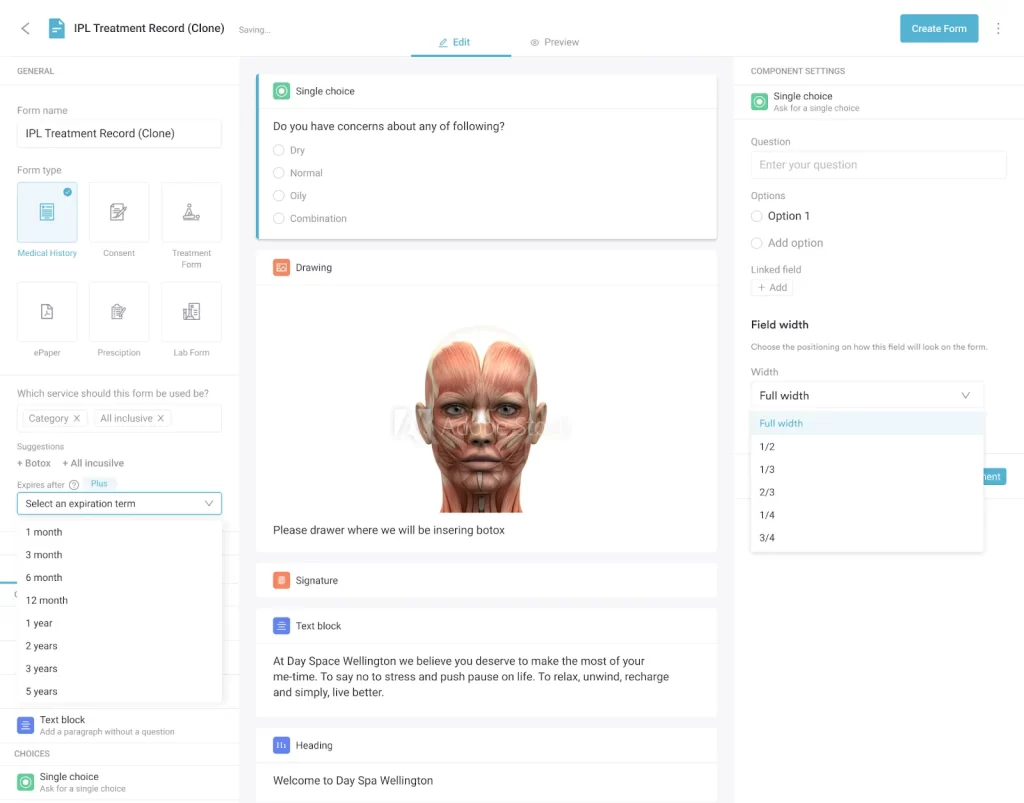
Pabau is an all-in-one practice management platform built for multi-specialty private clinics. Its Echo AI feature sits inside a system that also handles scheduling, digital intake forms, billing, treatment planning, and before-and-after photography. When a clinician finishes a consultation, the AI-generated note can connect directly to the patient’s file, inform next steps in the treatment plan, and link to billing records without manual data transfer. That integration is the central operational argument for Pabau in a multi-provider clinic environment.
SimplePractice is a purpose-built EHR for mental health and behavioural health practitioners. Its Note Taker feature was developed with input from over 1,000 therapists, according to the SimplePractice blog, and every design decision reflects the specific documentation needs of therapy practice. Session transcription, note drafting, and clinician review all happen within a workflow optimised for 50-minute therapy sessions, telehealth calls, and recurring appointment structures.
Pabau’s Echo AI captures consultation audio, transcribes it, and generates a structured clinical note within the patient’s record. Clinicians can review, edit, and finalise the note before it is saved to the client record. Because the note is generated inside Pabau’s full platform, it is immediately accessible alongside appointment history, treatment plans, invoices, and consent forms. For clinics running multiple specialties, this means a physiotherapist and a GP practitioner within the same practice can both use the same AI documentation tool without switching platforms.
SimplePractice’s Note Taker transcribes sessions in real time and drafts structured notes. Clinicians are required to review and edit all AI-generated content before notes are finalised, according to SimplePractice’s official support documentation. The platform supports in-person and telehealth sessions, and the AI can produce output in SOAP, DAP, and BIRP formats, each aligned to common therapy documentation standards. This format-specific support reflects how deeply SimplePractice has designed its AI around therapy practice conventions.
Feature-by-feature, the two platforms reflect their different clinical audiences. The table below covers the areas most relevant to clinic decision-makers evaluating clinical notes AI capability.
Compliance is where clinic geography matters most. A mental health practice in California operates under different regulatory expectations than a private wellness clinic in London, and the platform choice for clinical notes AI should reflect that. Understanding how each platform handles compliance is not a formality; it determines whether your documentation workflow carries legal and professional risk.

Pabau's Echo AI generates clinical notes across aesthetics, physiotherapy, private GP, and wellness specialties, all connected to scheduling, billing, and client records in one platform. Book a demo to see how it fits your clinic's workflow.

SimplePractice’s Note Taker builds HIPAA compliance into the EHR platform itself, according to the SimplePractice blog on HIPAA-compliant AI note-taking. This means the Business Associate Agreement (BAA), data handling protocols, and audit trail requirements are built into the platform’s infrastructure rather than handled separately. For US-based therapists, this integrated compliance model is a meaningful advantage. Pabau’s HIPAA compliance for clinic software is similarly built into the platform, while its primary design emphasis is on GDPR and UK/EU data protection requirements, making it the stronger choice for international private clinics.
For UK and EU-based clinics, Pabau’s alignment with GDPR requirements is directly relevant. The ICO (Information Commissioner’s Office) expects clear data processing agreements when AI tools handle patient data, and Pabau is built with that regulatory context in mind. Clinics operating under dual HIPAA and GDPR obligations (common in practices serving both US and UK patients) should review both platforms’ BAA and data processing agreement documentation before making a decision. See Pabau’s GDPR compliance checklist for a detailed walkthrough of UK data protection requirements.
Both platforms require clinicians to review AI-generated notes before they are finalised. This is not a limitation; it is a regulatory and professional requirement. The American Medical Association’s principles on AI in healthcare are explicit that AI tools should augment, not replace, clinical judgment. Neither platform positions its clinical notes AI as a fully autonomous documentation system, which reflects appropriate practice.
Review your platform’s Business Associate Agreement before enabling any AI documentation feature. Both HIPAA (US) and GDPR (UK/EU) require documented agreements covering how AI tools process, store, and delete patient audio and transcription data. Request the BAA documentation before switching on clinical notes AI features.
The clinical notes AI feature does not exist in isolation. How AI-generated notes connect to the rest of a clinic’s operations, including scheduling, billing, treatment records, and patient communication, determines whether documentation becomes genuinely more efficient or simply faster at the note-drafting stage alone.
Pabau’s integration depth is its clearest operational differentiator. When a clinician completes a consultation and Echo AI generates the note, that note sits inside the same system managing the patient’s appointment history, consent forms, treatment plans, and invoices. There is no export step, no copy-paste into a billing field, and no separate EHR lookup to see what was documented at the last session. For clinics running multiple practitioners across different specialties, this unified data flow reduces the coordination overhead that fragmented software stacks create. The role of AI in practice management goes well beyond note generation; Pabau positions Echo AI within that broader automation framework.
SimplePractice offers equivalent integration within its therapy-optimised suite. Session notes connect to billing, telehealth records, appointment history, and the client portal. For a solo therapist or small group practice, the platform’s integration depth is comprehensive within its defined scope. The limitation surfaces when a practice spans specialties beyond behavioural health. A clinic offering both therapy and physiotherapy, for example, would find SimplePractice’s integration model well-suited to the therapy side and under-specified for physical rehabilitation documentation.
For clinics considering how AI scribes affect patient care, the integration question is particularly relevant. A note that is generated quickly but then manually transferred between systems introduces error risk and erodes the time savings the AI was meant to provide. Both platforms avoid this problem within their primary use cases; the distinction is whether your clinic’s primary use case falls within SimplePractice’s therapy focus or Pabau’s multi-specialty model.
Pabau’s multi-specialty positioning is genuinely useful for clinics that operate across more than one clinical discipline. An aesthetic clinic offering both injectable treatments and physiotherapy-adjacent services does not need two documentation platforms; Echo AI covers both within a single patient record structure. The launch of Pabau’s Echo AI positioned it specifically for this cross-specialty documentation need, and clinic owners managing diverse service menus benefit from that breadth.
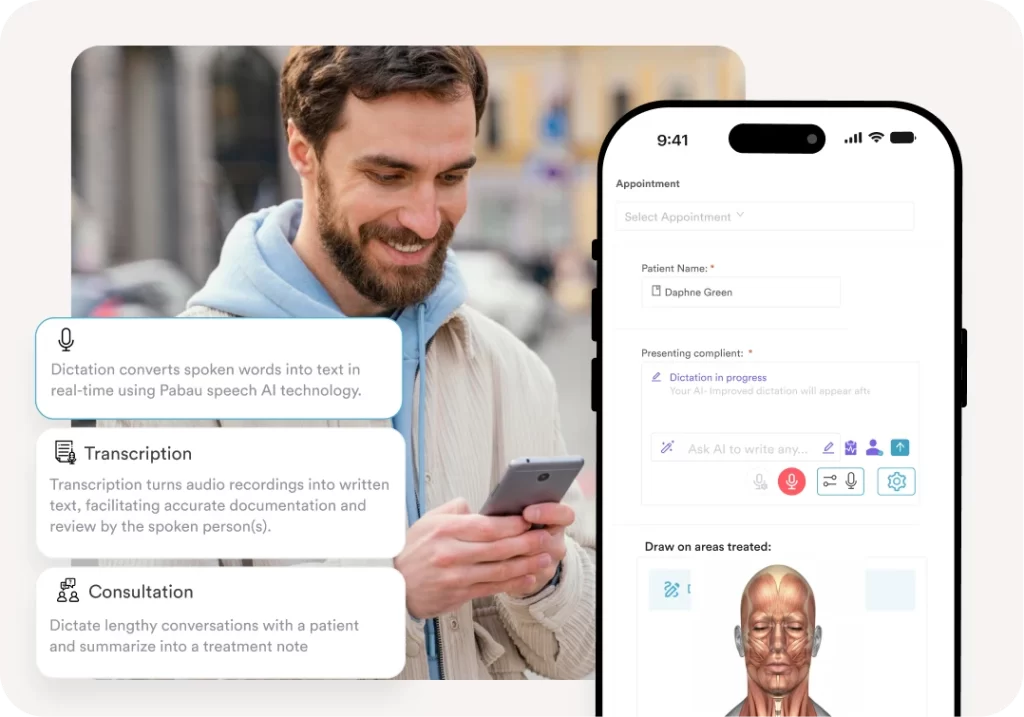
The connection between AI-generated notes and the broader clinical record also reduces rework. Clinicians do not need to manually pull information from notes into treatment plans or billing records; the workflow is designed so that what is documented flows through the system. This matters most in busy multi-practitioner clinics where documentation backlogs accumulate across sessions.
GDPR-first compliance design is an operational advantage for UK and EU clinics that US-first platforms cannot easily replicate. International practices, or any clinic serving patients across regulatory jurisdictions, should weigh this carefully. According to Capterra reviewers, Pabau rates 4.7 out of 5 across 600+ verified reviews, with positive themes around all-in-one clinic management, automation features, and appointment and billing management.
Pabau does not offer pre-built DAP or BIRP note formats out of the box. Mental health practitioners who rely on those specific modalities will need to configure custom templates rather than selecting from a built-in library. For therapy-specialist practices, that extra configuration step is a friction point that SimplePractice eliminates by default.
SimplePractice Note Taker is the clearest example of domain-specific AI documentation design in the therapy market. The support for SOAP, DAP, and BIRP formats means a therapist can select the note structure their practice uses and receive AI output already structured accordingly, without reformatting. For practices where documentation standardisation is a clinical governance requirement, this out-of-the-box format support is a meaningful efficiency gain.
The telehealth integration is strong. Note Taker works for both in-person and video sessions, so a therapist whose caseload is split between clinic and remote sessions does not need to manage documentation differently depending on the session format. According to Capterra reviewers, SimplePractice rates 4.6 out of 5 based on over 2,800 verified reviews. Positive themes include intuitive design for therapists, strong telehealth integration, reliable note templates, and a solid client portal.
For practices exploring mental health EMR options more broadly, SimplePractice is a strong contender within its defined scope, but the scope matters. On G2, SimplePractice rates 4.1 out of 5 based on approximately 125 reviews, with positive sentiment around documentation tools balanced against criticism of pricing and support responsiveness.
Pabau publishes plan pricing starting at $65/month on pabau.com/pricing, with Echo AI bundled into all plans at no extra cost. SimplePractice publishes plan pricing at simplepractice.com/pricing: Starter at $49/month, Essential at $79/month, and Plus at $99/month per practitioner. SimplePractice’s Note Taker is an optional add-on available across all plans, per their support documentation.
Pabau offers tiered pricing for clinic teams, with AI features included at relevant plan levels. Because Pabau serves multi-practitioner and multi-location clinics, pricing reflects the operational complexity of those environments. Contact Pabau directly or visit the pricing page for current plan structures. SimplePractice’s tiered plans are designed around solo and small group therapy practices, with Note Taker available on certain subscription levels. For solo practitioners, the per-practitioner pricing structure differs significantly from Pabau’s clinic-team model.
User sentiment on AI documentation tools reflects the importance of fit between the tool’s design and the clinician’s actual workflow. Both platforms receive strong overall ratings, but the review themes reveal different strengths and limitations that map closely to the audience each platform was built for.
When comparing platform pricing for clinical notes AI, factor in the full stack cost rather than the subscription line item alone. A platform that requires a separate transcription add-on, third-party EHR connection, or manual billing reconciliation may cost significantly more in aggregate than an all-in-one system with AI documentation included.
According to Capterra reviewers, Pabau’s all-in-one approach is a recurring positive theme. Reviewers highlight the automation features and ease of managing appointments and billing within a single system. The reported learning curve for new users is the most common constructive criticism, which is typical of platforms offering broad functionality across complex clinic workflows. For multi-specialty and multi-practitioner environments where AI scribe benefits scale across the whole team, Pabau’s review profile suggests strong operational value once the initial setup is complete.
SimplePractice’s Capterra rating of 4.6/5 across over 2,800 reviews reflects its strong position within its defined audience. Therapists consistently praise the intuitive design, the quality of note templates, and the reliability of the client portal. The most frequent criticism centres on pricing for solo practitioners and support responsiveness. For the core clinical notes AI experience, therapists report that Note Taker meaningfully reduces time spent on post-session documentation, which aligns with the platform’s core design promise. Read more on the pros and cons of AI in healthcare to understand the broader context for adopting these tools.
The right choice depends almost entirely on your clinic’s specialty mix, geography, and operational structure. Neither platform is categorically superior; they serve genuinely different clinical audiences.
Choose Pabau if: your clinic operates across multiple specialties, you have more than one practitioner, you need GDPR-compliant AI documentation, or your practice workflows require AI notes to connect directly to scheduling, billing, and treatment planning in one system. Pabau also suits clinics outside the US where HIPAA-first platforms create unnecessary compliance complexity. The telehealth software integration within Pabau extends the same cross-specialty logic to remote consultations.
Choose SimplePractice if: you are a mental health therapist or behavioural health practitioner running a solo or small group practice in the US. The pre-built SOAP, DAP and BIRP note formats, the therapist-validated workflow, and the HIPAA-native compliance model make SimplePractice the most purpose-designed clinical notes AI tool for this specific audience. If your entire caseload fits within behavioural health, the depth of SimplePractice’s therapy-specific documentation tools is difficult to match. Explore the best EHR options for private practice if you are still evaluating the wider market before committing.

Want to understand the full scope of AI documentation tools? AI in Practice Management covers how AI connects to scheduling, billing, and clinical workflows beyond just note generation.
Considering safer documentation practices for your clinic? Safer Clinical Notes provides a practical guide to reducing documentation risk across clinical specialties.
Evaluating Pabau’s AI against other tools? Echo AI vs Heidi AI compares Pabau’s documentation AI against another leading ambient scribe platform.
Need a structured evaluation framework for how AI scribes affect care? AI Scribes Impact on Patient Care examines the clinical and operational evidence for AI documentation adoption.
Most clinics do not fail at documentation because their clinicians write slowly. They fail because the tools they use create handoff gaps, compliance ambiguity, and administrative layers that compound across hundreds of sessions. Clinical notes AI solves the drafting problem; the platform you choose determines whether it solves the whole workflow problem or just one part of it.
Pabau’s Echo AI connects note generation to every downstream workflow a multi-specialty clinic depends on: client records, billing, treatment planning, and recall automation. For clinics that need documentation to move seamlessly across specialties and regulatory contexts, that integration is the practical case. Book a demo to see how Pabau’s clinical notes AI fits your clinic’s specific workflow.
Yes. Both Pabau and SimplePractice use AI to transcribe consultations and draft structured clinical notes. The clinician is required to review and edit AI-generated content before notes are finalised. This human-in-the-loop requirement is standard across all regulated clinical AI documentation tools.
It can be, provided the platform has executed a Business Associate Agreement (BAA) and its data handling processes meet HIPAA requirements. SimplePractice builds HIPAA compliance into its EHR infrastructure. Pabau is also HIPAA-compliant, with additional GDPR compliance for UK and EU practices. Always request the BAA documentation before activating AI note features.
SimplePractice Note Taker supports SOAP, DAP, and BIRP formats natively, aligned to therapy practice conventions. Pabau supports SOAP notes and offers customisable templates across specialties including aesthetics, physiotherapy, and private GP, rather than pre-built therapy-specific modalities.
Both Pabau and SimplePractice generate AI notes natively within their own EHR platforms, meaning notes are automatically accessible alongside appointment records, billing, and treatment history without manual export. Pabau’s integration spans multi-specialty clinic operations; SimplePractice’s is optimised for therapy practice workflows.
Time savings vary significantly by practice type, session length, and clinician workflow. Some AI documentation tools report user time savings in note-writing, though specific figures depend heavily on the comparison baseline and specialty. Evaluate your current documentation time per session and request a trial period to measure the actual impact on your specific workflow before committing to a platform.