HIPAA compliance and clearinghouse integration are non-negotiable for US-based practices.
Choosing the best medical billing software US practices can rely on is harder than it looks. Most options were built for one type of practice, one billing model, or one payer environment. Fewer than half of independent practices report being satisfied with their current billing software, according to the MGMA DataDive Cost and Revenue benchmarking data. Denied claims, manual resubmissions, and disconnected scheduling workflows cost independent clinics an estimated 10-15% of net revenue annually, a figure consistent with findings in the MGMA Annual Regulatory Burden Report.
This guide evaluates seven platforms: Pabau, AdvancedMD, CollaborateMD, DrChrono (now part of Tebra), Kareo (Tebra), SimplePractice, and athenahealth. Each review covers key features, pricing, strengths, limitations, and verified user sentiment from Capterra and G2. The goal is to help clinic owners and practice managers identify the right fit for their specific billing environment, whether that is a solo mental health practice, a multi-location med spa, or a high-volume primary care clinic.
Name
Best For
Standout Feature
Starting Price
Rating
Pabau
Multi-specialty and aesthetic clinics
All-in-one CRM, billing, and clinical workflows
From $62/mo
4.7/5 (608 reviews)
AdvancedMD
High-volume insurance billing practices
Denial management and RCM suite
From ~$429/mo per provider
3.6/5 (460+ reviews)
CollaborateMD
Small practices seeking affordable billing
Intuitive cloud-based billing interface
From ~$194/mo
4.4/5 (70+ reviews)
DrChrono (Tebra)
Tech-savvy practices needing custom EHR + billing
Highly customizable EHR templates with billing
Contact Tebra for pricing
4.0/5 (500+ reviews)
Kareo (Tebra)
Independent practices with billing-first needs
Integrated practice management and billing
Contact Tebra for pricing
3.9/5 (500+ reviews)
SimplePractice
Mental and behavioral health practitioners
Telehealth + insurance billing for therapists
From $29/mo
4.6/5 (2,600+ reviews)
athenahealth
Large practices and health systems
Payer network integrations and clearinghouse
% of collections model
3.8/5 (800+ reviews)
1. Pabau: Best Medical Billing Software US for Multi-Specialty and Aesthetic Clinics
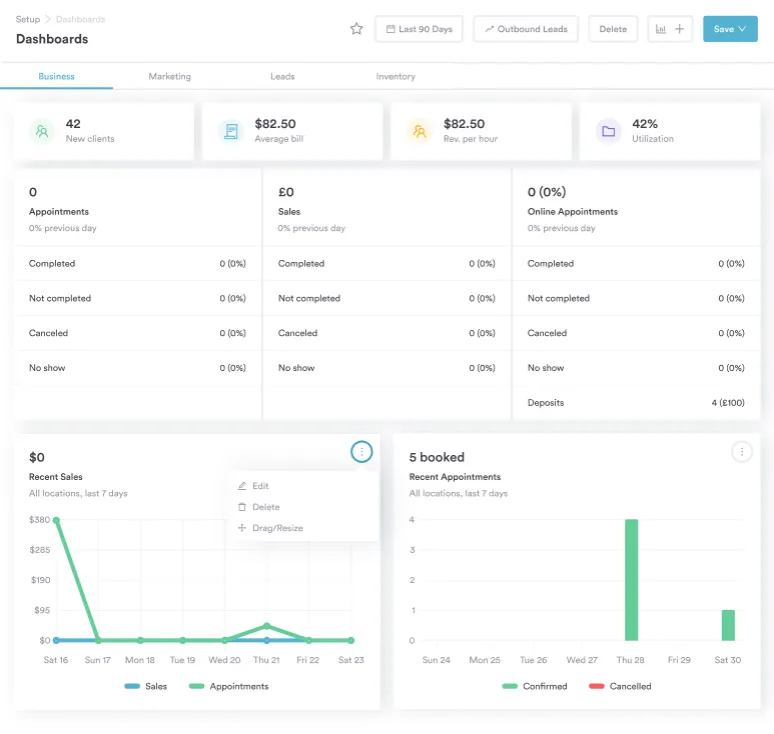
Most billing platforms handle insurance claims and stop there. Pabau takes a different approach: it unifies claims management, clinical documentation, appointment scheduling, and patient CRM into a single platform, so billing happens as a natural extension of the clinical workflow rather than a separate administrative task.
This architecture makes it particularly strong for practices that blend clinical, cosmetic, and wellness services, including medical spas, aesthetic clinics, dermatology practices, physical therapy, mental health, and multi-specialty operations. A practitioner completing a treatment note can generate an invoice, capture payment, and trigger a follow-up recall in the same session, without switching systems.
Key Features
Claims management: Supports CPT code-based invoicing and insurance billing workflows designed for US practices.
Integrated payment processing: Built-in card terminals, online payment links, and deposit collection without third-party tools.
Digital forms and consent: Customisable digital intake and consent forms that feed directly into the patient record.
Automated workflows: Recall sequences, appointment reminders, and post-care communications configured without manual intervention.
Multi-location management: Centralised reporting and billing across multiple clinic locations from a single dashboard.
AI clinical documentation: Echo AI assists with treatment note generation, reducing time spent on post-appointment documentation.
Client portal: Patients can book, complete forms, and view invoices via a branded portal, reducing front-desk admin load.
HIPAA-aligned workflows: Role-based permissions, audit trails, and encrypted data handling designed with US compliance considerations in mind.
Pricing
Plan
Price
Who It’s For
Key Features
Pabau Essential
$62/mo
Small clinics and solo practitioners
Billing, scheduling, EMR, patient portal
Pabau Plus
$93/mo
Growing multi-location clinics
Everything in Essential + CRM, automation, advanced reporting
Pabau Enterprise
Custom pricing
Large networks and franchises
Full platform + dedicated support, custom integrations
Best Medical Billing Software US: Where Pabau Shines
Unified clinical and billing workflow: Treatment notes, invoices, and payment capture happen in one session, reducing double-entry and administrative overhead.
Multi-industry adaptability: Supports aesthetic, wellness, physical therapy, mental health, dermatology, and multi-specialty practices without requiring separate modules or tools.
Onboarding and support: Reviewers consistently highlight responsive support during setup as a key differentiator for smaller independent practices.
Operational automation: Recall campaigns, deposit collection, and consent form automation reduce manual tasks that typically consume front-desk time.
Scalability: Multi-location management makes Pabau viable as a clinic grows from one site to a network, with centralized billing and reporting.
Where Pabau Falls Short
US insurance billing depth: Pabau does not include a built-in clearinghouse or RCM engine. Practices that are heavily insurance-dependent with complex payer mixes will need a dedicated RCM platform like AdvancedMD or athenahealth for denial management, ERA processing, and payer network integration.
Mobile app: Some reviewers note the mobile app experience has room for improvement compared to the desktop platform.
Initial configuration: Certain advanced features require setup time, which can feel involved for practices migrating from simpler tools.
Customer Reviews
According to Capterra reviewers, Pabau holds a 4.7 out of 5 rating based on over 608 verified reviews. Positive themes include responsive customer support, the all-in-one platform reducing the need for multiple tools, and a smooth onboarding experience. Some users note occasional sync issues and a mobile experience that lags behind the desktop version.
Who Pabau Is Best For
Aesthetic, med spa, and cosmetic clinics that need billing integrated with treatment records and consent management.
Multi-specialty practices seeking one platform for scheduling, clinical documentation, and invoicing.
Growing clinics planning to expand to multiple locations without switching software.
Practices with significant cash-pay and private-pay revenue that need flexible invoicing alongside basic insurance claim generation.
See how Pabau handles billing, clinical notes, and scheduling in one platform
Book a demo to explore how Pabau's integrated workflow can reduce administrative overhead and streamline billing for your practice.
2. AdvancedMD: Best Medical Billing Software US for Complex Insurance Billing
AdvancedMD is built from the ground up for insurance-heavy US practices. Its revenue cycle management suite handles the full claims lifecycle, from charge capture through clearinghouse submission, ERA processing, denial management, and collections follow-up. Practices processing high volumes of insurance claims across multiple payers tend to get the most value from its depth.
Key Features
Denial management: Automated workflows to identify, track, and resubmit denied claims.
Clearinghouse integration: Built-in clearinghouse for electronic claims submission and ERA processing.
RCM reporting: Detailed analytics on claim acceptance rates, days in AR, and collections performance.
EHR integration: Clinical documentation links directly to billing for charge capture accuracy.
Appointment scheduling: Scheduling module with insurance eligibility verification at booking.
Pricing
Plan
Price
Who It’s For
Key Features
AdvancedMD
From ~$429/mo per provider (reported)
Mid-to-large insurance-focused practices
Full RCM, EHR, denial management, clearinghouse
Where AdvancedMD Shines
Comprehensive denial management workflows reduce revenue leakage from rejected claims.
Strong reporting suite provides detailed visibility into practice financial performance.
Purpose-built for US insurance billing environments with payer-specific rules built in.
Where AdvancedMD Falls Short
Steeper learning curve than most competitors, with a complex implementation process that can extend onboarding timelines.
Higher price point that may not suit smaller or solo practices with limited billing volume.
Less suited for cash-pay or mixed cosmetic and clinical billing workflows.
Customer Reviews
According to Capterra reviewers, AdvancedMD holds a 3.6 out of 5 rating. Positive themes include comprehensive RCM capabilities and strong denial management tools. Common criticisms centre on a steep learning curve, the higher price point, and a complex implementation process. G2 reviewers rate it 3.5 out of 5.
Who AdvancedMD Is Best For
Primary care, internal medicine, and specialist practices processing high insurance claim volumes.
Practices that need sophisticated denial management and AR follow-up tools.
3. CollaborateMD: Best Medical Billing Software US for Affordable Cloud Billing
CollaborateMD positions itself as an accessible cloud-based option for smaller practices that need reliable medical billing without enterprise-level complexity or cost. The interface is consistently praised for being straightforward to navigate, which reduces training time for front-desk staff. Its payment processing workflows handle electronic claims submission and clearinghouse connectivity, though its EHR capabilities are more limited than all-in-one competitors.
Key Features
Cloud-based billing: Accessible from any device without local software installation.
Clearinghouse integration: Electronic claims submission to major payers, documented on their product pages.
Patient billing: Patient statements and payment tracking integrated into the billing workflow.
Reporting: Practice financial reports covering collections, outstanding balances, and claims status.
Intuitive interface reduces training time compared to more complex platforms.
Good customer support is a recurring positive theme in verified reviews.
Accessible pricing makes it viable for smaller practices with tighter budgets.
Where CollaborateMD Falls Short
Limited EHR functionality means practices also needing clinical documentation will require a separate system.
Fewer third-party integrations than larger platforms.
Reporting features are less advanced than AdvancedMD or athenahealth.
Customer Reviews
According to Capterra reviewers, CollaborateMD holds a 4.4 out of 5 rating. Positive themes include an intuitive interface, responsive customer support, and affordability for smaller practices. Reviewers note limited EHR capability and fewer integrations as the main constraints.
Who CollaborateMD Is Best For
Small independent practices that primarily need billing software without a full EHR.
Practices migrating from manual billing who want a lower-complexity cloud option.
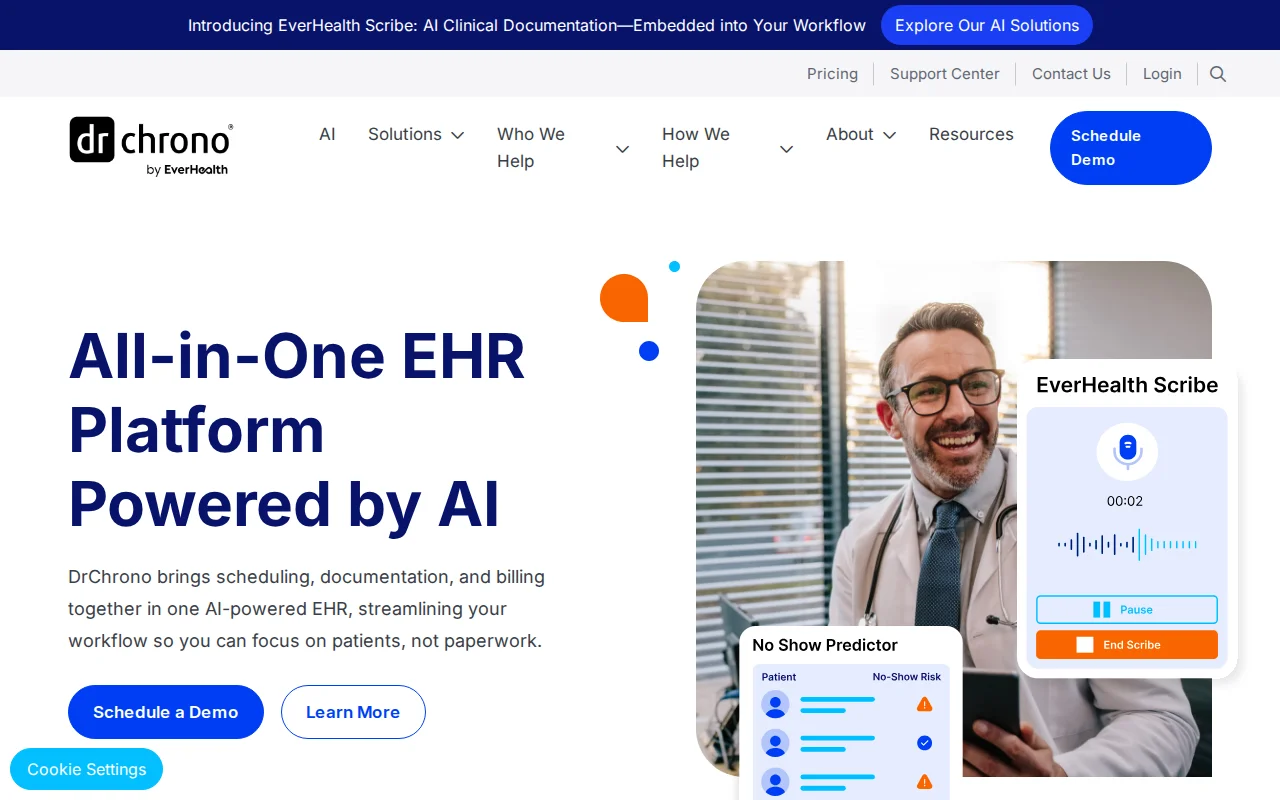
4. DrChrono (Tebra): Best Medical Billing Software US for Customizable EHR with Billing
DrChrono, now part of the Tebra platform following its 2022 acquisition, combines a highly customizable electronic health record with integrated billing, making it a strong option for tech-savvy practices that want to build clinical workflows around their specialty. Its iPad-first interface is a notable differentiator for practitioners who prefer mobile documentation. The billing module handles CPT code capture, insurance claims submission, and ERA processing, though setup can require meaningful configuration investment.
Key Features
Customisable EHR templates: Specialty-specific clinical note templates built around physician workflows.
Integrated billing: CPT code capture, claims submission, and ERA processing in a single platform.
iPad-optimized interface: Clinical and billing workflows designed for tablet-based use at point of care.
Practice management: Appointment scheduling, patient demographics, and insurance eligibility verification.
Highly customizable EHR templates allow specialty-specific documentation that feeds into billing accurately.
iPad-friendly interface is genuinely useful for practitioners who document at the bedside or in procedure rooms.
Integrated billing reduces the disconnect between clinical notes and charge capture.
Where DrChrono Falls Short
Customer support inconsistency is a recurring concern in user reviews.
Billing module can be complex to set up without technical support or dedicated implementation help.
Occasional performance issues reported, particularly under high transaction loads.
Customer Reviews
According to Capterra reviewers, DrChrono holds a 4.0 out of 5 rating based on over 500 verified reviews. Users praise customizable EHR templates and the integrated clinical-billing workflow. Support inconsistency and billing setup complexity are the most common criticisms.
Who DrChrono Is Best For
Specialist practices that need deeply customizable clinical templates linked to billing.
Practitioners who prefer iPad-based workflows for both documentation and charge capture.
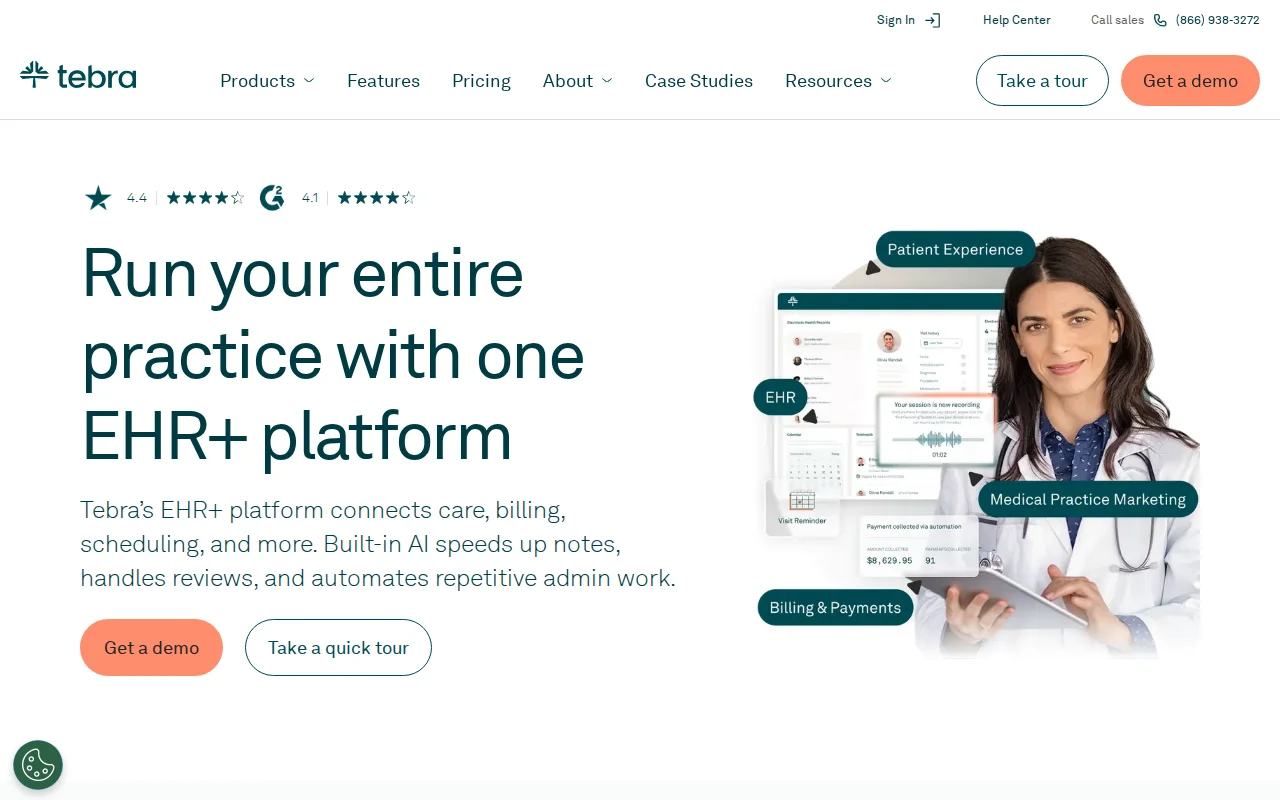
5. Kareo (Tebra): Best Medical Billing Software US for Independent Practice Billing
Kareo, now operating under the Tebra brand, has long been a go-to for independent practice owners who want a straightforward billing workflow without enterprise complexity. It handles electronic claims submission via an integrated clearinghouse, practice management, and scheduling for small to mid-sized independent practices. The merger with Tebra added patient engagement features, though some users report software stability concerns post-merger. For more context on how it compares, see the Pabau vs Tebra comparison page.
Key Features
Electronic claims submission: Clearinghouse integration for direct claim submission to payers, documented on Kareo/Tebra’s platform.
Practice management: Scheduling, patient demographics, and insurance eligibility in one workflow.
Billing dashboard: Claims tracking, payment posting, and outstanding balance management.
Patient engagement: Post-Tebra merger additions include patient messaging and reputation management tools.
Pricing
Plan
Price
Who It’s For
Key Features
Kareo (Tebra)
Contact Tebra for pricing
Independent practices and small groups
Claims submission, practice management, patient engagement
Where Kareo Shines
Straightforward billing workflows designed specifically for independent practice owners.
Clearinghouse integration handles electronic claims submission reliably for established payer relationships.
Practice management and scheduling are well integrated into the billing workflow.
Where Kareo Falls Short
Customer support response times are a common negative theme in reviews.
Software bugs reported following the merger with Tebra have affected some users’ experiences.
Pricing can be high relative to what smaller solo practices actually need.
Customer Reviews
According to Capterra reviewers, Kareo holds a 3.9 out of 5 rating. Positive themes include straightforward billing workflows and good fit for independent practices. Support response times and post-merger software issues are the most frequently cited concerns. G2 reviewers rate it 3.8 out of 5.
Who Kareo Is Best For
Independent physicians and small group practices with straightforward insurance billing needs.
Practices that want a billing-first platform with basic scheduling and patient management.
Pro Tip
Before committing to any billing platform, audit your payer mix for the last 12 months. If more than 40% of your revenue comes from cash-pay, cosmetic, or wellness services, a billing-only platform will underserve your practice. Look for systems that handle both insurance and cash-pay invoicing in a single workflow.
6. SimplePractice: Best Medical Billing Software US for Mental Health and Therapy Practices
SimplePractice was built specifically for mental and behavioral health practitioners, and that focus is evident throughout its feature set. Insurance billing, telehealth, progress notes, and appointment scheduling are all designed around the therapy session workflow. For a solo therapist or small group mental health practice, it offers a complete operational environment without requiring multiple tools. Practices outside mental and behavioral health, however, will find its functionality limited.
Key Features
Insurance billing: Built-in insurance billing with ERAs and EOBs processed within the platform.
Telehealth: Integrated video sessions with automated client reminders and consent collection.
Progress notes: Template-based clinical documentation designed for therapy session formats.
Client portal: Secure messaging, form completion, and scheduling accessible to patients online.
Automated billing: AutoPay and automated claim submission reduce manual billing steps for recurring appointments.
Everything in Essential + calendar sync, advanced reporting
Where SimplePractice Shines
Exceptionally well-suited for the mental health billing workflow, including insurance claim submission and ERA management.
Telehealth integration is seamless, with HIPAA-compliant video sessions built into the platform.
Very easy to use, with one of the cleanest interfaces in the category according to reviewers.
Where SimplePractice Falls Short
Functionality outside mental and behavioral health is limited. Multi-specialty or medical practices will find significant gaps.
Fewer billing customization options for practices with non-standard workflows.
Not well suited for practices that need multi-location management or complex operational automation.
Customer Reviews
According to Capterra reviewers, SimplePractice earns a 4.6 out of 5 rating, one of the highest in this comparison. Positive themes include ease of use, strong telehealth integration, and its fit for mental health practitioners. Limitations outside the behavioral health context and fewer billing customization options are the primary criticisms from reviewers. G2 reviewers rate it 4.2 out of 5.
Who SimplePractice Is Best For
Solo therapists, psychologists, counselors, and small group mental health practices.
Practitioners billing insurance for therapy sessions who also need integrated telehealth.
7. athenahealth: Best Medical Billing Software US for Large Health Systems and Group Practices
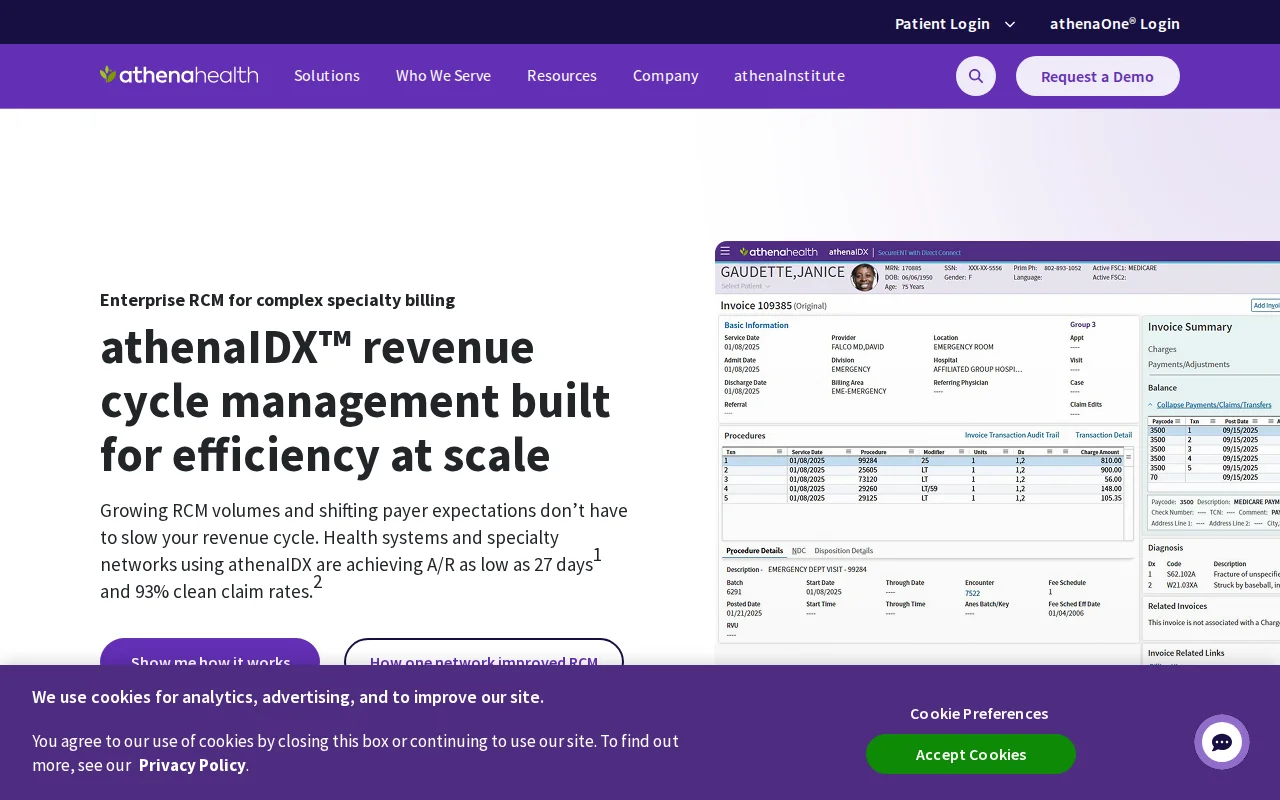
athenahealth is an enterprise-grade platform designed for large group practices and health systems with high insurance billing volumes. Its built-in clearinghouse connects to a wide payer network, and its RCM capabilities handle complex multi-payer environments at scale. The percentage-of-collections pricing model means costs scale with revenue, which can work for high-volume operations but becomes unpredictable for smaller practices. Practices outside the large-group context often find the implementation timeline and cost structure prohibitive. For an overview of how practice management software compares across categories, that resource provides additional context.
Key Features
Payer network integration: Large clearinghouse with connections to major US payers for electronic claim submission.
RCM suite: Comprehensive revenue cycle management including denial management and AR follow-up.
Analytics: Detailed reporting on financial performance, claim acceptance, and payer behaviour.
EHR integration: Clinical documentation integrated with billing for accurate charge capture.
Pricing
Plan
Price
Who It’s For
Key Features
athenahealth
% of collections (widely reported; verify on their website)
Large group practices and health systems
Clearinghouse, payer network, RCM, analytics
Where athenahealth Shines
Large payer network integration makes it strong for practices dealing with complex multi-payer environments.
Analytics and reporting capabilities are among the most detailed in the category.
Strong clearinghouse capabilities handle high-volume electronic claims at scale.
Where athenahealth Falls Short
Percentage-based pricing can become unpredictable and expensive as practice revenue grows.
Long implementation timelines make it a difficult fit for practices needing faster deployment.
Less suitable for small or solo practices where the cost structure and complexity outweigh the benefits.
Customer Reviews
According to Capterra reviewers, athenahealth holds a 3.8 out of 5 rating. Positive themes include large payer network integration and strong analytics. Percentage-based pricing unpredictability and long implementation timelines are the primary concerns reported by reviewers. G2 reviewers rate it 3.9 out of 5.
Who athenahealth Is Best For
Large multi-physician group practices and health systems with high insurance billing volumes.
Organizations where the percentage-of-collections model aligns with their revenue and administrative structure.
Notable Mention: Waystar
Waystar is a revenue cycle technology platform used by large health systems and hospital networks. It specializes in claims management, denial prevention, and payment accuracy at enterprise scale. Waystar is not a practice management system and does not include EHR, scheduling, or clinical documentation. It is best suited for organizations that already have an EHR in place and need a dedicated, high-volume RCM layer on top. Waystar reports processing over $5 trillion in gross claims annually and serves more than 500,000 providers. For practices evaluating billing software, Waystar belongs in the conversation only if claims volume and payer complexity are the primary operational challenges.
How to Choose the Best Medical Billing Software US Practices Actually Need
No single platform suits every practice. The right choice depends on five factors that vary significantly by practice type, billing model, and growth stage.
Billing model: Practices that are heavily insurance-dependent need strong clearinghouse integration and denial management (AdvancedMD, athenahealth). Practices with significant cash-pay or cosmetic revenue need flexible invoicing and point-of-sale payments (Pabau), though they may still need a separate clearinghouse for insurance claims.
Clinical integration requirements: If billing needs to flow from clinical documentation, look for platforms where EHR and billing share the same data layer rather than syncing via API.
Practice size and complexity: Solo and small practices should weigh onboarding burden heavily. Enterprise platforms like athenahealth bring implementation timelines that can run months.
Specialty fit: Mental health practices have distinct needs (telehealth, therapy note templates, insurance billing for therapy codes) that SimplePractice addresses specifically. Multi-specialty and aesthetic practices need broader operational coverage.
Pricing model transparency: Flat per-user or per-location pricing (Pabau’s approach) makes budgeting predictable. Percentage-of-collections models scale costs in ways that are difficult to forecast.
Practices that blend clinical, cosmetic, and wellness services, and those planning to grow beyond a single location, consistently find that an integrated platform like Pabau covers more operational ground than billing-only tools. For detailed guidance on features worth evaluating, the practice management software features guide covers what to prioritize during a software evaluation.
Running a medical spa and need billing that handles cosmetic services?Best Medical Spa Software compares platforms specifically for aesthetic and med spa billing workflows.
Want to understand how HIPAA compliance affects your billing software choice?HIPAA Compliance for Med Spas explains the compliance requirements that apply to billing data handling in US practices.
Conclusion
The best medical billing software US practices can rely on depends entirely on what those practices actually do. A solo therapist and a multi-location aesthetic clinic have fundamentally different billing environments, and the platforms that serve them well are not the same.
SimplePractice leads for mental and behavioral health. AdvancedMD leads for high-volume insurance billing. CollaborateMD offers an accessible entry point for smaller practices. DrChrono and Kareo, now unified under the Tebra brand, serve independent and specialist practices with customizable EHR and billing-first workflows. athenahealth delivers enterprise-grade RCM for large health systems.
Pabau takes a different position: it combines invoicing, digital forms, clinical documentation, automation, and multi-location management in a single platform. It is the strongest choice for cash-pay and aesthetic practices that need operational breadth, though practices with heavy insurance billing requirements should pair it with a dedicated RCM tool or choose a billing-first platform instead. For any practice evaluating a switch, booking a demonstration is the fastest way to assess real-world fit against your specific workflows.
Frequently Asked Questions
What is the best medical billing software for small practices?
For small practices, CollaborateMD and SimplePractice (for mental health) offer accessible cloud-based billing without enterprise-level complexity. Pabau is a strong option for small cash-pay or aesthetic practices that need scheduling, clinical documentation, and patient management alongside invoicing, as it reduces the need for multiple tools.
What features should I look for in medical billing software?
Prioritise clearinghouse integration for electronic claims submission, denial management workflows, ERA and EOB processing, HIPAA-compliant data handling, and reporting on claims status and collections performance. For practices with clinical documentation needs, integrated EHR-to-billing charge capture significantly reduces manual entry and coding errors.
How much does medical billing software cost per month?
Pricing varies widely. SimplePractice starts at $29/mo for solo therapists. Pabau starts at $62/mo (Essential) and $93/mo (Plus). AdvancedMD is reported at around $429/mo per provider. athenahealth uses a percentage-of-collections model. CollaborateMD starts around $194/mo. DrChrono and Kareo (both now under Tebra) require contacting sales for current pricing. Always verify directly with each vendor.
Is medical billing software worth it for solo practitioners?
For most solo practitioners billing insurance, yes. Manual claims submission and payment tracking consume significant administrative time that billing software automates. SimplePractice is particularly cost-effective for solo therapists. Solo medical practitioners with mixed billing needs may find an integrated platform like Pabau more efficient than a standalone billing tool.
Do aesthetic clinics and med spas need different billing software than medical practices?
Often, yes. Aesthetic and med spa billing typically mixes cash-pay cosmetic services with insurance-billable medical procedures. Standard medical billing platforms optimized for insurance workflows handle cash-pay invoicing poorly. Platforms like Pabau are built to handle both billing models within a single system, alongside clinical documentation and patient management specific to aesthetic workflows.