Anja Dodevska

Exilis patient treatment record: Free PDF for RF sessions
An Exilis patient treatment record is the session log for BTL’s radiofrequ...

6
Last Updated: Oct 23, 2026
Free PDF 2 pages, print-ready Clinician-reviewed
A Viveve treatment template is a consent and screening form for Viveve, a cryogen-cooled radiofrequency treatment for vaginal laxity and sexual function. It records the patient's medical screening, the risks and alternatives discussed, signed consent, and the aftercare given after the session. The form also states the device's US status. Viveve is FDA-cleared only for general surgical electrocoagulation and hemostasis, not for vaginal laxity or incontinence. Download it free, adapt the wording to your protocol, and have your clinical lead review it before first use.
A four-page Viveve consent form with a treatment summary, eight screening questions, history prompts, a consent statement, signatures and an aftercare record. Adapt the wording to your protocol before first use.
Start from scratch, or upload this PDF or any form you already use, and Pabau's AI Form rebuilds it with tick boxes, text fields and a signature. Attach it to the treatment once, and every patient gets it on time.
AI Form rebuilds the consent, history and aftercare forms you already use. You review each one, then publish.
Patients complete forms on their phone before they arrive, so the front desk stops retyping paper.
Every signed form is versioned and attached to the treatment record, ready when you need it.
Set how long a consent stays valid. Returning patients skip forms they have already signed.
Supports HIPAA and GDPR compliance AES-256 encryption 4.8 on G2 4.7 on Capterra Trusted by 4,000+ practices worldwide

The form records screening, consent and aftercare for each Viveve session in one signed file.
Viveve is FDA-cleared in the US only for general surgical electrocoagulation and hemostasis, not for vaginal laxity or incontinence.
Because those vaginal uses are off-label in the US, the consent section says so in plain words.
The template is a starting point and needs review by your clinical lead and legal adviser before use.
Pabau, the practice software we build, can send the screening questions to patients before their appointment.
A Viveve treatment template is a consent and screening form that records what the practitioner checked, explained and agreed before a Viveve session.
Viveve uses cryogen-cooled monopolar radiofrequency energy to heat vaginal tissue. According to Viveve Medical’s 2021 annual report, its only US clearance covers general surgical electrocoagulation and hemostasis.
Many teams send the form ahead of time through digital consent and intake forms so patients can read it before they arrive.
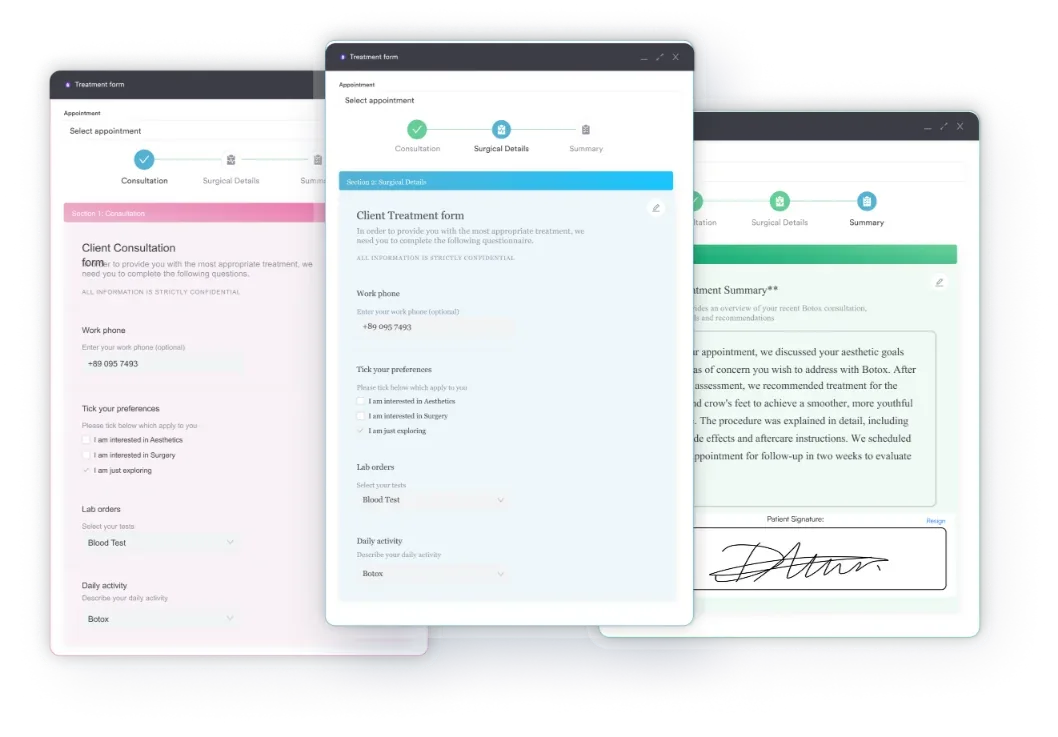
In the US, Viveve has not been cleared for vaginal laxity, sexual function, vaginal rejuvenation or stress urinary incontinence. Outside the US, it holds clearances for vaginal laxity or sexual function in more than 40 countries.
That is why the template’s treatment summary states the US status plainly, next to the risks and benefits. Confirm your national rules too, starting with FDA medical device resources in the US.
Work through the template in five stages, from screening to aftercare, and file the signed copy in the patient record. The diagram shows who completes each part of the form, and when.
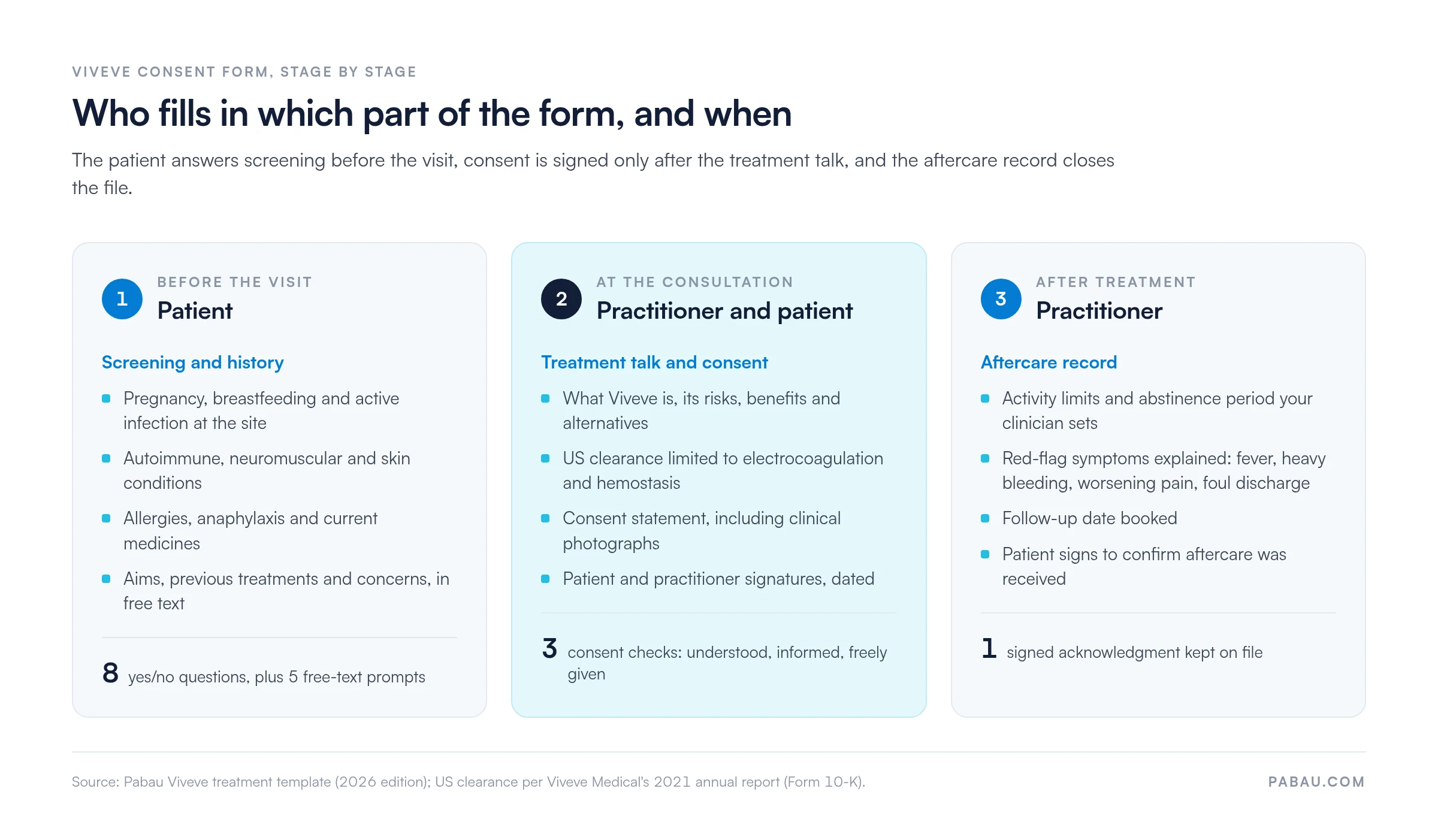
The current file runs to four pages. Adjust the wording to match your protocol before first use.
The template suits any practice that offers radiofrequency vaginal treatment and needs a consistent record of screening and consent.
If your team is still building its consultation flow, this guide on structuring a med spa consultation covers the groundwork.
Practices that also offer ultrasound-based treatment can pair this form with the vaginal HIFU consent guide, which covers screening for that device.
The main benefit is a consistent record of what was screened, explained and agreed before each session.
The consent statement also covers clinical photographs, which carry their own documentation rules. Our guide to photo consent requirements explains what a medical spa needs on file.
Check the screening and consent sections against the current Instructions for Use at each review, and log the date of every check. A form built for an older protocol can miss a labeling change that matters to your patients.
Screening should confirm the patient is a suitable candidate and record any reason to delay treatment.
Record each check with the date and initials. Any item that cannot be confirmed on the day should delay treatment rather than be left blank.
Aftercare documentation should state activity limits, the abstinence period your clinician sets, and the symptoms that need a call to the practice.
Give the patient a copy and keep a signed acknowledgment on file. Link the sheet to your pre- and aftercare instructions so patients receive the same guidance in every channel.
Tell patients to contact the practice promptly if they notice any of these symptoms.
The manufacturer’s aftercare guidance takes precedence over a general template. ACOG’s clinical guidance is a useful cross-check for gynecology teams.
Many practices still print the consent form, scan the signed copy and email aftercare separately. Each handoff is a chance for a page to go missing before anyone reviews the record.
Pabau, software for med spas, sends the screening questions to the patient before the visit. The signed consent and the aftercare record then sit on the same patient record.
Aftercare messages go out automatically after the session, so the patient gets the red-flag list in writing. Your team spends less time chasing signatures and more time on the consultation.

Pabau sends screening and consent forms ahead of the appointment, then keeps the signed copy and aftercare record on the patient record. See how it fits your intake workflow.

Viveve’s US clearance does not cover the reason most patients book it. That one fact decides how the consent section should read. A form that states it plainly protects the practice far better than one that stays silent.
Download the template, add your own aftercare protocol, and have your clinical lead sign off the wording before the first patient sees it. Book a demo to see how Pabau sends the form before the visit and files the signed copy for you.

Working on dermal filler paperwork? Dermal filler consent form template shows how injectable consent sections are structured.
Need consent wording for injectables? Anti-wrinkle treatment consent form gives a template and a practitioner guide.
Looking for a broader intake template? Aesthetic interest questionnaire template helps capture patient goals before a consultation.
Viveve treatment is a non-surgical procedure that uses monopolar radiofrequency energy combined with cryogen cooling, marketed for vaginal laxity and sexual wellness. It is normally a single in-office session, so confirm the current Instructions for Use before quoting details to patients.
Only for general surgical use. In the US, the Viveve System is FDA-cleared for electrocoagulation and hemostasis, according to the company’s 2021 annual report. It is not cleared there for vaginal laxity, sexual function, vaginal rejuvenation or stress urinary incontinence. Outside the US, it holds vaginal laxity or sexual function clearances in more than 40 countries.
A Viveve treatment typically takes about 45 minutes, according to the manufacturer. Allow extra time for the consent discussion and the aftercare record.
No, the template does not replace legal or clinical review. Have your clinical lead and legal adviser approve the wording, and adjust it to your local rules before first use.