Piercing consent form
A piercing consent form is a signed record that a client understood a piercing&#...

7
Last Updated: Oct 2, 2026

The Vanderbilt is a free, validated ADHD rating scale for children ages 6 to 12, rated Never, Occasionally, Often, or Very often.
A positive screen needs 6 or more items rated 2 or 3 in one symptom subscale, plus evidence of functional impairment.
You count qualifying items rather than adding the scores up. Totaling a subscale is the most common scoring error.
The parent form runs to 55 items and the teacher form to 43. Performance questions sit at items 48 to 55 and 36 to 43.
Practice management software like Pabau can send both forms, capture the ratings, and file the result in the child’s record.
A standardized rating scale for children ages 6 to 12, in both the parent and teacher versions. It carries the 18 DSM symptom items, the ODD and conduct screens, the anxiety and depression screen, and the performance section.
Download templateThe Vanderbilt ADHD Diagnostic Rating Scale (VADRS) is a free NICHQ screening instrument for ADHD in children ages 6 to 12. Scoring it comes down to two rules. Count the items a rater marked 2 or 3, and confirm the child’s performance has actually suffered.
Almost every scoring error breaks one of those two rules. This guide maps each item number to its subscale on both forms. It then walks the parent and teacher versions step by step, and shows what each result should change in your plan. It also marks where the scale stops, because a positive screen is not a diagnosis.
The Vanderbilt is a free rating scale that screens for ADHD symptoms in children ages 6 to 12. It was developed by NICHQ, the National Initiative for Children’s Healthcare Quality. Its symptom items are written straight from the DSM-5 criteria, and they cover both the inattentive and the hyperactive-impulsive presentation.
Symptom items use a 4-point frequency scale: Never (0), Occasionally (1), Often (2), Very often (3). Parents and teachers rate how often each behavior shows up in the setting they see. ADHD often looks different across settings, so the scale asks for both informants rather than treating one as sufficient.
The scale measures two symptom dimensions, screens for three comorbidities, and rates performance separately. Item numbers are where scoring goes wrong most often, so it helps to see the whole layout of both forms before you start counting.
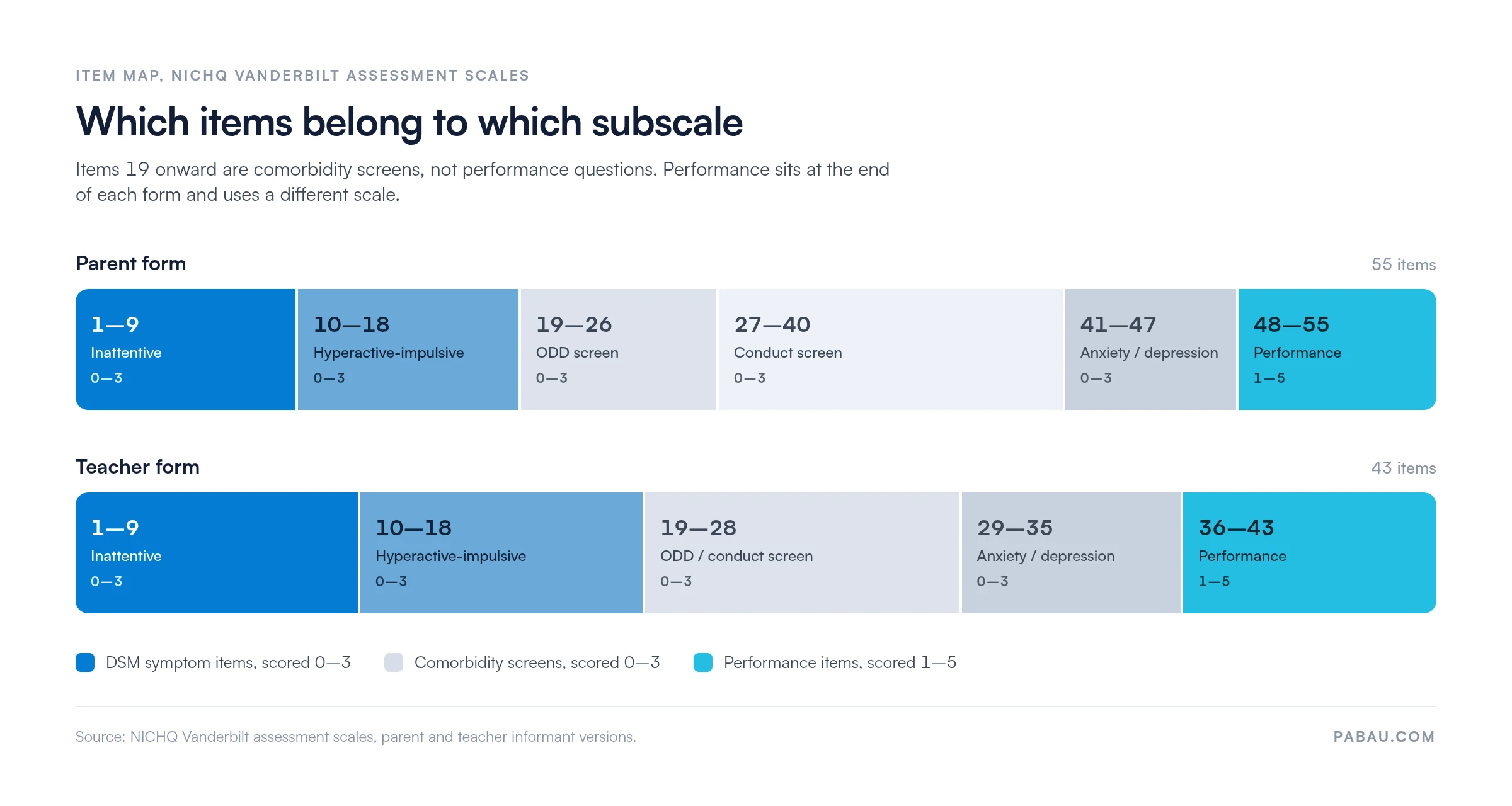
One rule sits above the rest. A positive ADHD screen needs the symptom count and the impairment finding together. A child who clears the inattentive threshold but whose schoolwork and behavior are unaffected has not screened positive. The performance section is what keeps that judgment honest.
The parent version reports how the child behaves at home and in the wider community. That view matters because symptoms often surface differently in an unstructured setting than they do in a classroom.
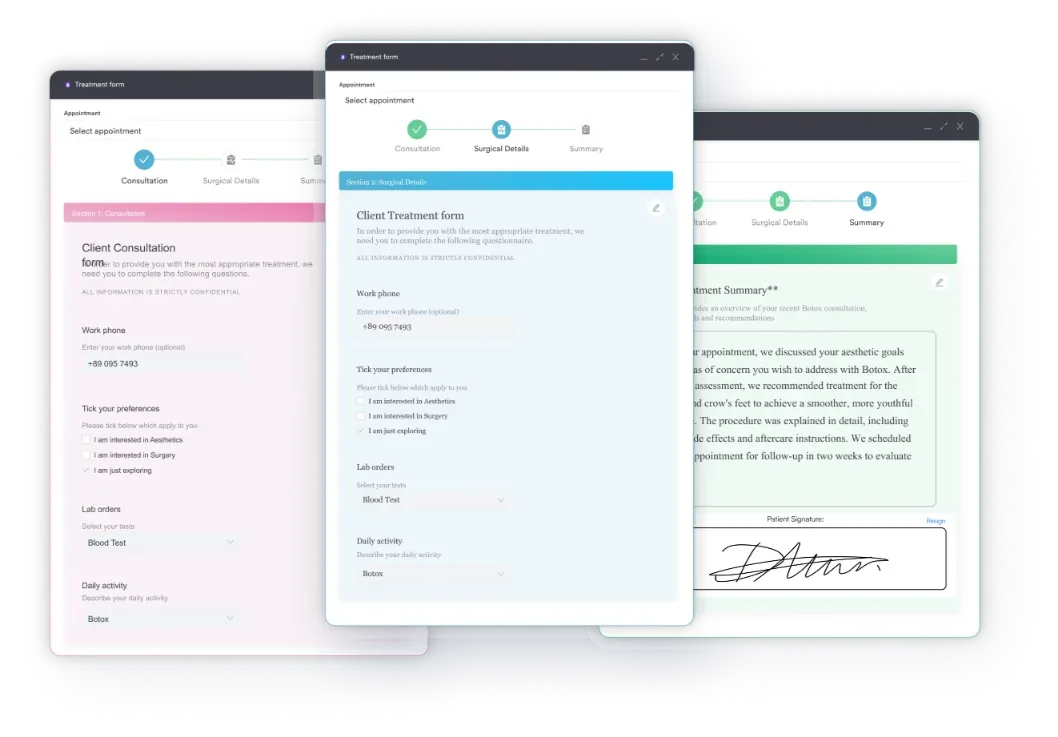
Hand-tallying is where the count slips, especially when a practice scores several forms in a row. Digital intake forms remove the tally step by counting qualifying items as the responses arrive.
The teacher version is shorter at 43 items, and it carries weight the parent form cannot. Teachers watch the child across a full academic day, in a group, and under steady behavioral expectations. Many children with ADHD look more inattentive or more restless there than they do at home.
The scoring logic is identical, but the item numbers move:
Divergence between the two reports is itself a finding. A parent who reports inattention while the teacher reports hyperactivity may be describing setting-dependent symptoms or different triggers. Read both forms side by side before you commit to an impression.
Three outcomes cover almost every completed pair of forms, and each one points at a different next step.
Positive screen, meaning symptom threshold plus impairment. Take the ADHD workup further. Add a continuous performance test or a structured interview, map the findings against DSM-5 criteria, and evaluate for anxiety, learning disorders, and ODD.
Borderline result, meaning one threshold met and the other missed. Gather collateral information and rule out sleep problems, anxiety, sensory issues, and school stress. Rescreen in two to four weeks, and consider psychosocial intervention before any medication discussion.
Negative screen. ADHD is unlikely to be the main concern. Look at other differentials such as an anxiety disorder, a learning disability, a trauma response, or a sleep disorder. Document the result and revisit it if symptoms change.
The Vanderbilt is a screening tool rather than a diagnostic instrument. A positive screen raises ADHD on the differential and settles nothing. Diagnosis still needs developmental history, direct observation, and a clinician working through the DSM-5 criteria.
Anyone evaluating a child aged 6 to 12 for possible ADHD can use it. That covers pediatricians, child psychiatrists, developmental psychologists, school counselors, occupational therapists, and practices running ADHD clinic software for assessment workflows. Some school districts also use it in universal screening programs.
Administer it at the initial evaluation, before any medication change, and at regular intervals during follow-up. That way you can track the symptom trajectory rather than guess at it.
Consistency across clinicians. The validated item set and the fixed thresholds mean two clinicians scoring the same form reach the same result.
DSM alignment. The symptom items map onto DSM-5 ADHD criteria, so the screen and the diagnostic interview speak the same language.
Two informants. Parent and teacher versions capture the cross-setting pattern that a single report cannot show.
Impairment, not just symptom count. The performance items force the question of whether the symptoms are affecting the child’s day.
Longitudinal tracking. Follow-up versions reuse the same items, so you can measure response to medication or behavioral support against a baseline instead of an impression.
A record you can keep. Completed forms held in secure practice management software stay with the child’s clinical documentation and out of a filing cabinet.
Send both informant forms through your practice’s online intake portal rather than by email. The ratings arrive attached to the child’s record, so nobody retypes a score and nobody chases a lost PDF the week of the appointment.
Scoring by hand is slow and easy to get wrong. Software for therapy practices removes the tally step and the transcription step at the same time.
Step 1: Distribution. Send the parent and teacher versions through the portal weeks before the appointment. Both informants get time to complete them, and you get time to read the results first.
Step 2: Counting. Let the system count qualifying items per subscale and flag anything at or above threshold. Nobody tallies a column of ratings by hand.
Step 3: Documentation. File the completed forms and the scored result in the child’s clinical record, where the whole care team can see them.
Step 4: Follow-up. Schedule the readministration at the medication review or the 12-week checkpoint. Comparing the follow-up count against the baseline is what turns the scale into a measurement tool.
Items 19 onward on both forms screen for Oppositional Defiant Disorder, conduct disorder, and anxiety or depression. None of them diagnose anything. They tell you whether a comorbidity is worth evaluating properly.
ADHD and ODD co-occur in 40% to 60% of cases. Spotting that early changes the plan, because stimulant medication on its own rarely resolves oppositional behavior. Family therapy and skills training usually have to run alongside it.
Error 1: Totaling instead of counting. The threshold is 6 or more items rated 2 or 3, not a subscale sum. A child with nine items rated 1 has a raw total of 9 and zero qualifying items.
Error 2: Scoring the wrong item range as performance. On the parent form, items 19 to 26 are the ODD screen, and performance runs from 48 to 55. On the teacher form, performance runs from 36 to 43.
Error 3: Combining parent and teacher scores. Score each informant’s form on its own, then compare them. The two forms measure different settings and lose their meaning when merged.
Error 4: Skipping the impairment check. A high symptom count in a chaotic classroom is not the same as ADHD. Confirm the performance section before you call a screen positive.
Error 5: Treating a screen as a diagnosis. Run the diagnostic interview, rule out medical and environmental causes, and check the DSM-5 criteria before anything is documented as ADHD.
Once treatment starts, the Vanderbilt has follow-up versions that mirror the baseline items. Readminister them 4 to 6 weeks after the intervention begins so you can measure the response instead of asking whether things feel better.
Comparing baseline and follow-up counts shows whether symptoms have improved, worsened, or stalled, which is what informs a dose change or a switch. Pair it with an ADHD medication monitoring sheet so tolerability gets tracked alongside symptom change.
The Vanderbilt has been validated in peer-reviewed research. Published studies report sensitivity of 0.80, so it identifies 80% of children who have ADHD. Specificity is 0.75, so it correctly clears 75% of the children who do not.
Strengths: free to use, quick to complete, aligned to DSM-5, validated across diverse populations, and built to capture symptoms in two settings.
Limitations: it does not measure executive function directly, and it does not weigh the effect of coexisting anxiety or mood disorders. It also depends on a teacher and a parent both returning a form, and it confirms no diagnosis on its own.
For a full evaluation, pair the Vanderbilt with a continuous performance test, a developmental history, and direct observation. You also need to confirm the symptoms have lasted long enough to meet DSM-5 criteria.
The usual routine is an emailed PDF for the parent and a printed copy for the teacher. Both come back at different times, someone counts the qualifying items by hand, and the result gets retyped into the note. Each of those handoffs is a chance to lose a form or miscount a subscale.
Practice management software like Pabau replaces that with digital intake forms the parent and the teacher complete on their own device. The ratings land directly in the child’s record, which removes the retyping step and the version confusion that comes with two paper copies.
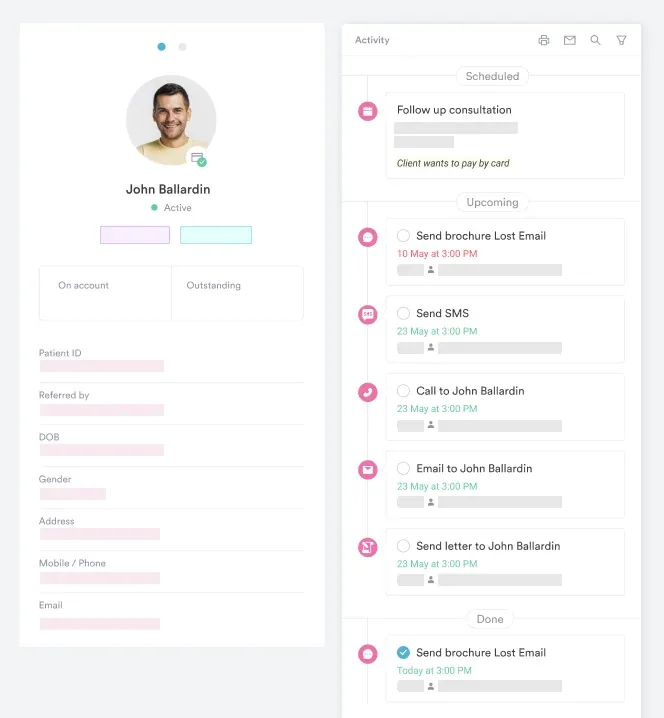
From there the record holds the completed forms, the scored result you documented, and the follow-up appointments on one timeline. When you readminister at a medication review, the baseline is already sitting next to it. The comparison takes seconds rather than a search through past notes.

Pabau’s digital intake forms send the parent and teacher versions and store the returned ratings in the child’s record. Follow-up scores sit next to the baseline, ready for the medication review.

The Vanderbilt is only as reliable as the counting behind it. Count qualifying items rather than totaling ratings, and use the item map for the form in front of you. Check the performance section before calling any screen positive.
Treat a positive result as the opening of the workup rather than the end of it. The scale puts ADHD on the differential, and the diagnostic interview, developmental history, and DSM-5 criteria decide whether it stays there.
If hand-scoring is eating into your assessment slots, the problem is workflow rather than clinical judgment. Book a demo to see how Pabau collects both informant forms and keeps the scored result with the child’s record.

Need a shorter first-pass screen? ADHD screening test template gives you a briefer instrument for the first conversation with a parent.
What happens after a positive screen? ADHD treatment plan structures the goals, interventions, and review dates that follow assessment.
Tracking response to medication? ADHD medication side effects monitoring sheet records tolerability between reviews.
Parents asking what the diagnosis means? ADHD handout for parents explains the condition and the treatment options in plain language.
Screening an adult instead? Adult ADHD self-report scale template covers the ASRS for patients past the Vanderbilt age range.
A positive screen needs 6 or more items rated 2 (Often) or 3 (Very often) in one symptom subscale. That is items 1 to 9 for inattention, or items 10 to 18 for hyperactivity and impulsivity. It also needs functional impairment, shown by a rating of 4 or 5 on a performance item.
The parent form runs to 55 items and reports behavior at home and in the community. The teacher form runs to 43 items and reports the classroom. Both are needed, because ADHD symptoms often present differently across settings. Comparing the two shows whether the pattern is pervasive or specific to one environment.
It is a validated screening tool with sensitivity of 0.80 and specificity of 0.75. A positive screen means ADHD warrants further evaluation, and it does not diagnose ADHD. Diagnosis needs the clinician to combine the screen with developmental history, DSM-5 criteria, and the exclusion of other causes.
Performance sits at items 48 to 55 on the parent form and items 36 to 43 on the teacher form. Items 19 to 26 on the parent form are the ODD screen, not performance. The section uses a 5-point scale, and a rating of 4 or 5 marks functional impairment in that domain.
No. Score each form independently and never add the subscale results across informants. Compare them instead. A parent reporting inattention while the teacher reports hyperactivity is a meaningful pattern in itself, and it tells you whether symptoms are pervasive or context-specific.
Beyond the ADHD symptom items, the form screens for Oppositional Defiant Disorder, conduct disorder, and anxiety or depression. These screens flag whether further evaluation is warranted and diagnose nothing. That matters because 40% to 60% of children with ADHD also meet ODD criteria, which changes the treatment plan.
There are four scored dimensions. Inattentive covers items 1 to 9, and hyperactive-impulsive covers items 10 to 18. Combined presentation means both subscales meet threshold. Performance, at items 48 to 55 on the parent form, measures the effect on academics, behavior, and social functioning.