Piercing consent form
A piercing consent form is a signed record that a client understood a piercing&#...

4
Last Updated: Oct 2, 2026

An ADHD worksheet is a structured tool clinicians use to document symptoms, executive function deficits, and emotional regulation patterns for diagnosis and treatment planning.
ADHD worksheets target core skill areas: executive function, emotional regulation, time management, behavior tracking, and CBT-based cognitive restructuring.
These tools work for both adults and children, tailored by age, ADHD presentation type, and treatment modality.
Practice management software like Pabau lets clinicians deliver worksheets digitally, track completion, and link responses directly to the patient record.
This template walks clients through symptom checklists, executive function and emotional regulation questions, and space for clinical notes, ready to use at intake or follow-up.
Download templateAn ADHD worksheet is a clinical tool that helps mental health professionals, psychiatrists, psychologists, therapists, and coaches evaluate attention-deficit/hyperactivity disorder symptoms in a structured way. Use it to assess children at intake, re-evaluate adults in ongoing treatment, or track symptom changes over months of care.
This guide covers what ADHD worksheets are, who uses them, and how to integrate them into your psychology practice software for a smoother clinical workflow.
Standardized assessment tools reduce diagnostic variability and improve treatment outcomes. The American Psychological Association highlights structured symptom assessment as a foundation for diagnosis and long-term tracking.
ADHD worksheets serve a single purpose: to gather and organize clinical information that helps you understand a patient’s ADHD presentation. They are not diagnostic on their own. Instead, they provide standardized formats for documenting core ADHD symptoms: inattention, hyperactivity, and impulsivity.
They also cover executive function deficits, emotional dysregulation, and context such as school, work, and home functioning. Clinicians combine this data with clinical interviews, rating scales, and collateral information to support diagnosis and treatment selection.
The primary audiences are:
With ADHD clinic software, you can embed these worksheets directly into your intake and documentation workflow. That removes manual data entry and keeps every response linked to the patient record.
Adult ADHD often looks different from childhood ADHD. Adults report internal symptoms like racing thoughts and trouble sustaining focus more often than hyperactivity. Many describe decades of struggling with time management, organization, and emotional regulation. Adult-focused worksheets prioritize work functioning, relationship impact, and executive function deficits over activity level.
Key domains in adult worksheets include:
Many adults find that worksheet-based assessment names struggles they have lived with since childhood. That creates diagnostic clarity and a roadmap for treatment.
Sending completed worksheets to the patient portal builds patient engagement and compliance. Clients can review their responses and see how their symptoms connect to the treatment plan.
Pediatric worksheets capture school functioning, peer relationships, parent-reported behavior at home, and developmental history. Because children cannot always self-report accurately, effective worksheets include sections for parent input, teacher input, and clinician observation.
Common components in pediatric worksheets include:
Behavior charts and symptom logs allow ongoing monitoring during medication trials or therapy.
Executive function deficits are a hallmark of ADHD across every presentation. These worksheets focus on working memory, task initiation, planning, organization, time perception, and cognitive flexibility. Together, these skills let people break large tasks into steps, manage competing priorities, and adjust strategies when something isn’t working.
These worksheets typically include:
Once clinicians identify which executive function areas are most impaired, they can target treatment accordingly. Options include coaching, environmental accommodations, medication, or therapy techniques.
Emotional dysregulation is increasingly recognized as a core feature of ADHD, even though DSM-5 criteria don’t name it explicitly. Many people with ADHD experience intense, rapid emotional shifts and difficulty tolerating frustration. Some also experience rejection-sensitive dysphoria, an acute fear or perception of criticism or rejection.
These worksheets help clinicians assess the frequency, intensity, and triggers of emotional dysregulation. They often include mood tracking, frustration tolerance scales, rejection sensitivity patterns, and coping strategy identification. That data feeds into emotion-focused therapies like DBT or CBT adapted for ADHD.
Cognitive behavioral therapy (CBT) is an evidence-based treatment for ADHD. CBT worksheets include thought records that identify automatic thoughts and cognitive distortions. They also cover behavioral activation, scheduling valued activities, and problem-solving frameworks. Clinicians tracking broader patterns alongside CBT worksheets can pair them with a structured psychiatric evaluation template.
A typical CBT worksheet for ADHD might walk a client through:
Researchers, including those supported by the National Institute of Mental Health, are studying whether combining CBT with medication outperforms medication alone. That makes structured worksheets a valuable tool for tracking a client’s response either way.
Time blindness and disorganization are hallmark executive function struggles in ADHD. These worksheets help clients notice time-use patterns and try strategies like time blocking and realistic task lists. Visual schedules and reminders round out the toolkit.
Common elements include:
Once a clinician understands how a client relates to time and organization, they can recommend accommodations or coaching tailored to that person’s needs. Options include external timers, visual calendars, and task apps.
Beyond diagnostic worksheets, symptom tracking worksheets let clinicians monitor ADHD severity over weeks and months. These typically include rating scales for inattention, hyperactivity, and impulsivity, plus functional impact assessments covering work, school, and relationships. They also note medication or therapy changes over time.
Tracking worksheets serve as evidence of treatment response and inform decisions about medication adjustments, therapy modifications, or additional support. They also provide concrete data for discussing progress with patients and families.
Effective worksheet integration follows a clear workflow. Introduce the worksheet at intake or during an assessment session, and explain that it supports more targeted treatment planning. Give clients time to complete it. Some prefer to fill it out on the spot, while others take it home and return it later.
Review the completed worksheet with the client during the next session. Ask clarifying questions, note patterns, and connect the data to their presenting concerns. Record key findings in the clinical note, and use the data to inform diagnosis and treatment recommendations.
For ongoing monitoring, return to the same or an adapted worksheet monthly or quarterly. Compare responses over time to assess treatment response. If a patient starts medication, a worksheet completed before and after treatment initiation provides objective evidence of symptom change.
Pabau’s AI documentation tools can extract key findings from worksheets and auto-populate clinical notes. That cuts manual write-up time and keeps worksheet data flowing into the permanent record.
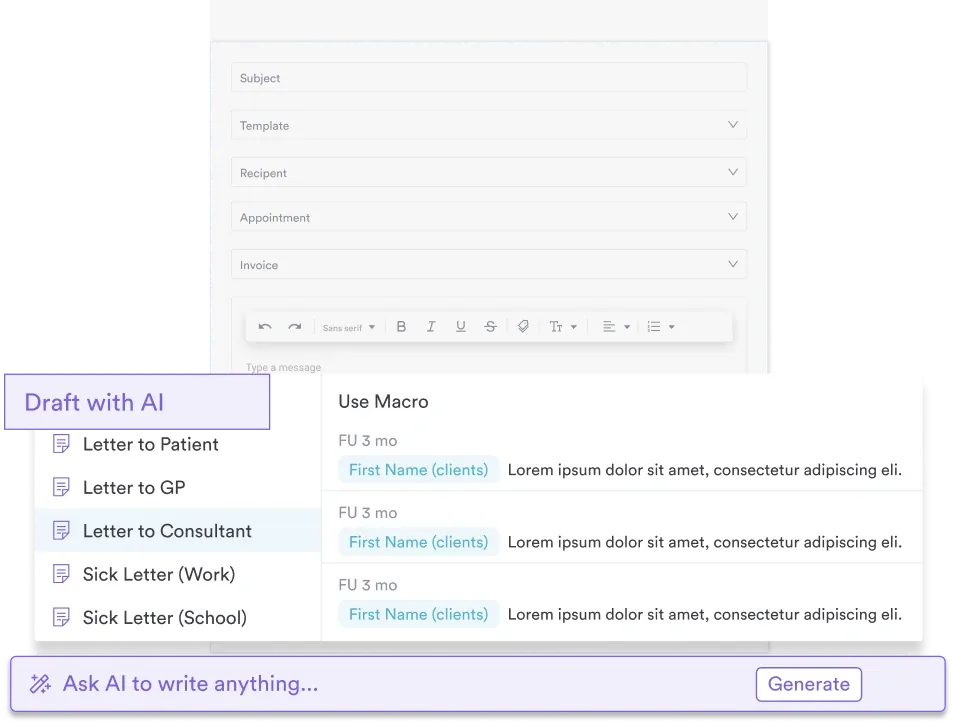
Storage and delivery matter as much as the worksheet itself. Paper worksheets get lost, client responses aren’t searchable, and tracking changes over time requires manual file review. Digital forms solve this by centralizing intake, assessment, and progress-tracking worksheets within your practice management system.
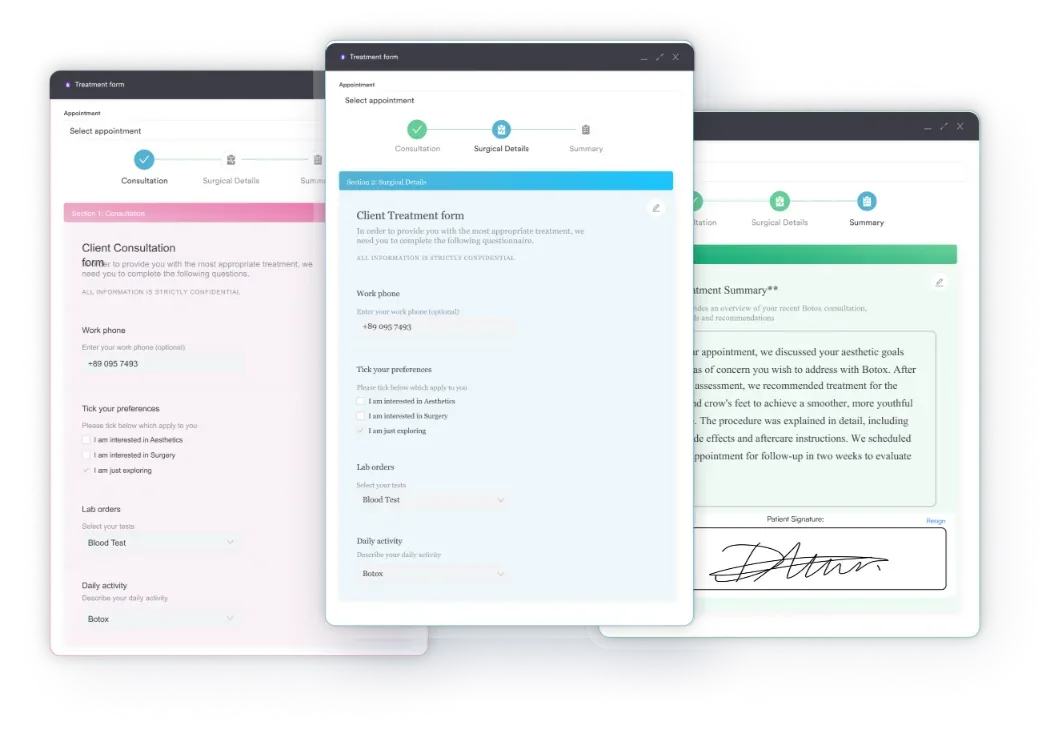
With therapy practice management software, you can:
Automated workflows make worksheets part of the clinical pipeline, not a side task. When a new intake is scheduled, the system automatically queues the ADHD worksheet for the client to complete before arriving. Clinicians review responses that morning, arrive prepared, and document findings directly into the patient record.
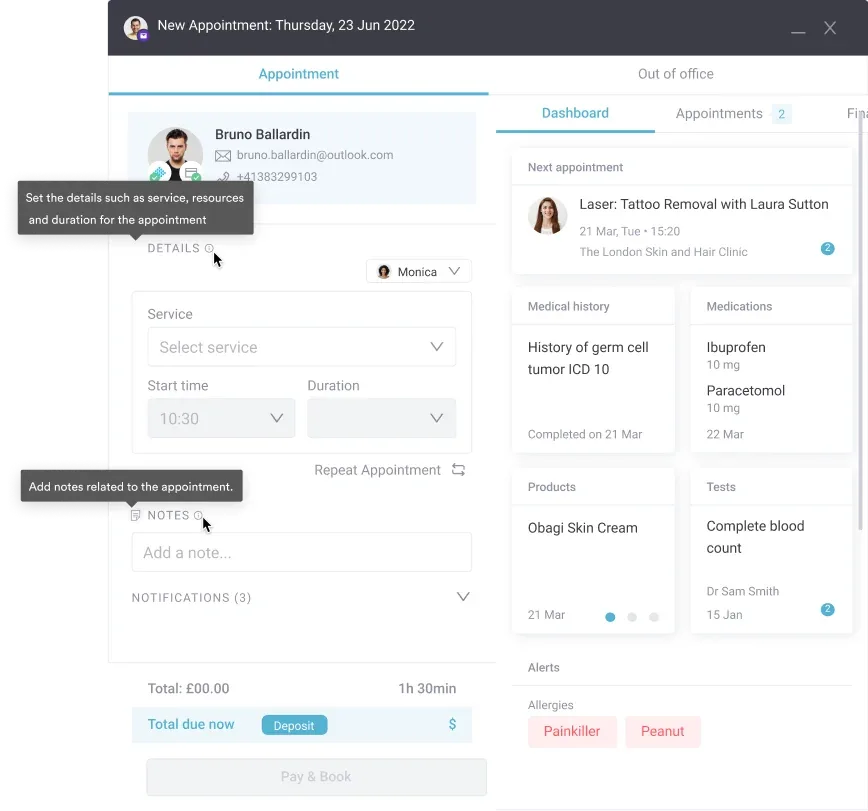
This integration also supports HIPAA-compliant storage of sensitive diagnostic information. Every clinician can access the same baseline data, and the system keeps an audit trail of assessments. That trail matters for compliance and continuity of care.
Digital worksheet delivery lets you store every worksheet, baseline, follow-up, and re-assessment, in one centralized patient records system. A client’s complete ADHD assessment history becomes visible at a glance. You might see an intake worksheet from January, an 8-week CBT follow-up from March, and medication trial tracking from May through July.
This historical perspective helps clinicians spot patterns, adjust treatment, and show measurable progress to clients and insurance providers. It also means a new clinician covering a session can quickly orient to a client’s ADHD profile without re-interviewing them from scratch.
The benefits of secure patient portals extend to worksheets too. Clients can review their own responses between sessions and notice patterns themselves. That builds self-directed insight they bring into each appointment, deepening engagement in treatment.

Pabau’s digital forms and integrated clinical notes make ADHD worksheets part of your workflow, not an add-on. Send, track, and link assessments to patient records in one system.

The clinicians who get the most from ADHD worksheets treat them as an ongoing record, not a one-time form filled out at diagnosis. Revisit the same domains at follow-up.
The worksheet then becomes evidence of what changed after a medication trial or a course of CBT. It stops being just a snapshot of symptoms on day one.
Paper forms and one-off assessments make that comparison hard to pull together months later. Pabau keeps every worksheet, note, and treatment change attached to the same client record. That turns a file search into a few clicks.
Book a demo to see how Pabau keeps ADHD assessments, notes, and treatment history in one place for your practice.
ADHD worksheets help therapists systematically gather symptom data, assess functional impact, and track treatment response. They provide structure for diagnosis, inform treatment planning (medication vs. therapy selection), and create a baseline for monitoring progress over time.
Yes. Many organizations including CHADD, clinical psychology websites, and practice management software platforms offer free downloadable ADHD worksheets. The template above is available at no cost for clinicians to use with clients.
Common types include diagnostic intake worksheets, executive function assessments, and emotional regulation tracking sheets. Others include CBT thought records adapted for ADHD, behavior tracking charts, and ongoing symptom monitoring forms. Selection depends on the client’s age, ADHD presentation, and treatment stage.
Yes. Emotional dysregulation is recognized as a core ADHD feature. Worksheets targeting emotion regulation help clients identify mood triggers, track intensity and duration of emotional responses, and trial coping strategies. These worksheets often feed into emotion-focused therapies like DBT.
A worksheet is a structured data-gathering tool, one part of a comprehensive ADHD assessment. A full assessment also includes a clinical interview, rating scales like Vanderbilt or Conners, and a review of developmental and medical history. It may include school or work records and psychological testing if indicated. Worksheets supply information, and assessments synthesize that information into a diagnostic opinion.