Nursing narrative note template
A nursing narrative note template is a structured PDF that guides you through re...

3
Last Updated: Oct 21, 2026

Urinary retention means the bladder cannot empty completely, and a post-void residual above 100 to 150 mL confirms it.
Name the cause before you pick an intervention, because obstruction, nerve damage, medication and surgery each need a different plan.
Conservative measures come first: an upright position, warm water over the perineum, timed voiding and privacy.
Intermittent catheterization beats an indwelling catheter whenever the patient tolerates it, since infection risk climbs with every catheter day.
Practice management software like Pabau keeps the assessment, the residual volumes and the notes in one client record.
A printable, blank care plan with fields for patient information, subjective and objective assessment data, nursing diagnoses and expected outcomes. It also covers six intervention areas, evaluation notes, documentation and a provider signature line.
Download templateYour patient has not voided in eight hours. The bladder feels firm above the pubic bone, the patient keeps shifting in the bed, and nobody charted a residual volume on the last shift.
Urinary retention builds quietly, then arrives as a distended bladder, an infection, or an extra week in the hospital. A nursing care plan for urinary retention keeps that from happening. It forces a number, a cause and a next step onto the chart.
Retention also hides behind other problems. A confused postoperative patient tugging at the sheets may be telling you the bladder is full, not that they need sedation.
Urinary retention is the inability to empty the bladder completely. The measurement that proves it is post-void residual, known as PVR. Anything over 100 to 150 mL left behind after a spontaneous void counts as clinically significant.
Acute retention arrives suddenly and hurts. The patient cannot pass urine at all, the bladder distends, and the discomfort is hard to miss. Chronic retention is quieter. Patients void small amounts, feel finished, and still carry several hundred milliliters.
That split changes your plan. Acute retention needs the bladder decompressed now. Chronic retention needs a trend instead: serial residuals, a medication review and a referral. For coding and billing, unspecified retention maps to R33.9.
The NANDA-approved label is Urinary Retention, which sits in domain 3, class 1. NANDA defines it as the inability of the bladder to empty completely. A broader label, Impaired Urinary Elimination, covers any disorder of urine production or elimination, including incontinence.
Pick the narrower label when the bladder is the problem. Then write it as a three-part statement, so anyone reading it can see your reasoning.
Example: “Urinary Retention related to postoperative detrusor weakness, as evidenced by a post-void residual of 180 mL and no spontaneous stream.”
The related factor drives everything that follows. A blocked outlet and a sleepy detrusor look identical at the bedside and need opposite responses.
Record both what the patient reports and what you observe. Vague wording here is what makes a plan impossible to evaluate later.
Five findings decide the plan: the last void, the fluid balance, the bladder exam, the scan and the medication list. Work through them in that order and the diagnosis usually writes itself.
One trap catches people out. A scan taken 20 minutes after the void reads high because the kidneys refilled the bladder, not because emptying failed. Scan straight after the patient finishes. A structured nursing health assessment keeps that sequence consistent between nurses. A fertility practice coordinating tests and appointments needs the timeline visible in one place.

A usable goal names a number, a behavior and a deadline. Anything vaguer than that cannot be evaluated, so it quietly disappears from the plan.
Write a review time beside each goal. A goal with no review point drifts, and the nurse coming on has no way of knowing whether it was met.
Conservative measures come first and catheterization second. That order holds because infection risk climbs with every day a catheter stays in place.
Move to catheterization when conservative measures fail, or when the residual is high enough to threaten the kidneys. Intermittent draining beats an indwelling device wherever the patient can tolerate it.
Postoperative urinary retention, or POUR, hits somewhere between 5% and 70% of surgical patients. The range runs that wide because the procedure and the anesthetic drive it, as the StatPearls review of POUR sets out.
The risk is predictable, so the plan can start before the patient goes into surgery.
Risk for Urinary Retention is its own NANDA label, and it applies before anything has gone wrong. Use it for pre-op patients, for men with an enlarged prostate, and for anyone whose nerves affect bladder control.
Benign prostatic hyperplasia is the leading cause in older men, and StatPearls tracks the acute and chronic patterns it produces. That makes surveillance the whole job for men’s health practices managing these patients long-term.
A preventive plan looks different from an active one. Record a baseline voiding pattern, teach the patient which drugs work against them, and name the warning signs. Surveillance replaces intervention here, which makes the plan easy to skip and costly when you do.
Four things, and no more than four. Overloading a discharge conversation guarantees none of it lands.
What should they watch for? No urine in eight hours, pain above the pubic bone, fever, or blood in the urine. Give them the number to call and say who answers it.
How do you teach self-catheterization so it sticks? Demonstrate it once, then hand over the catheter and watch them do it back to you. Written, illustrated instructions go home with them. A return demonstration is the only proof of competence you have.
Which medications matter? Antihistamines, decongestants and older antidepressants all impair voiding. Tell patients to check with a prescriber before starting anything new, including over-the-counter cold remedies.
What about fluids? Keep intake steady through the day and taper in the evening. Cutting fluids to avoid the toilet concentrates urine and invites infection.
Put all four on the discharge summary rather than relying on the conversation. Pelvic health practices running bladder retraining programs tend to send the same points again a week later, once the patient is home and paying attention.
Evaluation compares what happened against what you wrote. Three measurements answer it: void volume, residual volume and the patient’s own report.
Document in SOAP order, so the next reader follows your reasoning instead of rebuilding it. Subjective, objective, assessment, plan, in that sequence, matched to your EMR fields and local policy.
These plans tend to fail for documentation reasons rather than clinical ones. Three patterns come up again and again on the floor.
All three are handover failures, so they are fixable. A structured shift report sheet forces the residual, the catheter date and the next review into the same handover every time.
On paper, one retention plan lives in three places. The assessment sheet holds the history, the fluid balance chart holds the numbers, and the handover notes hold the reasoning. Nobody ever sees all three at once.
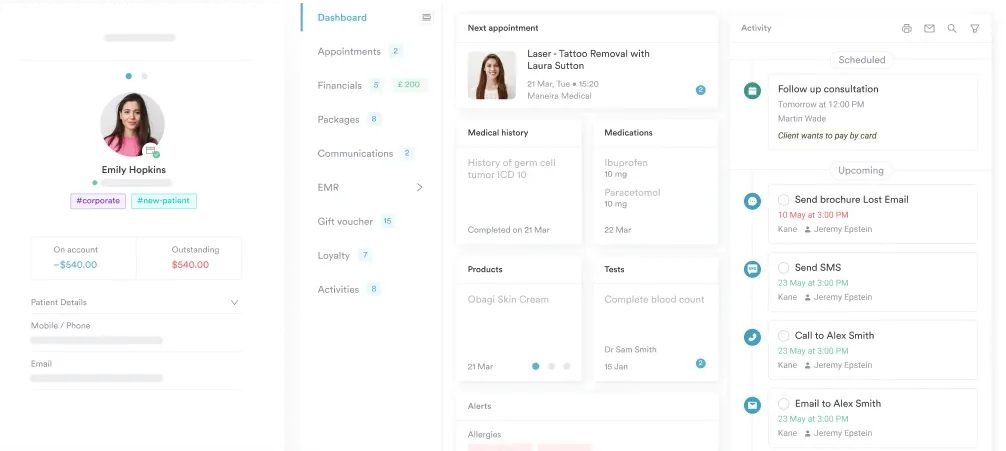
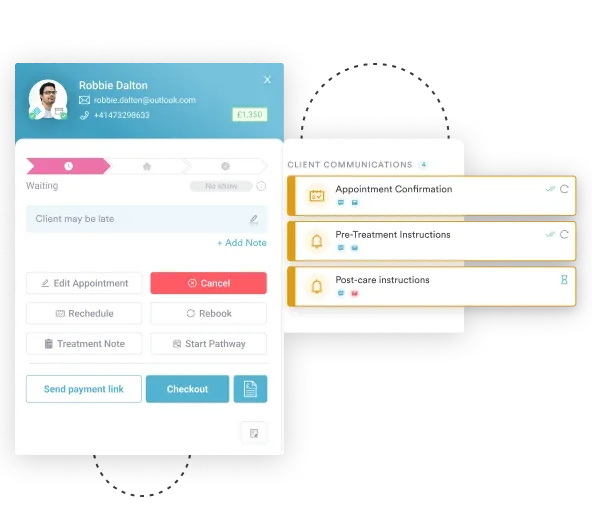
Practice management software like Pabau puts them in one file. Digital intake forms capture the voiding history and medication list before the appointment. Every residual, catheter date and treatment note then attaches to the same client record.
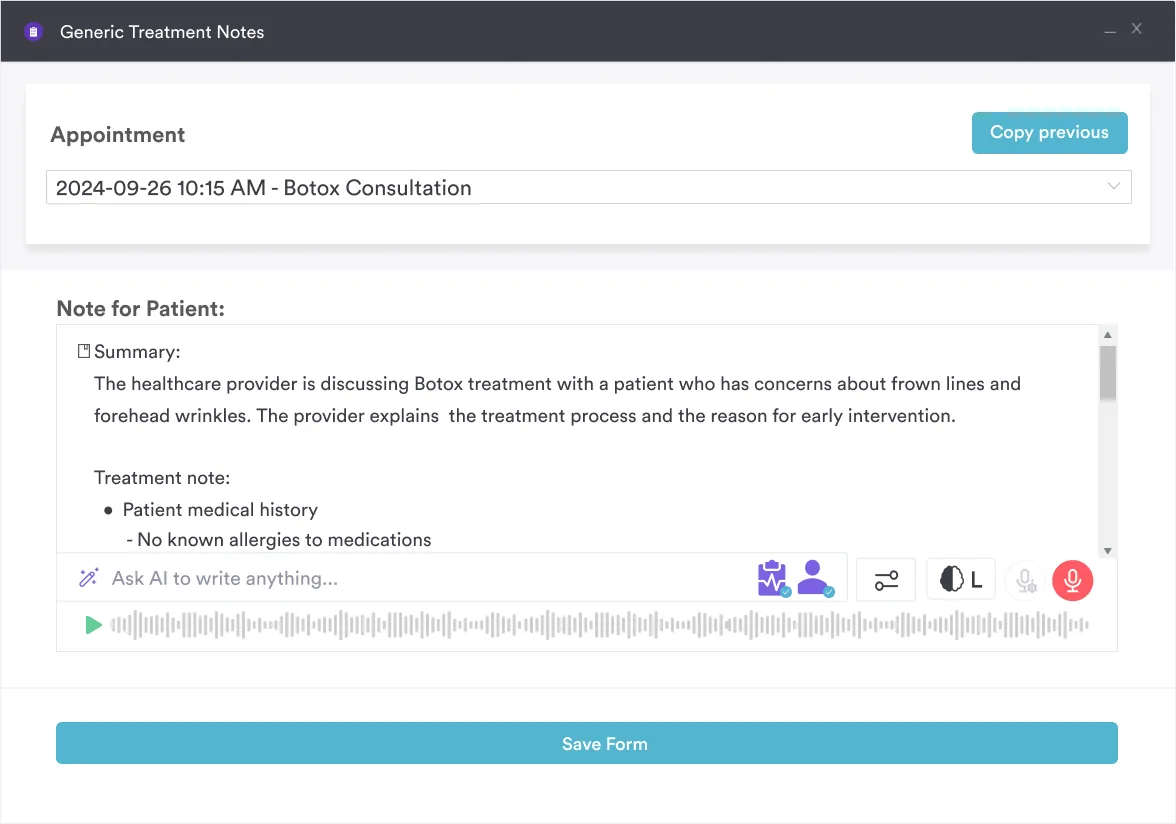
Pabau Scribe, our AI scribe, drafts the note from the consultation itself. Automated workflows then chase the follow-up scan and resend the catheter instructions on schedule, without anyone remembering to.
So the nurse coming on shift reads the whole picture in under a minute. That means fewer catheter days and fewer missed residuals. The plan then reflects the patient in front of you rather than the one admitted three days ago.

Pabau’s digital forms, client records and automated follow-ups hold a urinary retention care plan together across shifts. Nothing gets re-measured because the last reading went missing.

A urinary retention plan is only as good as its last measurement. Get the residual charted with a time beside it, name the cause, and pick the least invasive intervention that fits. Everything else follows from those three moves.
The trade-off worth remembering is the catheter. It solves the immediate problem and creates the next one, so treat every catheter day as something you have to justify.
Download the template above, adapt the diagnosis statement to your patient, and review it at every handover.
Book a demo to see how Pabau keeps assessments, residual volumes and treatment notes in one client record your whole team can read.

Ready to start your own practice? Pelvic health practice guide walks pelvic floor therapists through leaving an employer to start an independent practice.
Deciding how to price pelvic floor therapy? Pelvic floor therapy pricing guide compares package and per-session pricing and how each affects patient dropout.
Screening for pelvic floor dysfunction too? Pelvic floor distress inventory quantifies symptom burden and tracks treatment response over time.
Need a full wellness exam form? Women’s wellness exam template covers medical history, vital signs, pelvic and breast exam fields, and a screening checklist.
Documenting an amniocentesis procedure? Amniocentesis documentation template records consent, needle attempts, fluid volume and post-procedure monitoring.
Often, yes. Acute retention triggered by pain, anesthesia or anxiety frequently settles once you remove the cause. Warm water, an upright position and proper pain relief resolve a good number of cases. Give conservative measures a fair try first. If the residual stays above 300 mL, or the patient is distressed, drain the bladder.
Not long. A distended bladder pushes pressure back up the ureters, which threatens the kidneys. Acute retention is an emergency and needs drainage within hours. Chronic retention does its damage slowly, through repeat infections and rising creatinine. Either way, nobody can act on a bladder that never gets measured.
No. Retention is a storage problem, so the kidneys make urine but the bladder cannot release it. Oliguria and anuria are production problems, where little or no urine is made at all. A bladder scan separates them in seconds. A full bladder points to retention, an empty one points to the kidneys.
Urinary Retention no longer fits, because the catheter empties the bladder for the patient. Switch to Risk for Infection, and add Impaired Urinary Elimination if voiding function is still disordered. Review the label at every handover. A diagnosis that no longer matches the patient makes the whole plan look stale.