Sulcus Test: Shoulder Instability Assessment
The sulcus test is an orthopedic special test that checks for inferior glenohume...

3
Last Updated: Oct 22, 2026

A level of consciousness assessment measures a patient’s awareness, responsiveness, and orientation using standardized clinical tools.
The AVPU scale (Alert, Verbal, Pain, Unresponsive) gives you a triage screen in 30 seconds or less.
The Glasgow Coma Scale scores eye opening, verbal response, and motor response, for a total between 3 and 15.
Record the AVPU letter, the orientation count, and the individual E, V, and M components, not only the total.
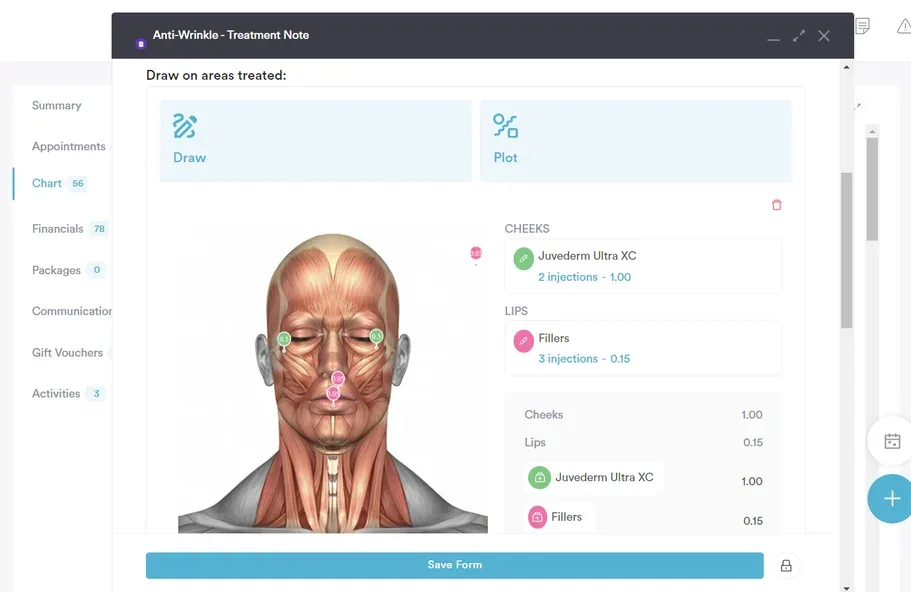
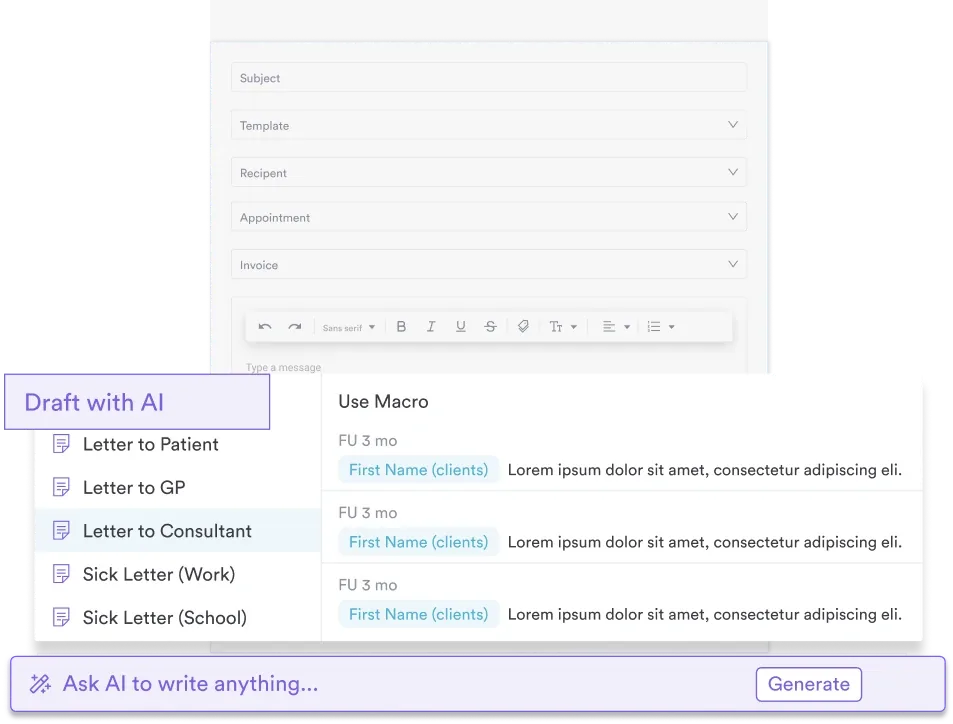
Practice management software like Pabau captures findings in digital forms, and Pabau Scribe, our AI scribe, drafts the note.
The form walks through AVPU screening, the four orientation questions, and full Glasgow Coma Scale scoring. It also carries the interpretation bands, escalation triggers, and a row for comparing against baseline.
Download templateA level of consciousness assessment measures how awake, alert, and aware a patient is. You screen with AVPU first. If anything looks off, you grade it in detail with the Glasgow Coma Scale.
Changes in responsiveness are early warnings. Stroke, sepsis, head injury, medication effects, and metabolic crises often show up here first. Miss a shift and you lose treatment time you cannot win back.
Both scales are long established. AVPU and the Glasgow Coma Scale appear in Clinical Methods, hosted on NCBI Bookshelf, National Library of Medicine (NIH). Emergency departments, ICUs, mental health practices, and primary care all use them.
This guide walks through both scales, the four orientation questions, and the red flags that trigger escalation. The template above gives your whole team one form to chart from.
A level of consciousness assessment is a formal evaluation of how awake, alert, and aware a patient is of their surroundings. It measures three dimensions: alertness, orientation, and responsiveness to stimuli. Observation, verbal questioning, and physical stimulation combine to produce a score you can compare over time. Intake forms completed on paper get transcribed, and transcription is where detail is lost.
The two tools clinicians reach for are AVPU for speed and the Glasgow Coma Scale for detail. Clinical guidelines widely recommend recording consciousness on admission, and again whenever the patient’s condition changes. A score nobody can find later does no clinical work, so where you write it matters.
Before the scoring scales, learn to recognize the five standard consciousness states. Each one has distinct clinical signs and triggers a different response.
Red flag: Any sudden change in consciousness needs documenting and escalating to a senior clinician. That includes a drop from alert to lethargic. Use automated alerts so a change between visits reaches the right person.
AVPU is your 30-second first-line tool. It stands for Alert, Verbal, Pain, and Unresponsive. Triage teams, emergency departments.
Use AVPU at every patient encounter. If the result is V, P, or U, move to a Glasgow Coma Scale assessment and notify a senior clinician. AVPU signals that something has changed. It is not a diagnosis.
Teams using software to manage patient records can pull up prior scores before every reassessment.
The Glasgow Coma Scale gives you the detail once AVPU raises a concern. It grades three independent functions: eye opening, verbal response, and motor response. Each is scored separately, then summed for a total between 3 and 15.
GCS interpretation: A total of 13 to 15 is mild alteration, 9 to 12 is moderate impairment, and 3 to 8 is severe. A score of 8 or below often prompts consideration of airway protection. Document the total plus the E, V, and M components, as in “GCS 11: E3V3M5”.
The component breakdown is what the next clinician actually works from. That consistency also holds up against compliance documentation standards during an audit.
Orientation is the cognitive half of consciousness assessment. Ask the patient these four questions and record the answers as they are given.
Record “Oriented x4” when all four are correct, or “Oriented x3” when one is wrong. Better still, name the domains that failed, as in “oriented to person and place, disoriented to time and event”.
Disorientation points to metabolic derangement, infection, a medication side effect, or a neurological event. In mental health practices it can also follow an acute episode, so work the cause through before you attribute it to the psychiatric picture.
Alcohol and drug use is a common reversible cause. Once the patient is alert again.
Follow this workflow at every patient encounter. Consistency builds clinical pattern recognition and protects your practice if the record is ever questioned.
When assessments are digital and templated, a pattern across several visits is easy to spot.
The download above structures the whole workflow on one page. Print it, laminate it for the treatment room, or rebuild it as a digital form in your practice management system. It includes:
Implementation tip: Train everyone who sees patients to run and record AVPU at every appointment.
Documentation quality decides whether the next clinician can act on what you found. Write what you observe, not what you conclude.
Poor documentation: “Patient seems confused and tired today.” Subjective, and vague enough to be useless tomorrow.
Better documentation: “AVPU: Alert. Oriented x4. GCS 15. No change from baseline. Patient reports adequate sleep, vital signs stable.” Objective, specific, and timed.
Follow clinical note writing best practices here. Use the template, include the time, and name any escalation you made. Where mental health symptoms accompany altered consciousness, the psychiatric evaluation template covers mental status in more depth.
Findings also feed the care plan. An evaluation nursing care plan is where you record whether the response you chose actually worked.
Any of these findings need immediate escalation and senior clinician notification:
Abnormal posturing belongs in the motor score. Reflex findings such as the cremasteric reflex sit in the wider neurological exam, not in the Glasgow Coma Scale total.
Record the finding, the time, who you notified, and what was done. That entry is what holds continuity of care together when several teams share the same patient.
Paper is still where a lot of teams write down AVPU and GCS. A summary gets typed into the record hours later, and the component scores are usually the first thing to fall out.
Practice management software like Pabau replaces that with one digital form the whole team charts from. Required fields mean a consciousness score cannot be skipped. Pabau Scribe drafts the note from what you say, so the E, V, and M breakdown survives into the record.
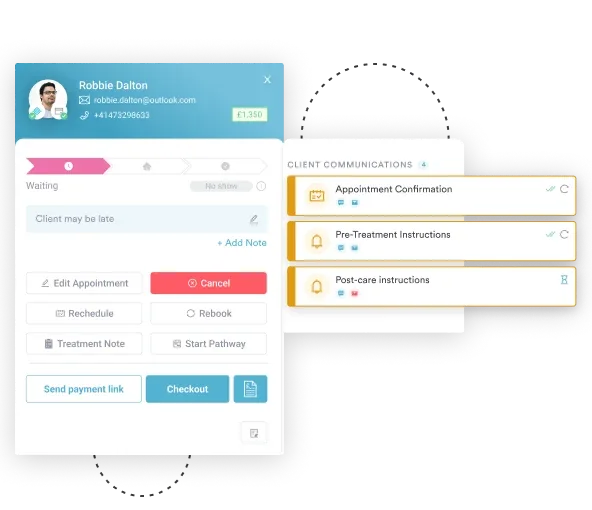
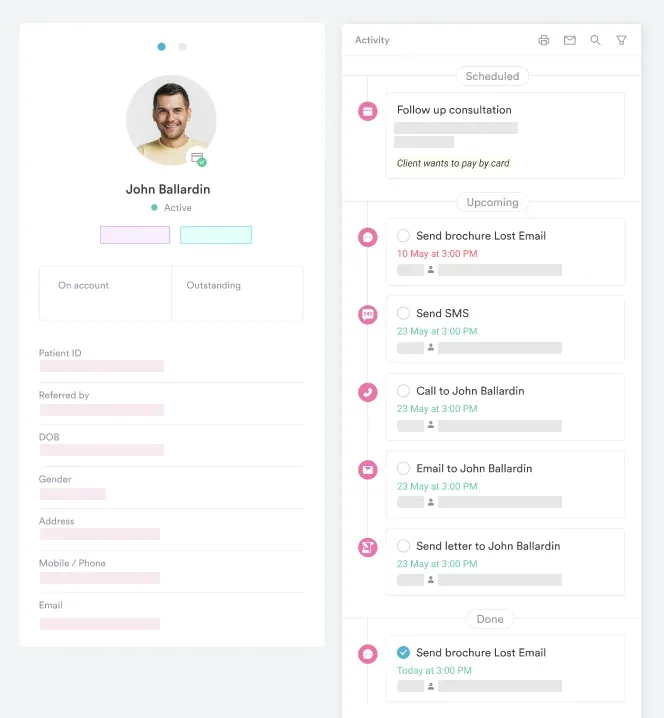
Because every visit is stored against the patient, a slow decline across three appointments shows up on one screen. Alerts can push a flagged change to a senior clinician the same day.
You end up with a record that reads the same whoever wrote it. You also get a trend you can act on before it turns into an emergency.

Pabau’s digital forms and AI scribe capture AVPU, orientation, and Glasgow Coma Scale findings as you work. Component scores stay in the record, so a decline between visits is easy to see.

AVPU tells you that something changed. The Glasgow Coma Scale tells you how much. Neither is worth much if the number never reaches the record in a form the next clinician can use.
So pick one format and hold the team to it. The AVPU letter, the orientation count, and the E, V, and M components, each with a time against it. That single habit turns a run of isolated scores into a trend.
The trade-off is honest enough. Charting the components takes a few seconds longer than writing “GCS 15”. Those seconds are what make tomorrow’s assessment comparable to today’s.
Book a demo to see how Pabau captures consciousness assessments and surfaces a decline before it becomes urgent.

Need the care plan that follows the assessment? Evaluation nursing care plan shows how to record outcomes and revise the plan after each review.
Need to confirm a patient’s fitness for an activity? Medical clearance letter confirms a patient’s fitness for treatment, work, or sports with documented clinical evidence.
Authorizing a caregiver to seek treatment for a child? Medical consent form for babysitters covers child details, caregiver authorization, and medical history for emergency treatment decisions.
Need a complete intake form for new patients? Medical needs form template covers medical history, medications, allergies, and insurance across a three-page intake form.
AVPU is a rapid 30-second screen with four categories: Alert, Verbal, Pain, and Unresponsive. The Glasgow Coma Scale scores eye opening, verbal response, and motor response separately, for a total between 3 and 15. Use AVPU first at triage. Escalate to the Glasgow Coma Scale when AVPU is not Alert, or when consciousness changes.
At every patient visit or admission. For hospitalized or unstable patients, assess every 1 to 4 hours depending on clinical status. For routine outpatient visits, once at the start of the appointment is standard. Document any change from the patient’s baseline, even when the patient is stable.
A GCS of 8 indicates severe impairment. It is often the threshold for considering airway protection in acute trauma or critical care. A score of 8 or lower needs urgent medical evaluation, escalation, and possible intensive monitoring.
Weave the questions into normal conversation. Ask “What is your name?” early, which covers person. Ask “Where are we today?” while showing them to a room, which covers place. Ask “What month is it?” casually for time, and “What brings you in?” for event. Most patients answer freely when the questions feel conversational.
Score what you can observe, which means eye opening and motor response. For verbal response, write “unable to assess” with the reason, such as a language barrier, intubation, or mutism. That protects clinical accuracy and flags the limitation for the next clinician.
Yes. The pediatric Glasgow Coma Scale is used for children aged 2 years and younger. Above age 2, the standard adult scale applies. The pediatric version swaps the verbal and motor criteria for age-appropriate ones, because an infant cannot answer orientation questions or follow commands. Use it if your practice treats young children.