Slocum test: How to perform, interpret and record it
The Slocum test is a knee drawer test performed with the tibia rotated. It check...

2
Last Updated: Oct 21, 2026

The adductor squeeze test evaluates hip adductor muscle strength and detects adductor pathology, pubic symphysis pain, and groin injury risk.
Three standardized positions (0°, 45°, and 90° hip flexion) are used, with 45° hip flexion shown to elicit maximum muscle activity and force values.
Test reliability is excellent (ICC 0.84-0.97 across positions) with peak force measured using a handheld dynamometer or sphygmomanometer.
Practice management software like Pabau offers digital assessment forms and client records that streamline documentation of squeeze test results, strength measurements, and return-to-sport progress.
A ready-to-use assessment form for evaluating adductor muscle strength and function using a standardized protocol across three hip flexion angles (0°, 45°, 90°) with documentation fields for pain scores, squeeze pressures, and clinical observations.
Download templateThe adductor squeeze test, also called the hip adductor test or groin squeeze, is a quick, objective clinical assessment that measures inner-thigh strength and flags adductor weakness or injury. This guide covers the complete protocol, equipment options, measurement techniques, and how to integrate results into your physiotherapy or sports medicine practice.
The adductor squeeze test measures the strength and function of the hip adductor muscles — the inner-thigh muscles that pull the legs together. During the test, the patient squeezes their knees inward against resistance (typically the examiner’s fist) while lying supine, performing an isometric adductor squeeze that reveals strength deficits, imbalances, or pain linked to groin injury.
This test is used to detect adductor tendinopathy, pubic symphysis pain, osteitis pubis, sports hernia, and general groin pain patterns. It’s a core assessment in musculoskeletal physiotherapy, sports medicine, osteopathy, and chiropractic practice.
The test works because the adductor muscles cross both the hip and the pubic symphysis joint — weakness or pain here often signals pathology that limits performance and increases injury risk.
The adductor squeeze test, sometimes called the supine adductor squeeze because the patient lies on their back throughout, is performed at three hip-flexion angles: 0°, 45°, and 90°. Each position tests the adductors at a different length-tension relationship and reveals different clinical information.
Research published in the British Journal of Sports Medicine and MSK Science and Practice shows that 45° hip flexion is the optimal test position for eliciting maximum adductor muscle activity and peak squeeze values. At this angle, the adductor muscles generate the greatest force output compared to 0° or 90°, making 45° the most sensitive position for detecting strength deficits.
Measurement tools: Handheld dynamometry (HHD) is the gold standard for precision, offering direct force readings in kilograms with excellent reliability.
Peak force using the long-lever position (hip and knee fully extended at 0°) produces 69% higher torque values than the traditional short-lever 45° squeeze, making it the preferred clinical choice when testing athletes or documenting baseline strength.
The adductor squeeze test with sphygmomanometer is a practical substitute when a handheld dynamometer isn’t available. Inflate the cuff to 20 mmHg and position it between the patient’s knees at the same level used for the fist-squeeze protocol.
Ask the patient to squeeze for five seconds at each hip-flexion angle, then record the peak pressure reading above the 20 mmHg baseline alongside any pain reported on the 0-10 scale. Cuff results correlate closely enough with dynamometry for routine screening, though dynamometry remains more precise for tracking small strength changes over time.
Mental health practices typically manage tools like this inside an EMR built for mental health.
Physiotherapists and clinicians using sports medicine software rely on the adductor squeeze test as a routine screening and monitoring tool. The test is essential for:
The adductor squeeze test demonstrates strong reliability across populations. A multi-position study by the University of Chichester found intraclass correlation coefficient (ICC) values of 0.84-0.97 across all three test positions when using handheld dynamometry and taking the mean of three repetitions. The long-lever position yielded the highest reliability (ICC 0.97) with minimal detectable change of 6.6%.
When detecting adductor and pubic pathology in athletes with longstanding groin pain, the adductor squeeze test at 0° and 90° hip flexion showed sensitivity and specificity values ranging 0.60-0.80 depending on the palpation findings and pain provocation threshold. These values are considered moderate to good for a screening test.
Minimal detectable change for handheld dynamometry adductor testing is 10-15% for peak torque, meaning a clinically meaningful strength gain is a 10% or greater increase in squeeze force from baseline. This threshold helps practitioners decide whether strength changes reflect true recovery or measurement error.
Normal adductor squeeze test values vary by age, sex, sport, and testing position. Values are typically expressed as peak force in kilograms (kg) or pressure in millimeters of mercury (mmHg).
Standardized documentation ensures consistency and allows comparison across sessions. Your adductor squeeze test record should include:

Use a SOAP note structure to record subjective reports of groin pain, objective adductor squeeze findings, assessment of adductor dysfunction, and plan for strengthening or return-to-sport clearance. Digital medical records management ensures these notes are linked to the client’s full history.
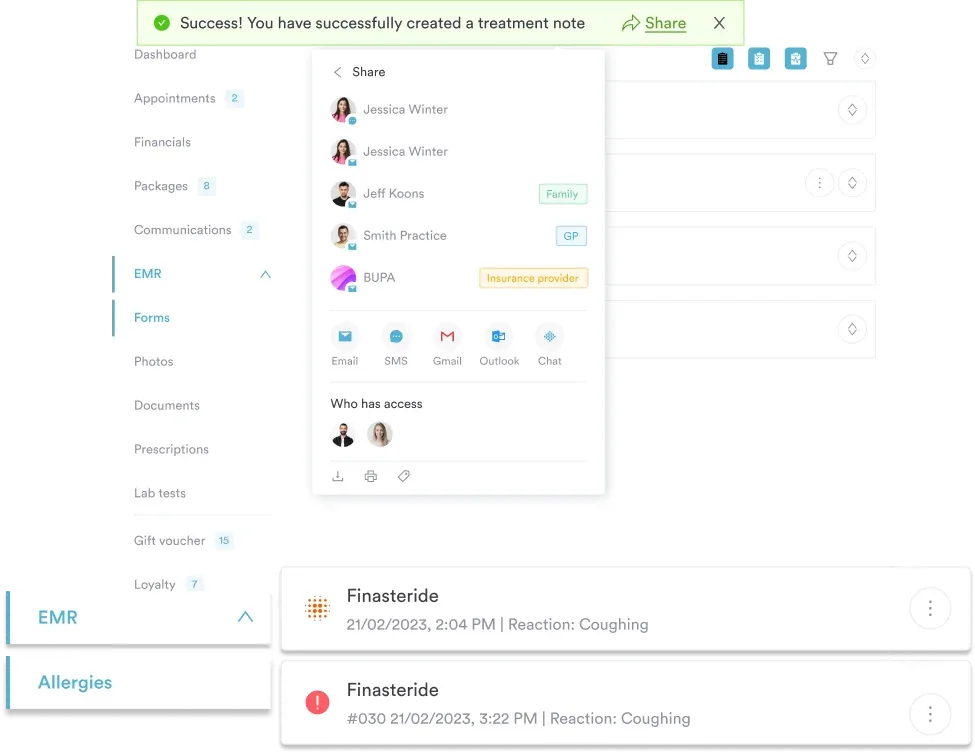
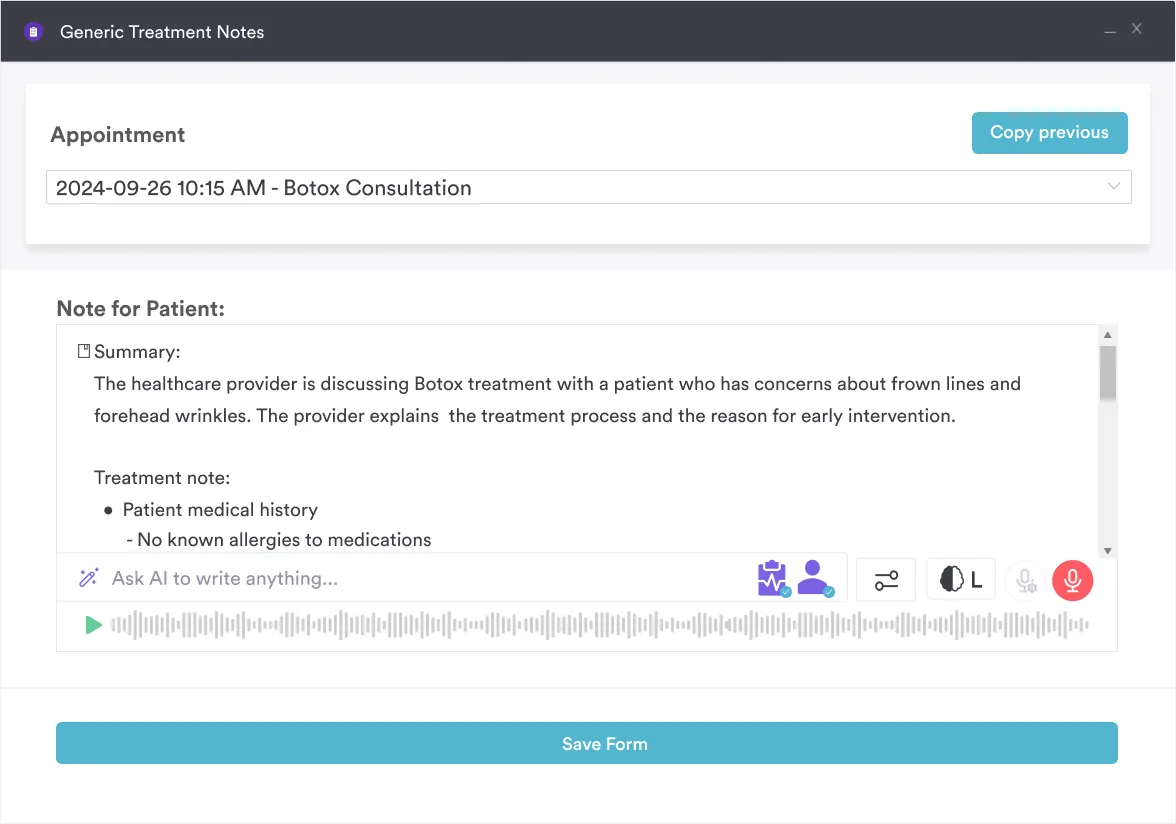

Pabau’s digital forms and client records help you document adductor squeeze test results, track strength progress, and manage return-to-sport timelines in one place.

Adductor squeeze test results inform return-to-sport decisions. Clearance typically requires: (1) bilateral symmetry <10% on the long-lever position (0° or 45°), (2) pain-free squeeze at ≥90% of baseline pre-injury force, and (3) sport-specific movement screening showing no groin pain provocation during running, cutting, or kicking activities.
Athletes with persistent adductor weakness (<80% of pre-injury baseline) benefit from progressive strengthening programs before return-to-sport.
The adductor squeeze test is often paired with other hip and groin assessments to build a comprehensive clinical picture. Common paired tests include the Copenhagen squeeze test (isometric hip adduction in sidelying, emphasizing the long adductor) and the FADIR test (hip flexion, adduction, and internal rotation, used to provoke intra-articular hip pain).
Clinicians also draw on the FABER test (hip flexion-abduction-external rotation, assessing hip joint mobility), the Thomas test (hip flexor tightness assessment), and the straight leg raise (sciatic nerve tension and hamstring length) to rule out competing sources of groin pain.
Groin pain in athletes is commonly classified using the Doha Agreement framework, which splits presentations into adductor-related, iliopsoas-related, inguinal-related, and pubic-related groin pain. A positive adductor squeeze test — pain at the adductor tendon insertion or reduced force versus the uninjured side — points specifically to the adductor-related category, helping narrow the diagnosis before ordering imaging or further testing.
Pain reproduction on the adductor squeeze test combined with pain on hip abduction resistance or palpation tenderness over the adductor muscle belly strongly suggests adductor tendinopathy. Pain at the pubic symphysis or lower abdomen with the squeeze test may indicate osteitis pubis or pubic symphysis dysfunction. Clinicians should use a structured SOAP note format to synthesize all findings.
Two main tools are used for adductor squeeze testing: handheld dynamometry and sphygmomanometry. Handheld dynamometers (e.g., Lafayette Instrument, Biodex) are the gold standard, offering precise force measurement in kilograms with excellent reliability. They require training and cost $300-$2,000 per unit.
Sphygmomanometer cuffs are inexpensive ($30-$100), portable, and suitable for practice-based screening, though they’re less precise than dynamometry and more prone to operator error.
For most physiotherapy practices, a mid-range handheld dynamometer or a standard aneroid sphygmomanometer is adequate for baseline testing and progress monitoring. Competitive sports teams typically invest in calibrated handheld dynamometers for precise athlete profiling.
The adductor squeeze test is a simple, objective, reliable assessment tool that detects hip adductor weakness, pain, and pathology. Performing the test at 45° hip flexion maximizes sensitivity, and bilateral comparison and tracking over time guide treatment and return-to-sport decisions.
Integrating squeeze test results into your digital patient records ensures consistent documentation and evidence-based progression planning. Book a demo with Pabau to see how our assessment forms and client records software streamline adductor testing workflows.

Need a template for lumbar spine flexion? Schober tests template standardizes how you record baseline landmarks and flexion distances across three test variants.
Need to screen for fear of movement? Tampa Scale of Kinesiophobia screens for fear-avoidance patterns that predict poor outcomes in chronic pain patients.
Tracking trunk control in a stroke survivor? Trunk Impairment Scale template quantifies exactly where trunk control breaks down and what improves during rehabilitation.
A positive test includes pain provocation in the groin or adductor region during squeezing, reduced force compared to the opposite leg (>10% asymmetry), or both. Positivity suggests adductor tendinopathy, pubic symphysis pain, osteitis pubis, or sports hernia.
45° hip flexion is optimal. Research shows it elicits the greatest adductor muscle activity and peak squeeze force compared to 0° or 90° positions, making it the most sensitive for detecting strength deficits.
Intraclass correlation coefficient values of 0.84-0.97 across all three positions indicate excellent reliability. The 45° hip flexion position achieves ICC 0.97 when using handheld dynamometry and averaging three repetitions.
At 45° hip flexion, untrained adults typically achieve 10-20 kg force; male athletes 20-40+ kg; female athletes 15-30 kg. Bilateral asymmetry <10% is normal. Values vary by age, sex, sport, and training status.
Inflate the cuff to 20 mmHg and position it between the patient’s knees. The patient squeezes for 5 seconds maximal contraction. Pressure rise above baseline indicates squeeze force. Record peak pressure and any pain on a 0-10 scale.
Clear for return when bilateral squeeze force is symmetric within 10%, pain-free squeeze force reaches ≥90% of baseline pre-injury strength, and sport-specific movement screening shows no groin pain provocation.
No. Adductor length and flexibility are checked with muscle-tightness tests, such as a passive hip abduction with the knee extended, while the adductor squeeze test measures strength and pain during an active isometric contraction. A hip adductor test is sometimes used as a catch-all term for either, so confirm which measure a report is referencing.