








Aesthetics licensing scheme England: What applies to your practice now
The aesthetics licensing scheme England isn't in force yet. Here's what the Heal...

Last Updated: August 21, 2026


Shockwave therapy aftercare, also called acoustic wave therapy (AWT) aftercare, is the post-procedure guidance practices give patients to support recovery and reduce side effects.
Patients can resume normal activities right after treatment. Restrictions on vigorous exercise, heat exposure, and NSAIDs apply for the first 48 to 72 hours.
Common side effects like mild bruising, tenderness, and localized inflammation are temporary and usually resolve within 7 to 10 days without treatment.
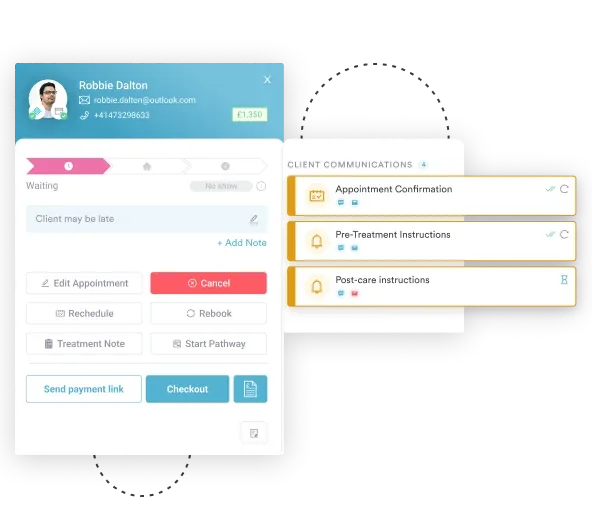
Pabau, practice management software with automated pre- and post-treatment messaging, helps practices deliver consistent aftercare, track patient compliance, and schedule follow-up appointments.
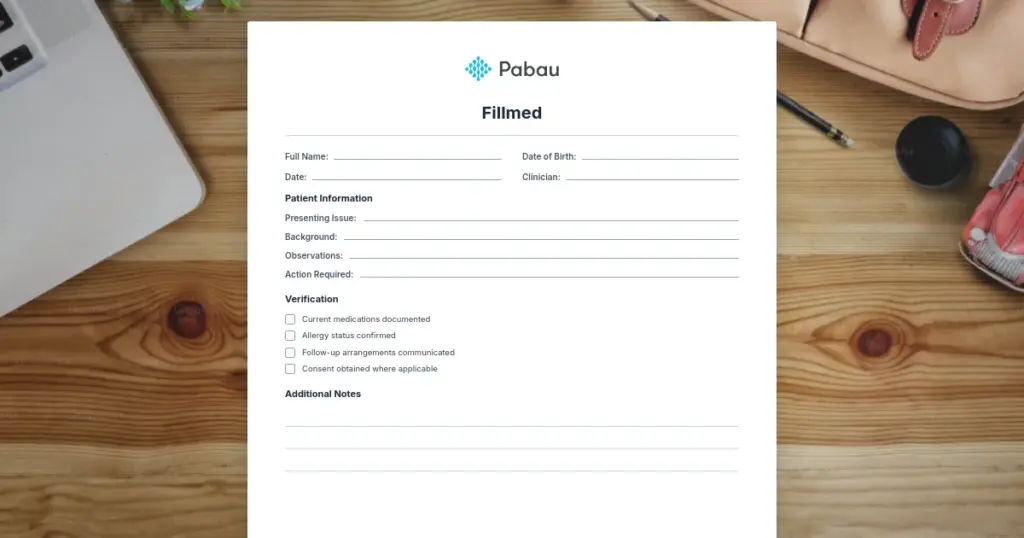
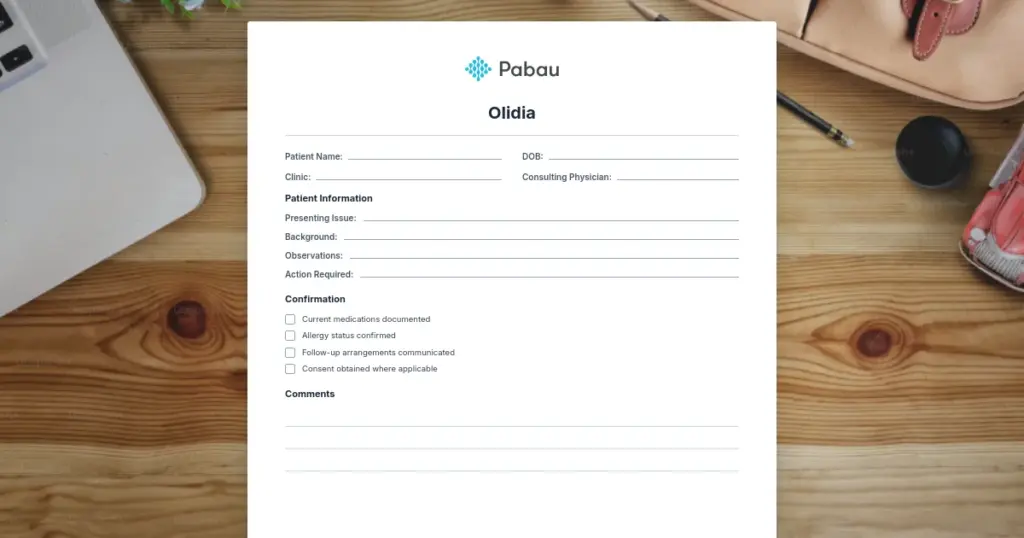
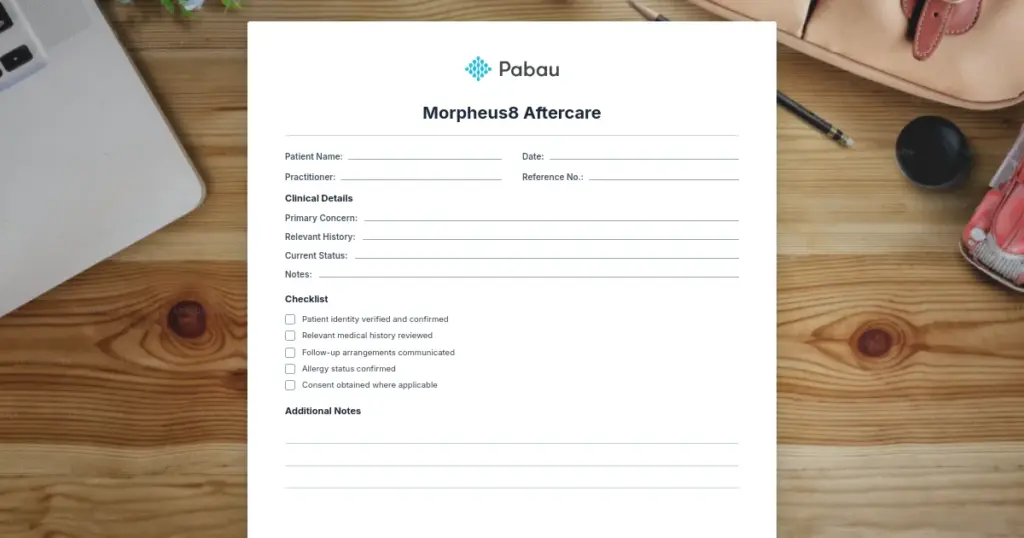
A ready-to-use aftercare instruction template covering post-treatment care protocols, activity restrictions, expected side effects, a contraindication checklist, and follow-up scheduling guidance for acoustic wave therapy across aesthetic and musculoskeletal indications.
Download templateAcoustic wave therapy (AWT), also called shockwave therapy, uses acoustic pressure waves to stimulate tissue repair. Because it is non-invasive, patients walk out and resume most daily activities the same day. What they do in the first 48 to 72 hours is what turns a good session into a good outcome, so the aftercare you send them matters.
This guide gives you the exact aftercare to hand patients after shockwave therapy, broken down by indication (aesthetic cellulite, sexual health, and musculoskeletal), plus a free template you can drop into your workflow. Below you will find what to do, what to avoid, which side effects are normal, and when a patient should call.
Shockwave therapy aftercare is the written and verbal guidance you give patients right after an acoustic wave therapy session. It sets out what to expect during recovery, which activities to avoid, which side effects are normal, and when to contact your practice.
Unlike invasive procedures that require strict downtime, AWT lets patients resume normal activities the same day. Specific precautions still apply during the first 48 to 72 hours to protect the result.
The clinical purpose is twofold: patient safety (making sure contraindicated activities don’t interrupt healing) and outcome optimization (maximizing the acoustic wave’s tissue-remodeling effect).
A structured aftercare instruction template ensures every patient gets the same evidence-based guidance, reducing legal exposure and standardizing the patient experience across your team. Some practices pair this guide with a dedicated AWT consent and treatment note template for complete documentation coverage.
Delivering shockwave therapy aftercare well comes down to five operational steps that align with your team’s patient-facing and clinical documentation systems.
Practice management software like Pabau can automate this entire workflow: the aftercare template attaches to each AWT appointment, reminders go out at scheduled intervals, and patient responses populate the clinical record automatically.
Shockwave therapy aftercare applies across multiple clinical settings and patient populations. Aesthetic practices and medical spas use it to support cellulite reduction and body contouring. Sexual health and men’s health practices use aftercare guidance for erectile dysfunction protocols.
Sports medicine, physical therapy, and orthopedic practices reference aftercare instructions for tendinopathy, plantar fasciitis, and musculoskeletal pain management.
Beyond the patient, aftercare instructions support clinical staff and practitioners — nurses, physicians, physician assistants, and estheticians all benefit from a standardized template that keeps messaging consistent. Medical directors and practice managers use these instructions as part of their compliance toolkit, aligned with CQC expectations and data protection requirements.
Practices adding AWT to a growing service menu can pair this template with a medical spa business plan template when planning the rollout.
A therapy practice management system files each completed worksheet under the client’s treatment plan.
Structured aftercare instructions deliver operational and clinical wins.
Every effective shockwave therapy aftercare set covers these core domains.
Contraindication checklist: flag absolute contraindications (pregnancy, active infection, pacemakers) and relative contraindications (recent botulinum toxin in the treatment area and active anticoagulation therapy) so patients understand why aftercare restrictions exist.
Indication-specific variants matter here. Aftercare for cellulite AWT emphasizes lymphatic support (hydration, gentle movement) to complement the treatment’s body-contouring effect. ED and sexual health AWT aftercare notes that improvement builds over multiple sessions, so it sets realistic expectations for timing.
When to contact the practice: include warning signs — severe swelling, signs of infection (increasing redness, warmth, discharge), persistent pain beyond 10 days, or any symptom that concerns the patient. A direct practice contact number or patient portal messaging system reassures patients they have a safety net.

See how private GPs reduce admin, improve clinical safety, and increase revenue with Pabau.

Beyond individual patient care, aftercare instructions are operational infrastructure. Aesthetic practices and medical spas that standardize aftercare guidance see measurable improvements in patient satisfaction scores, repeat-booking rates, and online reviews.
The same holds for physical therapy and sports medicine practices running AWT for tendinopathy or plantar fasciitis: patients who understand what to expect post-treatment feel more confident, trust your team more, and are more likely to recommend you to peers.
From a risk-management perspective, documented aftercare instructions protect your practice legally. If a patient has an unexpected complication and claims they were never told to avoid vigorous exercise, your written or digital instruction record — signed by the patient, recorded in their portal, or delivered via SMS — becomes evidence of your diligence.
CQC inspectors (UK) look for evidence that post-treatment guidance was provided, and US practices should keep the same standard-of-care documentation on file. A template ensures this evidence exists for every patient.
For multi-location practices and franchises, a centralized aftercare template hosted in a shared patient records system ensures consistency across locations. Every practice delivers the same message, reinforcing brand trust and reducing the risk that one location’s looser aftercare guidance undermines another location’s clinical standards.
Many practices offer AWT as part of a broader aesthetic menu that includes popular injectable treatments, so aftercare instructions need to address treatment sequencing and compatibility.
AWT and Botox: if a patient has had a Botox consultation and treatment in the same area, many practitioners let the toxin settle first (commonly around two weeks) before applying acoustic waves, since the waves could theoretically disperse it. Document any spacing in your pre-treatment consultation form.
AWT and HIFU (high-intensity focused ultrasound): these complementary technologies can be combined for skin tightening and body contouring. Many practitioners space the treatments a few weeks apart to avoid compounded inflammation.
AWT and fat freezing (cryolipolysis): some practices use AWT to support lymphatic drainage after fat freezing. If you offer both, set the spacing in your protocol and make sure your aftercare instructions clarify which treatments the patient received and any adjusted restrictions that apply.
AWT timing with dermal fillers and other injectables: many injectors wait 24 to 48 hours after AWT before administering fillers to avoid acute inflammation that could displace product. Document this spacing in the treatment plan.
The most carefully written aftercare instructions fail if patients don’t follow them.
Deliver instructions at three moments: before the patient leaves the practice (verbal and printed), 24 hours post-treatment (digital reminder), and 7 days post-treatment (check-in survey). Repetition strengthens message retention.
Use plain language, avoid medical jargon, and give a clear reason for each restriction (“Avoid vigorous exercise for 48 hours because it raises core temperature and inflammation, which can reduce AWT effectiveness”).
Lock in the next appointment before the patient leaves the practice. Long gaps between sessions can reduce the therapeutic effect, so keep to the cadence your protocol sets for that indication.
For musculoskeletal indications.
Simple patient-reported outcome measures at week 4 and week 8 (“On a scale of 1-10, how satisfied are you with results?”) create evidence of efficacy and flag patients who may need additional sessions or a different approach.
Practices that systematically track compliance and outcomes report higher patient retention and word-of-mouth referrals — data like “most patients see visible improvement by session 4” is far more credible in your marketing than a generic “AWT works great” claim.
Shockwave therapy aftercare protects patient safety, supports the result, and gives your practice a documented standard of care. A well-designed template, delivered at the right moments (in-practice, 24 hours post-treatment, and at follow-up), means every patient knows what to expect and how to support their recovery.
Book a demo with Pabau to see how automated pre- and post-care workflows deliver consistent aftercare messaging, track patient compliance, and simplify AWT administration from intake through outcome measurement.
Patients should avoid vigorous exercise (running, weightlifting, high-impact activities), prolonged heat exposure (hot baths, saunas, direct sun), NSAIDs (ibuprofen, naproxen) for 48 hours, and massage or manual manipulation of the treated area for at least 72 hours. These restrictions let the acoustic pressure waves fully trigger tissue remodeling without interruption.
Most patients notice early changes within a few sessions, with fuller results developing over 6 to 12 weeks. Tissue remodeling (collagen regeneration and angiogenesis) continues for up to 3 months after the final session. Timelines vary by indication and by how many sessions the plan includes, with cellulite and erectile dysfunction protocols usually needing more sessions than musculoskeletal ones.
Light activity (walking, gentle stretching) is safe immediately. Vigorous exercise should be postponed for 48 to 72 hours. This lets the body’s natural inflammatory healing response fully activate without the metabolic stress of intense activity, which raises core temperature and can dilute the treatment’s tissue-remodeling effect.
Mild side effects are normal and expected: bruising, tenderness, and localized swelling typically resolve within 7 to 10 days. These are signs the acoustic waves have triggered the healing cascade. Serious side effects (severe swelling, infection, persistent pain beyond 10 days) are rare and should prompt the patient to contact your practice.
Absolute contraindications include pregnancy, active infection at the treatment site, pacemakers, and active anticoagulation therapy. Relative contraindications include recent botulinum toxin in the treatment area, blood clotting disorders, and severe inflammation. Always screen patients during the pre-treatment consultation and update contraindication checks at each visit.
The number depends on the indication. Musculoskeletal cases often need 3 to 5 sessions at weekly intervals. Cellulite and sexual health protocols usually need more, sometimes two sessions a week over 6 to 12 weeks. Your clinician will set a plan based on the indication, the patient’s response, and the desired outcome.