

HCPCS code E0198: Water pressure pad billing guide
HCPCS code E0198 is a water pad for a standard mattress HCPCS code E0198 is the ...

Last Updated: Oct 13, 2026
V5010 is the HCPCS Level II code for assessment for hearing aid.
HCPCS Code V5010 carries a short and long description of "Assessment for hearing aid." It falls within the V5008-V5020 Hearing Assessments and Evaluations range, classified under Vision/Hearing Services by the Centers for Medicare and Medicaid Services (CMS). HCPCS Level II is organized into letter series spanning very different item types — the V-series here for vision and hearing, and, for instance. The action code is "N" (no maintenance), with an action effective date of January 1, 1995, indicating the code has remained stable without modification for over three decades. V5010 is frequently searched for as a "V5010 CPT code," but it is a HCPCS Level II code, not a CPT code, and that distinction matters when you pick the correct code set for a claim.
Clinically, V5010 represents the assessment process used to determine whether a patient needs a hearing aid and, if so, to select the appropriate device. It covers the full evaluation workflow: reviewing audiometric test results, assessing functional hearing in real-world conditions, determining candidacy, and selecting device type, style, and features based on individual need.
Let Pabau's smart automation suggest the right codes, reduce claim denials, and keep your practice compliant—effortlessly.
Automate repetitive tasks and focus on what matters most—your patients.
Reduce coding errors and ensure compliance with the latest regulations.
Clean claims, fewer denials, and faster reimbursements.
Powerful insights and reporting to help your practice thrive.
HIPAA compliant SOC 2 certified GDPR-compliant Trusted by 4,000+ clinics worldwide

HCPCS Code V5010 describes an assessment for hearing aid, used to evaluate whether a patient needs a hearing aid and which device is appropriate.
Medicare generally does not cover V5010, but state Medicaid programs (including Medi-Cal and New York Medicaid) may reimburse it when billed with correct prior authorization.
CPT 92590/92591 (hearing aid examination and selection) were deleted on January 1, 2026; V5010 remains an active HCPCS Level II code for payers and Medicaid programs that mandate V-code billing.
New hearing aid service CPT codes (92628-92642), effective January 1, 2026, replaced the deleted 92590-92595 family and may affect how hearing instrument specialists and audiologists bill for these evaluations.
| Property | Value |
|---|---|
| Code | V5010 |
| Short description | Assessment for hearing aid |
| Long description | Assessment for hearing aid |
| Code set | HCPCS Level II |
| Classification | Vision/Hearing Services |
| Code range | V5008-V5020 (Hearing Assessments and Evaluations) |
| Date added | January 1, 1984 |
| Action code | N (No maintenance) |
| Action effective date | January 1, 1995 |
Submitting HCPCS Code V5010 without adequate supporting documentation is the fastest path to a denial. Payers expect the claim to be backed by a complete clinical record that substantiates both medical necessity and the scope of service delivered. The CARC denial code list is short enough to learn, and most rework traces to a handful of entries.
At minimum, the patient record should include a current audiogram (typically within six months), documentation of the specific assessment activities performed, the clinician’s candidacy determination, and a record of the recommended device type. Practices using digital intake forms can streamline this capture at the point of service, reducing the chance of missing fields that trigger retrospective denials.
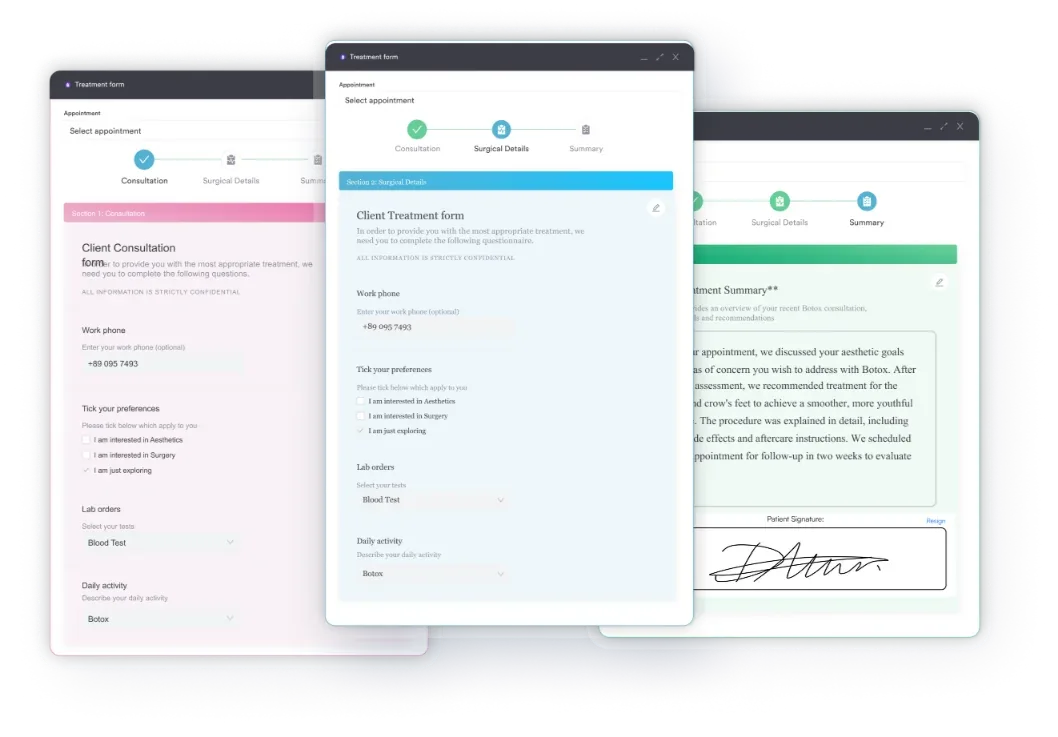
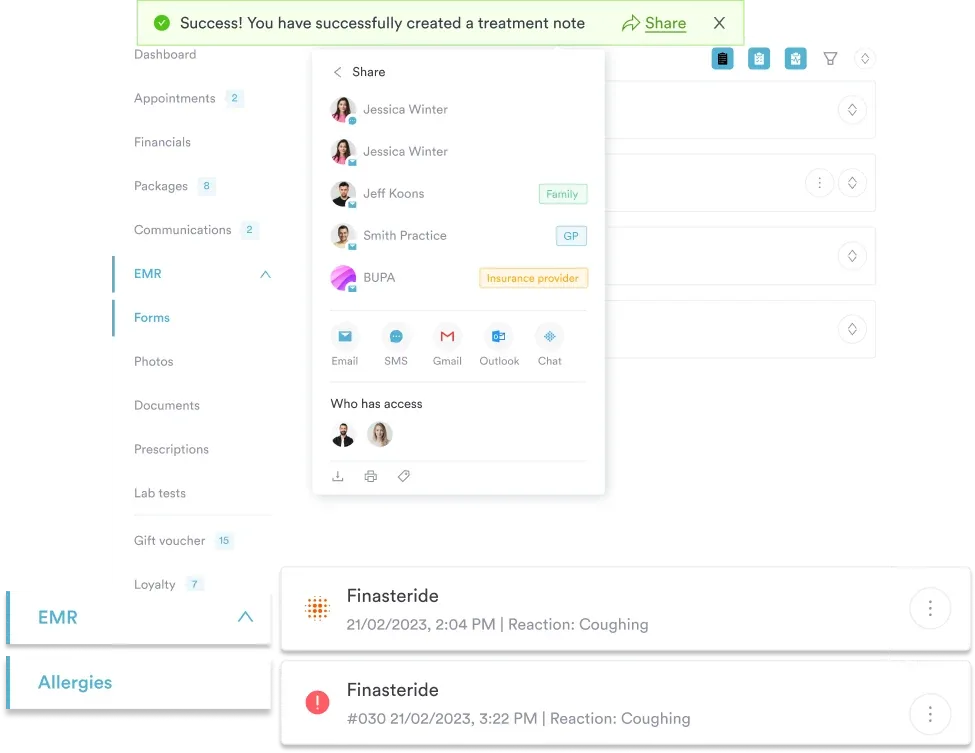
Both licensed audiologists and hearing instrument specialists (HIS) may bill V5010, but credentialing requirements vary by payer and state. Audiologists bill under their National Provider Identifier (NPI) with the appropriate taxonomy code. Hearing instrument specialists, whose scope of practice is more limited, face stricter credentialing checks from commercial payers and some Medicaid programs. Practices that manage multiple provider types benefit from patient record documentation systems that tie service delivery to the specific licensed provider, reducing audit risk.
Place of service (POS) code 11 (Office) applies in most outpatient audiology settings. Some Medicaid programs accept POS 12 (Home) when assessments are conducted at the patient’s residence. Modifier use with V5010 is payer-specific. Common modifiers applied include:
Always verify modifier requirements against the specific payer’s policy before submitting. Modifier misuse is consistently cited as a top denial trigger for hearing services billing. Practices that integrate claims management workflows into their practice management system can flag modifier requirements before submission rather than addressing them at the appeal stage.
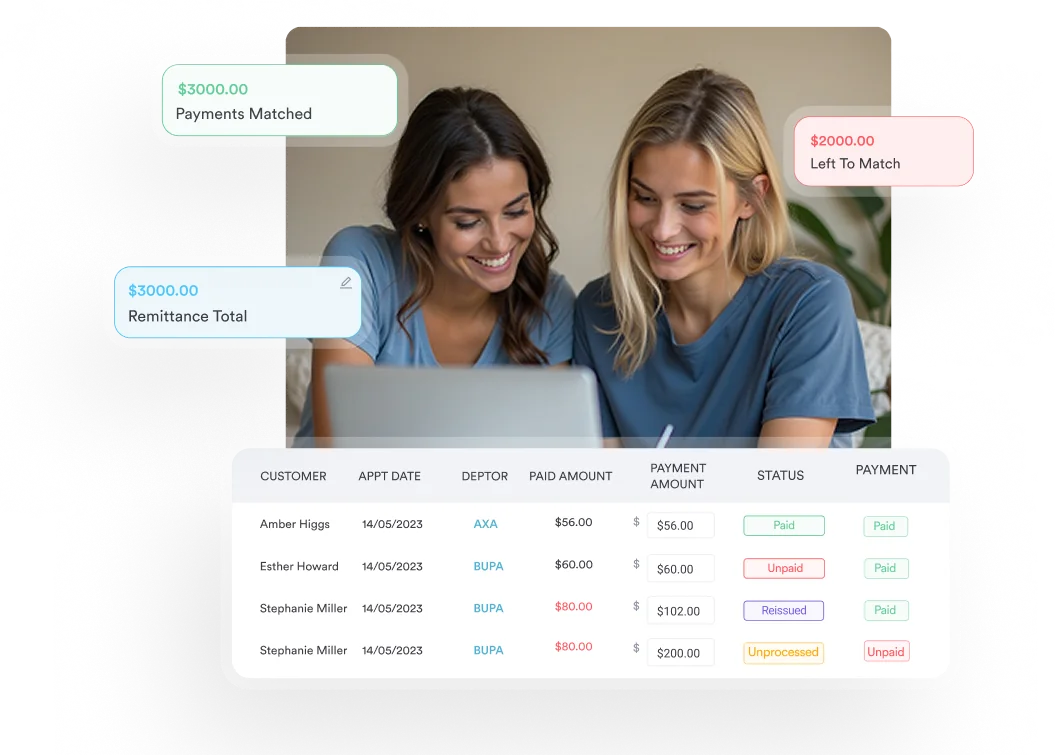
Before billing V5010, verify whether the payer requires a physician referral or prior authorization. Several Medicaid programs, including New York eMedNY and Illinois, require an authorization specifically identifying V5010 before the claim can be submitted. Missing authorization is a non-appealable denial in many of these programs.
Coverage for HCPCS Code V5010 is one of the most misunderstood aspects of hearing services billing. The short answer: Medicare typically does not cover it. The nuanced answer: several state Medicaid programs do, under specific conditions.
Medicare Part B generally excludes coverage for routine hearing examinations and hearing aids. Because V5010 is an assessment oriented toward hearing aid candidacy and selection, it falls within this exclusion for most Medicare beneficiaries. CMS does not reimburse V5010 as a covered service under the standard Part B benefit. When you need a denial on file for a secondary payer, append modifier -GY to show V5010 is statutorily excluded from Medicare. You can verify current payment status and any applicable fee schedule data using the CMS Physician Fee Schedule lookup tool.
Some Medicare Advantage (Part C) plans may cover hearing services beyond the traditional Part B benefit, including hearing aid assessments. Coverage terms vary by plan and contract year. Billers should check each plan’s Evidence of Coverage document and confirm coverage before rendering the service.
State Medicaid programs represent the primary payer landscape for V5010 outside of commercial insurance. Coverage rules, reimbursement rates, and prior authorization requirements differ significantly across states.
Because Medicaid rates and prior authorization requirements change on an annual or biennial basis, maintaining current access to state provider manuals is essential. Practices with HIPAA compliance for medical offices processes already in place typically have the documentation audit controls needed to satisfy Medicaid’s pre-authorization record-keeping requirements.

Pabau keeps audiograms, candidacy documentation, prior-authorization records, and your V5010 and CPT hearing-device claims in one place, so your audiology team submits clean claims the first time, even through the 2026 CPT transition.

One of the more confusing decisions in hearing services billing has been choosing between HCPCS Code V5010 and the CPT codes for hearing aid examination and selection. Until recently that meant weighing V5010 against CPT 92590 and 92591, but the AMA deleted those CPT codes on January 1, 2026 and replaced them with a new family of hearing-device service codes (92628-92642). Payer rules and provider type still determine which code set applies.
According to the AAPC HCPCS code reference, and consistent with guidance from the American Speech-Language-Hearing Association (ASHA), hearing aid examination and selection was historically reported using CPT Code 92590 (monaural) or CPT Code 92591 (binaural). Effective January 1, 2026, the AMA deleted the entire 92590-92595 family and replaced it with a new set of hearing-device service codes (92628-92642). HCPCS Code V5010 was not affected and remains available as the Level II alternative. The key distinction now is payer acceptance:
Check your payer contract first. For dates of service on or after January 1, 2026, commercial payers that have transitioned will expect the new CPT codes (92628-92642) rather than the deleted 92590/92591. Medicaid programs in states that mandate HCPCS V-codes for hearing services still require V5010, and some Medicaid-managed care organizations (MCOs) accept either family. When in doubt, call the payer’s provider services line before submitting. Using EHR integration between your clinical and billing systems reduces the risk of submitting the wrong code family by keeping payer-specific rules visible at the point of coding.
V5010 does not stand alone. Audiology practices routinely bill multiple V-codes across a single patient encounter or episode of care. Understanding the neighboring codes prevents both undercoding and duplicate billing errors.
| HCPCS Code | Description | Relationship to V5010 |
|---|---|---|
| V5008 | Hearing screening | Precedes V5010; not a substitute. V5008 screens for hearing loss; V5010 assesses for aid candidacy. |
| V5010 | Assessment for hearing aid | Primary subject of this guide |
| V5011 | Fitting and orientation/checking of hearing aid | Follows V5010; reported separately for the fitting appointment |
| V5020 | Conformity evaluation | Post-fitting verification; confirms device performance meets target prescription |
The device recommendation can also point outside this range. When one ear has no usable hearing and the other needs amplification, the fitting is a BICROS system, formerly coded V5210. When the better ear hears normally, the fitting is a CROS system instead, and the glasses-mounted version is coded V5190.
ICD-10-CM diagnosis codes most commonly paired with V5010 include H90 series codes (Conductive and sensorineural hearing loss, including H90.3 for sensorineural hearing loss, bilateral) and H91 series codes (Other and unspecified hearing loss). Correct ICD-10 pairing supports medical necessity and reduces the chance of LCD-based denials.
Never bill V5010 and V5008 for the same patient on the same date of service without a clear clinical justification. Payers treating V5008 as a screening and V5010 as an assessment will bundle these codes and deny one of them as redundant. Document separately what prompted each service if both are legitimately performed on the same visit.
The billing landscape for hearing services is shifting. New hearing aid service CPT codes took effect January 1, 2026, a change confirmed by the Academy of Doctors of Audiology (ADA). On that date the AMA deleted the legacy CPT codes 92590-92595 (hearing aid examination, selection, and check) and replaced them with a new family of 12 hearing-device service codes (92628-92642). Importantly, this change applies to CPT codes only: per ASHA, the HCPCS Level II V-codes, including V5010, V5011, and V5020, were not affected and remain active.
Audiologists who already use CPT codes in their practice (for diagnostic evaluations, for example) are better positioned for the transition. The new hearing aid service CPT codes expand their ability to bill for fitting and selection services under the same code set they use elsewhere.
Hearing instrument specialists who rely exclusively on HCPCS V-codes face a more complex decision. Their payer contracts may not yet accept the new CPT codes, and some Medicaid programs may continue requiring V-codes for a transitional period. The ADA has released member resources to assist with this transition, but providers should verify acceptance with every payer before switching code families.
V5010 has not been retired. CMS has not published a sunset date for the V5010 code, and the code remains in the 2025 and 2026 HCPCS Level II data files as an active code. Providers whose payer contracts specify HCPCS V-code billing for hearing aid services, particularly Medicaid-contracted providers in states that mandate V-codes, should continue using V5010 until their specific payers communicate otherwise. Using automated billing workflows that flag code-family requirements by payer can reduce the transition risk for multi-payer practices. You can verify current code status and fee schedule applicability via the PGM Billing HCPCS lookup tool.
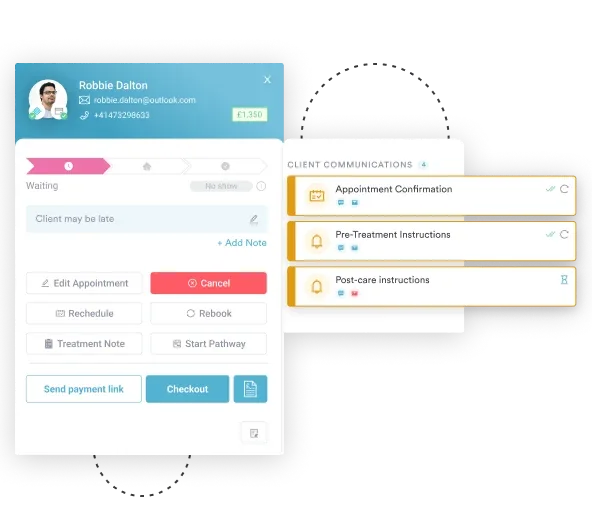
The safest approach for 2026: maintain V5010 as your primary code for Medicaid and hearing-instrument-specialist-contract payers, while evaluating the new CPT codes for commercial payers and audiologist-specific contracts where acceptance has been confirmed. Practices managing this dual-code environment benefit from practice management software that supports payer-specific billing rules at the claim level.
Consider a hearing instrument specialist who evaluates a Medi-Cal patient for hearing aid candidacy. The claim is assembled like this:
For a standard Medicare Part B patient, the same service is reported but expected to deny, since V5010 is statutorily excluded; the -GY modifier documents that exclusion so the balance can move to the patient or a secondary plan.
Billing HCPCS Code V5010 correctly requires more than knowing the code description. Payer-specific coverage rules, prior authorization requirements, correct modifier use, and the 2026 CPT transition all affect whether a claim is paid on first submission. Getting documentation right before the claim goes out is the only reliable way to avoid the denial-appeal cycle.
Pabau’s compliance management tools help audiology and multi-specialty practices capture structured clinical documentation at every patient touchpoint, reducing the gap between what was delivered and what the claim can prove. If you want to see how Pabau handles billing documentation and patient record workflows for specialty practices, book a demo.

Billing for hearing aid supplies as well as the assessment? HCPCS code V5267 guide breaks down how hearing aid supplies and accessories are coded after a V5010 candidacy assessment.
Billing anesthesia for an imaging procedure? CPT 01922 imaging anesthesia guide CPT Code 01922 covers anesthesia during a non-invasive imaging procedure or radiation therapy session.
Looking for a different interventional radiology code? CPT Code 01926 guide CPT Code 01926 bills anesthesia for intracranial, intracardiac, or aortic interventional radiology at eight base units plus time units.
HCPCS Code V5010 is a Level II Healthcare Common Procedure Coding System code that describes an assessment for a hearing aid. It is used by audiologists and hearing instrument specialists to report the clinical evaluation process that determines whether a patient is a candidate for a hearing aid and which device is most appropriate for their hearing profile. The code has been in the HCPCS Level II set since January 1, 1984.
Standard Medicare Part B does not cover HCPCS Code V5010 because Medicare generally excludes routine hearing examinations and hearing aids from its benefit. Some Medicare Advantage (Part C) plans may cover hearing aid assessments, but coverage terms vary by plan. Always check the individual plan’s Evidence of Coverage before rendering the service.
CPT 92590 was the monaural (one ear) hearing aid examination and selection code, but it, along with the entire 92590-92595 family, was deleted by the AMA effective January 1, 2026 and replaced by a new set of hearing-device service codes (92628-92642). HCPCS Code V5010 was not affected by that change and remains active as the Level II alternative required by certain Medicaid programs and payers that mandate V-code billing for hearing services. For current dates of service, compare V5010 against the new 92628-92642 codes rather than 92590, and let your payer contract determine which family applies.
Modifier -59 (distinct procedural service) is commonly applied when V5010 is billed on the same date as a diagnostic audiological evaluation. Modifier -52 indicates reduced services when the full assessment was not completed. Some state Medicaid programs require proprietary modifiers tied to prior authorization. Always verify modifier requirements with the specific payer before submitting the claim.
ICD-10-CM codes from the H90 series (conductive and sensorineural hearing loss) and H91 series (other and unspecified hearing loss) are most commonly paired with HCPCS Code V5010. The diagnosis must match the clinical findings documented in the audiogram and support medical necessity for the hearing aid assessment. Payer-specific Local Coverage Determinations (LCDs) may restrict which ICD-10 codes are accepted.
No. It is frequently searched as a “V5010 CPT code” or “V5010 CPT code description,” but V5010 is a HCPCS Level II code maintained by CMS, not a Current Procedural Terminology (CPT) code owned by the AMA. The mix-up is common because both code sets appear on the same claim forms. For hearing aid evaluation services, CPT billing now uses the 92628-92642 family (effective January 1, 2026), while V5010 remains the HCPCS alternative that many Medicaid programs and hearing instrument specialists still require. Match the code set to what your payer contract specifies.



