

CCSD code G5100: Bypass of duodenum billing guide
CCSD code G5100 bills a bypass that leaves the duodenum in place CCSD code G5100...

Last Updated: Oct 16, 2026
E0247 is the HCPCS Level II code for transfer bench for tub or toilet with or without commode opening.
HCPCS code E0247 bills for a transfer bench for a tub or toilet, with or without a commode opening, classified as durable medical equipment (DME) under bathing supplies. Medicare coverage code D means special coverage instructions apply, so claims need medical necessity documentation, the KX modifier, and the RR modifier for rentals.
Let Pabau's smart automation suggest the right codes, reduce claim denials, and keep your practice compliant—effortlessly.
Automate repetitive tasks and focus on what matters most—your patients.
Reduce coding errors and ensure compliance with the latest regulations.
Clean claims, fewer denials, and faster reimbursements.
Powerful insights and reporting to help your practice thrive.
HIPAA compliant SOC 2 certified GDPR-compliant Trusted by 4,000+ clinics worldwide

HCPCS Code E0247 describes a transfer bench for tub or toilet with or without commode opening, classified under DME bathing supplies since January 1, 2004.
Medicare coverage code D means special coverage instructions apply; the KX modifier is required to confirm medical necessity before claims are submitted.
Rental billing requires the RR modifier; omitting it causes the claim to default to a purchase, which is a common denial trigger for DME suppliers.
Pabau’s claims management software helps DME suppliers and clinics track modifier requirements, attach documentation, and submit cleaner claims with fewer denials.
HCPCS Code E0247 is the billing code used by DME suppliers and healthcare providers when supplying a transfer bench for a tub or toilet with or without a commode opening. The code sits within the claims management software workflow for any clinic or supplier billing durable medical equipment under Medicare Part B or state Medicaid programs.
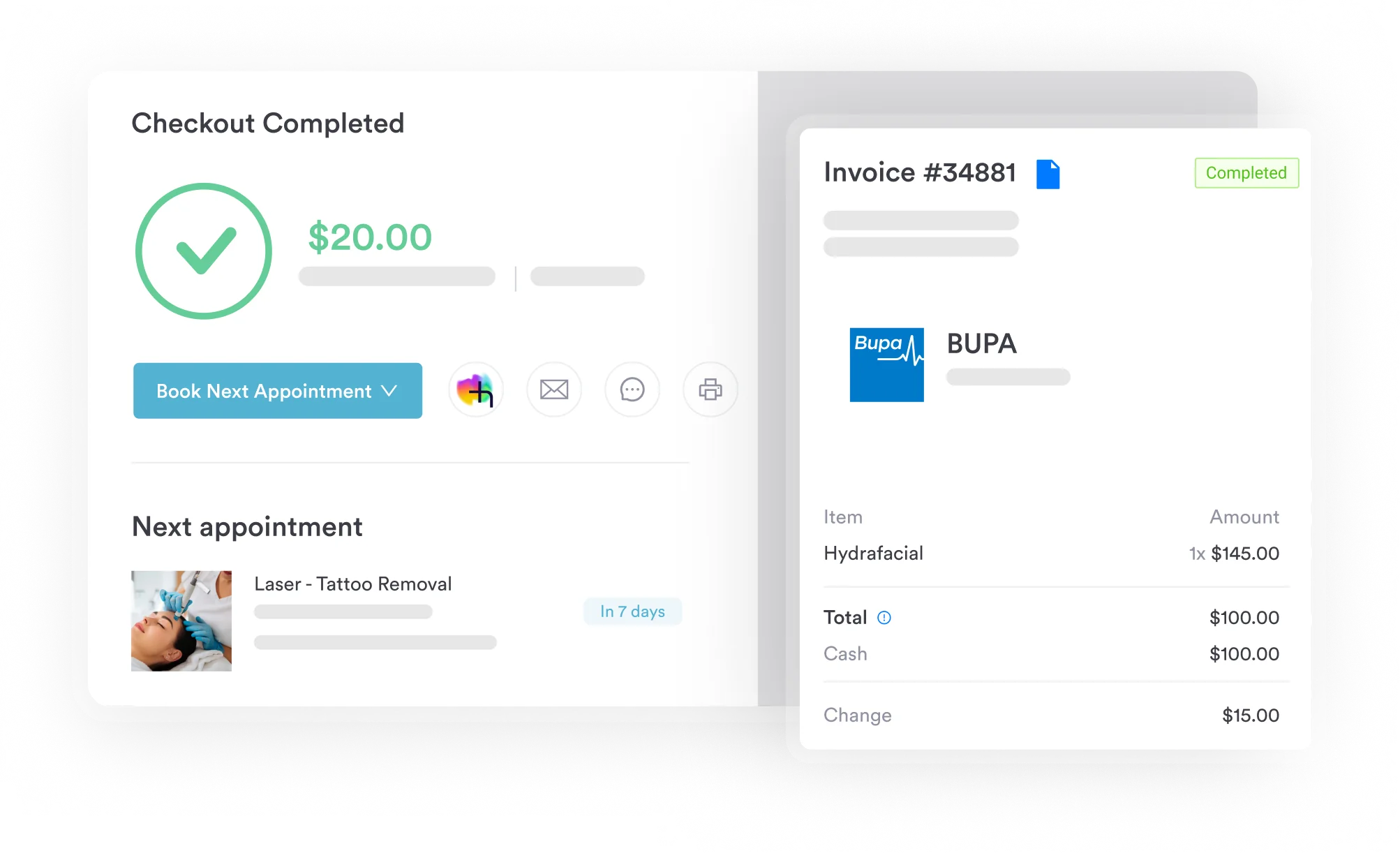
Most claim denials tied to E0247 happen before the equipment ever leaves the supplier’s warehouse. Missing modifiers, incomplete documentation, and miscoded diagnosis linkages account for the bulk of rejections. Understanding the code’s properties in full prevents those errors at the source.
| Property | Value |
|---|---|
| HCPCS Code | E0247 |
| Long description | Transfer bench for tub or toilet with or without commode opening |
| Short description | Trans bench w/wo comm open |
| HCPCS category | Bathing Supplies (DME) |
| Coverage code | D (Special coverage instructions apply) |
| Action code | N (No maintenance for this code) |
| Action effective date | January 1, 2004 |
| BETOS classification | Other DME |
| Maintained by | Centers for Medicare & Medicaid Services (CMS) |
Coverage code D is significant. It means standard Medicare rules do not automatically apply; instead, billing must comply with payer-specific Local Coverage Determinations (LCDs). Suppliers who treat E0247 as a straightforward purchase code without checking current LCD guidance regularly encounter denials on the back end.
Medicare Part B covers transfer benches as durable medical equipment when they meet the criteria defined in applicable LCDs. The CMS HCPCS overview outlines the framework under which DME categories like bathing supplies are assessed for coverage.
For E0247 to be covered, the beneficiary must have a mobility or functional impairment that makes standard tub or toilet access unsafe without assistive equipment. A physician or qualified treating practitioner must document that the equipment is medically necessary for home use. “Home use” is a hard requirement; Medicare does not cover DME designated primarily for use in skilled nursing facilities or outpatient settings when billed under Part B. The same home-use and medical-necessity framework governs other Part B equipment a recovering patient often needs alongside a transfer bench. A superbill form is not a claim form, but it carries the same data the patient insurer will ask for.
The KX modifier is added to an E0247 claim to confirm that the supplier has documentation on file supporting medical necessity and that the claim meets the LCD requirements. Without the KX modifier, Medicare contractors may auto-deny the claim as unsubstantiated. Suppliers should never submit KX unless they genuinely hold the supporting documentation.
When a supplier believes Medicare may deny a claim for E0247 (for example, when medical necessity is questionable or the beneficiary’s condition does not clearly meet LCD criteria), an Advance Beneficiary Notice (ABN) must be issued before the equipment is delivered. The ABN protects both the supplier and the beneficiary by ensuring the patient understands potential out-of-pocket liability before the equipment is provided.
Failing to issue an ABN when one is warranted means the supplier cannot bill the beneficiary if Medicare denies the claim. This is a financial risk that compliance management software can help mitigate by flagging high-risk claims before submission.
Modifier selection is where most E0247 billing errors occur. Each modifier signals a different billing scenario, and submitting the wrong one (or omitting a required one) typically results in an outright denial or an underpayment.
| Modifier | Meaning | When to use |
|---|---|---|
| RR | Rental | When the transfer bench is being rented rather than purchased. If RR is omitted, the claim defaults to a purchase. |
| KX | Requirements specified in the LCD are met | Required when medical necessity documentation is on file and the claim meets LCD criteria. |
| NU | New equipment | Used when billing for a new, unused piece of equipment at the time of delivery. |
| UE | Used equipment | Used when billing for previously owned or refurbished equipment. |
The RR modifier deserves particular attention. Wisconsin ForwardHealth’s 2004-05 bulletin explicitly states: “If modifier RR is not used, the request is considered a purchase.” That same logic applies broadly across Medicaid programs and many commercial payers.
Rental of E0247 without the RR modifier generates a purchase claim by default, which can create billing discrepancies and audit exposure. Good patient care management documentation practices should flag rental versus purchase status at the point of order entry.
Audit your modifier workflow quarterly. Build a claim edit rule in your billing system that rejects any E0247 claim where neither NU, UE, nor RR is present. Missing acquisition-type modifiers are the single fastest path to a post-payment audit for DME suppliers.
An inventory management tool ties each dispensed item to a patient and a billing code, ending stockroom guesswork.
Medicare and most Medicaid programs require suppliers to maintain a documentation file before and at the time of delivery. The file must be available on request during audits and post-payment reviews. Missing or incomplete documentation is a frequent reason for DME recoupment requests from Medicare Administrative Contractors (MACs).
Proper managing medical forms at your practice is the foundation of clean DME claims. For E0247 specifically, the documentation file should contain all of the following before the claim is submitted:
Storing these documents in a system that links them directly to the claim reduces audit risk.
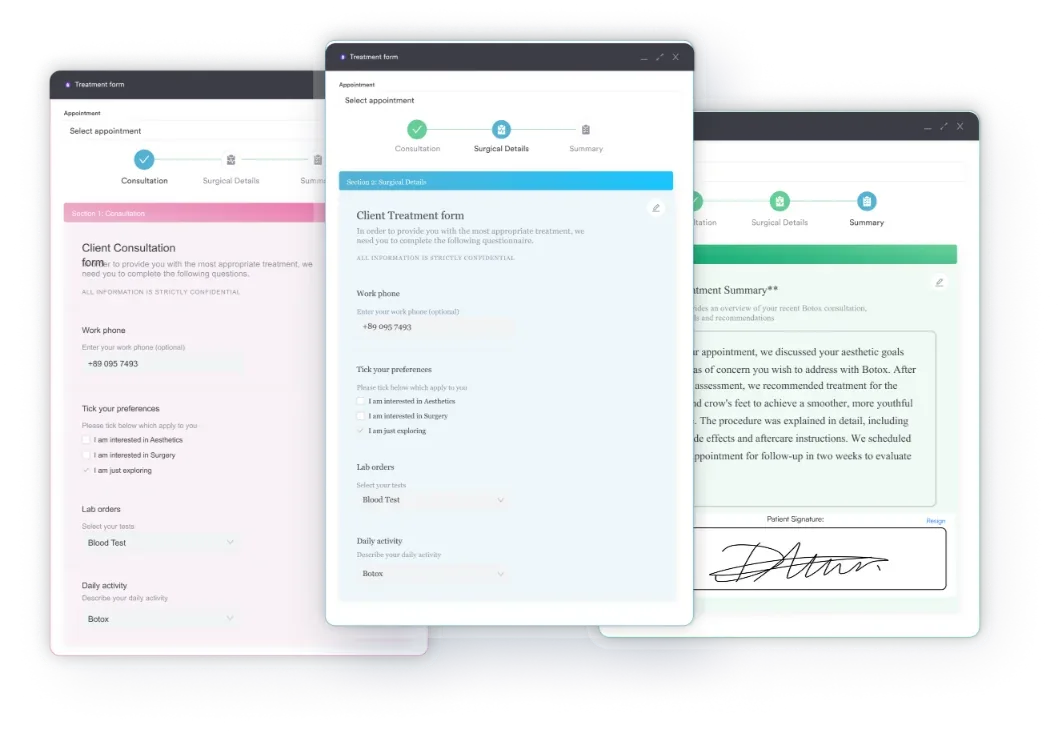
Additionally, maintaining HIPAA compliance for medical offices and DME suppliers requires that all patient documentation be stored securely and transmitted only through encrypted channels. DME auditors look for both documentation completeness and appropriate data handling.
Every DME claim must be linked to at least one ICD-10-CM diagnosis code that supports the medical necessity of the equipment. For E0247, the diagnosis must reflect a functional or mobility impairment that makes unaided bathing transfers unsafe. Submitting E0247 with an unrelated or insufficiently specific diagnosis code is one of the most common reasons for medical necessity denials.
The following ICD-10-CM codes commonly support E0247 claims, though the treating physician’s documentation must justify whichever code is used:
| ICD-10-CM Code | Description | Clinical context |
|---|---|---|
| M62.81 | Muscle weakness (generalized) | General muscle weakness affecting lower extremity function |
| R26.89 | Other abnormalities of gait and mobility | Gait impairment affecting safe transfers |
| Z87.39 | Personal history of other musculoskeletal disorders | Post-surgical or post-injury recovery with ongoing mobility limitation |
| G35 | Multiple sclerosis | MS-related balance and coordination impairment |
| G20 | Parkinson’s disease | Rigidity and postural instability affecting bathing safety |
| I69.354 | Hemiplegia following cerebral infarction, left non-dominant side | Post-stroke functional limitation |
| M16.11 | Unilateral primary osteoarthritis, right hip | Hip arthroplasty recovery or severe OA limiting range of motion |
| S72.001A | Fracture of unspecified part of neck of right femur, initial encounter | Hip fracture, acute phase or post-surgical recovery |
The diagnosis code alone is not sufficient. The clinical notes must demonstrate that the specific condition causes functional limitation at the tub or toilet. A diagnosis of osteoarthritis, for example, will not support E0247 if the clinical notes describe only mild pain with no documented transfer difficulty.
Specificity in both the code selection and the supporting documentation is essential for patient record documentation that survives audit review.
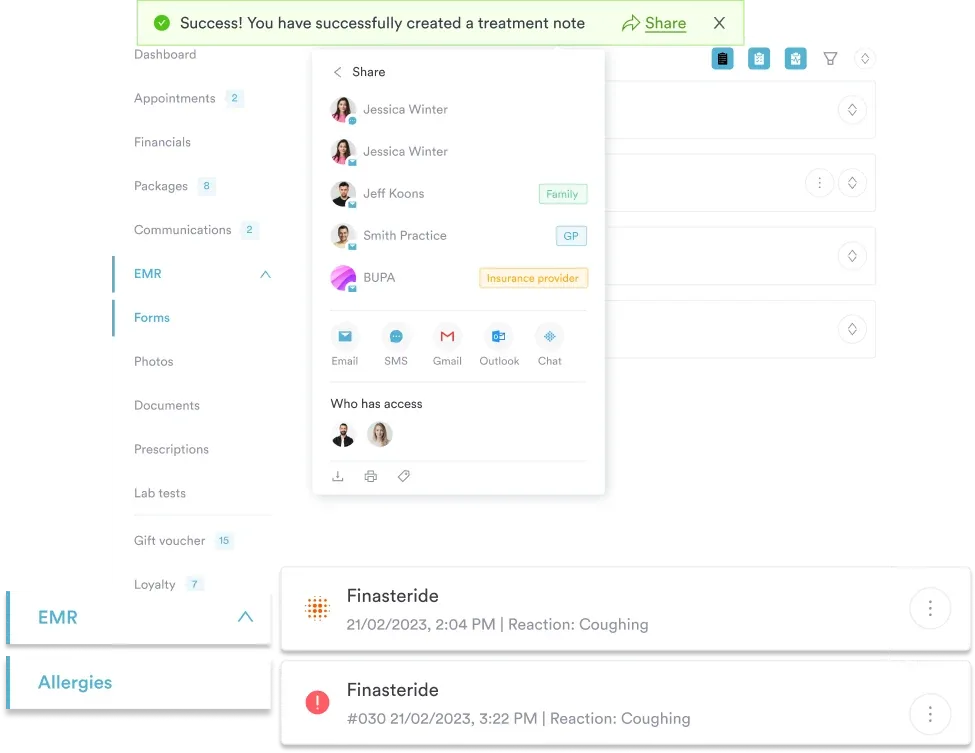

Pabau’s claims management and digital forms tools help DME suppliers and clinics attach the right documentation to every claim, flag missing modifiers, and reduce denials before submission.

E0247 and E0248 describe similar equipment but differ on one clinical criterion: patient weight capacity. Getting this wrong results in either an underpayment (billing E0247 for a heavy-duty bench) or a potential audit flag (billing E0248 when the standard bench is clinically appropriate).
| Code | Description | Key distinguisher |
|---|---|---|
| E0247 | Transfer bench for tub or toilet with or without commode opening | Standard weight capacity; the default code for most patients |
| E0248 | Transfer bench, heavy duty, for tub or toilet with or without commode opening | Heavy-duty construction for patients whose weight exceeds the standard bench capacity; clinical justification required |
When ordering E0248, the physician documentation should explicitly reference the patient’s weight and the clinical reason a heavy-duty bench is required. Payers including several state Medicaid programs look for this documentation when reviewing heavy-duty DME claims. Using E0248 without weight-based documentation when E0247 would have been appropriate is a common coding error flagged in DME audits.
E0247 sits within a family of HCPCS codes covering bathing and bathroom safety equipment. Suppliers commonly bill these codes together or as alternatives, depending on the patient’s specific functional needs. You can explore the broader category of related procedure codes and DME billing frameworks through Pabau’s procedure code resources.
When multiple codes from this group are billed in the same claim or for the same patient in the same period, payers may apply bundling edits. Confirm with the relevant MAC or payer’s LCD whether E0246 (tub rail) and E0247 (transfer bench) may be billed together for the same beneficiary in the same encounter, as some coverage policies restrict duplicate bathroom safety equipment billing.
Run a DME crosswalk check before billing multiple bathing supply codes in the same claim. Some MACs apply medically unlikely edit (MUE) restrictions on the E0243-E0248 group when billed for the same patient on the same date. Check the AAPC Codify HCPCS lookup or your MAC’s published MUE table before submitting.
Frequency limits define how often a payer will reimburse for the same HCPCS code for the same beneficiary. For E0247, California Medi-Cal sets a limit of one transfer bench per five years. This means a second E0247 claim for the same beneficiary within a five-year window requires additional documentation demonstrating why replacement is medically necessary before the frequency limit has elapsed.
Medicare does not publish a single national frequency limit for E0247 in the same way Medi-Cal does. Coverage frequency under Medicare Part B is governed by LCD policies specific to each MAC jurisdiction. However, replacement claims (billing E0247 again for a beneficiary who already received the item) must be accompanied by documentation showing one of the following:
Washington Apple Health (Medicaid), in its April 2025 billing guide, lists E0247 among the codes with specific coverage requirements. State Medicaid programs vary significantly, and suppliers billing E0247 across multiple states should maintain a state-by-state reference of frequency limits. Tracking this within a DME practice management software system that flags prior claim history prevents inadvertent frequency violations.
Prior authorization (PA) requirements for E0247 vary by payer. Medicare Part B does not universally require PA for transfer benches, but some MACs and Medicare Advantage plans do. State Medicaid programs have their own PA rules, and these can change with little notice.
Texas Medicaid (Superior Health Plan) included E0247 on a prior authorization code list as of 2021, though that same document indicated PA removal updates were being applied. Suppliers should verify current PA status directly with each payer before delivering equipment, particularly for Medicaid programs where rules shift frequently.
A practical workflow for PA management:
This workflow integrates naturally with medical practice management software that tracks authorization status and ties it to the claim record automatically.
To bill Medicare for E0247, a supplier must be enrolled with the National Supplier Clearinghouse (NSC) and hold active DMEPOS accreditation from a CMS-approved accreditation organization.
Accreditation confirms that the supplier meets CMS standards for quality management, product sourcing, delivery documentation, and beneficiary rights. Operating without active accreditation and billing Medicare for DME items is a program integrity violation with serious financial and legal consequences.
The DMEPOS Competitive Bidding Program also affects reimbursement rates in designated Competitive Bidding Areas (CBAs). In CBAs, only suppliers who have won a competitive bidding contract can bill Medicare for certain DME product categories.
Suppliers outside a CBA or without a contract in that CBA cannot bill Medicare for items included in the bidding program for beneficiaries in that area. Transfer benches have been included in certain competitive bidding rounds, so confirming current contract status and the item’s inclusion status for the specific CBA is essential before billing.
Maintaining current DMEPOS accreditation documentation, NSC enrollment confirmations, and competitive bidding contract status in a central compliance-ready file is a standard audit-preparedness measure. You can reference the AAPC Codify HCPCS lookup to verify current E0247 code properties and any modifier-specific guidance from coding professionals.
Medicare reimbursement for E0247 is set through the DMEPOS fee schedule, which CMS updates annually. Fee schedule amounts vary based on whether the item is rented or purchased, whether the beneficiary is in a CBA, and whether the claim is submitted by a contracted competitive bidding supplier. Outside CBAs, the national fee schedule rates apply. Inside CBAs, the contracted payment amount applies.
The CMS DMEPOS fee schedule allows suppliers to check current allowed amounts for E0247 by geographic area and service date. Always use the current year’s fee schedule; rates published in prior years do not carry over automatically and have changed in past update cycles.
For rental billing (RR modifier), the monthly rental payment structure applies. The rental period, capped payment rules, and transition to purchase (if applicable) follow Medicare’s standard DME rental rules.
Suppliers billing for rental must understand the capped rental period and the point at which ownership transfers to the beneficiary, after which ongoing claims are no longer billable. For verification and up-to-date rate lookups, the NLM HCPCS Level II API provides programmatic access to current code data.
State Medicaid programs set their own fee schedules independently of Medicare, and published state rates for E0247 vary widely depending on whether the item is rented or purchased and on each program’s update cycle.
Current Medicaid rates vary by state and are updated on state-specific fee schedule cycles. Suppliers should pull current rates directly from each state’s Medicaid portal rather than relying on historical published figures.
Here is how the pieces fit on a clean E0247 claim. A DME supplier rents a standard transfer bench to a Medicare beneficiary recovering from a hip fracture:
Swap RR for NU (new) or UE (used) when the bench is purchased rather than rented. The same claim billed without RR would default to a purchase, and without KX it risks an unsubstantiated-necessity denial.
HCPCS Code E0247 is straightforward in its description but requires precision across every step of the billing process. From confirming the right modifier combination to maintaining a complete documentation file and verifying prior authorization, each element of the claim must be correct before submission.
The most common denial triggers (missing KX, absent RR on rental claims, undocumented medical necessity) are preventable with systematic pre-claim workflow checks.
Pabau’s claims management platform supports DME suppliers and clinical teams in building those checks into their daily workflows, reducing the rework that follows denied claims. To see how Pabau handles documentation, modifier tracking, and claim submission in practice, book a demo with the team.
HCPCS Code E0247 covers a transfer bench for tub or toilet with or without commode opening, classified under durable medical equipment (DME) in the bathing supplies category. It is billed by DME suppliers when providing this equipment to patients with documented mobility or functional impairments that make unaided tub or toilet transfers unsafe.
Yes, Medicare Part B may cover E0247 when the treating physician documents medical necessity and the claim meets the requirements of the applicable Local Coverage Determination (LCD). Coverage code D means special coverage instructions apply, so suppliers must review the relevant MAC’s LCD before assuming automatic coverage. The KX modifier is required to confirm medical necessity documentation is on file.
E0247 is the standard transfer bench code; E0248 is the heavy-duty variant for patients whose weight exceeds the standard bench capacity. Billing E0248 requires physician documentation explicitly referencing the patient’s weight and the clinical justification for heavy-duty construction. Using E0248 without that documentation when a standard bench would have been appropriate is a common DME audit finding.
The required modifiers depend on the billing scenario. KX is required when medical necessity criteria are met and documentation is on file. RR is required for rental billing; omitting it defaults the claim to a purchase. NU indicates new equipment; UE indicates used equipment. Submitting a claim without an acquisition-type modifier (NU, UE, or RR) is a common denial trigger.
California Medi-Cal limits E0247 to once every five years. Medicare does not publish a single national frequency limit, but replacement claims require documentation showing the equipment was lost, damaged, or that the patient’s clinical needs changed. Suppliers should verify current frequency limits with each payer’s LCD or state Medicaid billing guide before submitting a replacement claim.
Prior authorization requirements vary by payer. Traditional Medicare Part B does not universally require PA for E0247, but Medicare Advantage plans and state Medicaid programs often do. Texas Medicaid (Superior Health Plan) listed E0247 on a PA code list as recently as 2021. Suppliers should verify current PA requirements with each payer before delivering equipment, as rules change with little advance notice.



