CPT code 52648: Laser ablation of the prostate billing guide
What CPT code 52648 covers, and what it bundles in CPT code 52648 is the code fo...

Last Updated: Oct 21, 2026
B4083 is the HCPCS Level II code for stomach tube - levine type.
The descriptor stops there, which is where the code goes wrong. A Salem sump looks much the same on a delivery ticket, yet it belongs to a different code. Then there is the order that never reached the billing file, which looks fine until the remittance advice arrives. Both problems are cheap to prevent and slow to appeal.
Let Pabau's smart automation suggest the right codes, reduce claim denials, and keep your practice compliant—effortlessly.
Automate repetitive tasks and focus on what matters most—your patients.
Reduce coding errors and ensure compliance with the latest regulations.
Clean claims, fewer denials, and faster reimbursements.
Powerful insights and reporting to help your practice thrive.
HIPAA compliant SOC 2 certified GDPR-compliant Trusted by 4,000+ clinics worldwide

HCPCS Code B4083 covers a stomach tube of the Levine type, used for enteral feeding or gastric decompression.
Enrolled DMEPOS suppliers bill B4083 under Medicare Part B, while the treating physician only writes the order.
Coverage runs through the enteral nutrition benefit, so the condition must be expected to last at least 90 days.
Most denials come from a missing order, an unsupported ICD-10 code, or the wrong tube type on file.
B4084 and B4085 were deleted in 2002, so gastrostomy and jejunostomy tubes now bill under B4087 and B4088.
The code describes the Levine tube itself. Not the formula, not the placement, and not the pump. It sits in the B4000 to B9999 range, which the Centers for Medicare and Medicaid Services (CMS) reserves for enteral and parenteral therapy supplies.
Billing a different tube design under B4083 is a coding error, even when the clinical purpose matches. Balloon tubes, sump tubes and dedicated feeding tubes all carry their own codes. Reviewers compare the product name on the invoice against the descriptor, so the packing slip matters as much as the claim line.
A Levine tube has one channel, so it does one job at a time. It is usually PVC or rubber, sized between 12 and 18 French, and it passes through the nose into the stomach. Two clinical situations put it in a patient’s chart.
Multi-lumen tubes are the trap here. A Salem sump carries a second vent lumen, which stops the suction from grabbing the stomach wall. That makes it a different device with a different code. So if the order says sump, B4083 is not your line.
B4083 is correct when an enrolled DMEPOS supplier furnishes a Levine tube to a Medicare beneficiary and the record supports enteral therapy. Five things need to be true before the claim goes out.
Physicians never bill B4083 themselves. They write the order, then the enrolled supplier submits the claim to the DME Medicare Administrative Contractor (DME MAC). Billing from the wrong entity is a hard denial, so the split matters from day one.
Keep in mind that the tube is rarely the whole order. Daily supply kits bill under their own codes. Formula bills separately again.
Dietitian time is its own claim too. Nutrition counseling around the therapy bills as a professional service. Splitting those lines correctly keeps the tube claim clean.
An inventory management tool flags when supply usage and supply billing drift apart.
None of this is complicated once you can see the whole path. Here is the route a single tube takes.
An example makes that sequence concrete. A 74-year-old with post-stroke dysphagia goes home on tube feeding. The neurologist’s order names a Levine tube and states that swallowing is unlikely to recover within a year. Then the supplier delivers, collects a signature, and bills B4083 with NU and I69.391. That claim pays because the duration statement, the tube type and the diagnosis all match the record.
There is no single national rate for B4083. Medicare pays it from the DMEPOS fee schedule, which is adjusted by locality and updated every January 1. Competitive bidding then changes the picture again in some areas.
Watch where a figure came from before you quote it. Lookup sites often publish a state Medicaid fee limit rather than a Medicare amount, and the two rarely match. Pull the current DMEPOS file for your service area instead, because that is the number a reviewer will use.
Medicare covers the Levine tube under the enteral nutrition benefit set out in Chapter 15 of the Medicare Benefit Policy Manual. Coverage turns on one clinical question. Oral feeding has to be impossible or unsafe, not simply inconvenient.
One billing mechanic is worth knowing here. The daily enteral supply allowance codes cover the ancillary items, while the tube bills on its own line. Replacement frequency follows the utilization guidance in the coverage policy rather than anything in the descriptor.
Run an eligibility check every time a new B4083 order arrives, not just at the start of care. Part B status can change between the order date and the claim date, especially for beneficiaries turning 65 or leaving employer-sponsored insurance.
What sits in the file decides the claim, more than how neatly the code was chosen. Reviewers work from a short list of records, and every one of them has to be on file with the supplier before submission.
Supporting notes come from wherever the therapy started. A swallow study, a dietitian’s plan or a discharge summary can each carry the functional detail a reviewer wants. Practices running dysphagia caseloads keep those notes in speech therapy software.
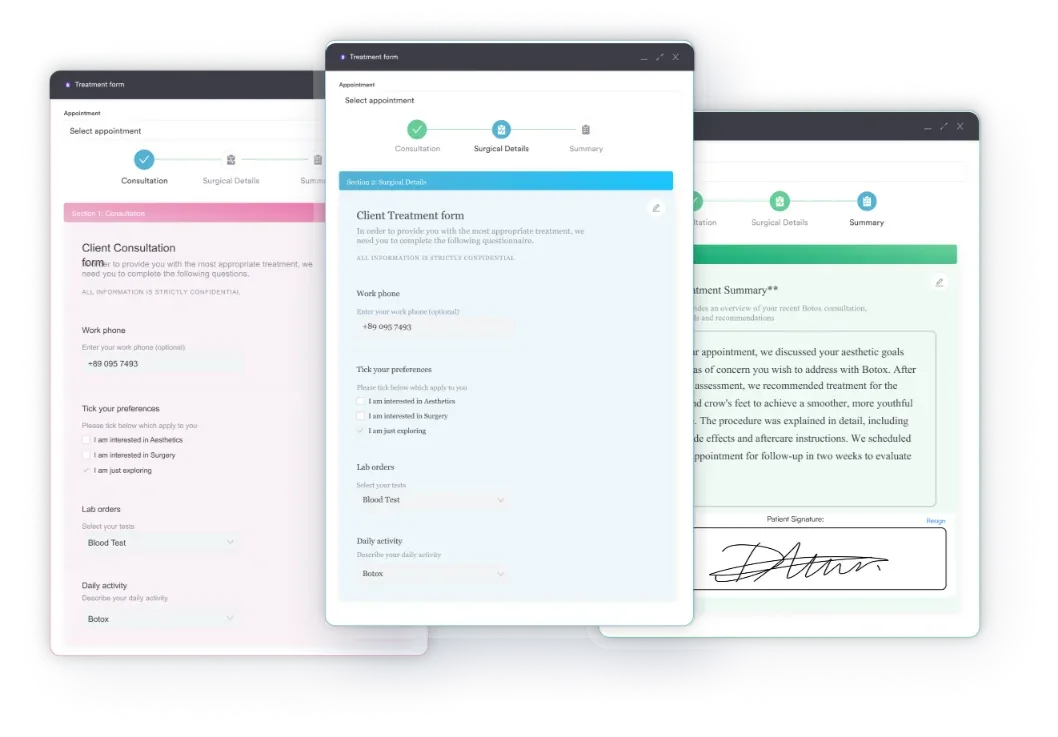
A standardized order form removes most of the guesswork. Well-built medical forms capture the diagnosis, the tube type and the expected duration in fixed fields. A dysphagia care plan then shows the therapy continuing, which matters on repeat supply claims.
Suppliers also need a lawful route to those notes. A signed HIPAA medical release form lets them request records from the practice directly. That beats chasing a fax on the day an audit letter arrives.
Hold everything for at least seven years from the date of service. State rules on how long to keep medical records vary, and audit windows add their own pressure. HIPAA storage duties cover scanned supplier files as much as clinical charts, so treat both the same way.
The diagnosis on the claim has to appear on the enteral nutrition coverage policy’s supporting list. Anything else denies automatically, however sound the clinical story reads.
The controlling documents are LCD L38955 for enteral nutrition and its Policy Article A58833. Your DME MAC publishes both, and each gets revised periodically, so current coverage determinations are worth a look before a batch goes out.
Specificity matters as much as the list itself. Code to the documentation in front of you, then keep that documentation where you can find it.
The nasogastric codes split on whether a stylet comes with the tubing. Gastrostomy codes cover a different route into the body altogether.
Two codes still turn up in old crosswalks and legacy price lists. B4084 and B4085 were deleted from HCPCS on January 1, 2002. Gastrostomy and jejunostomy tubes have billed under B4087 and B4088 ever since, so a claim built from a stale reference will reject.
The working rule is short. If the tube goes through the nose and is a plain single-lumen Levine design, B4083 fits. When a stylet came in the package, check B4081 first, because B4082 covers the same tubing without one.
Anything placed surgically or percutaneously leaves this group entirely, and B4087 is the usual landing spot. Low-profile buttons go to B4088. Neither one belongs on a nasogastric claim.
Nearly every B4083 line carries NU, because the tube is furnished new. The other two DMEPOS modifiers exist for equipment that gets rented or reissued, which a single-use tube never is.
An RR on a B4083 line looks strange to a reviewer, and it invites questions you do not want. So check what your billing system defaults to for B-series codes. A default set once, years ago, keeps repeating quietly on every claim after it.
Denials on this code cluster around five failures, and each one has a process fix rather than a coding fix.
Notice the pattern. Four of the five are document-handling failures, not coding failures. Fixing where the paperwork lives will do more for your denial rate than another round of code training. Revenue cycle management reporting separates claims that were denied from claims nobody submitted.
Six lines and about two minutes. That is usually enough to catch what the DME MAC would have caught for you.
Most of what breaks a B4083 claim happens on the clinical side, long before a supplier sees it. The order sits in one system, the swallow study in another, and the duration statement hides in a paragraph nobody ever exported.
Treatment notes, signed forms and uploaded documents all attach to the same timeline, so answering a records request takes a search instead of a morning. Good EHR integration means that clinical detail moves once, not three times.
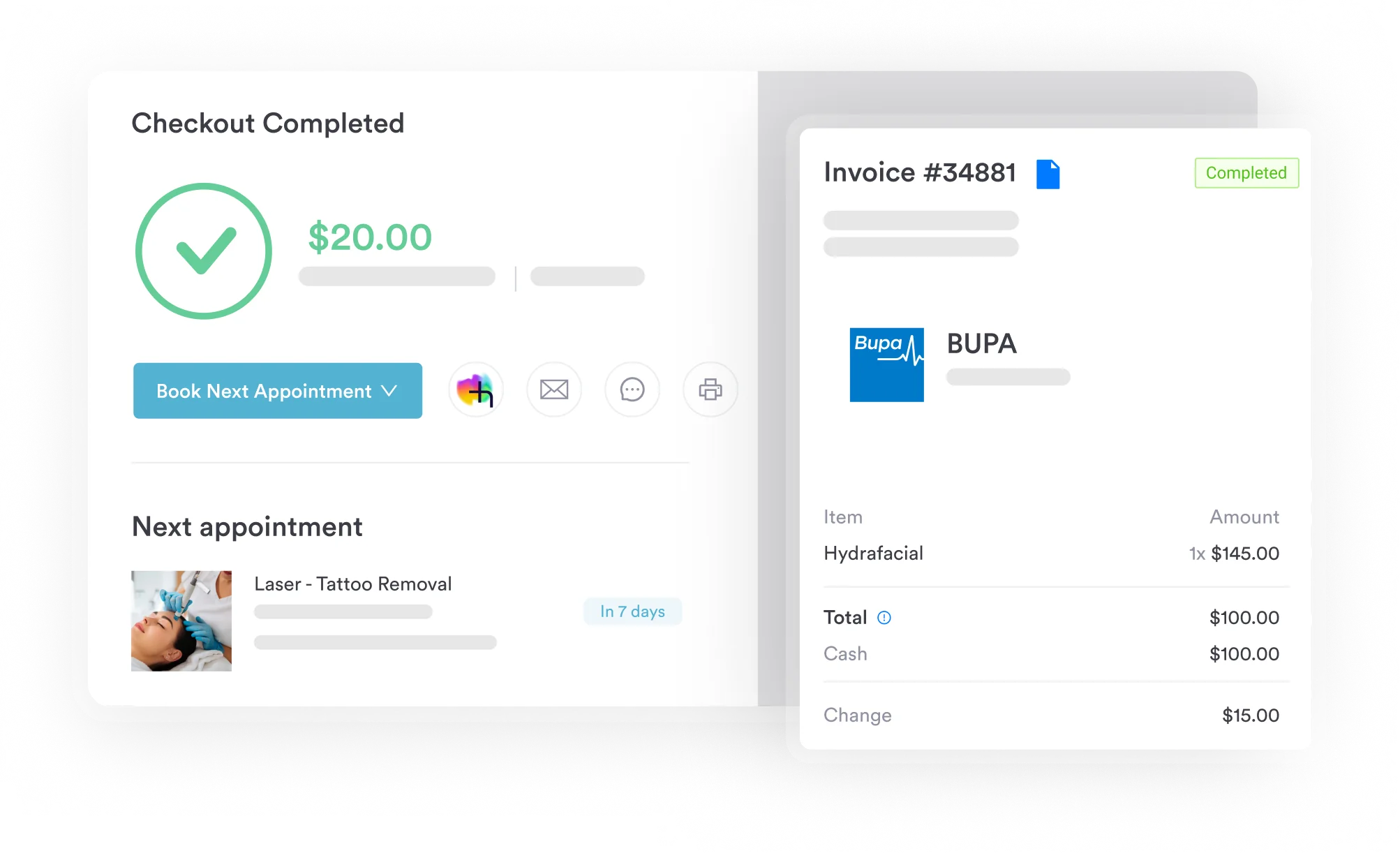
The outcome is practical rather than dramatic. A supplier or a reviewer will ask for the order and the notes behind it. Your team can then hand over a complete file the same day. Repeat supply claims then stop stalling on paperwork that exists but cannot be found.

Pabau keeps treatment notes, signed forms and uploaded documents on a single client timeline. The records behind a supply claim stay complete and easy to share. See how that fits your documentation workflow.

B4083 rewards boring discipline. The descriptor is short, the modifier is almost always NU, and coverage turns on a single question about duration. Everything that goes wrong is a paperwork problem that shows up looking like a coding problem.
So the leverage sits upstream. Fix the order template, fix where the clinical notes live, and fix the modifier default. Do those three things and the denial rate falls without anyone learning a new code. Refresh your crosswalk too, since B4084 and B4085 have been gone since 2002.
Want the clinical half of that chain in one place? Book a demo and see how Pabau keeps treatment notes, forms and documents on a single client record.

Billing the daily supplies alongside the tube? B4035 walks through the pump-fed supply kit and how the daily allowance works.
Moving a patient from enteral to parenteral nutrition? B4176 explains how amino acid solutions are billed and documented.
Need the pump and administration side of parenteral therapy? B4180 covers the coverage rules and unit definitions that trip suppliers up.
Billing a double-upright knee orthosis? double-upright knee orthosis guide covers the thigh-and-calf descriptor, rotation control options, and the varus/valgus adjustment feature.
Billing an ankle brace claim? ankle foot orthosis guide covers the PDAC verification requirement and Medicare coverage criteria under LCD L33686.
No. Part A bundles supplies into the inpatient payment, so nothing bills separately. B4083 applies when a supplier furnishes the tube for use at home.
Medicare does not require prior authorization for B4083. Many commercial and Medicare Advantage plans do. Check the plan’s supply policy before delivery, not after.
Read the remark code first, because it names the failure. Then file a redetermination with your DME MAC within 120 days of the remittance. Attach the signed order and the supporting notes.
Yes. Most payers follow the HCPCS Level II code set, so the code carries over. Fee limits, quantity caps and coverage criteria still vary by state and by plan.
No. B4083 is the supply. Placing a nasogastric tube is a professional service, and CPT code 43752 covers placement that requires a clinician’s skill.
The descriptor sets no limit. Replacement frequency follows the utilization guidance in the enteral nutrition coverage policy, and quantities above that need documentation on file.