

CCSD code G5100: Bypass of duodenum billing guide
CCSD code G5100 bills a bypass that leaves the duodenum in place CCSD code G5100...

Last Updated: Oct 16, 2026
B4087 is the HCPCS Level II code for gastrostomy/jejunostomy tube, standard, any material, any type, each.
The code's official long description is: Gastrostomy/jejunostomy tube, standard, any material, any type, each. The phrase "any material, any type" is intentional. CMS designed HCPCS code B4087 to be device-agnostic, covering silicone, polyurethane, and PVC tubes regardless of brand or construction, so billers do not need separate codes for each manufacturer's variation.
Let Pabau's smart automation suggest the right codes, reduce claim denials, and keep your practice compliant—effortlessly.
Automate repetitive tasks and focus on what matters most—your patients.
Reduce coding errors and ensure compliance with the latest regulations.
Clean claims, fewer denials, and faster reimbursements.
Powerful insights and reporting to help your practice thrive.
HIPAA compliant SOC 2 certified GDPR-compliant Trusted by 4,000+ clinics worldwide

HCPCS code B4087 describes a standard gastrostomy or jejunostomy tube, any material, any type, billed each under the Medicare Part B DME benefit.
A valid Standard Written Order (SWO) from the treating physician, plus supporting medical-record documentation of medical necessity, must be on file before submitting a B4087 claim, since a missing or inadequate SWO is the leading denial reason.
B4087 covers the standard (conventional) tube, while B4088 covers low-profile (button-style) devices, and selecting the wrong one triggers automatic claim rejection.
Pabau’s claims management software and digital forms help practices track SWO completeness, document medical necessity, and submit enteral access device claims accurately.
The table below summarizes the administrative attributes of HCPCS code B4087 as defined in the current CMS HCPCS Level II data file.
Note the “each” unit of service at the end of the long description. Submit one unit per tube supplied, not per patient encounter. Submitting multiple units without corresponding documentation for each device is a common audit trigger.
Reimbursement for HCPCS code B4087 is set annually through the CMS DMEPOS (Durable Medical Equipment, Prosthetics, Orthotics and Supplies) fee schedule. Rates vary by MAC jurisdiction. The figures below reflect published 2026 national averages. Always verify current rates against the CMS DMEPOS fee schedule for your jurisdiction before billing.
Because exact fee amounts change with each annual DMEPOS update, this guide does not publish specific dollar figures. Commercial sources list rates, but only the CMS HCPCS data file is authoritative. Pull the current DMEPOS fee schedule directly from CMS before billing B4087 for the first time each calendar year.
Set a calendar reminder each October to download the draft DMEPOS fee schedule from CMS.gov. B4087 rates publish in the Federal Register before January 1 each year, giving your billing team time to update fee tables before the new rates take effect.
Medicare Part B covers HCPCS code B4087 under the DME benefit when the patient has a permanent or long-term condition requiring enteral feeding and the tube is medically necessary. The referral often starts with a primary care visit.
Providers handling enteral access device billing should also review HIPAA compliance requirements to ensure documentation handling meets federal standards.
Coverage applies when all of the following criteria are met:
Medicare does not cover temporary post-surgical tubes expected to be removed within a few weeks. The benefit is designed for chronic conditions requiring long-term enteral access. Always verify Local Coverage Determination (LCD) policies with your specific DME MAC, as coverage criteria can include additional clinical documentation requirements.
The best medical practice management systems tie supply usage to invoices, so dressing changes stop being free.
Missing or inadequate documentation is the primary reason B4087 claims get denied. Good medical forms management is the compliance foundation that keeps DME claims out of the denial queue.
Every B4087 claim requires the following on file before submission:
CMS discontinued Certificates of Medical Necessity (CMNs) and DME Information Forms (DIFs) for claims with dates of service on or after January 1, 2023. Suppliers no longer complete, submit, or maintain either form, and claims received with one attached are rejected. Coverage for B4087 rests on the SWO plus the supporting medical-record documentation above, not a CMN.
Even before 2023, enteral nutrition items such as B4087 were documented with a DIF (CMS Form 10126) rather than a CMN. CMNs applied to a different item set, including oxygen equipment, TENS units, pneumatic compression devices, osteogenesis stimulators, and seat-lift mechanisms.
Practices using digital forms can standardize SWO collection and physician order workflows, reducing the risk of missing or unsigned documents at the time of claim submission. The same intake stack should capture the patient’s consent for treatment alongside the SWO, since tube placement is itself a procedure requiring documented consent.
Keeping records audit-ready is especially important for DME suppliers subject to Medicare post-payment review. Our guide to secure patient documentation covers the broader compliance picture.
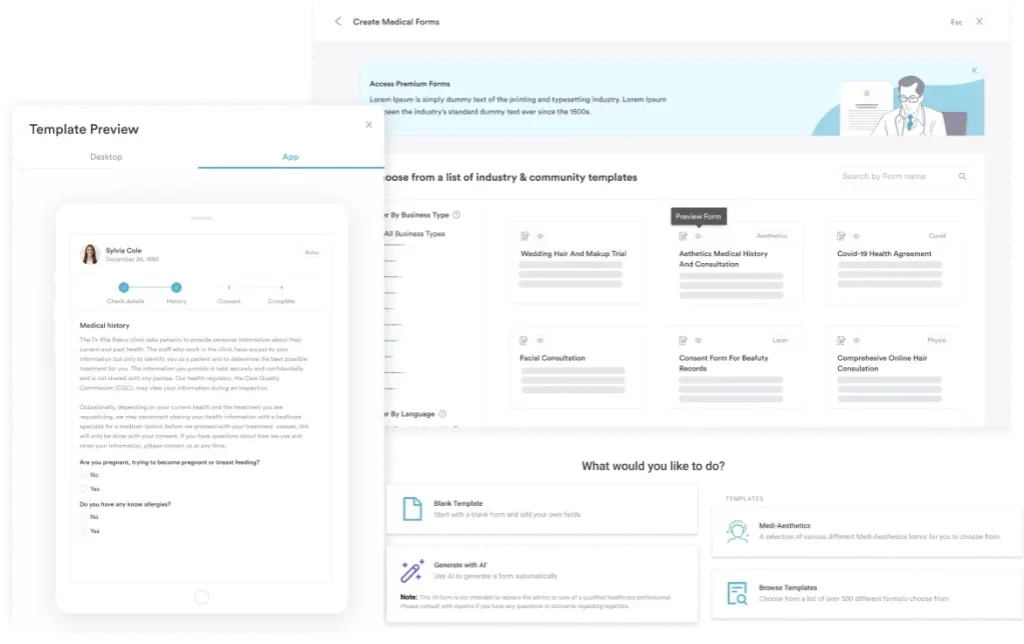

Pabau helps practices managing enteral access device billing centralize SWO documentation, track physician orders, and reduce claim errors with automated workflows.

Pairing HCPCS code B4087 with an appropriate ICD-10-CM diagnosis code is required to establish medical necessity on the claim. The diagnosis must reflect the underlying condition that necessitates the gastrostomy or jejunostomy tube. Diagnosis pointers on the claim form link each service line to the diagnosis that justifies it.
The same status-code logic shows up elsewhere in the digestive system. Conditions with a metabolic or nutritional root cause.
Always cross-reference this list against your DME MAC’s current LCD. Some MACs publish expanded ICD-10 supporting diagnosis lists, and diagnosis codes must be active and valid for the date of service. Verify codes against the CDC ICD-10-CM tool before claim submission.
Long-term enteral feeding patients are also monitored for nutrition-related complications beyond the GI tract. Malabsorption in older adults sometimes surfaces as senile osteomalacia.
B4087 and B4088 cover two clinically distinct product types. Selecting the wrong code is one of the most common B-range billing errors because the devices look similar in supplier catalogs. The distinction is based on the tube’s physical profile, not the insertion site.
The physician order and supplier delivery documentation must specify the tube type. If the order says “standard G-tube” but the supplier ships a button-style device and bills B4087, that mismatch constitutes incorrect coding. Train intake staff to confirm device specifications against the HCPCS description before the order is fulfilled.
Tube placement itself is billed separately from the device. Facilities administering local anesthesia during insertion.
HCPCS code B4087 sits within a family of gastrostomy, jejunostomy, and enteral feeding tube codes. Billers working with enteral access devices should be familiar with the full range for accurate code selection. Patients who receive a B4087 tube often need enteral formula billed separately under B4150, and some also need an in-line digestive enzyme cartridge billed under B4105.
Some coding tools and older references still list B4084 (gastrostomy/jejunostomy tube, 12 French or greater, not low profile) as if it were a current alternative to B4087. CMS deleted B4084 effective January 1, 2002, so treat any source that still shows it as outdated, and bill B4087 or B4088 based on the device’s profile instead.
Check current code status against the AAPC’s HCPCS Level II lookup when in doubt.
When a patient receives both the tube (B4087) and an enteral feeding supply kit on the same date, bill each code separately. B4087 covers the device, while B4034, B4035, or B4036 covers the supply kit depending on feeding method. Do not bundle them into one line item, or MAC edits will flag the claim.
DME enteral tube billing draws a higher rate of post-payment review than many other HCPCS categories. Catching common errors before a claim reaches the payer costs far less than fighting a recoupment request after the fact. Choosing medical billing software that flags incomplete documentation before submission helps prevent the errors below.
Enteral access device billing usually fails for administrative reasons, not clinical ones. An SWO missing a required element, a physician order never attached to the patient record, or a diagnosis code that is one digit off are workflow problems, not coding knowledge problems. The claims management software inside Pabau helps billing teams catch these issues before a claim goes out.
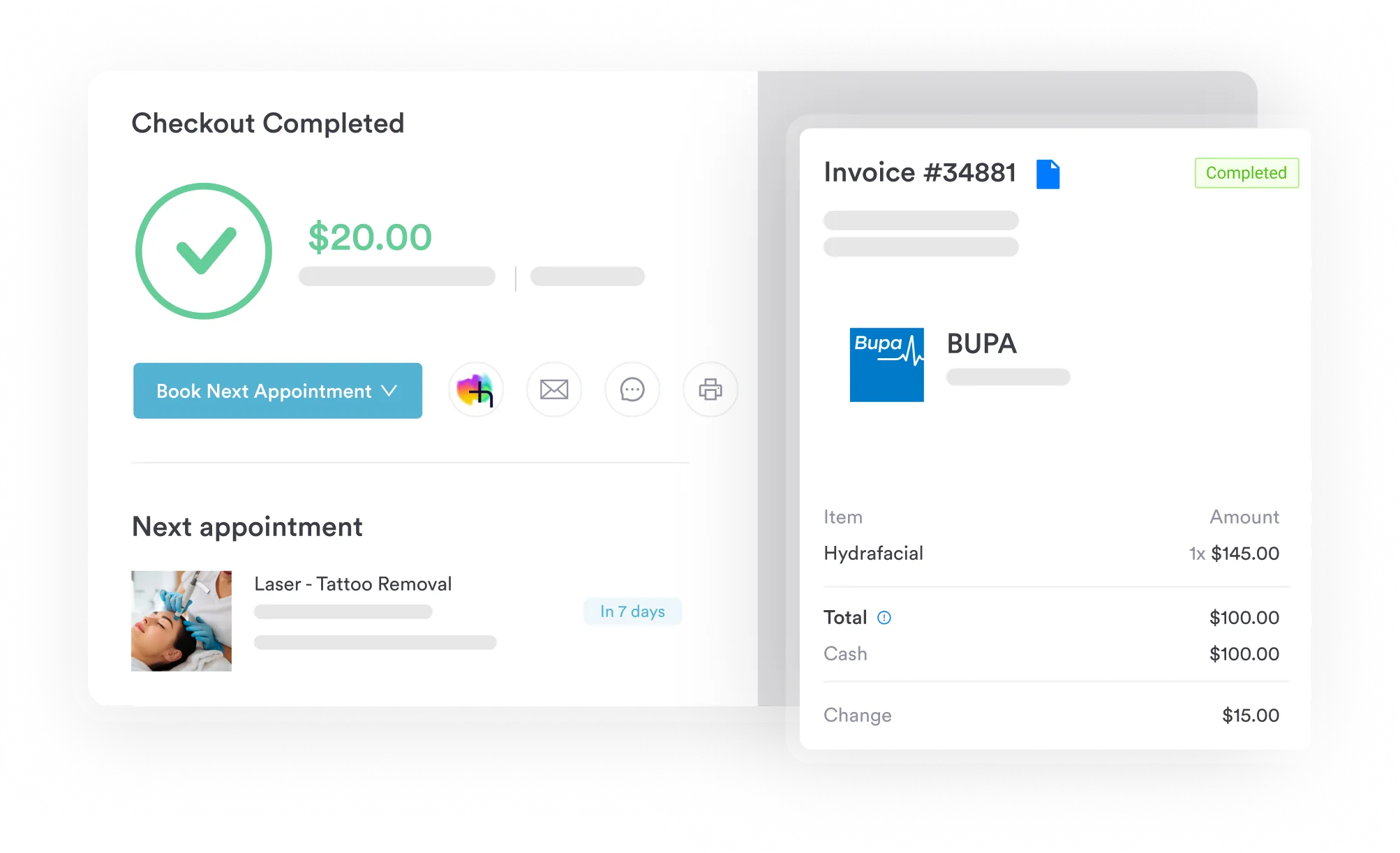
Pabau’s client records centralize physician orders, SWOs, and clinical notes in one place, so billing staff can verify documentation completeness without hunting across multiple systems. Teams that have moved toward going paperless report fewer documentation-related denials because every form is timestamped, searchable, and linked directly to the patient record.
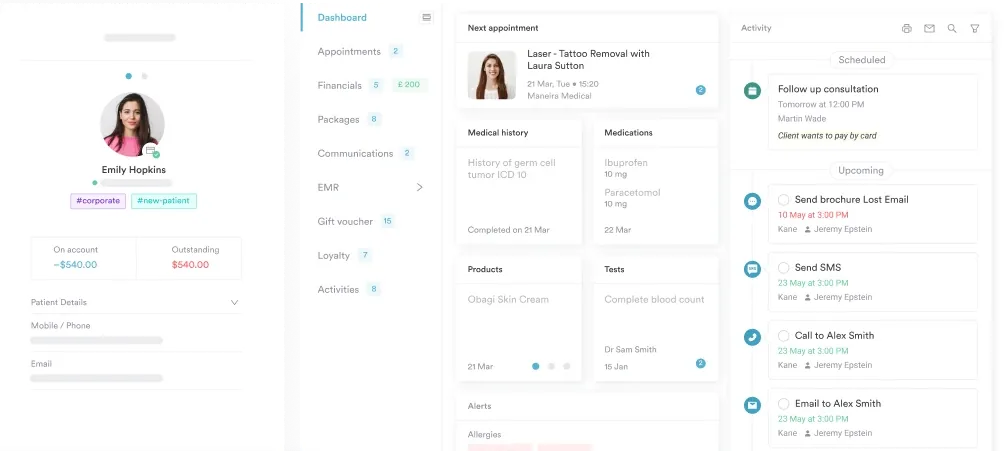
For practices managing automated billing workflows, Pabau can flag incomplete SWOs and prompt the billing team to collect the missing signature, date, or device detail before the claim goes out. Combining EHR integration with structured claim submission reduces the back-and-forth that delays reimbursement on B-range enteral codes.
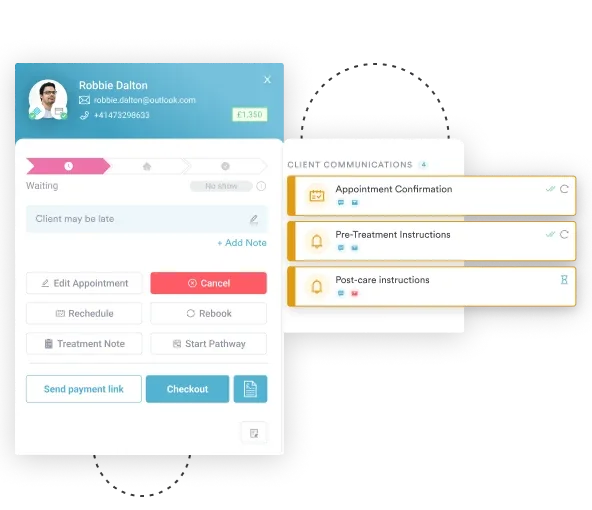
Most B4087 claim denials trace back to one preventable cause: A missing or inadequate SWO. Getting the code right is the easy part. The harder discipline is ensuring that every physician order, supporting medical-record note, and ICD-10 diagnosis is accurate, current, and attached to the claim before it goes out the door.
Pabau’s claims management tools and automated document workflows help DME billing teams resolve those issues systematically, so B4087 claims get paid on first submission. To see how Pabau handles enteral nutrition billing documentation, book a demo with the team.

Billing other DME items under Part B? E0130 covers the documentation requirements for a rigid pickup walker, following the same SWO logic as B4087.
Need to code an implantable device correctly? C1767 walks through billing a non-rechargeable neurostimulator generator under OPPS.
Billing a custom ankle foot orthosis? custom AFO billing guide covers the three most common errors that cause these claims to deny.
HCPCS code B4087 covers a standard gastrostomy or jejunostomy tube, any material, any type, billed per each unit supplied. It falls under the Medicare Part B DME benefit and is processed by DME MAC contractors. The code is device-agnostic, covering silicone, polyurethane, and PVC tubes from any manufacturer.
B4087 covers a standard (conventional) gastrostomy or jejunostomy tube that extends externally from the stoma site. B4088 covers a low-profile (button-style) tube that sits flush with the skin. Both are Medicare-covered, but selecting the wrong code when the device type is documented in the physician order is an incorrect code selection and a common audit trigger.
No. CMS discontinued Certificates of Medical Necessity (CMNs) and DME Information Forms (DIFs) for claims with dates of service on or after January 1, 2023. Suppliers no longer complete, submit, or maintain either form. B4087 claims are documented instead with a Standard Written Order (SWO) from the treating physician, plus supporting medical-record notes establishing the diagnosis, treatment plan, and expected duration of need. Claims submitted without a complete SWO on file will be denied by the DME MAC.
The most commonly used ICD-10-CM codes are Z93.1 (gastrostomy status), K94.20 (gastrostomy complication, unspecified), K31.89 (other diseases of stomach and duodenum), and Z93.4 (other artificial openings of gastrointestinal tract status for jejunostomy). Always verify the specific diagnosis codes against your DME MAC’s current LCD supporting diagnosis list before billing, as approved code lists can vary by jurisdiction.
Yes. Medicare Part B covers B4087 under the DME benefit when the patient has a permanent condition requiring enteral feeding, medical necessity is documented, and the tube is supplied by a Medicare-enrolled DMEPOS supplier. Temporary post-surgical tubes expected to be removed within a few weeks generally do not qualify.
The top errors are a missing or inadequate Standard Written Order (SWO), billing B4087 when a low-profile B4088 device was supplied, pairing the code with an ICD-10 diagnosis not on the MAC’s LCD supporting list, and submitting unit counts higher than devices actually delivered. Each of these is preventable with a pre-submission documentation checklist reviewed at the time of order intake.



