

CCSD code G5100: Bypass of duodenum billing guide
CCSD code G5100 bills a bypass that leaves the duodenum in place CCSD code G5100...

Last Updated: Oct 16, 2026
B4180 is the HCPCS Level II code for parenteral nutrition solution; carbohydrates (dextrose), greater than 50% (500 ml = 1 unit) - home mix.
Let Pabau's smart automation suggest the right codes, reduce claim denials, and keep your practice compliant—effortlessly.
Automate repetitive tasks and focus on what matters most—your patients.
Reduce coding errors and ensure compliance with the latest regulations.
Clean claims, fewer denials, and faster reimbursements.
Powerful insights and reporting to help your practice thrive.
HIPAA compliant SOC 2 certified GDPR-compliant Trusted by 4,000+ clinics worldwide

HCPCS Code B4180 describes a parenteral nutrition solution of carbohydrates (dextrose) greater than 50%, billed in 500 ml units for home mix preparation.
B4180 is a Durable Medical Equipment (DME) Level II HCPCS code. Each 500 ml equals one billable unit, so unit count accuracy is critical to avoiding claim denials.
Medicare coverage requires documented medical necessity under LCD L38953, a physician order, and diagnosis codes supporting GI malabsorption or related conditions.
Pabau’s claims management software helps infusion and IV therapy practices document billing details and organize HCPCS coding workflows in one place.
This HCPCS Code B4180 is a Level II HCPCS code maintained by the Centers for Medicare and Medicaid Services (CMS) for Durable Medical Equipment billing. It describes a specific type of home parenteral nutrition solution and is active for the 2026 code year.
The billing unit definition is non-negotiable: each 500 ml of solution equals exactly one unit. A patient receiving 1,500 ml per day should be billed at three units of HCPCS Code B4180. Submitting a single unit for the full daily volume is one of the most common reasons claims underpay or are queried on audit. Verify the unit count against the infusion record before submission every time.
The B4180 is a CMS-maintained code within the HCPCS Level II set, distinct from CPT codes. The AAPC’s HCPCS Level II code lookup is a searchable reference for the full B-code range, useful when verifying adjacent codes.
B4180 applies when a patient cannot absorb nutrients through the gastrointestinal tract and requires high-concentration dextrose delivered parenterally, outside a hospital setting. The “home mix” designation means the solution is compounded or mixed at home, or by a home infusion pharmacy. It is not supplied as a pre-mixed commercial product. Many of these patients receive ongoing care through a dedicated infusion center rather than a hospital infusion suite.
Clinical scenarios where HCPCS Code B4180 is typically reported include:
The dextrose concentration threshold is the critical clinical detail. B4180 covers solutions where dextrose exceeds 50%. A solution at 50% or below falls under a different code in the B4164-B5200 range. That code is B4164, billed per 500 ml unit. Coders must confirm the concentration from the pharmacist’s compounding record or the physician’s order before selecting B4180.
Practices that operate IV therapy and infusion EMR workflows will recognize this concentration-first documentation approach from other infusion billing contexts. The same principle applies: the code follows the clinical record, not the other way around.
Medicare covers home parenteral nutrition under the DME benefit, administered through the DME Medicare Administrative Contractor (DME MAC) for the patient’s region. Coverage for HCPCS Code B4180 is governed by Local Coverage Determination (LCD) L38953. That LCD sets the medical necessity criteria a claim must meet to be payable.
Key Medicare coverage requirements for B4180:
Reimbursement rates for B4180 are set by the DMEPOS fee schedule, not the physician fee schedule. The DMEPOS fee schedule lookup tool is updated annually, so never use a prior-year rate for current billing. Always verify the current fee schedule amount for the applicable DME MAC jurisdiction before quoting expected reimbursement to patients or completing financial counseling.
Practices opening or expanding IV therapy clinics need to confirm DME supplier enrollment before billing Medicare for home infusion services. This is separate from standard Part B enrollment. DME billing carries distinct supplier standards and accreditation requirements that differ from physician practice billing.
Before submitting any B4180 claim, confirm the supplier’s DME enrollment is current and the correct jurisdiction MAC is listed on the claim. Billing a Part B MAC for a DME service is one of the fastest routes to a claim rejection that cannot be reopened without resubmission.
Good practice management software for medical practices turns supplies used in a visit into billed line items automatically.
The CGS Medicare parenteral nutrition correct coding and billing guidance is the primary reference for B-code billing rules. It covers unit calculation, modifier requirements, and documentation standards that apply directly to HCPCS Code B4180 claims.
Insufficient documentation is the leading cause of B4180 claim denials on audit. Every claim for HCPCS Code B4180 must be supported by a complete documentation package. Practices using digital intake and clinical forms can capture these requirements before the claim is prepared, not after a denial letter arrives.
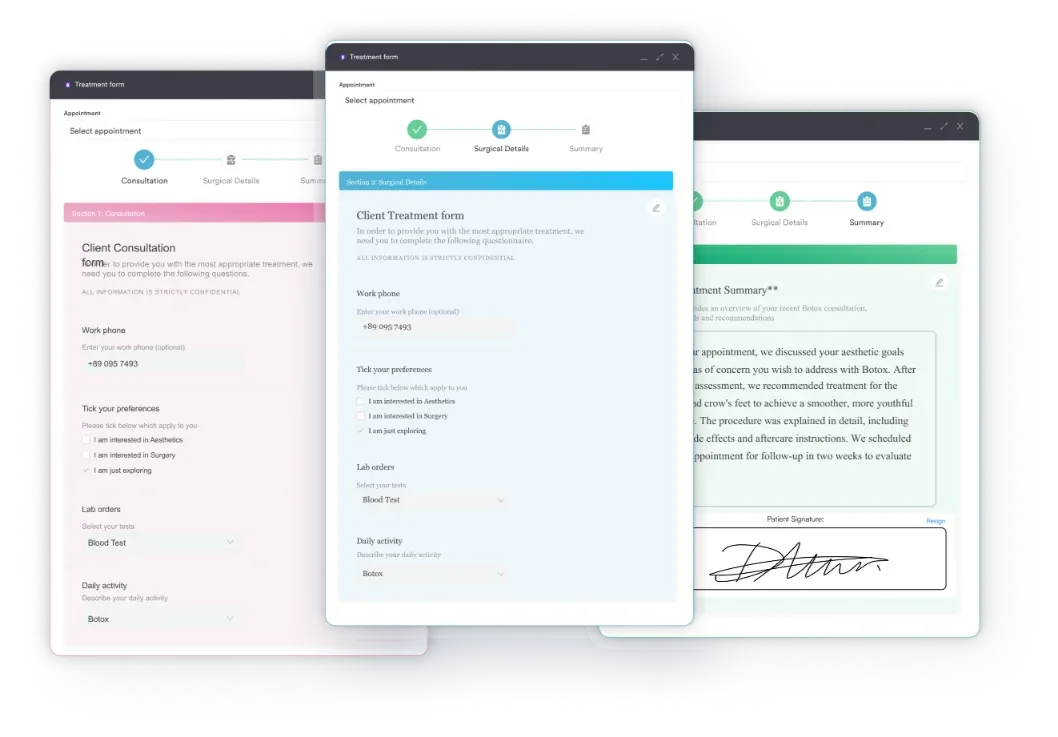
Required documentation for B4180 claims:
Billing teams that handle parenteral nutrition codes regularly encounter the same error patterns. Catching these before submission is faster and cheaper than working a denial.
Code B4180 claims require an ICD-10 diagnosis code that establishes medical necessity for parenteral nutrition. The ICD-10 codes listed below represent the most frequently used crosswalk diagnoses for home parenteral nutrition claims. Payer policies vary, so coders should verify the current LCD-approved list with their DME MAC before submission. The PGM Billing HCPCS lookup tool provides a searchable crosswalk for verifying applicable diagnosis codes alongside HCPCS codes.
Not all ICD-10 malnutrition codes automatically satisfy LCD L38953 coverage criteria. The diagnosis must reflect a structural or functional GI impairment, not only a nutrition deficit. Practices that treat patients with complex GI conditions should review the HIPAA-compliant documentation practices required for maintaining these clinical records across care episodes and audits.
HCPCS Code B4180 sits within a structured range of parenteral solution codes. Selecting the right code depends on the dextrose concentration and the solution type: protein, lipids, or additive kits. It also depends on whether the product is a home mix or a pre-mixed commercial preparation. A fully compounded premix falls under a different code, such as HCPCS Code B4189. Practices that manage mobile IV therapy and infusion businesses should keep this code reference accessible during claim preparation.
B4185 and B4187 are lipid-emulsion codes, not a general catch-all for any parenteral nutrition solution. Both price per 10 grams of lipids delivered, a different billing unit from B4180’s 500 ml per unit. B4185 covers a lipid emulsion not otherwise specified, and B4187 covers Omegaven, a fish-oil lipid emulsion. Reaching for either code to bill a carbohydrate solution, or an unclassified solution, applies the wrong unit basis and risks a payment error.
Apply this decision rule: confirm the compounding record shows dextrose above 50% in a home mix. If it does, HCPCS Code B4180 is correct, billed per 500 ml. A lipid emulsion instead calls for B4185 or B4187, billed per 10 grams of lipids. When the solution fits no other descriptor in the range, the correct code is B9999, not B4185. Teams that want a consistent pre-claim coding checklist can use structured IV therapy intake and documentation forms. These forms capture the concentration and solution-type data at the point of care.
Confirm three things before any B-code parenteral nutrition claim goes out. Check the solution type, the billing unit it uses, and whether the prep is home mix or commercial. Carbohydrate solutions bill per 500 ml under B4180. Lipid emulsions bill per 10 grams of lipids under B4185 or B4187. Route a genuinely unclassified solution to B9999, not B4185.
Infusion and IV therapy practices often track B4180 documentation across separate systems.
Pulling all three together at claim time, especially under audit, costs staff time and risks a missing piece.
Pabau’s claims management software, part of our practice management platform, keeps these records in one patient file. Digital intake and consent forms capture the physician order and CMN details at the point of care. Treatment notes log the daily infusion volume, so the unit count is easy to verify before a claim goes out.
The result is a documentation trail that’s ready before a DME MAC or an auditor asks for it, rather than assembled after a denial.

Pabau’s claims management tools keep physician orders, compounding records, and infusion logs organized in one patient file. B4180 documentation is ready before a claim goes out.

Billing errors for HCPCS Code B4180 almost always come down to the same root cause. Either the concentration threshold or the unit count was not verified against the clinical record before the claim was submitted. The 500 ml per unit rule is exact, and the greater-than-50% threshold is a hard line. Medicare DME coverage requires documentation that most practices already produce, but they don’t always attach it to the claim.
Practices that want to reduce parenteral nutrition claim denials should build the pharmacy concentration record and infusion volume log into every billing workflow. Pabau’s claims management software keeps these documentation requirements and HCPCS coding workflows organized in one system, instead of scattered across disconnected tools. To see how it fits your practice, book a demo.

Coding a different parenteral nutrition component? HCPCS code B4154 covers special metabolic enteral formula billing, a related B-code many infusion practices also submit.
Billing DME supplies alongside parenteral nutrition? HCPCS code A4674 details billing rules for chemicals and antiseptics used in home dialysis and infusion care.
Managing coding for home dialysis patients too? HCPCS code A4772 covers blood glucose test strip billing for patients on home dialysis.
Billing an infliximab-axxq infusion claim? infliximab-axxq billing guide covers the 10 mg unit billing and 2026 validity for this Avsola biosimilar code.
Billing a different biosimilar infusion? rituximab-arrx biosimilar billing guide covers billing HCPCS code Q5123 by the 10 mg unit for infusion doses up to 1,000 mg.
HCPCS Code B4180 bills a parenteral nutrition solution of carbohydrates (dextrose) greater than 50% concentration, prepared as a home mix. Each 500 ml equals one billable unit. It is a Durable Medical Equipment (DME) code submitted to the DME MAC. It applies to patients who cannot absorb nutrients through the GI tract and need high-concentration dextrose delivered parenterally at home.
The dextrose concentration must be greater than 50% to qualify for HCPCS Code B4180. Solutions at exactly 50% or below fall under a different code in the B4164-B5200 range, specifically B4164. Always confirm the concentration from the pharmacy compounding record before assigning the code.
B4180 is specific to carbohydrate (dextrose) parenteral nutrition solutions greater than 50% concentration, home mix, billed at 500 ml per unit. B4185 is the lipid-emulsion code for a parenteral nutrition solution not otherwise specified, billed at 10 grams of lipids per unit. It is not a general catch-all for non-lipid PN solutions. That role belongs to B9999.
The main home parenteral nutrition billing codes fall in the HCPCS B4164-B5200 range. B4164 covers dextrose at or below 50%, and B4180 covers dextrose greater than 50% in a home mix. B4168, B4172, and B4176 cover amino acid solutions at different concentrations. B4185 and B4187 cover lipid emulsions billed per 10 grams of lipids, with B4187 specifically Omegaven. Select the code that matches the solution type, concentration, and billing unit confirmed in the pharmacy record.



