HCPCS code J3471: Hyaluronidase ovine injection billing guide
HCPCS code J3471: Descriptor, code type, and quick-reference data HCPCS code J34...

Last Updated: Oct 14, 2026

CPT code 66999 is the unlisted procedure code for the anterior segment of the eye, used when no specific CPT code exists for a performed surgical service.
Payers require a detailed narrative report with every 66999 claim – include a comparable CPT code as a reimbursement benchmark, or expect denial.
CMS explicitly directs goniopuncture and microgoniotomy to be billed under CPT code 66999 per Article A57864 – never use a higher-specificity code for these procedures.
Pabau’s claims management software helps ophthalmology practices track unlisted code submissions, attach narrative documentation, and monitor prior authorization status across payers.
CPT code 66999 is the unlisted procedure code for the anterior segment of the eye, reported when no specific code in the 65400–66999 range describes the surgery performed. It commonly applies to goniopuncture, microgoniotomy, anterior capsulotomy, and endoscopic cyclophotocoagulation. Every claim requires a narrative report and a benchmark code before a payer will reimburse it.
CPT code 66999 is the unlisted procedure code for surgical interventions on the anterior segment of the eye — used when no specific CPT code in the 65400–66999 range adequately describes the service performed.
The full descriptor, as maintained by the American Medical Association (AMA), is: Unlisted procedure, anterior segment of eye. CPT code 66999 sits at the end of the anterior segment surgery subsection, serving as the catch-all code when ophthalmologists perform novel, emerging, or insufficiently described techniques.
Submitting CPT code 66999 triggers manual review by the payer’s medical director. Unlike standard CPT codes that process automatically against a fee schedule, unlisted codes require narrative justification and a benchmark comparison before reimbursement can be approved.
Ophthalmology practices using ophthalmology claims management software can flag these submissions early and track their status through adjudication. For a related example of how unlisted and specialty codes work in practice.
CPT code 66999 applies only when no existing CPT code in the anterior segment range adequately describes what was performed. The most frequently billed procedures under this code fall into four categories.
CMS addressed this directly in billing guidance Article A57864: no specific CPT code covers goniopuncture or microgoniotomy, so CMS instructs providers to report CPT code 66999 and identify the procedure within the narrative. There is no alternative code for these micro-invasive glaucoma surgery techniques.
Paired ICD-10 codes from the H40 glaucoma range are typically used alongside CPT code 66999 for these procedures. Document the specific procedure performed, the trabecular target, and any devices or instruments used. For guidance on another emergency-level procedure code requiring detailed documentation.
When a patient develops anterior capsular contraction or capsular phimosis after cataract surgery, an anterior capsulotomy may be required. The American Academy of Ophthalmology (AAO) has confirmed CPT code 66999 as the appropriate code for this procedure, pairing it with ICD-10 H26.499 (Other secondary cataract, unspecified) or a more specific capsule-related diagnosis code.
No existing CPT code covers anterior capsulotomy as a standalone surgical intervention in the postoperative setting. For a comparable unclassified biologics billing scenario requiring similar narrative support.
When cataract surgery, a MIGS procedure, and ECP are performed in the same session, coding becomes complex. According to Ophthalmology Management (April 2024), one option is to report CPT code 66999 for the combined ECP and canal-opening component when the combination does not map to a single existing code.
The surgeon should document each component clearly and reference comparable stand-alone codes as the benchmark for the unlisted submission.
Limited viscoelastic injection into Schlemm’s canal via one to three openings is another procedure billed under CPT code 66999 when the canal is not fully opened.
Femtosecond laser procedures performed on the anterior segment may also fall here when no other code captures the complete technique, though payer acceptance for femtosecond laser billing under 66999 varies considerably and requires individual verification.
Every 66999 claim requires documentation beyond a standard operative note. Payers cannot adjudicate an unlisted code without understanding exactly what was done, why it was necessary, and how complex it was relative to existing coded procedures.
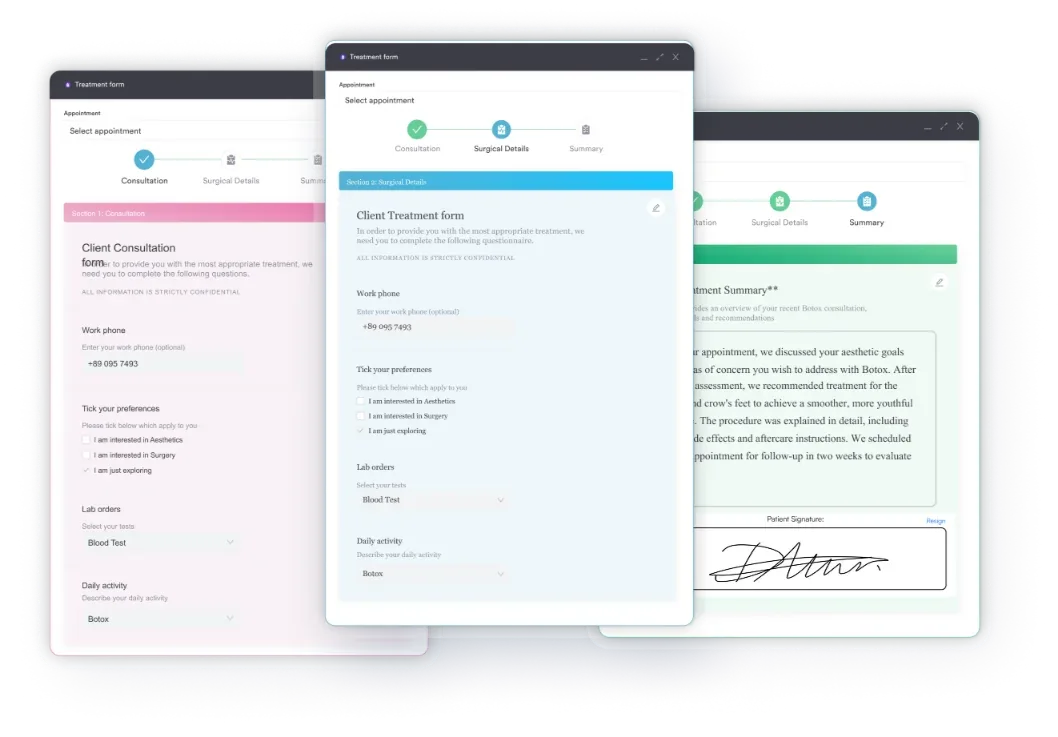
Implementing digital operative documentation and consent forms helps practices ensure the narrative report captures all required elements before claim submission, reducing the back-and-forth that unlisted codes frequently generate. For home visit billing that similarly requires thorough documentation.
The narrative should be attached to the claim — entered in Box 19 of the CMS 1500 form for paper claims or in the equivalent electronic field. For electronic submissions, many clearinghouses accept the narrative as an attachment using the PWK segment in the 837P transaction.
Maintaining comprehensive patient records that auto-populate procedure documentation reduces the administrative burden of preparing unlisted code narratives, particularly when practices perform these procedures regularly.
For another code where documentation standards heavily influence coverage.
Consistency matters. If a practice bills CPT code 66999 for goniopuncture regularly, the narrative template should be standardized to include procedure-specific language each time, while still being individualized to the patient’s clinical situation. Generic narratives increase denial rates.
Build a library of narrative templates for each procedure you regularly bill under CPT code 66999 – MIGS, anterior capsulotomy, ECP – so your billing team can adapt a consistent structure per claim rather than starting from scratch. Reference the same benchmark CPT code every time for each procedure type to establish a predictable reimbursement baseline with payers.
Chronic endocrine cases are easier to coordinate in a patient management system that tracks recalls automatically.
Modifiers for CPT code 66999 follow the same rules as other ophthalmic surgical codes, with laterality modifiers being the most common addition.
RT and LT are used in place of modifier 50 when the procedure is unilateral. Medicare and most commercial payers expect laterality to be specified on all ophthalmic surgical claims.
Using billing compliance management tools to flag missing laterality modifiers before submission prevents a common source of rejection for eye surgery claims. For an example of how modifier usage affects nerve conduction study billing.

Modifier 59 is particularly important when 66999 is billed alongside a primary ophthalmic code, such as 66984 (Cataract extraction). Without modifier 59, NCCI (National Correct Coding Initiative) edits may bundle the unlisted procedure into the primary code, resulting in non-payment for the additional work performed.

Pabau helps ophthalmology practices track CPT code 66999 claims, attach narrative documentation, and monitor prior authorization across payers – all in one place.

Medicare does not have a fixed fee schedule rate for CPT code 66999. Because it is an unlisted code, the CMS Physician Fee Schedule lookup returns no automatic RVU assignment for 66999. Reimbursement is determined case-by-case by the Medicare Administrative Contractor (MAC) reviewing the claim.
Coverage for procedures billed under 66999 is not guaranteed. Medicare covers the underlying procedure only if it meets medical necessity criteria under the applicable Local Coverage Determination (LCD). For MIGS procedures, CMS Article A57864 governs coverage – and coverage is limited.
Goniopuncture and microgoniotomy are covered only under specific clinical criteria, and even when covered, the MAC sets the payment rate by comparing the unlisted procedure to the most similar covered service.
The benchmark comparison in the narrative report directly influences what the payer pays. When a practice identifies 66984 (Extracapsular cataract removal) as the comparable code for a combined cataract-MIGS procedure billed under 66999, the MAC typically references the fee schedule for 66984 and adjusts based on complexity relative to the unlisted procedure.
The practice’s narrative should argue clearly whether the unlisted work represents equal, lesser, or greater complexity.
Commercial payer policies vary considerably. Some payers accept the practice’s benchmark comparison at face value; others apply their own internally published rates. Consulting an RVU lookup tool can help practices estimate the benchmark reimbursement range before submitting the claim. For another procedure where payer-specific rates affect reimbursement.
Prior authorization is common for 66999 claims at commercial payers. Build prior auth into the workflow before scheduling any elective anterior segment procedure that will be billed as an unlisted code.
Practices that track prior auth status through their medical documentation workflows are less likely to perform unpaid work when authorization is missing or incomplete. For a crisis billing code that similarly requires prior authorization planning.
When billing CPT code 66999, always identify the benchmark CPT code in your narrative and confirm its current Medicare facility and non-facility RVU values before submission. A benchmark code that has been revised or retired will weaken your reimbursement argument. Run the benchmark code through the CMS fee schedule lookup each time you update your narrative templates.
Before using CPT code 66999, verify that no specific code exists for the procedure performed. The most common alternatives are listed below.
The key test: Does the procedure involve the cornea, iris, ciliary body, anterior chamber, lens, or limbus? If yes, CPT code 66999 is the appropriate unlisted code.
If the primary target is the conjunctiva, use 68399. If it is the eyelid, use 67999. Unlisted codes are site-specific, so picking the wrong one creates a mismatch between the claim and the operative report.
The ICD-10 diagnosis code submitted with CPT code 66999 must directly support the medical necessity of the unlisted procedure. A mismatch between the diagnosis and the described procedure is a top reason for denial on unlisted code claims.
When billing combined procedures, list the primary ICD-10 diagnosis first. For a combined cataract and MIGS session, the glaucoma diagnosis (H40.xx) may be listed as the primary indication for the unlisted portion if CPT code 66999 is used only for the MIGS component.
Consult the AAPC Codify CPT reference to cross-check diagnosis-to-procedure pairing requirements before submission. For an overview of a high-complexity evaluation and management code pairing.
CPT code 66999 carries higher audit risk than standard procedure codes. Because there is no automatic fee schedule match, every claim triggers manual review — and manual review means documentation gets read, not just scanned for code-level completeness. For another code with elevated audit scrutiny due to its complexity.
The three most common denial reasons are: Incomplete narrative (missing the benchmark comparison), lack of prior authorization at commercial payers, and an ICD-10 code that doesn’t match the described procedure. Each is preventable with a pre-submission checklist.
Practices that use surgical and ophthalmic EMR software with built-in claims tracking can set up automated denial alerts for specific CPT codes, making it easier to catch and resubmit 66999 claims before they age out of the timely filing window.
For a comparable unclassified drug code that also requires denial management planning.
CPT code 66999 is the billing pathway for anterior segment procedures that fall outside every existing coded service. The code itself is straightforward; the documentation and payer management surrounding it are not.
Standardized narrative templates, pre-submission checklists, and claim-level tracking reduce denial rates for unlisted code submissions. Pabau’s ophthalmology EMR and documentation tools help ophthalmic practices build the complete clinical record that supports every unlisted code claim, from the operative note through to payer follow-up.
For a preventive medicine counseling code that also depends on thorough documentation. To see how Pabau handles ophthalmic billing workflows end to end, book a demo.

Need to understand how unlisted CPT codes work across surgical specialties? IVF CPT codes covers how unlisted and specialty surgical codes are documented and submitted in reproductive medicine.
Want to reduce claim denials across your practice? Pabau claims management software tracks surgical code submissions, flags missing modifiers, and monitors prior authorization status across all payers.
Looking for compliant documentation practices for ophthalmic procedures? Medical forms in healthcare practice covers how structured documentation workflows support both clinical accuracy and billing compliance.
CPT code 66999 is the unlisted procedure code for surgical interventions on the anterior segment of the eye when no specific CPT code in the 65400-66999 range adequately describes what was performed. Common procedures billed under this code include goniopuncture, microgoniotomy, anterior capsulotomy for capsular fibrosis, endoscopic cyclophotocoagulation, and combined cataract-MIGS procedures.
Every CPT code 66999 claim requires a detailed narrative report that includes a complete procedure description, medical necessity rationale, a comparable existing CPT code as a reimbursement benchmark, operative time, and expected postoperative care. The narrative is entered in Box 19 of the CMS 1500 form or attached electronically and is required by all payers including Medicare.
Medicare coverage for CPT code 66999 is determined case-by-case by the Medicare Administrative Contractor (MAC) reviewing the claim. There is no automatic fee schedule rate for unlisted codes. For MIGS procedures, CMS Article A57864 governs coverage criteria, and coverage is limited to specific clinical indications. Submitting a strong narrative report with a comparable code benchmark is essential for Medicare to consider reimbursement.
The most commonly used modifiers with CPT code 66999 are RT (right eye) and LT (left eye) for laterality. Modifier 50 applies when the same procedure is performed on both eyes in a single session. Modifier 59 is added when 66999 is billed alongside a primary ophthalmic code to prevent NCCI edit bundling. Modifiers 78 and 79 apply in postoperative period scenarios.
Common ICD-10 pairings include H40.10X0 (Open-angle glaucoma, unspecified) and H40.11X0–H40.11X4 (Primary open-angle glaucoma, stages 0–4) for MIGS procedures; H26.491-H26.499 (Other secondary cataract codes) for anterior capsulotomy; and H40.20X0 for angle-closure glaucoma and combined ECP anterior chamber procedures. The diagnosis code must directly support the medical necessity of the specific unlisted procedure described in the narrative.
CPT code 66999 is the unlisted code for the anterior segment of the eye, covering structures including the cornea, iris, ciliary body, anterior chamber, and lens. CPT 68399 is used when the primary surgical target is the conjunctiva, and CPT 67999 is used when the eyelid is the primary site. Choosing the wrong unlisted code creates a mismatch between the claim and the operative report, leading to denial.