

HCPCS code E0198: Water pressure pad billing guide
HCPCS code E0198 is a water pad for a standard mattress HCPCS code E0198 is the ...

Last Updated: Oct 13, 2026
G0108 is the HCPCS Level II code for diabetes outpatient self-management training services, individual, per 30 minutes.
HCPCS code G0108 pays for 30 minutes of individual diabetes self-management training, or DSMT. On paper, it is a simple time-based code.
In practice, most G0108 denials have nothing to do with the session itself. They trace back to a referral that arrived a day late, or an accreditation certificate that quietly expired. Sometimes it is just a place-of-service code that says office when the patient was at home.
The benefit itself is generous. Medicare covers 10 hours of training in the first year, then 2 hours every year after that. Getting paid for those hours comes down to clearing a short set of checks before the educator opens the curriculum.
Let Pabau's smart automation suggest the right codes, reduce claim denials, and keep your practice compliant—effortlessly.
Automate repetitive tasks and focus on what matters most—your patients.
Reduce coding errors and ensure compliance with the latest regulations.
Clean claims, fewer denials, and faster reimbursements.
Powerful insights and reporting to help your practice thrive.
HIPAA compliant SOC 2 certified GDPR-compliant Trusted by 4,000+ clinics worldwide

HCPCS code G0108 covers one 30-minute session of individual diabetes self-management training, billed to Medicare Part B.
Medicare pays for up to 10 hours of initial training in 12 months, then 2 follow-up hours each year.
Nine of those first 10 hours default to group training, unless the referral documents one of three exceptions.
Original Medicare wants place-of-service 02 or 10 on a telehealth session, with no telehealth modifier attached.
Practice management software like Pabau holds the referral, the session times, and the running hour count on one patient record.
G0108 is the Medicare code for diabetes outpatient self-management training, individual session, each 30 minutes.
One educator, one patient, half an hour of structured teaching. It applies when a qualified provider delivers that session inside an accredited DSMT program, to a patient with a documented diabetes diagnosis.
Per the Centers for Medicare and Medicaid Services, HCPCS Level II codes like this one cover services the CPT set leaves out.
What it does not cover is a general diabetes conversation during an office visit. The session has to follow a recognized curriculum: glucose monitoring, nutrition, medication use, activity, foot care, and recognizing problems early.
Those topics are where the teaching actually happens. Nutrition hours usually run off a shared record, so a food diary gives the educator something concrete to work through.
Hypoglycemia teaching runs the other way around, training patients to match symptoms against a glucose reading, the pattern clinicians know as Whipple’s triad.
Structured education like this is what moves patient compliance in chronic disease. That is why Medicare built a dedicated code for it, rather than routing the work through evaluation and management billing.
Count the patients in the room. One patient means G0108. Two or more means G0109, the group version of the same benefit. Everything else stays the same: same accredited program, same referral, same 30-minute unit.
The pay rate is where they part company, and so does the way each one eats into the annual allowance. Units of both codes count toward one shared ceiling per patient, so a program running parallel individual and group tracks has to total them together.
Medicare Part B covers DSMT under National Coverage Determination 40.1. Four conditions have to be in place before you bill a single unit. Miss any one of them and the claim is denied outright, not pended.
The CDC’s DSMES toolkit sets out the same four conditions for program managers.
Only 1 of the initial 10 hours is payable as individual training. The remaining 9 hours have to be furnished as group training, so G0109 carries most of the first year. That default surprises programs that build their whole curriculum around one-to-one sessions.
CMS allows three exceptions, and any one of them opens all 10 hours to individual delivery:
The exception has to be on the referral, not in the educator’s note after the fact. The 2 follow-up hours each year carry the same referral, accreditation, and documentation requirements as the initial benefit.
Once a patient exhausts the benefit entirely, further training is a private arrangement, which is where a Medicare waiver comes in.
Provider eligibility here is tighter than most billing teams expect. No clinician bills G0108 on their own license alone.
The session has to be delivered by a qualified provider working inside a CMS-recognized accredited program, and the program is what carries the billing privilege.
Scope-of-practice rules still vary by state, and incident-to billing requires direct supervision. Check your MAC’s position before you route claims that way. Digital medical forms can record educator credentials at intake. You then prove eligibility at the point of care, instead of hunting for certificates during an audit.
Auditors look for the same six items every time. Build the list into your session template and the record assembles itself.
One detail catches programs out repeatedly. The referral has to come from the provider who is managing that patient’s diabetes, not from any clinician the patient happens to see.
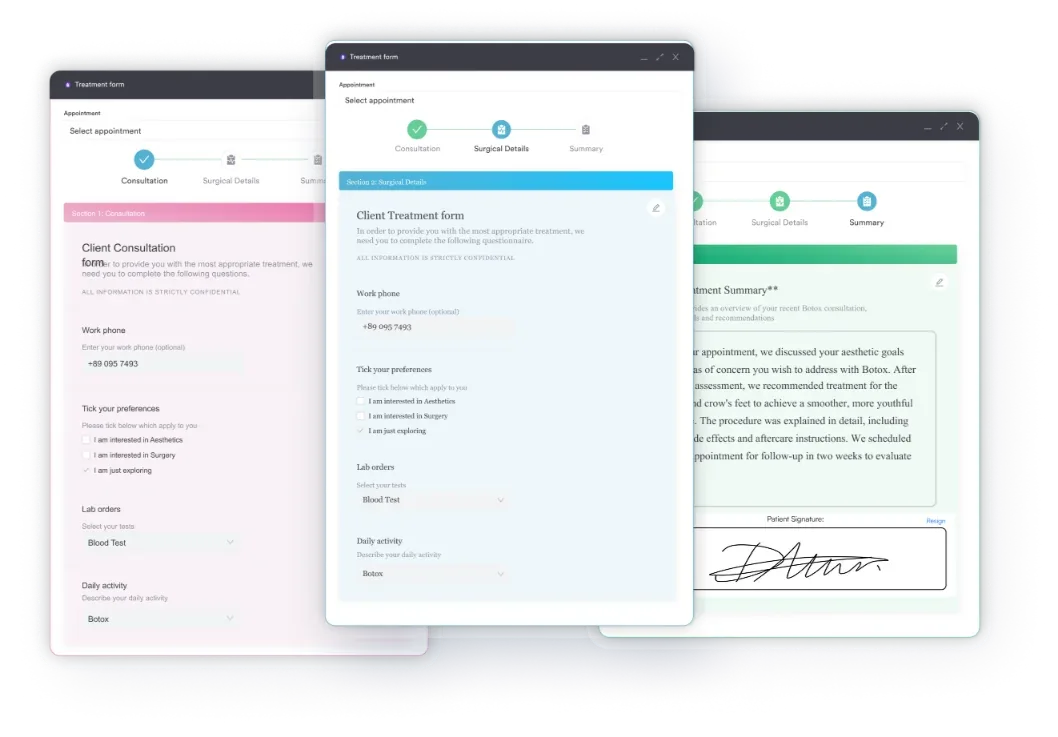
Storing these records under HIPAA compliance rules matters too, especially for programs running sessions across several sites. Digital intake forms capture the referral, consent, and session notes in a structure that answers a records request without a scramble.
A diabetes code from the E08-E13 family, carried on every claim line, coded to the level of detail the note supports.
Coverage sits in NCD 40.1, which ties payment to a documented diabetes diagnosis rather than to a fixed list of accepted codes.
Then code to the highest level of detail the record supports. E11.65 beats a three-character stem whenever the note documents hyperglycemia, and E11.9 belongs only on records that genuinely say nothing more.
Submitting an unspecified code while the chart holds the detail is a standard audit finding.
Medicare pays G0108 from the Physician Fee Schedule, so the amount moves with your locality and your place of service.
The 2026 non-facility rate lands around $63 to $68 per 30-minute session. Treat that as a planning figure and confirm yours in the CMS fee schedule lookup tool using your MAC locality.
Facility rates run lower, because Medicare pays the hospital separately for the space and staff. That difference matters when a program moves sessions between a practice suite and a hospital outpatient department.
Say an educator runs an initial individual session from 9:02 to 10:17, and the note records both times. That is 75 minutes of face-to-face training.
The claim still goes out as 2 units of G0108, not 2.5. CMS does not allow rounding on these half-hour codes, so the final 15 minutes are unpaid.
Programs that schedule in clean 30-minute blocks lose nothing to that rule, while programs that let sessions run long donate time every week.
Individual DSMT is reimbursable by telehealth, and the session must run on real-time audio and video. For original Medicare, the place-of-service code carries the whole message.
Use 02 when the patient is somewhere other than home, and 10 when the patient is at home. No telehealth modifier is needed on a Medicare fee-for-service claim.
That last point trips up teams working from older billing guides. Modifier GT was retired for Part B professional claims back in 2018, when place-of-service coding took over the job.
POS 11 on a telehealth session is the mistake to watch, because it tells the payer the patient was in the office.
Time documentation gets harder over video, since nobody wants to watch a clock during a teaching session. Telehealth software that stamps start and stop times on the record solves that quietly in the background.
CMS pays G0108 only to programs holding current recognition from the American Diabetes Association or the Association of Diabetes Care and Education Specialists. No MAC waives this, and no appeal recovers a session delivered while the certificate was lapsed.
Put your accreditation expiry date in the practice calendar with a 90-day reminder attached. ADA and ADCES cycles run four years, which is long enough for the date to slip everyone’s mind. Renewal paperwork takes weeks, and every session delivered after the certificate lapses is money your program cannot recover.
Most billing guides stop at the code. Here is the route a clean claim actually takes, and the point at which each one usually stalls.
Step two is the one worth automating first. Hour counts live in a different place from the appointment book in most programs, which is exactly why patients tip over the ceiling unnoticed.
MACs flag the same handful of problems, year after year. Each one has a fix that costs less than the appeal.
Attendance belongs on this list too. A missed session burns a reserved slot inside a fixed annual allowance. Left unchecked, patient no-shows push someone past their benefit year with hours unused.
Most DSMT programs hold this information in three separate places. The referral sits in the clinical record, the hour counts sit in a spreadsheet, and the accreditation date sits in someone’s calendar. That arrangement works until the person holding the spreadsheet takes a week off.
Practice management software like Pabau keeps all of it against the patient record instead. Forms capture the referral and diagnosis at intake, and session notes carry their own timestamps. Automated workflows can then flag a patient approaching the annual ceiling. Your educator sees the warning before the session, rather than your biller seeing a denial after it. Some payers require prior authorization for this service, and a claim without it is denied regardless of coding. Common claim denial codes repeat by specialty, so the pattern is worth reading before reworking.
Billing lives in the same system, so the diagnosis on the invoice comes from the clinical note rather than a retyped spreadsheet cell.
In a metabolic health EMR setup, DSMT runs alongside nutrition counseling and medication reviews. One shared record stops two teams from recording the same patient differently. The same pattern holds for weight loss clinic software, where education hours and clinical visits share a calendar.
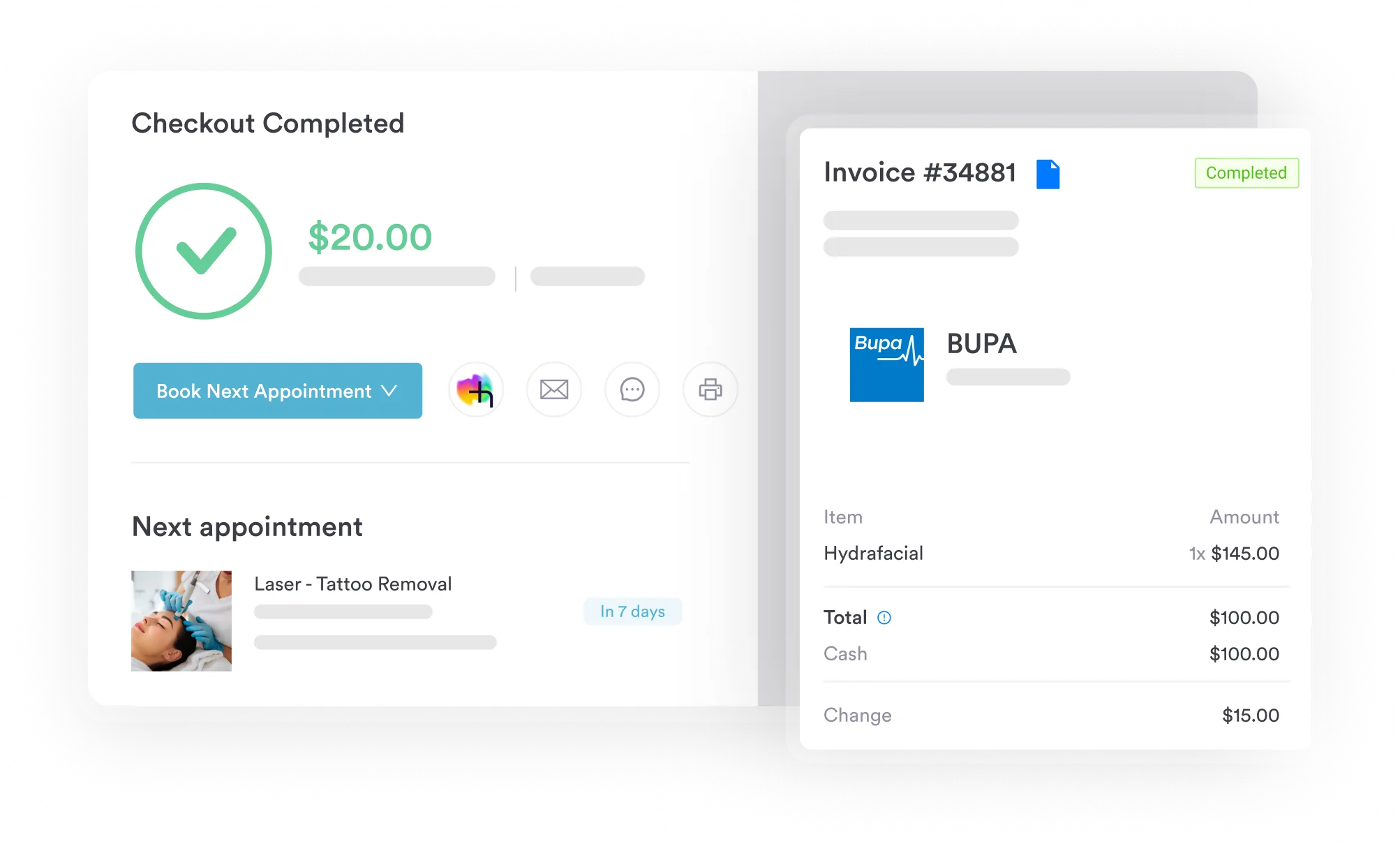
Attendance is the other half of the job. Booked hours only count once the patient turns up, so reminders do more for a DSMT program than they do for a standard appointment book.
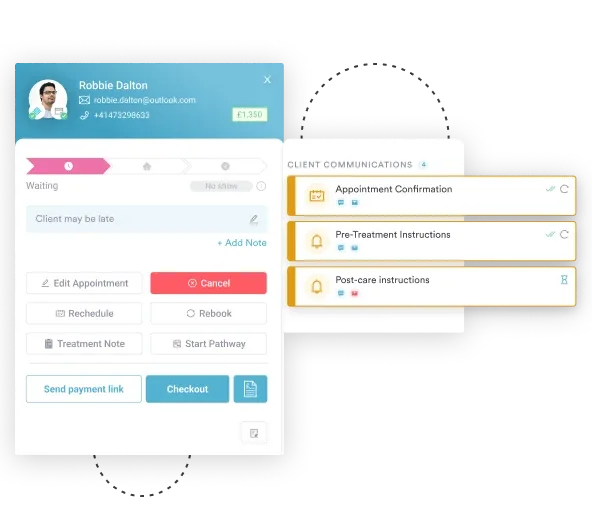

Pabau holds the referral, the session times, and the running hour count on one patient record. Your team can answer a MAC request without digging. See how it works for diabetes education programs.

G0108 rewards programs that are organized more than programs that are clever. The code itself holds no traps. The paperwork around it does, and almost all of that paperwork is created before the educator and the patient sit down together.
So pick the two checkpoints that fail most often in your practice. Usually that is the referral date and the running hour count. Move both upstream into scheduling. Denials stop being an appeals problem and become a booking problem, which is a much cheaper problem to own.
Want those checks running without a spreadsheet? Book a demo and see how Pabau tracks DSMT referrals, session times, and annual hours on one patient record.

Billing a combined blowout fracture repair? CPT code 21387 covers combined-approach repair of an orbital blowout fracture.
Billing a LeFort III fracture repair? CPT code 21432 covers open treatment of a LeFort III craniofacial separation with wiring or fixation.
Billing a complicated TMJ dislocation? CPT code 21485 covers closed treatment of a complicated TMJ dislocation requiring fixation or splinting.
Billing a scalene muscle division? CPT code 21700 covers division of the scalenus anticus without cervical rib resection.
Still billing a deleted rib fracture code? CPT code 21805 is deleted, and this guide covers the successor codes for rib repair.
No. G0108 needs a documented diabetes diagnosis from the E08-E13 family. Patients with prediabetes fall under the Medicare Diabetes Prevention Program instead. That program runs on its own referral rules, its own supplier enrollment, and its own billing codes.
DSMT is not a zero-cost preventive benefit. After the annual Part B deductible, the patient owes 20 percent of the Medicare-approved amount for each session. Say so at booking, because a surprise coinsurance bill is a common reason patients abandon their remaining hours.
No. The 10 initial hours sit inside one continuous 12-month period. Anything the patient leaves unused when that window closes is gone, and the benefit drops to 2 follow-up hours a year. Front-load the schedule when a patient starts late.
Yes, since Medicare Advantage plans must cover what Part B covers. The billing rules differ though. Many plans expect modifier 95 on a telehealth session, some require prior authorization, and network rules can limit which accredited programs a member may use.
No. DSMT and medical nutrition therapy are separate Part B benefits with separate hour allowances, and one patient can receive both in the same year. The restriction is timing, because Medicare will not pay for both on the same date of service.



