

CPT code 48152: Whipple procedure without pancreatojejunostomy
CPT code 48152: Official description and procedure overview CPT code 48152 descr...

Last Updated: Nov 13, 2026
31600 is the CPT code for a planned tracheostomy (separate procedure). It describes a tracheostomy created through a midline neck incision on a scheduled, non-emergency basis. Percutaneous dilational tracheostomy is commonly reported with 31600 too, though some payers require unlisted 31899.
As a separate procedure, 31600 is bundled into related major surgery in the same session. The operative note has to support billing it alone. Emergency tracheostomy is reported with 31603 or 31605, and Medicare assigns 31600 a 0-day global period.
Let Pabau's smart automation suggest the right codes, reduce claim denials, and keep your practice compliant—effortlessly.
Automate repetitive tasks and focus on what matters most—your patients.
Reduce coding errors and ensure compliance with the latest regulations.
Clean claims, fewer denials, and faster reimbursements.
Powerful insights and reporting to help your practice thrive.
HIPAA compliant SOC 2 certified GDPR-compliant Trusted by 4,000+ clinics worldwide

CPT Code 31600 covers a planned tracheostomy performed as a separate procedure, and percutaneous dilational tracheostomy is commonly reported with it, though payer policy varies.
The ‘separate procedure’ label means 31600 is bundled into concurrent major airway surgery unless a modifier and independent clinical rationale are documented.
Emergency tracheostomy maps to 31603 (transtracheal) or 31605 (cricothyroid membrane), not 31600, regardless of urgency at the time of surgery.
Medicare assigns 31600 a 0-day global period, so follow-up E/M visits from the next day onward are separately payable.
Pabau, the practice management platform we build, tracks prior authorization on each case and warns staff when one is missing.
CPT Code 31600 reports a planned tracheostomy billed as a separate procedure.
For a planned tracheostomy in a patient younger than 2 years, report 31601 instead of 31600. The table collects the descriptor, CPT section, global period and care settings to confirm before you build the claim.
CPT Code 31600 covers an open surgical tracheostomy performed on a planned basis. The surgeon makes a midline cervical incision and dissects through the anterior neck soft tissue. A tracheal opening, typically between the second and fourth tracheal rings, then seats a cuffed tracheostomy tube.
Clinical indications that commonly support this code include prolonged mechanical ventilation, upper airway obstruction from head and neck malignancy, and bilateral vocal cord paralysis. Severe obstructive sleep apnea where CPAP has failed qualifies too, as does an anticipated need for long-term airway access after major head and neck surgery.
The operative note must clearly state the indication so the supporting ICD-10 diagnosis code aligns with what the payer sees as medically necessary.
What “separate procedure” means in practice: The AMA uses this designation for procedures that are integral components of larger operations. When 31600 is performed as the primary and only procedure of the operative session, it is separately billable.
When it is performed alongside a concurrent major procedure on the same anatomical region, payers treat it as part of that larger surgery. The exception is a claim with a modifier and documentation showing the tracheostomy was clinically distinct.
Picking the wrong tracheostomy code is a frequent audit finding in this code family. Planned and emergency tracheostomy carry different codes, and the technique must be documented explicitly.
CPT Code 31600 describes open tracheostomy. Percutaneous dilational tracheostomy (PDT) reaches the airway with a Seldinger-type technique, using serial dilators under bronchoscopic guidance. PDT has no dedicated CPT code and is commonly reported with 31600. Some payers instead require unlisted code 31899, so confirm payer policy before you submit.
Most payer policies accept 31600 for PDT, so the operative note is what auditors check. It should name the technique, open or percutaneous, and record any bronchoscopic guidance. The audit risk comes from billing 31600 to a payer whose policy requires 31899 for PDT.
Modifiers for CPT Code 31600 justify billing the tracheostomy when it might otherwise be bundled. They also flag clinical circumstances that fall outside the standard service description.
Separate procedure + modifier -59: Sometimes 31600 shares a session with a larger procedure but is clinically distinct and separately documented. Modifier -59, or the matching X modifier (XE, XS, XP or XU), can then override the bundling edit. The operative note must demonstrate that the tracheostomy served an independent clinical purpose not integral to the concurrent surgery.
Before appending modifier -22 to CPT Code 31600, give the complicating factors their own paragraph in the operative note. A one-line reference to complexity is not enough. Payers that audit -22 claims look for time, specific anatomical challenges, and surgeon narrative. A generic note that says ‘procedure was complicated’ without detail will not hold up on appeal.
Medicare reimbursement for CPT Code 31600 is determined by the Medicare Physician Fee Schedule (MPFS) and adjusted for geography using Geographic Practice Cost Indices (GPCI). Facility and non-facility rates can differ because the practice expense component reflects who carries the overhead. For 31600, CMS lists the same practice expense value in both settings.
RVU values are updated annually. Verify current figures against the CMS Physician Fee Schedule lookup tool before quoting rates to providers. The 2026 national conversion factor is $33.4009 per RVU. Multiplied by 8.18 total RVUs, that gives a payment of about $273 before GPCI adjustment. Geographic adjusters then shift that figure by a margin that varies by locality.
Commercial payers and Medicaid programs set their own rates. Many commercial contracts price surgical codes as a percentage of Medicare, so the MPFS rate is a useful floor estimate even when billing non-Medicare payers. For RVU lookup by location, the FastRVU lookup tool applies GPCI adjusters by locality and returns both facility and non-facility rates.
Bronchoscopy is frequently performed alongside tracheostomy, either to guide percutaneous placement or to confirm tube position after open creation. Whether these codes are separately billable depends on the payer and the specific NCCI edit in effect for the billing quarter. A later bronchoscopy through the established tracheostomy incision is a separate service, reported with 31615.
Chapter 5 of the National Correct Coding Initiative (NCCI) Policy Manual addresses trachea and bronchi coding, and NCCI edits change quarterly.
Check the current edition before billing bronchoscopy with 31600. If you bill both, document that the bronchoscopy had a clinical purpose beyond confirming tube position. A biopsy with its own documented indication is reported with 31625. The AAPC Codify CPT lookup includes NCCI edit indicators by code pair for the current quarter.
Documentation requirements for CPT Code 31600 center on two things. The record must show that the procedure was planned rather than emergent, and it must name the technique, open or percutaneous.
An operative note that supports 31600 should contain all of the following elements:
ICD-10 diagnosis codes that commonly support 31600 medical necessity:
Check the ICD-10-CM codes you select against the documented clinical indication. Payers cross-reference the diagnosis against their local coverage determination (LCD) for surgical procedures.
CPT Code 31600 denials usually trace back to one of five causes, and each has its own prevention step.
Commercial payers routinely require prior authorization for planned (elective) tracheostomy because it is a scheduled surgical procedure with defined alternatives. Medicare generally does not require prior authorization for most surgical procedures, but commercial plans do, and the requirements vary significantly by payer.
An authorization submission should include the attending physician’s notes documenting the indication, the diagnosis codes and the planned procedure code. Add any imaging or pulmonary function data that supports medical necessity. Submitting incomplete packages is the primary reason retrospective authorization requests fail.
Tracheostomy tube changes are not included in CPT Code 31600. Medicare assigns 31600 a 0-day global period, so follow-up E/M visits from the next day onward are separately payable. Routine tube changes are not.
How a tube change is reported depends on whether the fistula tract has formed:
Document the clinical justification for any early tube change billed with 31502. A note that only says “tube changed” will not support a separate claim. It needs to state why the change was necessary, what gauge tube was placed, and how the patient responded.
Planned tracheostomy claims tend to fail on paperwork. An authorization lapses before the surgery date, or the auth number never reaches the claim.
Pabau records the auth code, approved dates and sessions on the patient’s case, and it warns staff when an authorization is missing. Its claims management software sends US claims through the Claim.MD clearinghouse, with eligibility checks before the visit and ERA remittances posted afterward.
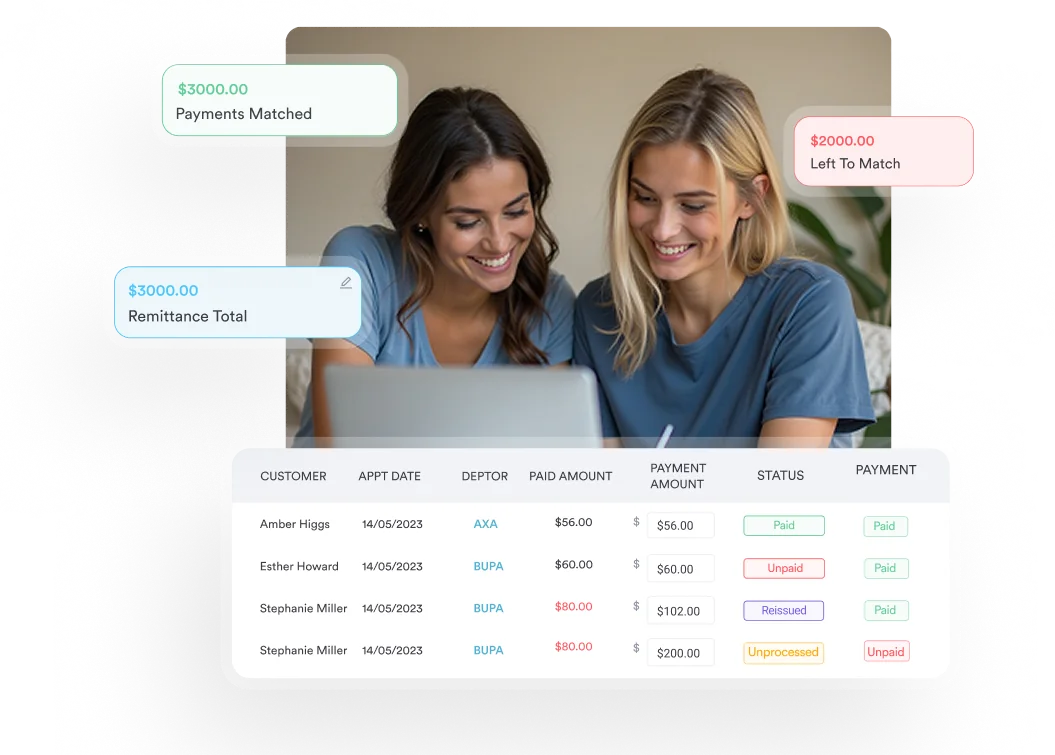
Your coders then see the authorization status and the payer’s response in the same record. A missing auth gets caught before submission, and each remittance is matched to the case it paid.

Pabau tracks authorization status and connects to the Claim.MD clearinghouse for US claims. See how it works for surgical practices.

Code 31600 when the operative note shows a planned tracheostomy and names the technique, and check the session’s other procedures before you bill it. For PDT, confirm whether the payer wants 31600 or 31899. The separate-procedure bundling and the bronchoscopy edits are where these claims break, and both are fixed in the note rather than on appeal.
The 2026 values also change the follow-up math. With a 0-day global, the next day’s visit is billable, so a practice still treating 31600 as a 90-day package leaves follow-up care unbilled. That wider workflow is what revenue cycle management covers.
Book a demo to see how Pabau tracks authorizations and US claims for surgical practices.

Need to understand how clearinghouse submission works end to end? Medical claims clearinghouse guide explains how claims move from practice to payer and where they typically break down.
Seeing repeat denials and not sure where they originate? Denial management in healthcare covers the most common CARC denial reasons and how to build a systematic response workflow.
Want the reference on clean claim submission standards? Clean claim requirements details what payers check before adjudicating and what fields most commonly trigger rejection.
CPT Code 31600 is the procedure code for a planned tracheostomy performed as a separate procedure. It describes a tracheal opening made through a midline cervical incision on a scheduled, non-emergency basis. Percutaneous dilational tracheostomy is commonly reported with 31600 too, though some payers require unlisted 31899. It does not cover emergency tracheostomy or tube changes.
CPT 31600 covers a planned, open tracheostomy performed electively. CPT 31603 covers an emergency tracheostomy performed via a transtracheal approach when life-threatening airway loss is imminent. The key distinction is planned vs. emergency and must be reflected in the operative note, not inferred from the acuity of the hospital admission.
Sometimes, depending on the NCCI edit in effect for the billing quarter and the payer’s policy. Bronchoscopy performed solely to confirm tracheostomy tube placement is typically bundled. If bronchoscopy was performed for an independent clinical reason documented before the operative session, billing both with an appropriate modifier may be supported. Verify the current NCCI edit table before submitting.
The most commonly applied modifiers are -22 for increased procedural complexity and -51 for multiple procedures in the same session. Modifier -59 or an X modifier overrides a bundling edit when the tracheostomy had an independent clinical purpose. Modifier -78 covers an unplanned same-day return to the OR for a related complication, and -79 an unrelated same-day procedure. Under the 0-day Medicare global, a later-day return is a new service. Each modifier requires specific supporting documentation in the operative note.
The national Medicare payment for CPT 31600 is about $273 in 2026, based on 8.18 total RVUs at the $33.4009 conversion factor. Geographic Practice Cost Index adjusters shift this figure by locality. Confirm the current rate for your locality using the CMS Physician Fee Schedule lookup tool before quoting reimbursement figures.
Separate billing is payer- and NCCI-edit-specific. Some payers treat bronchoscopic guidance as integral to percutaneous tracheostomy. Others allow 31622, often with modifier -59 or -XU, when the bronchoscopy is separately documented. Check the current NCCI edit and your payer’s policy before billing both.



