



CCSD code G5100: Bypass of duodenum billing guide
CCSD code G5100 bills a bypass that leaves the duodenum in place CCSD code G5100...

Last Updated: Oct 16, 2026

CPT Code 00851 covers anesthesia for tubal ligation/transection and intraperitoneal lower abdominal procedures, including laparoscopy.
Base units are 6 per the VA/OWCP nationwide schedule; reimbursement is calculated as (base units + time units) x the anesthesia conversion factor.
NC Medicaid requires 00851 to be reported as a separate procedure with total time units when sterilization follows another procedure; federal Medicaid sterilization consent rules always apply.
Pabau’s claims management software helps anesthesia billing teams track time units, apply the correct modifiers, and reduce claim denials across commercial and government payers.
CPT Code 00851 is the anesthesia code for tubal ligation and transection — intraperitoneal procedures in the lower abdomen, including laparoscopy. It applies whenever an anesthesiologist or CRNA provides anesthesia for surgical sterilization, whether by laparoscopic or open approach.
Because sterilization is a federally regulated procedure, 00851 carries documentation and consent rules that ordinary surgical anesthesia codes do not. This guide covers the official descriptor, base units, modifier requirements, reimbursement calculation, payer coverage rules, and the 00851 vs. 00840 distinction that trips up the most claims.
Anesthesia coding sits within a rule-heavy subset of the AMA’s Current Procedural Terminology (CPT) code set, where base units, time units, and qualifying circumstance modifiers all interact. For anesthesia providers serving OB-GYN practices or ambulatory surgical centers performing tubal ligations, getting 00851 right on the first submission is the difference between 30-day payment and a 90-day denial cycle.
CPT Code 00851 falls within the Anesthesia for Procedures on the Lower Abdomen range (00800-00882), as maintained by the American Medical Association. Its official descriptor is: Anesthesia for intraperitoneal procedures in lower abdomen including laparoscopy; tubal ligation/transection.
The code applies when an anesthesiologist or CRNA provides anesthesia during a tubal ligation by salpingectomy, fulguration, band, clip, or ring application. It covers both laparoscopic and open approaches. The procedure is classified as an elective permanent sterilization, which triggers specific documentation and consent requirements that vary by payer and by state Medicaid program.
Bilateral salpingectomy — sometimes still billed under the older bilateral tubal ligation (BTL) terminology — is the key area of coding debate. Per community coder consensus (corroborated by multiple state Medicaid policies), 00851 is the correct anesthesia code for bilateral salpingectomy performed for contraceptive sterilization, not 00840. CPT 00840 describes anesthesia for other intraperitoneal lower abdominal procedures not otherwise specified. When the operative report clearly documents sterilization as the intent, 00851 is the more specific and appropriate selection. Using 00840 when 00851 applies creates an audit exposure point, particularly under Medicare and Medicaid.
For broader context on anesthesia and gynecological procedure CPT billing reference guides, including IVF-adjacent procedures that often co-occur with tubal ligation workups, the coding logic follows the same specificity-first principle. Related surgical guides such as CPT Code 58571 (laparoscopic hysterectomy) apply the same intent-driven approach.
Anesthesia reimbursement does not follow the standard RVU-based formula used for most CPT codes. Instead, it uses a unit-based calculation that combines base units, time units, and qualifying circumstance units.
The formula is: (Base Units + Time Units + Qualifying Circumstance Units) x Conversion Factor = Allowable Amount
The nationwide base units for CPT 00851 are 6 base units, per the VA/OWCP nationwide anesthesia fee schedule (VA Community Care Table H). This figure is used by the Department of Labor OWCP and the Department of Veterans Affairs for fee-for-service anesthesia reimbursement. Commercial payers and state Medicaid programs may set different base unit values, though most align with the ASA Relative Value Guide (RVG).
| Component | How it works | Example value |
|---|---|---|
| Base units | Fixed per CPT code; reflects complexity of the procedure | 6 units (00851) |
| Time units | 1 unit per 15 minutes of anesthesia time (CMS standard); some payers use 10-minute intervals | 8 units (2 hours) |
| Qualifying circumstance | Additional units for emergency, extreme age, or controlled hypotension (CPT 99100-99140) | 0-5 units |
| Conversion factor | Dollar amount per anesthesia unit; set by locality and payer | Varies by payer/locality |
Conversion factors vary significantly by locality. CMS publishes its anesthesia conversion factors annually as part of the Medicare Physician Fee Schedule. The CMS Physician Fee Schedule lookup tool allows anesthesia providers to search current payment amounts by geographic region. Commercial payers negotiate conversion factors independently, so actual reimbursement can differ from Medicare rates by 20-40% in either direction.
Because anesthesia codes carry base unit values rather than work/PE/MP RVUs, standard RVU calculators do not apply directly. Verify payment amounts by code and locality against the CMS fee schedule before submitting claims. For related anesthesia codes in the same family.
Practices managing anesthesia billing alongside broader gynecological services benefit from integrated fertility and reproductive health practice software and purpose-built gynecology EHR systems that connect scheduling, clinical documentation, and claim submission in one workflow.
Track anesthesia start and stop times precisely. Time unit rounding rules vary: CMS rounds to the nearest minute, while many commercial payers round to the nearest unit (15 minutes). A 4-minute difference in documented time can cost one full unit per claim. Build time-capture into your pre-op and PACU documentation workflow rather than relying on manual retrospective entry.
Anesthesia modifier selection determines who gets paid, how much, and whether the claim passes through medical direction rules. The four core anesthesia modifiers are mutually exclusive at the provider-role level.
When an anesthesiologist medically directs a CRNA under QK, the CRNA must also append modifier QX (CRNA service under medical direction) to their claim. Both claims are required for the payer to process the split-payment correctly. Missing the QX on the CRNA’s claim is a common rejection trigger that requires manual intervention to correct.
Additional modifiers relevant to 00851 claims:

Pabau’s claims management tools help anesthesia billing teams track time units, apply modifiers correctly, and manage documentation requirements across commercial and government payers. See how it works for your practice.

Coverage rules for 00851 differ substantially across payer types. Coding teams need payer-specific guidance before assuming the code pays automatically.
Medicare covers anesthesia for tubal ligation in limited circumstances. Elective sterilization is generally not a Medicare-covered benefit for beneficiaries under standard Part B. However, Medicare Advantage plans may have broader coverage. Verify coverage eligibility and prior authorization requirements plan-by-plan before scheduling.
Federal Medicaid regulations impose a 30-day waiting period between sterilization consent and the procedure, with specific documentation requirements under 42 CFR Part 441. CPT Code 00851 is covered under Medicaid family planning benefits in multiple states, including Florida, Oklahoma, and New York, subject to those consent rules. Claims in this benefit category are often paired with contraceptive-management diagnosis codes such as ICD-10 code Z30.46.
North Carolina Medicaid Clinical Coverage Policy 1L-1 provides one of the clearest billing instructions: when a sterilization procedure follows another surgical procedure on the same date, 00851 must be reported as a separate procedure with total time units for the anesthesia. This applies whether anesthesia type is general, regional, or MAC. Failure to report 00851 separately in these cases results in bundling denials.
Florida Medicaid Family Planning covers CPT 00851 explicitly on the AHCA Family Planning Covered Codes List. Oklahoma OKHCA lists 00851 as covered for anesthesia for tubal ligation with a benefit date effective January 1, 2014. New York eMedNY lists 00851 for tubal ligation/transection under the Physician Procedure Codes section.
Practices providing sterilization procedures need sterilization consent compliance workflows built into their clinical documentation to ensure the federally required 30-day waiting period and consent forms are captured before anesthesia is administered and billed. For HIPAA-compliant documentation practices covering reproductive health records, the documentation standard is particularly important given the sensitivity of sterilization data.
Most commercial payers cover anesthesia for tubal ligation under standard surgical benefits. Prior authorization is common. Payer contracts determine the conversion factor and whether the payer follows ASA base units or its own schedule. Use the AAPC Codify CPT lookup to cross-reference payer-specific coverage notes and prior authorization requirements before submitting 00851 claims. The claim form ties each procedure line to a diagnosis pointer, showing why the anesthesia was medically necessary.
Before billing 00851 for a bilateral salpingectomy, confirm the operative report explicitly documents the sterilization intent. An operative note that reads only ‘bilateral salpingectomy for endometriosis’ without sterilization language will support 00840, not 00851, and claiming 00851 without that documentation creates an audit vulnerability. Request an addendum from the surgeon if sterilization intent was the clinical driver but is absent from the initial note.
The 00851 vs. 00840 question is the most common coding error in lower abdominal anesthesia billing. Both codes cover intraperitoneal procedures in the lower abdomen including laparoscopy, but the key difference is specificity.
| CPT Code | Descriptor (abbreviated) | Base units | When to use |
|---|---|---|---|
| 00840 | Anesthesia for intraperitoneal procedures in lower abdomen including laparoscopy; not otherwise specified | 6 | Laparoscopic or open lower abdominal surgery not covered by a more specific code |
| 00851 | Anesthesia for intraperitoneal procedures in lower abdomen including laparoscopy; tubal ligation/transection | 6 | Tubal ligation, transection, bilateral salpingectomy for sterilization |
| 00844 | Abdominoperineal resection | 7 | Abdominoperineal resection procedures |
| 00846 | Radical hysterectomy | 8 | Radical hysterectomy procedures |
| 00848 | Pelvic exenteration | 8 | Pelvic exenteration procedures |
When the operative report documents bilateral salpingectomy performed with contraceptive intent, 00851 is the specific code. When bilateral salpingectomy is performed for pathologic reasons (such as ectopic pregnancy or hydrosalpinx without sterilization intent), 00840 may be more appropriate. The intent documented in the operative report drives the code selection.
Some coders default to 00840 for any bilateral salpingectomy because the procedure name does not literally say “tubal ligation.” This is an overcautious interpretation that leaves the more specific code unused and creates potential undercoding exposure when the sterilization intent is documented. Consult your payer’s coverage policies and the AMA’s CPT guidance for the most current interpretation.
For reference, both 00840 and 00851 carry the same 6 base units in the VA/OWCP schedule, so the financial difference between selecting one over the other is minimal at the unit level. The risk is compliance exposure under Medicaid, where sterilization-specific rules and consent requirements apply to 00851 claims but not to 00840.
Anesthesia billing teams managing claims across multiple surgical sites benefit from software that flags modifier conflicts, checks base unit values against payer contracts, and tracks Medicaid consent documentation status before claim submission. Accurate digital anesthesia consent forms that capture the federally required sterilization consent information are the first line of defense against Medicaid denials on 00851 claims.
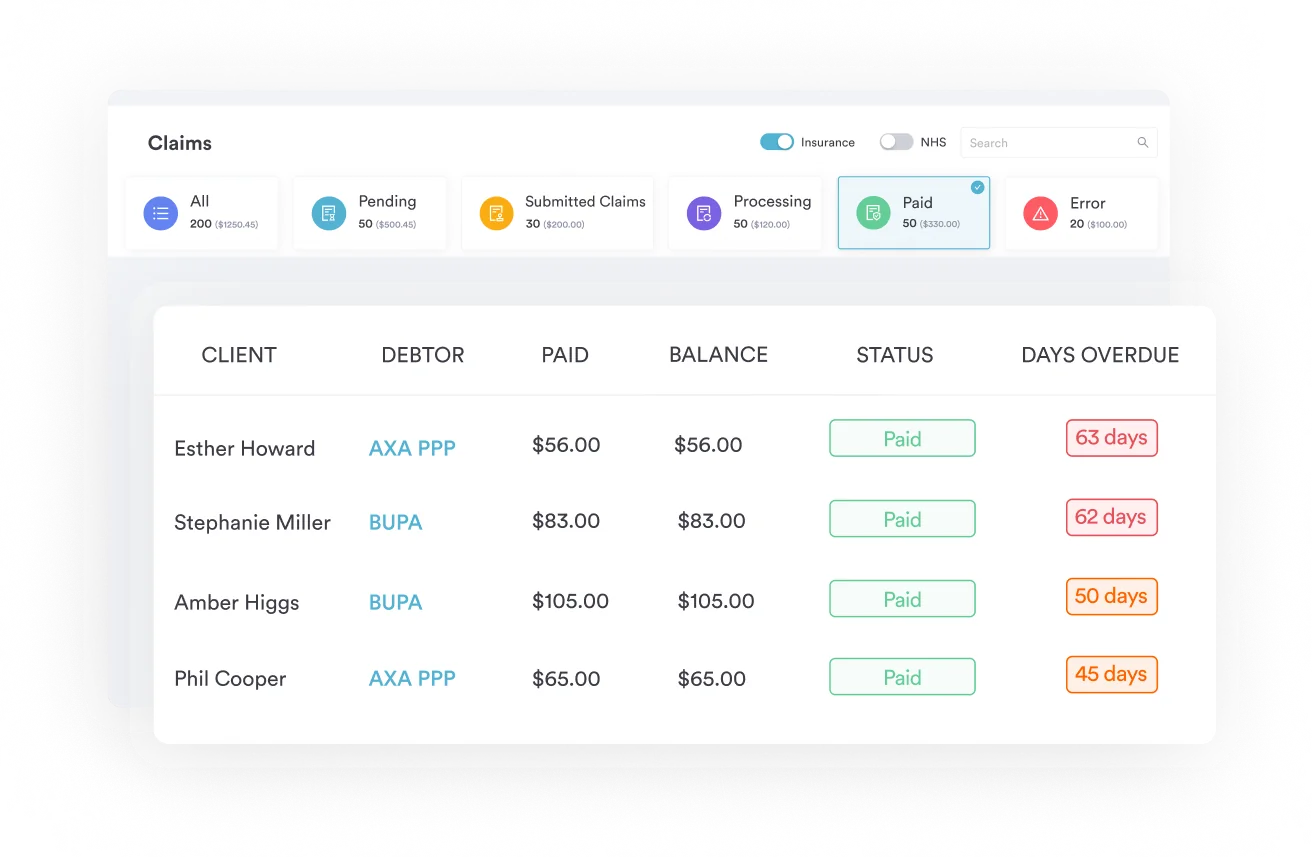
Anesthesia claims for 00851 require documentation that supports three distinct audit checkpoints: medical necessity, sterilization consent compliance, and anesthesia time accuracy.
The anesthesia record must document patient ASA physical status, pre-anesthesia evaluation findings, the surgical procedure performed, anesthesia start and stop times, and the type of anesthesia administered. For tubal ligation, payers expect the pre-op evaluation to confirm that general or regional anesthesia was clinically indicated. MAC-only cases are accepted by some payers but require documentation explaining why MAC was selected over general anesthesia. Choosing a level means weighing problems addressed, data reviewed and risk, which is what MDM documentation covers.
Federal Medicaid sterilization consent rules under 42 CFR Part 441 require a signed, dated consent form obtained at least 30 days before the procedure. The consent form must use the federally approved language and must be retained in the patient’s chart. For Medicaid claims, the consent form or its confirmation must accompany or be documented in the claim record. Missing or incomplete consent forms are the leading reason for Medicaid 00851 denials.
Practices using automated anesthesia billing workflows can configure consent expiration alerts that trigger when a sterilization consent is approaching or past the 30-day window, preventing cases from proceeding without valid documentation on file.
Anesthesia time begins when the anesthesiologist or CRNA starts preparing the patient for anesthesia induction in the operating room and ends when the anesthesiologist hands care to post-anesthesia care staff. Both the start and stop times must appear on the anesthesia record. CMS uses 1 unit per 15 minutes; round fractional units per your payer’s contract terms.
Verify your base unit values, conversion factors, and 2026 fee schedule data against the CMS Physician Fee Schedule before submitting. For related anesthesia codes commonly performed alongside tubal ligation.
Anesthesia billing for sterilization procedures requires more than selecting the right code number. CPT Code 00851 carries Medicaid consent requirements, modifier sequencing rules, and concurrent care documentation standards that standard surgical billing does not. Getting the 00851 vs. 00840 distinction right, applying the correct AA/QZ/QK/AD modifier, and documenting anesthesia time accurately are the three variables that determine whether a claim pays on first submission or cycles through a denial queue.
Pabau’s claims management software helps anesthesia and OB-GYN billing teams manage documentation workflows, track modifier compliance, and submit cleaner claims across government and commercial payers. To see how Pabau supports anesthesia billing operations, book a demo.

Billing anesthesia for shoulder replacement? Shoulder replacement anesthesia code covers the base units and how modifiers and Medicare’s conversion factor set the payment.
Billing anesthesia for an artery bypass graft? Shoulder artery bypass graft code covers the base units and the neighboring codes it is easy to confuse with.
Billing anesthesia for a shoulder tendon repair? Biceps tenodesis anesthesia code covers the base unit value and how it differs from the neighboring 01710 code.
CPT Code 00851 is the anesthesia code for tubal ligation and transection procedures performed as intraperitoneal surgery in the lower abdomen, including laparoscopic approaches. It applies to anesthesia provided during surgical sterilization by salpingectomy, fulguration, banding, clipping, or ring application. The code also applies to bilateral salpingectomy when performed with contraceptive sterilization as the documented intent.
CPT Code 00851 is the anesthesia code most practices use for tubal ligation, covering bilateral tubal ligation (BTL) and laparoscopic tubal ligation alike, regardless of technique — salpingectomy, fulguration, banding, clipping, or ring application. It carries 6 base units. The surgical portion is billed separately by the operating physician under a code in the 58600–58615 range; 00851 covers only the anesthesia service.
CPT Code 00851 carries 6 base units per the VA/OWCP nationwide anesthesia fee schedule and the ASA Relative Value Guide. Reimbursement is calculated as (6 base units + time units + qualifying circumstance units) x the payer’s anesthesia conversion factor. Conversion factors vary by payer and geographic locality.
CPT 00851 is the specific code for anesthesia during tubal ligation and sterilization procedures; CPT 00840 is the “not otherwise specified” code for other lower abdominal intraperitoneal procedures. When an operative report documents sterilization as the clinical intent, 00851 is the correct code. Using 00840 for a documented sterilization procedure creates compliance exposure under Medicaid, which applies sterilization-specific consent and billing rules only to 00851 claims.
Usually not as a separately billable anesthesia code. When tubal ligation is performed in the same operative session as a cesarean delivery, the anesthesiologist doesn’t start a new anesthetic event for the sterilization portion, so the anesthesia is billed once under the cesarean delivery code. The surgical CPT code for that scenario is add-on code 58611, reported alongside the cesarean delivery code with no separate reimbursement value of its own. 00851 applies when tubal ligation is its own distinct procedure — for example, on a separate day during the same hospital stay (CPT 58605) or at a later, unrelated date — with its own anesthesia record and start/stop times.
Yes, CPT Code 00851 is covered by Medicaid family planning benefits in multiple states, including Florida, Oklahoma, and New York, subject to federal sterilization consent requirements under 42 CFR Part 441. A signed consent form must be obtained at least 30 days before the procedure. Medicaid claims without compliant consent documentation are routinely denied. Coverage terms, waiting period requirements, and prior authorization rules vary by state Medicaid program.
The primary modifiers are AA (anesthesiologist personally performing), QZ (CRNA without medical direction), QK (anesthesiologist medically directing two to four concurrent CRNA cases), and AD (supervision of more than four concurrent cases). When a CRNA performs under medical direction, they must append QX to their claim alongside the supervising anesthesiologist’s QK claim. Modifier 59 or 51 is required when 00851 is billed on the same date as another anesthesia code.
Reimbursement equals (base units + time units + qualifying circumstance units) multiplied by the anesthesia conversion factor. For 00851, base units are 6. Time units are calculated at 1 unit per 15 minutes of anesthesia time under CMS rules, though some commercial payers use 10-minute intervals. The conversion factor is set by payer and locality. Use the CMS Physician Fee Schedule lookup to find current locality-specific conversion factors before estimating reimbursement.



