

CPT Code 30801: Superficial turbinate ablation billing guide
CPT Code 30801: Official descriptor and procedure overview The American Medical ...

Last Updated: Nov 27, 2026
M5582 is the CCSD code for diathermy of urethral caruncle, the electrosurgical destruction of a benign outgrowth at the urethral opening. UK private medical insurers expect it on claims for this procedure, with ICD-10 N36.2 as the primary diagnosis.
M5582 sits in Chapter 12 of the CCSD schedule, Urinary system and male reproductive organs. Surgical excision of the same lesion is billed under its sibling code, M5580.
Let Pabau's smart automation suggest the right codes, reduce claim denials, and keep your practice compliant—effortlessly.
Automate repetitive tasks and focus on what matters most—your patients.
Reduce coding errors and ensure compliance with the latest regulations.
Clean claims, fewer denials, and faster reimbursements.
Powerful insights and reporting to help your practice thrive.
HIPAA compliant SOC 2 certified GDPR-compliant Trusted by 4,000+ clinics worldwide

CCSD code M5582 covers diathermy of a urethral caruncle only. Surgical excision of the same lesion is billed under M5580.
Pair M5582 with ICD-10 N36.2 (urethral caruncle) as the primary diagnosis. A symptom code in the primary slot invites an insurer query.
UK private medical insurers such as Bupa, AXA Health, Aviva and Vitality set their own preauthorization rules, so confirm cover before the procedure.
The operation note must name diathermy as the technique, describe the lesion, and record whether tissue went for histology.
M5582 sits in the Minor complexity band in the published National Friendly and Aetna International fee schedules.
CCSD Code M5582 carries the descriptor “Diathermy of urethral caruncle.” National Friendly’s published fee schedule lists M5582 under that descriptor, in the Minor complexity band. The code comes from the schedule of the Clinical Coding and Schedule Development (CCSD) Group, which holds the standard procedure codes for UK private healthcare. M5582 covers only the electrosurgical destruction of a urethral caruncle. Excision, biopsy or other urethral work in the same session needs its own code.
Codes starting with M sit in Chapter 12 of the schedule, Urinary system and male reproductive organs, according to the CCSD Technical Guide. M5582 has one sibling for the same lesion: M5580, Excision of urethral caruncle. Billing the excision code for a diathermy procedure misstates the work and invites an insurer query.
The descriptor and complexity band above appear in the published National Friendly schedule of fees and the Aetna International doctors’ fees list. Each insurer sets its own fee for the band, so check the schedule of the insurer you are billing.
A urethral caruncle is a benign, fleshy outgrowth at the back edge of the urethral opening. It is most common in postmenopausal women, linked to low estrogen and prolapse of the urethral lining. Lesions range from a few millimeters to over a centimeter. They can cause painful urination, blood in the urine, spotting after voiding, or discomfort when sitting.
Many caruncles cause no symptoms and are managed with topical estrogen cream. A referral for diathermy follows when that treatment fails, or when the lesion is symptomatic and large enough to need intervention.
Diathermy suits smaller lesions because it controls bleeding as it works and can be done under local anesthetic as an outpatient. Recovery is usually short. When a tissue diagnosis is needed, excision is favored, because diathermy can destroy the cell structure a pathologist needs to see. Recording why diathermy was chosen over excision strengthens the claim if the insurer asks for clinical justification.
Before submitting an M5582 claim, confirm the clinical notes record failed or inadequate conservative treatment. Insurers that require preauthorization often ask for evidence that topical treatment was tried first. A note stating ‘persistent symptomatic urethral caruncle despite six weeks of topical estrogen’ is far stronger than ‘urethral caruncle – for diathermy’.
Knowing the procedural steps helps billing staff check the operation note against what M5582 covers. That reduces the risk of claiming for a procedure that was performed differently.
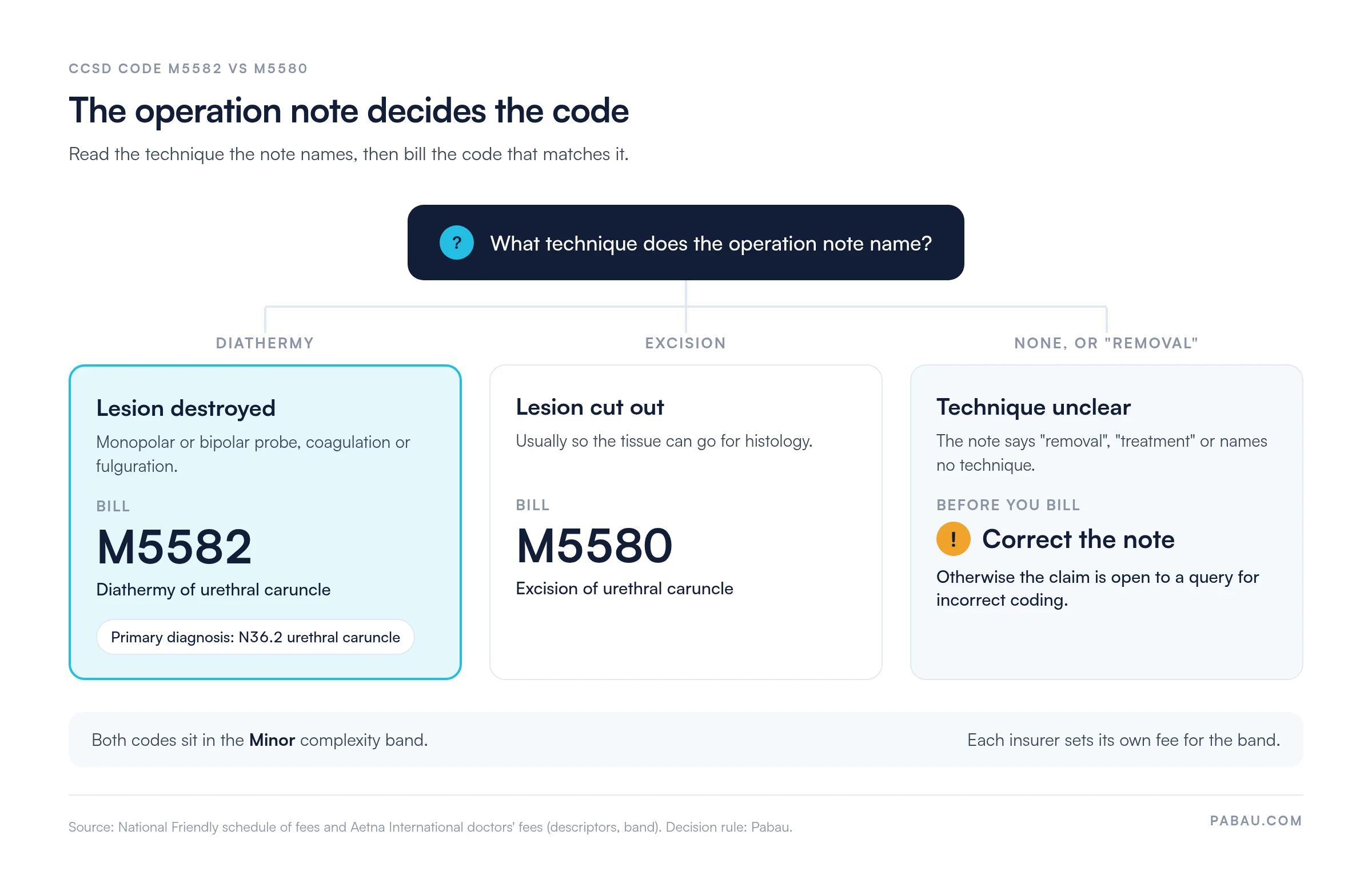
The operation note must state “diathermy” explicitly, because the technique it names decides the code. A note that says “excision” or names no technique leaves the claim open to a query for incorrect coding.
The ICD-10 code for a urethral caruncle is N36.2, which sits under N36, “Other disorders of urethra,” in the WHO ICD-10 classification. UK private medical insurers expect an ICD-10 diagnosis alongside the CCSD procedure code. Pairing CCSD Code M5582 with N36.2 is the minimum for a clean claim. A procedure and diagnosis that don’t match is a common trigger for a query or rejection.
Always list N36.2 as the primary diagnosis. Symptom codes such as R30.0 or R31 can be added as secondary codes to support medical necessity. They must not replace N36.2 in the primary position. Using N36.8 as a catch-all for urethral conditions is a common coding error on this procedure.
Chapter 12 holds several urethral and bladder outlet codes that billing staff confuse with CCSD Code M5582. Bladder outlet dilatation is M5820, and widening the urethral opening is M8130. Each code covers a specific procedure, and the codes are not interchangeable. Prostate operations sit in a separate section of the same chapter, with open adenoma removal under M6100.
The descriptors above come from the National Friendly schedule of fees. Check each code in the CCSD schedule before you submit, as codes can change with each CCSD release. Searching the schedule needs a free CCSD login. Our guide to CCSD billing codes explains how the schedule is organized, and the CCSD code library collects billing guides for individual codes.
Whether M5582 needs preauthorization depends on the insurer and the patient’s policy. Bupa, AXA Health, Aviva and Vitality each set their own rules. Many insurers expect the patient to get authorization before planned treatment, so confirm cover before you book the procedure.
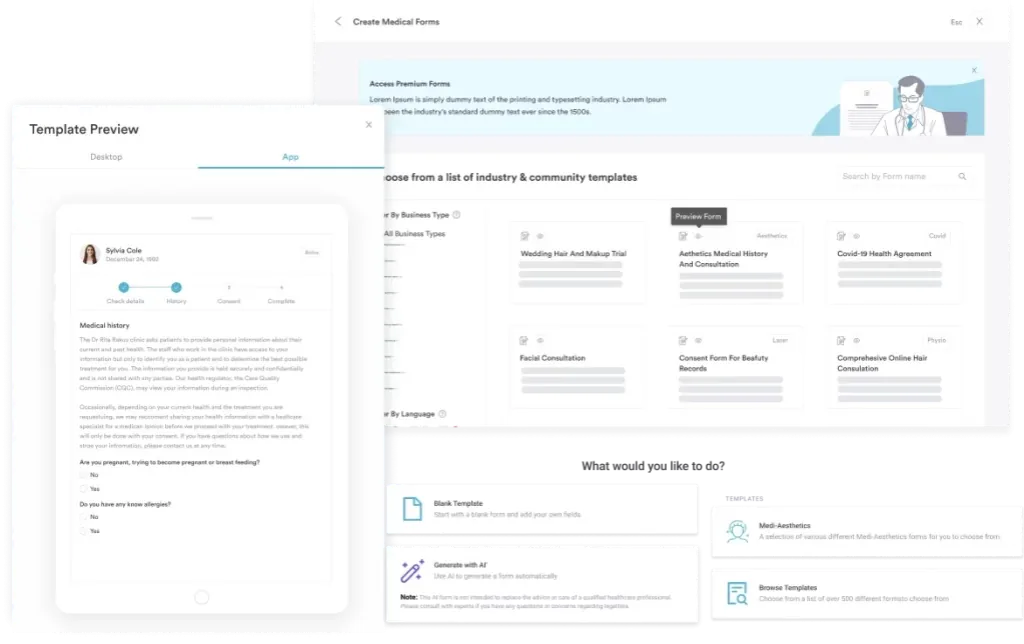
Thin documentation is a frequent reason M5582 claims get queried. The operation note must show that the procedure coded matches what was performed. Pabau, a practice management platform with built-in claims, has digital forms that prompt practitioners for each required field. Filling them in at the point of care cuts the risk of a later query.
The operation note must include all of the following:
When an anesthetist is involved, they claim from the insurer separately. The Aetna International schedule lists an anesthetist fee for M5582, but check whether the patient’s insurer pays one. Building the seven fields above into your operation note template stops a missing one from reaching the insurer.
Run a sample audit of your last ten M5582 claims. Check each operation note against the seven-point checklist above. If ‘diathermy’ is missing and ‘removal’ or ‘treatment’ appears instead, those claims are open to insurer queries. Making the technique a required field in the note template stops it happening again.
M5582 queries and rejections follow predictable patterns. The table below maps each one to its root cause and the fix.
UK private practices billing CCSD Code M5582 tend to hit the same three problems: thin operation notes, ICD-10 mismatches and lost authorization numbers. Pabau keeps the procedure code, the diagnosis and the operation note on one patient record, so each claim goes out with its evidence attached.
Pabau’s claims management software sends claims electronically to insurers through Healthcode and directly to Bupa. Each claim’s status sits in one view. For a team billing several caruncle procedures a week, an insurer query gets answered before it stalls payment.
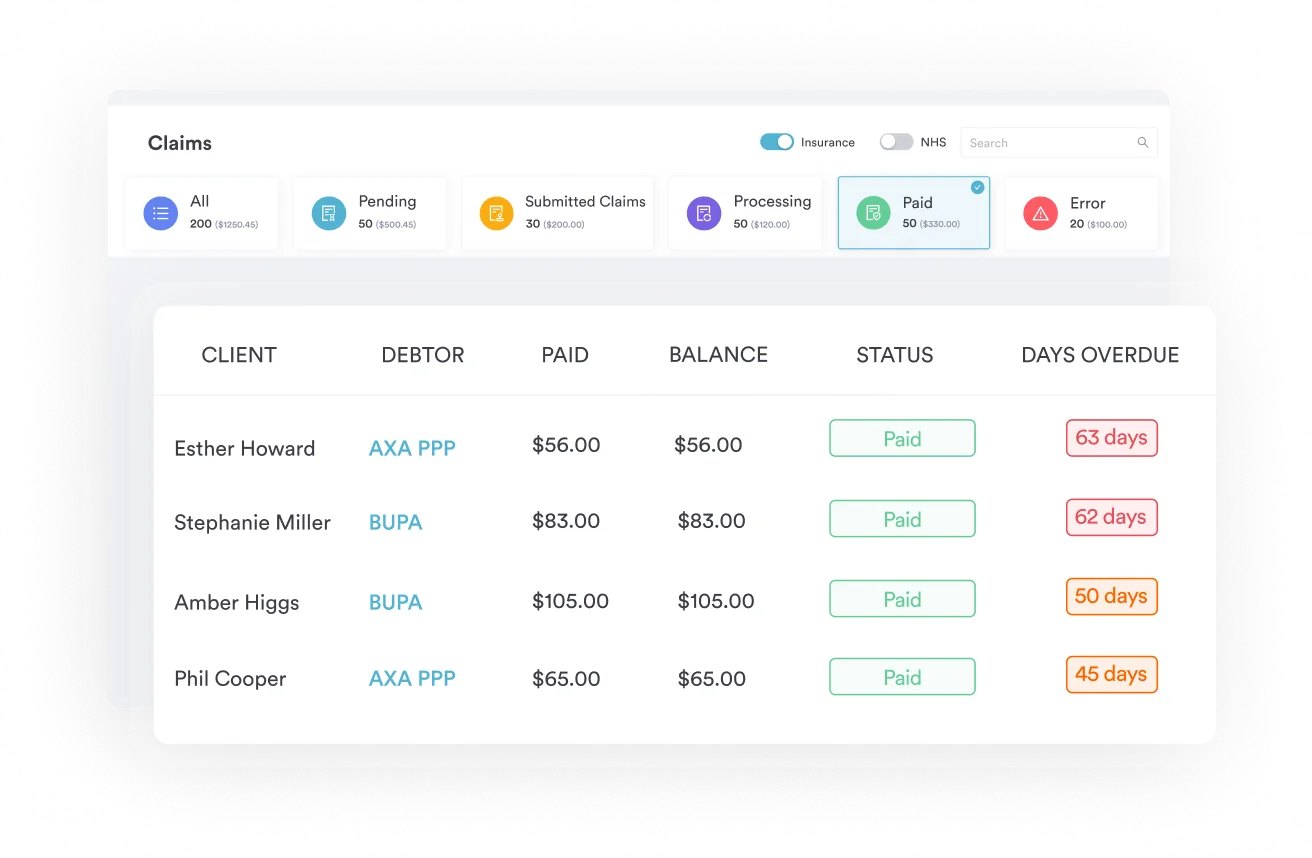

Pabau sends CCSD claims like M5582 to Healthcode and Bupa. It keeps the operation note on the patient record and tracks each claim until it is paid.

M5582 is a narrow code, and that is its main trap. It covers diathermy alone, so the operation note has to say diathermy in plain words. Pair it with N36.2, and keep M5580 for the cases where the caruncle is cut out.
The coding is the easy part. Authorization is where these claims stall, so get the insurer’s reference before the procedure, not after it. Do that, and an M5582 claim becomes routine.
Book a demo to see how Pabau sends CCSD claims to Healthcode and Bupa and tracks them until they are paid.

Need a broader CCSD billing reference? Bupa CCSD codes explains how CCSD procedure codes are structured and how UK insurers use them on claims.
Removing the caruncle instead? CCSD code M5580 covers surgical excision of a urethral caruncle, the sibling procedure to M5582.
Looking for tools to reduce insurer queries? Claims management software from Pabau sends claims to Healthcode and Bupa and tracks each one until it is paid.
Working on the bladder outlet instead? CCSD code M5820 covers dilatation of the outlet of the female bladder, including cystoscopy.
Adding a symptom code? ICD-10 code R30.0 covers dysuria, a secondary diagnosis that can support an M5582 claim.
CCSD Code M5582 is the UK private healthcare procedure code for diathermy of a urethral caruncle. That is the electrosurgical destruction of a benign outgrowth at the urethral opening. Surgical excision of the same lesion is billed under M5580 instead.
N36.2 (urethral caruncle) is the primary ICD-10 diagnosis for a claim billed under CCSD Code M5582. Symptom codes such as R30.0 or R31 can support the claim as secondary codes. Using one of them, or N36.8, as the primary diagnosis invites an insurer query.
Diathermy destroys the caruncle with electrical current and is billed under M5582. Excision cuts the lesion out, usually so the tissue can go for histology, and is billed under M5580. The code on the claim must match the technique named in the operation note.
It depends on the insurer and the patient’s policy. Bupa, AXA Health, Aviva and Vitality each set their own rules, and many expect authorization before planned treatment. Confirm cover and get an authorization number before you book the procedure.
There is no fixed limit in the code itself, but each new episode needs fresh clinical notes confirming the caruncle has come back. Most insurers will also want a new authorization. The notes should show a new lesion rather than an incomplete first treatment.
The operation note should state diathermy as the technique, name the anesthetic, and describe the lesion’s size and location. It should also confirm hemostasis and record whether a specimen went for histopathology. Missing details give the insurer grounds to query the claim.




