








CCSD Codes
CCSD code 0001T: UK private healthcare procedural code
CCSD code 0001T belongs to the UK’s Clinical Coding and Schedule Developme...

June 26, 2026


CCSD Code 2530O is a UK private healthcare procedure code maintained by the Clinical Coding and Schedule Development (CCSD) Group and administered by Grant Thornton UK LLP.
Fees for CCSD Code 2530O are set by individual insurers, not CCSD; always verify the current rate with Bupa, AXA Health, Allianz Care, or your specific payer before invoicing.
Pre-authorisation requirements vary by insurer and policy; submit the authorisation reference number on every claim to prevent automatic rejections.
Pabau’s claims management software helps UK private clinics submit CCSD-coded invoices accurately, track authorisation references, and reduce billing errors across all major PMI payers.
Most private healthcare claim rejections in the UK trace back to a handful of avoidable errors: wrong code narrative, missing pre-authorisation reference, or an ancillary code billed incorrectly. CCSD Code 2530O is no different. Like every code in the CCSD Schedule of Procedures, it carries precise billing rules that major insurers including Bupa, AXA Health, and Allianz Care enforce at the point of review.
This guide covers the procedure narrative and clinical scope of CCSD Code 2530O, how each major insurer approaches pre-authorisation, ancillary codes, documentation standards, and the claim submission steps most likely to keep your invoice off the rejection list. Always verify code details against the current CCSD Schedule of Procedures, as codes are updated periodically.
The Clinical Coding and Schedule Development (CCSD) Group maintains the Schedule of Procedures used across the UK private healthcare sector. Every code in the schedule carries an exact narrative that defines its clinical scope. Billing accurately requires using that narrative verbatim, because insurers cross-reference it at claims adjudication.
CCSD Code 2530O sits within the CCSD Schedule’s numeric-alpha series. The “O” suffix signals a specific procedural variant within the 2530 group, distinguishing it from related codes in the same chapter. The full code narrative and chapter placement are available to registered users via the CCSD website or through the CCSD Coder mobile app. Because the schedule is login-gated, practitioners should verify the live narrative directly before invoicing.
What is consistent across CCSD codes regardless of chapter: the narrative defines the exact procedure covered, the level of anaesthetic implicitly assumed, and whether the code is a standalone or an add-on. Billing for work outside the code’s narrative scope is a primary driver of claim denials and, in repeat cases, provider recognition reviews by insurers.
Bupa publishes its recognised CCSD codes via codes.bupa.co.uk. Entering 2530O in that portal returns the narrative Bupa recognises, the associated fee (where applicable), and any billing restrictions specific to their scheme. This is the most reliable first check before submitting a claim. Our complete Bupa CCSD codes guide covers how to navigate the portal and interpret what you find.
One practical point: the CCSD Technical Guide, updated October 2025, sets out the coding principles that govern the entire schedule. It explains modifier usage, add-on code rules, and how to handle bilateral or staged procedures. Reading the relevant section before billing a code for the first time is time well spent.
CCSD does not set fees. That point catches many practitioners off-guard. The CCSD Group creates and maintains the code descriptions; individual insurers set the fees they will pay against each code. This means CCSD Code 2530O may attract a different fee from Bupa, AXA Health, Allianz Care, and Freedom Health, and each fee can change at the insurer’s annual schedule review.
The table below summarises where to find current fee information and the general approach each major UK private medical insurer takes to pre-authorisation. Verify directly before submitting any claim.
For AXA Health, the AXA Health specialist procedure codes portal shows which chapters and codes are active under their current schedule. For Allianz Care, the Allianz Care UK fee schedule (effective December 2024) lists CCSD-based national fees in full. Both are worth bookmarking for any practice billing across multiple insurers.
Pre-authorisation rules change. What Bupa required in one calendar year may shift the following April. Practices that track authorisation requirements in their practice management system, rather than relying on memory, catch these changes before they reach claim submission. See the Bupa procedure codes fee schedule for a structured overview of how Bupa organises its recognised codes.
Before billing CCSD Code 2530O, run a check on the insurer’s portal to confirm the code is currently active in their schedule and that your authorisation reference is still valid. Authorisation references typically expire within 90 days. An expired reference is one of the most common and most preventable causes of claim rejection across all major UK private medical insurers.
Many CCSD procedure codes require or permit ancillary codes to be billed alongside the primary code. Ancillary codes capture elements of the procedure not included in the main narrative, such as assistant surgeon fees, anaesthetic administration, or supplies billed as a separate item.
The CCSD Technical Guide specifies which codes can be billed as add-ons and which cannot. When submitting CCSD Code 2530O, practices should check three things.
ICD-10 diagnosis codes are typically submitted alongside CCSD procedure codes, particularly for Bupa and AXA Health claims. The diagnosis code provides the medical necessity context. While CCSD sets the procedure coding standard, the diagnosis code must reflect the clinical presentation accurately. Mismatches between the procedure claimed and the diagnosis code are a reliable trigger for claims scrutiny.
For context on how ancillary codes work across comparable CCSD codes, see the CCSD Code E2500 nasolaryngopharyngoscopy billing guide and the CCSD Code H2503 therapeutic sigmoidoscopy billing guide. Both illustrate how the Technical Guide’s ancillary code principles apply in practice across different clinical chapters.

Pabau helps UK private clinics submit CCSD-coded invoices accurately, track pre-authorisation references, and manage claims across Bupa, AXA Health, and other major PMI payers, all from one system.

UK private insurers expect specific documentation to accompany or support any claim. For procedural codes in the CCSD Schedule, the minimum documentation standard across major payers typically includes a valid GP or consultant referral, a clinical record confirming the diagnosis and treatment plan, and the procedure note confirming what was performed.
For CCSD Code 2530O, the documentation requirements align with general CCSD procedural standards, with some insurer-specific additions.
Understanding the CQC‘s role in UK private healthcare helps practices build documentation workflows that meet both clinical governance and insurer audit requirements. In Scotland, Health Improvement Scotland (HIS) oversees private healthcare, with broadly similar documentation standards.
Data retention obligations under UK GDPR mean patient records supporting CCSD billing must be stored securely and for the appropriate minimum period. Practices should review the UK GDPR compliance checklist to confirm their record-keeping systems meet the current requirements. Strong documentation practices also reduce exposure if an insurer requests a post-payment audit. See also Pabau’s guidance on best practices for managing data protection in clinical settings.
Store the authorisation reference number, the date it was granted, and its expiry date in the same record as the patient’s appointment and procedure note. When a claim is queried months later, having all three in one place speeds up the response and demonstrates the practice followed the correct pre-authorisation workflow from the outset.
Electronic submission is the standard for UK private healthcare claims, with most major insurers requiring invoices through approved billing systems or provider portals. Understanding the most common denial reasons for CCSD procedural codes helps practices strengthen submission workflows and avoid claim rejections.
To reduce claim denials, review rejected claims by reason code to identify recurring workflow issues versus isolated documentation gaps. Claims management software helps track submissions, authorisations, and outstanding claims in one place.
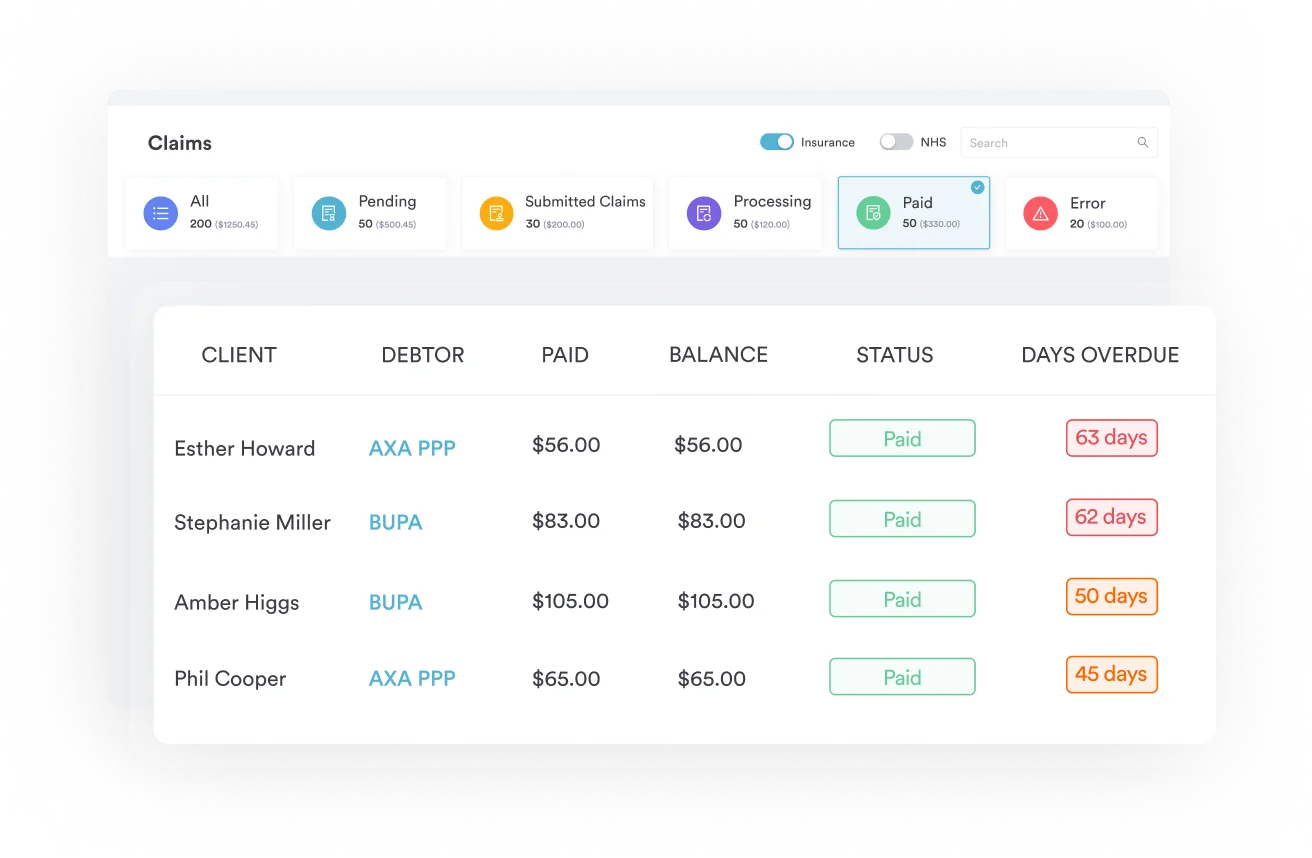
For practices billing across multiple CCSD codes, using code-specific checklists helps reduce errors and reliance on staff memory. The compliance framework for physiotherapy clinics provides a practical model for structuring billing and compliance workflows across UK private practices. Practices can also explore the operational benefits of private practice billing to improve efficiency and consistency.
Billing CCSD Code 2530O accurately comes down to three consistent disciplines: verifying the current code narrative and fee against each insurer’s published schedule, securing and recording pre-authorisation before treatment, and submitting claims with the correct diagnosis code and complete documentation. Each step is straightforward in isolation; the errors happen when one step is skipped under time pressure.
Pabau’s claims management software is built for UK private clinics that bill across multiple CCSD payers. It connects pre-authorisation tracking, invoice generation, and claims follow-up in one workflow, so nothing falls through the gap between appointment and payment. If you’re ready to tighten your CCSD billing process, book a demo and see how it works in practice.

Looking for a full overview of Bupa CCSD codes? Bupa CCSD codes guide covers all 2,859 procedure codes in Bupa’s recognised schedule, how to navigate the portal, and billing best practices.
Need to understand how similar procedural codes are billed? CCSD Code H2503 billing guide walks through the additional code rules and insurer requirements for therapeutic sigmoidoscopy.
Considering how Pabau supports private practice compliance? Leaving the NHS for private practice covers the operational, regulatory, and billing considerations for practitioners making the transition.
CCSD Code 2530O is a procedure code in the UK’s CCSD Schedule of Procedures, used by private medical insurers to identify and pay for a specific clinical procedure. Check the exact description and chapter against the current schedule at ccsd.org.uk, as it is updated on a regular basis.
Bupa sets its own fees separate from the CCSD Group. The current fee is listed in real time at codes.bupa.co.uk. Always check the portal before sending an invoice, as fees can change at each schedule review.
Most major UK private medical insurers require pre-authorisation for CCSD procedure codes. The authorisation reference number must appear on the invoice. Check the rules with the payer before the patient’s appointment, as they can change between policy years.
All major UK private medical insurers use the CCSD Schedule, including Bupa, AXA Health, Allianz Care, Freedom Health, H3 Insurance, VitalityHealth, WPA, Healix, Aviva, and Cigna UK. Fees and coverage rules vary by payer.
The most common reasons are a missing or expired authorisation reference, a mismatch between the procedure note and the code description, a missing or wrong ICD-10 diagnosis code, an unbundling issue, and the treating clinician not being on the insurer’s approved list. A pre-submission checklist built into your billing workflow prevents most of these.