ICD-10 Code V28.01XD: E-bike driver noncollision accident, nontraffic, subsequent encounter
ICD-10 Code V28.01XD: Definition and billable status ICD-10 Code V28.01XD is the...

Last Updated: Oct 20, 2026
Billable Code Specific Code
M79.0 is the billable ICD-10-CM code for rheumatism, unspecified.
Most soft tissue complaints walk through the door with vague presentations. The patient has aching joints, diffuse musculoskeletal pain, and a history that doesn't yet point clearly to rheumatoid arthritis, fibromyalgia, or any other named condition. That's exactly the clinical space ICD-10 Code M79.0 is designed to occupy - and also where it generates the most coding errors.
M79.0 is one of those codes that looks straightforward until a payer audit or a denial lands on your desk. The Excludes1 conflicts, the documentation thresholds, and the temptation to reach for it when a more specific code is available - these are the pressure points.
Let Pabau's smart automation suggest the right codes, reduce claim denials, and keep your practice compliant—effortlessly.
Automate repetitive tasks and focus on what matters most—your patients.
Reduce coding errors and ensure compliance with the latest regulations.
Clean claims, fewer denials, and faster reimbursements.
Powerful insights and reporting to help your practice thrive.
HIPAA compliant SOC 2 certified GDPR-compliant Trusted by 4,000+ clinics worldwide

ICD-10 Code M79.0 maps to Rheumatism, unspecified – a billable ICD-10-CM diagnosis code valid for the 2026 fiscal year (effective October 1, 2025).
Use M79.0 only when clinical documentation supports a rheumatic condition that cannot be classified under a more specific code – payers may deny claims where a specific code exists.
M79.0 has Excludes1 notes for palindromic rheumatism and Excludes2 notes for several specific rheumatic conditions – check these before submitting a claim.
Pabau’s claims management software supports ICD-10 diagnosis code selection at the point of care, reducing transcription errors between code lookup and claim submission.
ICD-10 Code M79.0 describes Rheumatism, unspecified – a diagnosis used when a provider identifies a rheumatic condition but cannot classify it under a more specific ICD-10-CM code. According to the CDC/NCHS ICD-10-CM web tool, M79.0 is a billable/specific code valid for reimbursement purposes in the 2026 edition of ICD-10-CM, which became effective on October 1, 2025.
Rheumatism NOS (not otherwise specified) is the informal clinical synonym. Coders and providers should treat this as a true last-resort code within the M79 category – not a convenient default when documentation is incomplete.
The table below gives a quick reference for ICD-10 Code M79.0, covering everything a coder or biller needs to verify before submitting a claim.
M79.0 sits within a well-defined parent-to-child hierarchy in the ICD-10-CM classification. Understanding where it sits matters because sequencing and code selection errors at the chapter level are a common source of payer queries. You can explore the full hierarchy using the CMS ICD-10 codes page, which publishes annual update files and official tabular lists.
The path from chapter to billable code is: M00-M99 (Diseases of the musculoskeletal system and connective tissue) → M70-M79 (Soft tissue disorders) → M79 (Other and unspecified soft tissue disorders, not elsewhere classified) → M79.0 (Rheumatism, unspecified).
For accurate ICD-10-CM code hierarchy navigation, coders must understand which sibling codes sit alongside M79.0 in the M79 category. The table below lists all M79 subcategory codes with their official descriptions.
Practices charting these diagnoses in Jane often compare Jane App alternatives once caseloads and billing get heavier.
The Excludes notes for M79.0 are where coders run into the most compliance risk. The WHO ICD-10 browser and the official CMS ICD-10-CM tabular list both publish these restrictions, and they are binding – violating an Excludes1 note creates a medical necessity conflict that payers will flag on audit.
Excludes1 means “not coded here” – the excluded conditions cannot be coded at the same encounter as M79.0. The conditions below require their own specific codes and must never appear on the same claim line as M79.0.
Excludes2 means “not included here” – the excluded conditions represent conditions that are not the same as M79.0 but may be coded together when both are separately documented and clinically distinct.
The key practical distinction: if a patient presents with fibromyalgia, code M79.7 directly – not M79.0. Fibromyalgia has its own billable code and reaching for M79.0 instead is an under-specificity error that many payers will reject. When both rheumatism unspecified and fibromyalgia are separately documented as distinct conditions at the same visit, both codes may appear on the claim.
Before submitting a claim with M79.0, run the Excludes1 list against every other diagnosis code on that encounter. A single Excludes1 conflict will generate a denial – and retroactive corrections require reworking the entire claim, not just resubmitting one line.
M79.0 is appropriate when a provider diagnoses a rheumatic condition but the clinical evidence does not yet support a more specific code. Primary care, rheumatology, orthopedics, and physical therapy EMR workflows all encounter this scenario – a first presentation where symptoms are rheumatic in character but workup is pending or inconclusive.
Appropriate use scenarios include a patient with diffuse joint aching and morning stiffness where serological tests are pending and the provider explicitly documents “rheumatism, type to be determined.” What it does not cover: a patient with a confirmed diagnosis of rheumatoid arthritis (use M06.9), gout (M10.-), or fibromyalgia (M79.7). The closer the clinical picture gets to a named condition, the less appropriate M79.0 becomes.
Document carefully in those cases.
The documentation standard for M79.0 follows the broader CMS requirement that diagnosis codes must be supported by clinical evidence in the medical record. For HIPAA-compliant documentation practices, the encounter note should include all of the following before M79.0 is assigned:
Using structured patient record management that captures diagnosis codes at the point of documentation reduces the risk of vague or contradictory entries that trigger payer audits. For guidance on structuring clinical notes to withstand review.
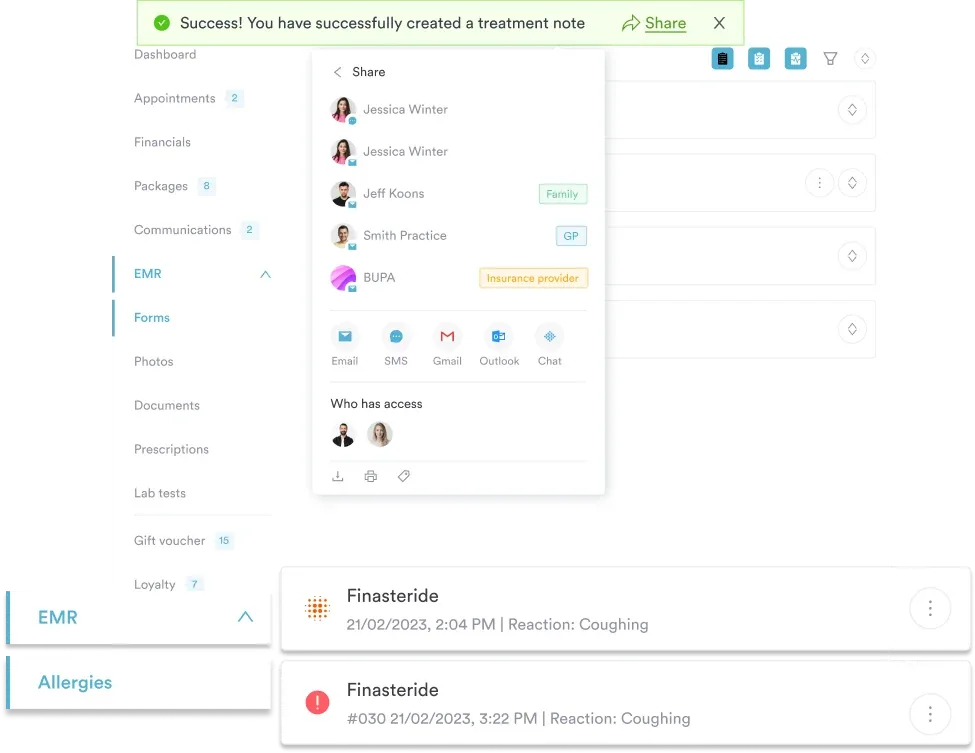

Pabau lets clinicians attach diagnosis codes like M79.0 directly in the clinical notes workflow, connecting the coding decision to your billing queue without copy-paste errors or system switching.

Accurate coding for rheumatism and soft tissue disorders depends on distinguishing M79.0 from closely related codes. The comparison below covers the most frequently confused alternatives and when each is the correct choice. For broader context on situational anxiety diagnosis coding alongside musculoskeletal presentations – common in chronic pain patients – review relevant comorbidity codes separately.
This is the section missing from most reference pages on M79.0. Coders who look up this code on icd10data or AAPC get the technical data – but not the practical denial patterns that emerge in real billing workflows. The four mistakes below are the ones that consistently generate claim rejections and audit flags.
This is the most common error. A provider documents “fibromyalgia” in the encounter note and the coder assigns M79.0 because it’s quicker to find. Payers with LCD (Local Coverage Determination) policies for fibromyalgia will cross-reference the documentation against the submitted code and deny the claim for under-specificity. Always assign the most specific code the documentation will support.
Submitting M79.0 alongside M12.3- (palindromic rheumatism) on the same claim is a direct Excludes1 violation. Clearinghouse edits may catch this before submission, but practices running older billing systems may not receive the edit until after the claim reaches the payer – by which point a corrected claim and appeal process adds weeks to reimbursement timelines.
An encounter note that lists “joint pain” without a provider diagnosis statement does not support M79.0. If the note never uses the word “rheumatism” or an equivalent documented diagnosis, the code lacks clinical justification. During a retrospective audit, the payer will request the medical record and recoup payment if the documentation doesn’t match. For practices managing accurate ICD-10 diagnostic coding across multiple conditions, consistent documentation habits matter more than any individual code choice. A Medicare claim is adjudicated against local coverage policy, which varies by contractor.
When M79.0 is coded alongside other diagnoses, sequencing rules apply. The condition chiefly responsible for the encounter should be listed first. Using M79.0 as the principal diagnosis when the visit was driven by a more specific condition – say, an exacerbation of rheumatoid arthritis – misrepresents the clinical reason for the encounter and may trigger a medical necessity review.
M79.0 is accepted by Medicare and most commercial payers as a valid billable diagnosis code. However, payer acceptance of the code does not guarantee reimbursement for the associated services – that depends on medical necessity documentation and the specific procedure codes billed alongside it.
Common procedure codes paired with M79.0 include E/M codes (99202-99215 for outpatient visits), physical therapy codes (97110, 97530), and musculoskeletal ultrasound codes where clinically indicated. Practices managing high volumes of musculoskeletal claims benefit from claims management software that connects diagnosis code selection directly to the claim submission workflow, reducing the transcription step between code lookup and billing queue.

Prior authorization requirements for services billed with M79.0 vary significantly by payer and plan. Do not treat any payer’s current policy as universal. Always verify individual plan requirements before scheduling services that may require pre-authorization for rheumatologic evaluations or extended physical therapy courses. For practices in regulated settings.
Check your clearinghouse edit reports for M79.0 claims monthly. Repeated denials on the same code often indicate a payer LCD change or a documentation pattern issue – catching it at the aggregate level is faster than chasing individual claim appeals.
The official ICD-10-CM coding guidelines from AAPC and the CMS ICD-10-CM tabular list provide the following guidance relevant to M79.0. These notes govern code selection and sequencing for every payer operating under HIPAA (Health Insurance Portability and Accountability Act) diagnosis code mandates.
Rheumatism unspecified is a real clinical scenario – and M79.0 exists for a reason. The problem is the frequency with which it appears on claims where a more specific code was available, or where documentation never supported the diagnosis in the first place. Both patterns lead to denials and, in audit scenarios, recoupment.
Pabau’s claims management software connects ICD-10 diagnosis code selection to the billing workflow directly at the point of documentation – reducing the gap between what’s in the clinical note and what’s on the claim. To see how Pabau handles coding documentation for musculoskeletal and soft tissue encounters, book a demo.

Coding a growth-plate fracture that set crooked? ICD-10 code S49.109P names an unspecified lower humerus growth-plate fracture that healed with malunion, and where practices go wrong coding it.
Coding a follow-up visit for a forearm bruise? ICD-10 code S50.10XD covers a follow-up visit for the same forearm contusion, marking aftercare during healing rather than the first visit.
Coding a follow-up visit for a healing radius fracture? ICD-10 code S52.001E covers a follow-up visit for an open right radius fracture that is healing on schedule.
ICD-10 Code M79.0 is used to document a diagnosis of rheumatism, unspecified – a rheumatic condition where the clinical evidence does not support a more specific ICD-10-CM code at the time of the encounter. It is valid for reimbursement purposes in the 2026 edition of ICD-10-CM (effective October 1, 2025).
Yes, M79.0 is a billable/specific ICD-10-CM code accepted for claim submission and reimbursement. It is valid for the current fiscal year 2026. Individual payer acceptance and medical necessity criteria may vary, so verify specific LCD and NCD policies before submitting.
M79.0 (Rheumatism, unspecified) applies when the provider diagnoses a rheumatic condition of unspecified type. M79.1 (Myalgia) applies when the primary complaint is muscle pain without a rheumatic diagnosis. They are sibling codes within the M79 category and should not be used interchangeably – select based on what the provider explicitly documented.
The Excludes1 notes for M79.0 include palindromic rheumatism (M12.3-), arthritis NOS (M13.9), and rheumatoid arthritis NOS (M06.9). These conditions cannot be coded on the same encounter as M79.0 – they require their own codes and represent clinically distinct diagnoses that must not be confused with rheumatism unspecified.
The medical record must include an explicit provider diagnosis statement using the term “rheumatism” or equivalent, a description of symptoms and duration, and documentation that more specific codes were considered but could not be assigned due to pending workup or inconclusive findings. A symptom list alone without a diagnostic statement does not support M79.0.
The parent category for M79.0 is M79, Other and unspecified soft tissue disorders, not elsewhere classified. M79 itself is a non-billable category code that organises all subcodes from M79.0 through M79.9. The broader chapter is M00-M99, Diseases of the musculoskeletal system and connective tissue.