ICD-10 code S61.201A: Open wound of left index finger without nail damage
ICD-10 code S61.201A covers a left index finger wound of unstated type ICD-10 co...

Last Updated: Oct 16, 2026
Billable Code Specific Code
K00.1 is the billable ICD-10-CM code for supernumerary teeth.
Let Pabau's smart automation suggest the right codes, reduce claim denials, and keep your practice compliant—effortlessly.
Automate repetitive tasks and focus on what matters most—your patients.
Reduce coding errors and ensure compliance with the latest regulations.
Clean claims, fewer denials, and faster reimbursements.
Powerful insights and reporting to help your practice thrive.
HIPAA compliant SOC 2 certified GDPR-compliant Trusted by 4,000+ clinics worldwide

ICD-10 Code K00.1 is a billable ICD-10-CM diagnosis code for supernumerary teeth, valid for 2026 reimbursement.
Inclusion terms cover mesiodens, distomolar, fourth molar, paramolar, and supplementary teeth.
K00.1 carries a Type 2 Excludes note for K01 (embedded and impacted teeth), meaning both codes can be reported together when clinically documented, but sequencing should follow payer-specific rules.
Pabau’s claims management software helps oral health practices attach K00.1 correctly to claims and avoid denials.
ICD-10 Code K00.1 is a billable, specific ICD-10-CM code for supernumerary teeth. It carries a valid status for fiscal year 2026 and can be used on claims submitted for reimbursement without requiring a more specific subcode.
The code sits within the K00-K14 block (Diseases of oral cavity and salivary glands) inside Chapter 11 (Diseases of the digestive system) of the CDC/NCHS ICD-10-CM classification. Its parent code is K00 (Disorders of tooth development and eruption), making it one of ten K00 subcodes covering everything from anodontia to teething syndrome.
| Field | Value |
|---|---|
| Code | K00.1 |
| Description | Supernumerary teeth |
| Billable | Yes |
| Chapter | Chapter 11: Diseases of the digestive system |
| Block | K00-K14: Diseases of oral cavity and salivary glands |
| Parent code | K00: Disorders of tooth development and eruption |
| Valid for 2026 | Yes |
| ICD-9-CM predecessor | 520.1 |
Because K00.1 is a specific, billable code rather than a category header, coders do not need to search for a more specific subcode. It reports the condition on its own.
In ICD-10-CM, every presentation of supernumerary teeth maps to K00.1. Clinically known as hyperdontia, these are extra teeth that develop beyond the normal complement of 20 primary or 32 permanent teeth. They affect roughly 1-4% of the general population, according to AAPC Codify coding references and published dental literature, and they are more common in the maxillary arch than the mandibular arch.
Clinically, supernumerary teeth present in several distinct forms. Coders should understand the subtypes because they appear directly in K00.1’s inclusion terms.
All four subtypes fall under ICD-10 Code K00.1. When the radiograph or operative note identifies the specific subtype, document it in the clinical record. It strengthens medical necessity even though the code does not separate them.
The official ICD-10-CM tabular list provides inclusion terms for K00.1 that coders should match against clinical documentation. These terms confirm the code applies and support clean claim filing through your claims management software.
If the treating clinician’s note uses any of these terms to describe the tooth anomaly, K00.1 is the appropriate code. A mesiodens, the most common presentation, is reported under K00.1 in ICD-10 like every other extra tooth. “Supernumerary tooth,” “extra tooth,” “accessory tooth,” and “duplication of teeth” are also acceptable clinical equivalents, and the condition itself is often labeled hyperdontia. Document exactly what appears in the radiograph report or operative note.
Always cross-reference inclusion terms against the provider’s operative note before submitting. A note that says ‘distomolar extraction’ maps directly to K00.1. A note that only says ‘extra tooth, impacted’ may need to be clarified before coding, since impaction maps to K01.1 instead.
A functional medicine platform connects each GI diagnosis to the nutrition and supplement plan addressing it.
Order matters when K00.1 appears alongside other oral cavity codes. Payers and groupers apply the CMS ICD-10-CM Official Guidelines to check code pairings, and a sequencing error can trigger a denial even when the individual codes are correct.
The K00 parent code carries a Type 2 Excludes note for K01 (Embedded and impacted teeth). A Type 2 Excludes note means the excluded condition is different enough from K00 that it may be coded separately when both conditions are present and documented. However, K01.1 (Impacted teeth) describes a tooth that is blocked from erupting by a physical block, while K00.1 describes the presence of a numerically extra tooth. They are different clinical conditions.
The coding risk: a supernumerary tooth that is also impacted. In that scenario, a clinician may document both conditions. Check whether the payer accepts both codes on the same claim or requires a single main diagnosis. Without clear documentation of both, do not assume both codes apply.
When K00.1 is the reason for the visit, sequence it as the main diagnosis. When supernumerary teeth are discovered by chance during treatment for another condition, sequence the primary condition first and K00.1 as a secondary code. For inpatient visits, follow Chapter 11 and UHDDS sequencing rules as published in the annual CMS guidelines.
Accurate coding for tooth development disorders requires familiarity with the full K00 subcode set and the adjacent K01 codes. The table below maps the K00 family so coders can locate the right code when documentation points to a different condition. For broader coding context, see adjacent ICD-10 coding guides for other organ systems.
| Code | Description | Relationship to K00.1 |
|---|---|---|
| K00.0 | Anodontia | Opposite end of the spectrum: absence of teeth |
| K00.1 | Supernumerary teeth | This code |
| K00.2 | Abnormalities of size and form of teeth | Shape/size issues, not extra teeth |
| K00.3 | Mottled teeth | Enamel discoloration from fluoride or other causes |
| K00.4 | Disturbances in tooth formation | Formation defects, not extra teeth |
| K00.5 | Hereditary disturbances in tooth structure, not elsewhere classified | Structural defects such as amelogenesis or dentinogenesis imperfecta, not extra teeth |
| K00.6 | Disturbances in tooth eruption | Eruption timing issues without extra teeth |
| K00.7 | Teething syndrome | Symptoms of tooth eruption in infants, not extra teeth |
| K00.8 | Other disorders of tooth development | Documented developmental disorders not listed above |
| K00.9 | Disorder of tooth development, unspecified | Use only when documentation does not support specificity |
| K01.0 | Embedded teeth | Tooth unerupted without mechanical obstruction |
| K01.1 | Impacted teeth | Tooth blocked by another tooth or bone, check Type 2 Excludes for K00 |
The most common coding confusion is between K00.1 and K01.1. Supernumerary teeth (K00.1) refers to the existence of an extra tooth. Impacted teeth (K01.1) refers to a tooth that cannot erupt due to physical obstruction. A supernumerary tooth can cause another tooth to become impacted, but that result codes to K01.1, not K00.1.

Pabau’s integrated claims management tools help oral health practices attach ICD-10 diagnosis codes accurately, track claim status, and reduce denials caused by incomplete documentation.

Payers require documentation that supports both the diagnosis and any intervention billed. For K00.1, the documentation package typically includes the items below. Using structured digital intake forms for dental patients ensures this information is captured at the point of care rather than assembled after the fact before a claim goes out.
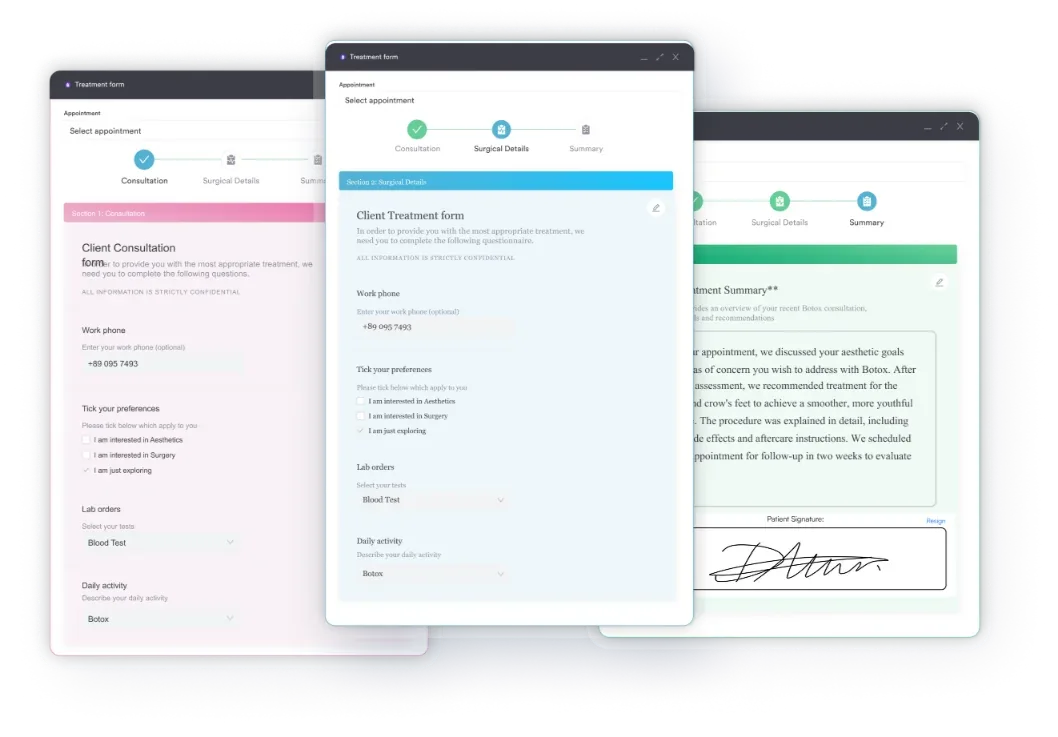
Pre-authorization requirements vary by payer. Some medical insurance plans cover extraction of supernumerary teeth when the procedure is medically necessary and documented as causing pathology or functional impairment. Dental plans may apply different coverage rules. Confirm payer-specific rules before filing.
Run a pre-approval check before scheduling extraction for supernumerary teeth. Some payers require documented evidence that the extra tooth is causing or likely to cause functional problems. A panoramic radiograph with the clinician’s written findings is usually the minimum required.
Oral health and dental practices that bill medical insurance for supernumerary tooth procedures need a clean workflow from diagnosis capture to claim submission. Mismatches between the clinical note and the billing system are where K00.1 claims most often fail.
Accurate patient records are the foundation. When the clinician records the supernumerary tooth in the patient’s chart with the correct subtype and radiographic findings, the coder has the evidence needed to apply K00.1 safely. Practices using paper records or separate billing systems often miss this link.
For practices managing multiple insurance types and both medical and dental claims.
Supernumerary teeth are an uncommon finding, but when they appear, getting ICD-10 Code K00.1 right determines whether the claim pays on the first pass. The code is billable, valid for 2026, and supported by clear inclusion terms covering mesiodens, distomolar, paramolar, and supplemental teeth.
The documentation requirements are straightforward when the clinical team captures the right details at the point of care. Pabau’s integrated claims management tools help oral health practices keep diagnosis coding, patient records, and claim submission connected so K00.1 encounters don’t stall in the billing queue. Book a demo to see how Pabau supports dental and oral health billing workflows.

Need a coding reference for anxiety without a dedicated code? Situational anxiety ICD-10 coding guide explains how clinicians select the most accurate code for situational anxiety.
Looking for procedure code guidance alongside your diagnosis codes? ADHD screening CPT codes shows how CPT and ICD-10 codes pair together in a complete billing workflow.
Coding corns and calluses without a laterality subcode? ICD-10 code L84 guide covers this single code for corns and callosities across plantar, heel, and other presentations.
ICD-10 Code K00.1 is the billable ICD-10-CM diagnosis code for supernumerary teeth, covering extra or accessory teeth including mesiodens, distomolar, paramolar, and supplemental teeth. It falls under Chapter 11 (Diseases of the digestive system) within the K00-K14 oral cavity block and is valid for 2026 claims.
Yes, K00.1 is a billable and specific ICD-10-CM code that can be used directly on claims for reimbursement purposes. No further subcode is required, and it has been valid without revision through fiscal year 2026 per the CMS ICD-10-CM code files.
K00.1 falls under Chapter 11 (Diseases of the digestive system) within the K00-K14 block for diseases of the oral cavity and salivary glands. Its parent category is K00 (Disorders of tooth development and eruption).
K00.1 codes for supernumerary teeth (the presence of numerically extra teeth), while K01.1 codes for impacted teeth (a tooth physically blocked from erupting by another tooth or bone). A supernumerary tooth can cause an adjacent tooth to become impacted, but the impaction itself is coded to K01.1, not K00.1. Check the K00 Type 2 Excludes note when both conditions are documented in the same encounter.
Supporting documents usually include radiographic evidence (panoramic or periapical X-ray showing the extra tooth), a clinical examination note identifying the subtype and location, a medical necessity narrative explaining why treatment is required, and a procedure note linking the treatment to the diagnosis. Payer pre-approval rules vary, especially when billing extraction to medical rather than dental insurance.
K00.1 is the billable diagnosis code for extra teeth, a condition clinically known as hyperdontia. It applies whether the finding is a single mesiodens or several accessory teeth, and no additional subcode is needed to submit it for reimbursement.
A mesiodens is reported under K00.1, the same entry used for distomolar, paramolar, and supplemental teeth. The tabular list groups every presentation of an extra tooth under one code, so the specific subtype belongs in the clinical note rather than in the diagnosis code.