ICD-10 code S61.201A: Open wound of left index finger without nail damage
ICD-10 code S61.201A covers a left index finger wound of unstated type ICD-10 co...

Last Updated: Oct 16, 2026
Billable Code Specific Code
C37 is the billable ICD-10-CM code for malignant neoplasm of thymus.
Let Pabau's smart automation suggest the right codes, reduce claim denials, and keep your practice compliant—effortlessly.
Automate repetitive tasks and focus on what matters most—your patients.
Reduce coding errors and ensure compliance with the latest regulations.
Clean claims, fewer denials, and faster reimbursements.
Powerful insights and reporting to help your practice thrive.
HIPAA compliant SOC 2 certified GDPR-compliant Trusted by 4,000+ clinics worldwide

ICD-10 Code C37 is the billable diagnosis code for malignant neoplasm of thymus, valid for the 2026 coding year.
C37 covers thymoma and thymic carcinoma. Its ICD-10-CM Type 1 Excludes note applies to malignant carcinoid tumor of the thymus (C7A.091), which is coded separately.
Histological confirmation from pathology is required before submitting C37; coding without it can trigger claim denials under Medicare and commercial payers.
Pabau’s claims management software helps oncology and thoracic surgery practices submit C37 claims accurately and track denial patterns across payers.
Code: C37
Full description: Malignant neoplasm of thymus
Code system: ICD-10-CM (International Classification of Diseases, 10th Revision, Clinical Modification)
Chapter: C00-D49 (Neoplasms)
Section: C30-C39 (Malignant neoplasms of respiratory and intrathoracic organs)
Billable: Yes
Valid for: 2026 ICD-10-CM coding year
The thymus is a lymphoid organ located in the anterior mediastinum, behind the sternum. It plays a central role in immune system development, primarily during childhood, and involutes progressively after puberty. Malignant neoplasms of the thymus are rare, accounting for fewer than 1% of all thoracic malignancies. According to the Centers for Medicare and Medicaid Services (CMS), ICD-10-CM Code C37 is classified under malignant neoplasms of respiratory and intrathoracic organs and is valid for use in all HIPAA-covered transactions.
C37 captures all histological subtypes of thymic malignancy under a single code. There are no subcategory codes beneath C37 in ICD-10-CM – the code itself is the most granular classification available.
Searches for a thymoma ICD-10 code, thymus cancer, or thymic carcinoma all resolve to C37. Several clinical terms index to C37 in the ICD-10-CM alphabetic index, and coders should recognize all of the following as valid synonyms when reviewing physician documentation.
When a pathology report uses any of these terms, C37 is the correct principal diagnosis code. Coders should not attempt to assign a more specific code unless additional ICD-10-CM specificity exists, which it does not for thymic malignancies under the current classification system. The CDC/NCHS ICD-10-CM official tool confirms C37 as the sole billable code in this category.
C37 carries one official ICD-10-CM Type 1 Excludes note: malignant carcinoid tumor of the thymus (C7A.091). A Type 1 Excludes note means the two codes are never used together – when a thymic tumor is a well-differentiated carcinoid (neuroendocrine) tumor, assign C7A.091 instead of C37. A separate but equally consequential rule is clinical rather than a coded excludes note: a malignancy is coded to C37 only when its origin is confirmed as the thymus, not the surrounding mediastinum.
Beyond that formal excludes note, a clinical site-of-origin distinction matters – although this one is coding guidance, not a coded ICD-10-CM excludes note. The thymus occupies the anterior mediastinum, but a malignancy is coded to C37 only when the origin is confirmed as the thymus gland itself. If imaging or pathology identifies the tumor as a primary mediastinal mass without confirmed thymic origin, the correct code is C38.1, C38.2, or C38.3 depending on location. Conflating these codes is one of the most common audit findings in thoracic oncology billing.
Coders should also be aware that ICD-O (International Classification of Diseases for Oncology) morphology codes are used in cancer registries and are distinct from ICD-10-CM. Do not substitute ICD-O codes in clinical billing records.
Always verify the site of origin in the pathology report before assigning C37. If the pathologist documents a ‘mediastinal mass, NOS’ without specifying the thymus, assign C38.3 instead. C37 requires confirmed thymic origin – imaging alone is insufficient for code selection.
C37 sits within a broader code hierarchy that coders and billers need to understand for accurate crosswalk and sequencing decisions. Below are the most relevant adjacent codes.
For practices tracking a range of complex ICD-10 diagnosis codes across their patient population – including post-surgical cardiac complications such as ICD-10 code I24.1 (Dressler’s syndrome) that can follow mediastinal or thymic surgery – it is worth noting that C37 does not have laterality – the thymus is a midline structure, so no left/right distinction applies. This is different from many other neoplasm codes in the C30-C39 range. The WHO ICD-10 browser provides the international classification context for C37 within the broader neoplasm chapter.
Once treatment is complete and the patient has no evidence of active disease, C37 no longer applies. The history of thymoma ICD-10 code is Z85.238 (personal history of other malignant neoplasm of thymus), used on surveillance and follow-up encounters after the malignancy resolves. Assign Z85.238 rather than C37 when the record documents a past thymic tumor with no current disease. For routine follow-up after completed cancer treatment, sequence Z08 (encounter for follow-up examination after completed treatment for malignant neoplasm) first, with Z85.238 added to show the specific history. Eligibility, referral status and time thresholds all sit inside the Medicare Benefits Schedule descriptor rather than the code itself.
Accurate C37 documentation goes beyond writing “thymoma” in the assessment. Payers increasingly require specific supporting elements before approving claims for thymic malignancy.
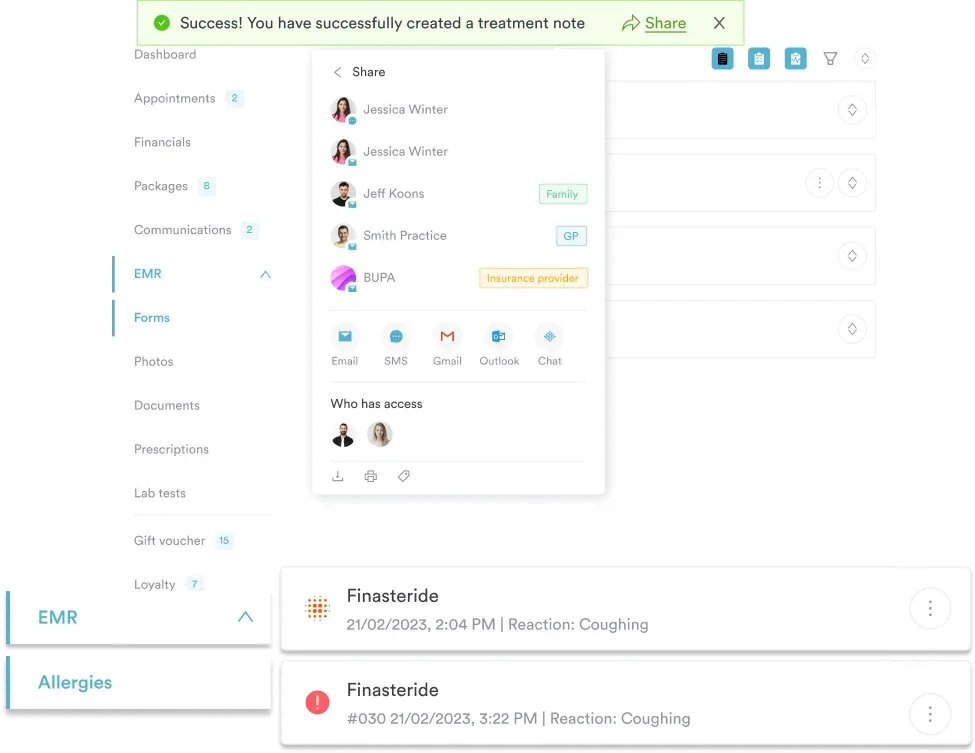
Well-structured medical documentation forms that prompt physicians for site of origin and histological subtype at the point of care reduce the downstream burden on coders. Practices using clinical records management tools can embed structured templates that capture these fields before the claim is generated, rather than chasing documentation after the fact.
For thoracic surgery encounters, the operative note must specify the procedure performed on the thymus (thymectomy, biopsy, or debulking) and confirm the intraoperative findings. This note, combined with the pathology report, forms the documentation backbone for C37 claims. Maintaining strong HIPAA compliance requirements around record retention and access is equally important for audit readiness.
When coding thymectomy encounters with C37, sequence the principal diagnosis as C37 and add the relevant surgical CPT code (e.g. CPT 60521 for a sternal split or transthoracic thymectomy without radical mediastinal dissection, or 60522 for the same approach with radical mediastinal dissection; CPT 60520 covers the transcervical approach). Document the medical necessity clearly in the operative note – payers frequently request medical records for these high-cost thoracic procedures.
Thymic malignancy claims are low-volume but high-scrutiny. Several billing factors distinguish C37 from more routine oncology coding.
Most commercial payers require prior authorization for thymectomy, chemotherapy, and radiation therapy associated with C37. The authorization request must include the histological confirmation, the staging documentation, and the proposed treatment plan. Submitting a prior authorization without pathology support is a common reason for initial denial.
UK private insurers also require prior authorization, since they treat thymectomy as major elective surgery. Those insurers code procedures from the CCSD schedule rather than CPT. Where histology shows a malignant thymoma, C37 is the diagnosis listed against B1800 for an open thymectomy.
Medicare covers thymectomy under its surgical benefit when medical necessity is established. Local Coverage Determinations (LCDs) vary by Medicare Administrative Contractor (MAC) jurisdiction, so practices should verify coverage specifics with their MAC before submitting. Using claims management software with payer-rule logic can flag missing authorization requirements before submission rather than after denial.

C37 is typically sequenced as the principal diagnosis for inpatient thymic surgery admissions and as the first-listed diagnosis for outpatient oncology encounters. Secondary codes add clinical detail and support medical necessity.
The association between thymoma and myasthenia gravis deserves specific attention. Thymoma is present in approximately 15% of myasthenia gravis cases, and myasthenia gravis occurs in roughly 30-50% of thymoma patients. When both conditions are documented and treated in the same encounter, code both C37 and the appropriate G70 code. Payers accept dual coding here – do not omit the neurological condition.
Practices managing complex oncology billing across ICD-10-CM diagnosis coding for multiple specialties — from endocrine tumours like malignant neoplasm of the thyroid gland (C73) to gynaecological cancers such as malignant neoplasm of the vagina (C52) — benefit from structured workflows that enforce sequencing rules at the point of charge capture. Strong compliance management processes reduce audit exposure when payers request supporting records for these claims.

For practices concerned about patient data security in oncology records, encrypted documentation and access controls are particularly important given the sensitivity of cancer diagnoses.

Pabau’s claims management software helps oncology and thoracic surgery practices submit accurate ICD-10 claims, track denial patterns, and maintain audit-ready documentation across every payer.

ICD-10-CM does not incorporate clinical staging into the C37 code structure. The code applies regardless of whether the thymoma is encapsulated or invasive, early-stage or metastatic. Staging is captured through documentation in the record and in cancer registry data using ICD-O and the Masaoka-Koga classification, but it does not change the ICD-10-CM code assignment.
The Masaoka-Koga system stages thymoma from Stage I (encapsulated, no capsular invasion) through Stage IV (pleural or pericardial dissemination, or hematogenous metastasis). For billing purposes, all stages code to C37. For medical necessity arguments with payers, however, staging documentation in the clinical notes significantly strengthens the authorization request for surgical resection or multimodal treatment.
The AAPC Codify ICD-10-CM resource confirms that C37 carries no laterality designator and no severity qualifier in the current code set. Any specificity beyond “malignant neoplasm of thymus” must be documented in the clinical record rather than reflected in a more granular ICD-10-CM code, because no such code exists. Practices building ICD-10-CM coding reference workflows across specialties .
The WHO Classification of Tumors of the Thymus recognizes thymoma subtypes (Types A, AB, B1, B2, B3), thymic carcinoma, and thymic neuroendocrine tumors as distinct entities. Thymoma and thymic carcinoma map to C37 in ICD-10-CM, while well-differentiated thymic neuroendocrine (carcinoid) tumors are coded to C7A.091 under C37’s Type 1 Excludes note. Coders sometimes encounter confusion when a pathology report provides a WHO subtype designation – this is correct clinical specificity but does not change the ICD-10-CM code.
Thymic carcinoma (WHO Type C, now reclassified simply as thymic carcinoma) is biologically more aggressive than thymoma but is coded identically to C37. When a pathology report specifies thymic carcinoma versus thymoma, the distinction is clinically meaningful for treatment planning and prognosis but carries no ICD-10-CM coding difference.
ICD-10 Code C37 is straightforward in one sense – it is the only billable code for malignant neoplasm of thymus. The complexity lies in the documentation requirements, the Type 1 Excludes note for thymic carcinoid tumors (C7A.091), the clinical boundary with mediastinal codes, and the payer-specific prior authorization demands that accompany these rare but high-cost cases.
Pabau’s claims management software gives oncology and thoracic surgery practices the tools to capture structured documentation, enforce sequencing rules at charge entry, and track denial patterns before they compound into revenue cycle problems. To see how Pabau supports accurate ICD-10 coding workflows, book a demo with the team.

Need a healed quadriceps injury code? Quadriceps laceration sequela coding covers S76.129S for a quadriceps laceration sequela, used once the wound has healed.
Coding an unspecified thigh muscle injury? Thigh muscle injury coding guide covers S76.909A for an unspecified thigh muscle injury, noting hip injuries code separately to S76.0.
Need the full I61.x code series? Intraparenchymal hemorrhage coding guide covers the I61.x code series, with documentation tips and coding best practices for practices.
ICD-10 Code C37 is the billable ICD-10-CM diagnosis code for malignant neoplasm of thymus. It covers primary malignant tumors of the thymus gland such as thymoma and thymic carcinoma and is valid for the 2026 coding year. Well-differentiated thymic carcinoid (neuroendocrine) tumors are the exception, coded to C7A.091 rather than C37.
Yes, C37 is a fully billable ICD-10-CM code. It requires no additional subcategory code and can be submitted directly on claims for malignant thymic conditions when supported by pathological documentation.
Both thymoma and thymic carcinoma are coded to C37 in ICD-10-CM. The distinction is clinically important for treatment and prognosis, but the current code set does not differentiate between them. The histological subtype should be documented in the record even though it does not change the code.
C37 carries one Type 1 Excludes note: malignant carcinoid tumor of the thymus (C7A.091), which must be coded instead of C37 for well-differentiated thymic carcinoid (neuroendocrine) tumors. Separately – and this is clinical guidance rather than a coded excludes note – a primary mediastinal malignancy without confirmed thymic origin is coded to C38.1 (anterior mediastinum), C38.2 (posterior mediastinum), or C38.3 (mediastinum, part unspecified) rather than C37.
Yes, when myasthenia gravis is documented and treated in the same encounter as thymoma, both conditions should be coded. Assign C37 as the principal diagnosis and the appropriate G70 code (e.g. G70.01 for myasthenia gravis with acute exacerbation) as a secondary code. This dual coding is accepted by payers and reflects the clinical reality of this paraneoplastic association.
No. All stages of thymic malignancy, from encapsulated thymoma (Masaoka-Koga Stage I) to metastatic disease (Stage IV), are coded to C37 regardless of extent. Clinical staging information belongs in the medical record and cancer registry but does not alter the ICD-10-CM code selection.
A thymic cyst is a benign lesion, so it is never coded to C37, which applies only to malignant thymic tumors. Benign neoplasms of the thymus are coded to D15.0, and a congenital cervical thymic cyst is classified under the congenital anomaly chapter rather than the neoplasm chapter. Confirm the pathology first, because assigning C37 to a benign cyst is a common source of claim denials.
Thymectomy is a surgical procedure, so it is billed with a CPT code (60520, 60521, or 60522) rather than an ICD-10-CM diagnosis code. The ICD-10 code on a thymectomy claim comes from the diagnosis that justifies surgery, usually C37 for a malignant thymic tumor. After the thymus is removed and the patient is disease-free, use the personal history code Z85.238 on follow-up encounters instead of C37.