Fertility clinic marketing: Strategies that attract & convert patients
Fertility clinic marketing is how a fertility practice attracts, educates, and c...

Last Updated: Oct 14, 2026

Tebra does not publish fixed pricing tiers. It uses a custom-quote model, with Tebra’s own pricing overview citing $49 to $799 per provider per month and community-reported full-bundle quotes landing around $149 to $499 per provider per month depending on the modules selected.
Canceling any single module ends the bundled discount permanently. Tebra’s pricing policy states that the remaining modules revert to their full individual price.
Tebra AI Note Generation is a separate add-on priced per provider, at either $99 per month for up to 400 notes ($0.25 per note over 400) or a flat $0.99 per note.
Beyond the subscription, Tebra charges one-time and add-on fees: about $75 per provider for EPCS setup, $500 per facility plus around $50 per user per year for PDMP integration, and a $150 monthly minimum for accounts with no active provider.
Payment processing runs 2.75% plus $0.30 on card-present transactions and 3.25% plus $0.30 on card-not-present transactions, on top of the subscription.
Most independent practices researching how much Tebra costs per month hit the same wall: a pricing page that says “get a custom quote,” with no published tiers and no way to estimate the total without a sales call. This guide breaks down what Tebra actually costs, using Tebra’s own pricing policy and community-reported figures.
It covers the module structure, the per-provider math, the AI and payment-processing fees, and the one-time charges that never appear in the headline quote. The closing section shows how Pabau, practice management software with public, flat-rate pricing, stacks up against a Tebra quote, so you have a transparent benchmark to weigh it against.
Tebra is a cloud-based EHR and practice management platform built for US independent medical practices. It was formed when Kareo, a medical billing company, merged with PatientPop, a patient-engagement and marketing platform.
That heritage shapes both the product and the pricing: the billing and revenue cycle tools come from Kareo, the online-reputation and patient-acquisition tools come from PatientPop, and the two are sold as bundled modules. Tebra is aimed at primary care, behavioral health, and small physician-led specialty practices billing commercial insurance and Medicare. Specialty and multi-specialty groups weighing US EHRs often compare ModMed vs eClinicalWorks too.
Tebra does not publish a fixed pricing table. The platform is built around three core modules: Tebra Clinical (EHR and documentation), Tebra Billing (revenue cycle management), and Tebra Engage (patient engagement and marketing, inherited from PatientPop).
Each module carries a per-provider monthly fee, and a discount applies only when they are bundled. Most practices buy one of two bundles: Practice Essentials, which includes billing, clinical EHR, and telehealth, or Practice Automation, which adds the patient engagement and experience tools.
So how much is Tebra per month? It depends on the modules and your provider count, and the published ranges vary by source. Tebra’s own pricing overview cites $49 to $799 per provider per month across single solutions and full bundles.
Tebra’s billing cost guide puts the integrated platform at $99 to $399 per provider per month. Community discussions on Reddit about Tebra pricing report higher real-world quotes, with one PMHNP user citing $499 per month for the full bundle. Because Tebra pricing is set through a custom quote, these figures are indicative and vary by practice size, specialty, and module mix.
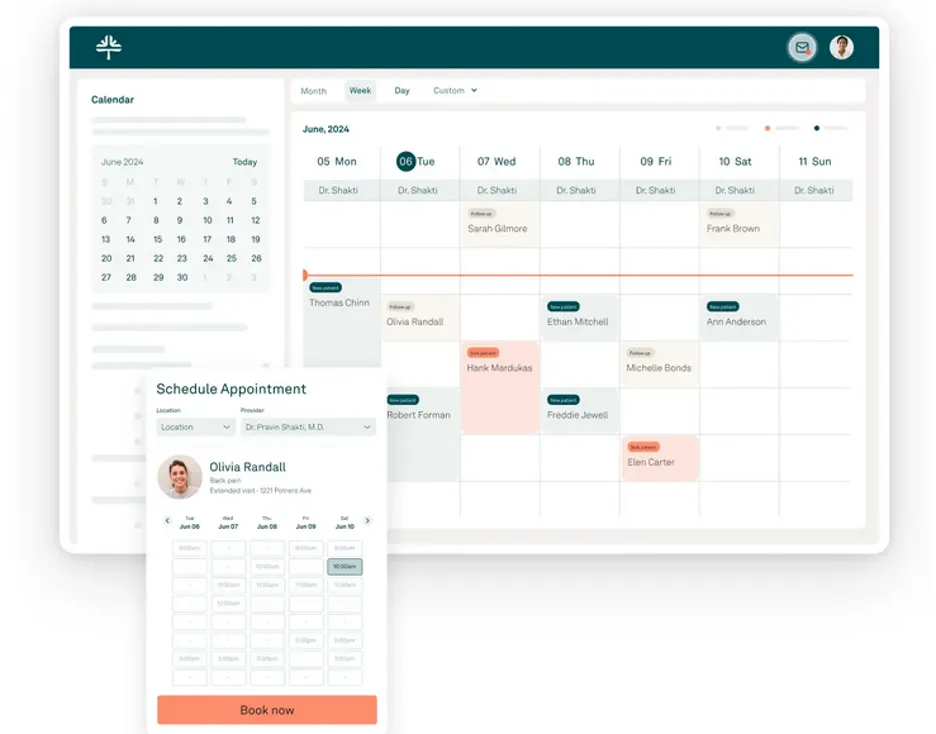
The detail that catches buyers out is the module-reversion policy. Per Tebra’s official pricing policy, if any module is canceled at any time, all remaining modules revert to their full individual price.
The bundled discount disappears permanently once you remove any component, not temporarily. For a growing practice that might want to drop a module during a slower period or as workflows change, this creates a financial lock-in worth understanding before signing.
Tebra also runs a low-volume pricing track. Providers billing 100 claims or fewer per provider per month can qualify for per-claim pricing rather than a full subscription.
On legacy plans, that works out to around $0.99 per electronic claim per provider after the first 50 claims each month. Exceed 100 claims per provider per month for three consecutive months, though, and the account converts to standard subscription pricing.
Tebra enforces a $150 monthly minimum on accounts that have not activated a provider, so there is a cost floor even during setup or a quiet stretch. Licenses are per prescribing provider (one MD, DO, NP, or PA per subscription), while non-clinical staff can use the system at no extra per-seat cost.
For a provider active across more than one practice on a single account, Tebra charges one fee at the highest applicable module level, so a part-time clinician working across two locations still counts as one full subscription at the most expensive tier.
That structure means your Tebra cost per month scales with providers and modules rather than a flat per-seat rate. Accounts suspended for late payment also face a $49 reactivation fee.
Beyond monthly subscription fees, Tebra’s payment processing carries its own rate structure. Card-present transactions cost 2.75% plus $0.30 per transaction. Card-not-present transactions, such as online payments, stored cards, and online booking deposits, cost 3.25% plus $0.30. These fees are in addition to the subscription and compound for practices processing high patient-payment volumes.
For example, a practice processing $50,000 per month in card-not-present transactions, assuming roughly 500 transactions averaging $100 each, pays about $1,625 in percentage fees (3.25%) plus about $150 in per-transaction fees ($0.30 x 500), for a combined total of roughly $1,775 in processing fees on top of any module subscription.
Two charges sit outside the monthly subscription and are easy to overlook in a quote. EPCS setup, the identity proofing and token provisioning required to e-prescribe controlled substances, is a one-time fee of roughly $75 per provider.
PDMP integration, which checks the state prescription-drug-monitoring database before prescribing, is $500 one-time per facility plus about $50 per user per year, passed through from the data provider. Practices on Tebra’s Practice Operations plans may also see a telecom messaging compliance fee of $25 per practice ID plus $94.89 per provider per month, capped at $15,000 per year.
None of these appear in the headline per-provider figure, so ask for them in writing before you commit.
The table below summarizes Tebra’s commercial terms based on Tebra’s published pricing policy and reported customer quotes.
Billing is where Tebra medical billing software has its deepest roots. The platform grew out of Kareo, a medical billing system built specifically for US independent practices, before the PatientPop merger created Tebra.
The Tebra Billing module handles claim scrubbing, eligibility checks, ERA posting, and denial management within one end-to-end revenue cycle workflow. For physician-led practices billing commercial insurance and Medicare, this RCM infrastructure is genuinely strong, provided clinical notes capture medical decision making clearly enough to support each claim.
Tebra billing is optimized for the multi-payer US insurance environment, with automated claim scrubbing and denial tracking built into the core workflow.
Customers in primary care, specialty medicine, and behavioral health frequently cite the clearinghouse connections and denial-management workflows as the main reason they stay on Tebra rather than switch to lighter, lower-cost EHRs. For high-claim-volume practices, this depth offsets the opaque pricing for many buyers. Our Tebra vs DrChrono comparison weighs that billing depth against an iPad-native alternative.
Tebra’s scheduling capabilities come bundled with patient engagement features inherited from the PatientPop acquisition. The combined platform supports online booking, automated appointment reminders, reputation management, digital intake forms, and patient acquisition workflows including local SEO support and review generation.
For independent practices focused on growing their patient panel and managing online reputation, this integration has genuine operational value beyond what most EHRs offer.
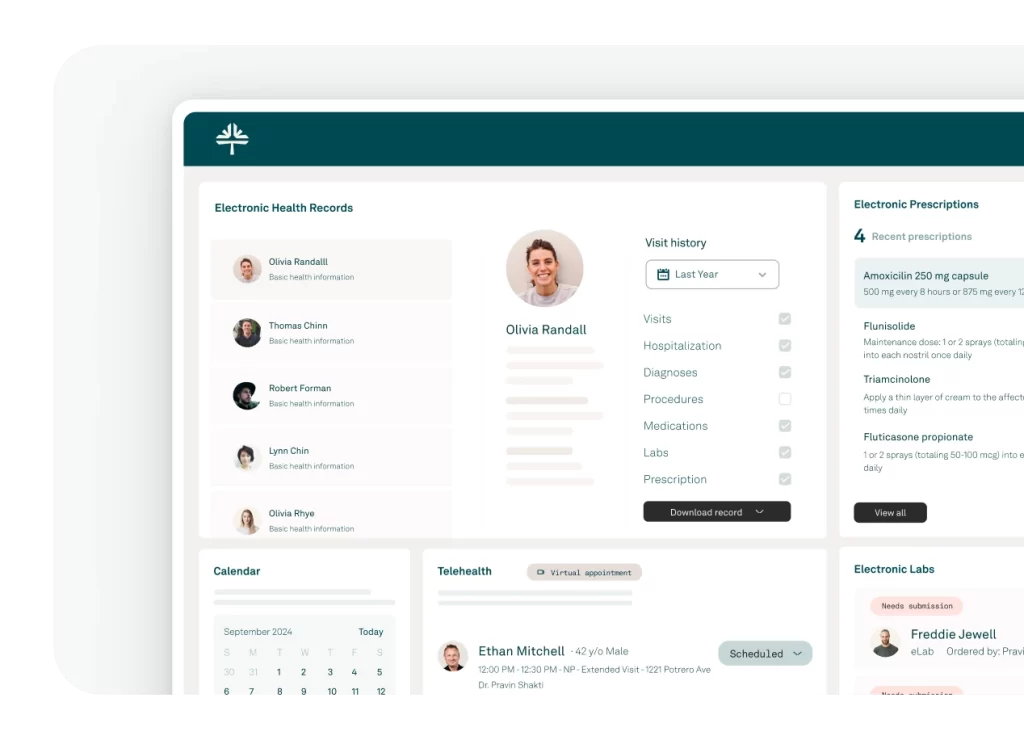
The Engage module sits in Tebra’s higher pricing tiers and is generally part of the full bundle rather than a standalone purchase. This is one reason reported quotes for the full bundle land near $499 per provider per month: practices buying Tebra often want the Engage module specifically, and the bundled pricing is the most cost-effective way to access it.
For practices that already have a separate marketing or reputation management provider, Tebra Engage may be redundant. Practices weighing standalone tools can compare Clientbook vs Podium, which contrasts clienteling depth against review generation and multi-channel messaging.
AI-assisted clinical documentation is now a standard expectation for EHR platforms. Tebra’s AI Note Generation is a separately priced add-on, not included in any base subscription tier. Per Tebra’s official pricing policy (Section II.F), it offers two alternative pricing options per provider, not a stacked combination:
The right option depends on monthly note volume per provider. A clinician producing roughly 20 notes per day (about 440 notes a month) on the subscription rate would pay $99 plus around $10 in overage on 40 notes, totaling about $109 a month.
The same volume on the per-transaction rate would run roughly $436 a month. High-volume documenters benefit clearly from the subscription option, while lighter users with fewer than 100 notes a month are better served by pay-as-you-go.
The structural point worth understanding before buying: Tebra’s AI documentation is metered, even on the subscription. Practices that document heavily across multiple providers will see this line item compound, and forecasting it accurately means knowing realistic per-provider note volumes ahead of the contract.
According to Capterra reviewers, Tebra holds a 3.9 out of 5 rating from over 1,300 reviews. Positive Tebra reviews focus on billing workflow depth, the mobile app, and the startup checklist resources for new practices.
Critical reviews and complaints cluster around pricing transparency, support responsiveness during implementation, and the per-note AI cost structure. On Reddit, several users in the psychiatric and primary care space report full-bundle quotes well above entry-level expectations, including the PMHNP user who cited a $499 per month quote for the complete package.
Request a 12-month total cost breakdown when evaluating any Tebra quote. Ask for: base subscription, per-provider fees, AI note add-on costs, payment processing rates, one-time EPCS and PDMP fees, and any minimum monthly account fees. Also ask explicitly what happens to your module pricing if you need to cancel one module in month six. The answer to that question will tell you more about the real cost than the headline quote.
Where Tebra quotes you privately and prices each module separately, practice management software like Pabau publishes a flat monthly price that already includes every feature. Pabau’s plans start from around $104 per month (£118) and scale on the number of users and locations, not on which features you unlock, so every subscription gets the full platform.
There is no bundle to break: changing your plan does not reprice the rest of your account the way canceling a Tebra module does.
AI documentation is the clearest contrast. Pabau Scribe, our AI scribe, is built into the platform rather than sold as a separate per-note metered add-on like Tebra’s AI Note Generation. You can also estimate your total from the public Pabau pricing page before talking to anyone, instead of booking a call to get a number.
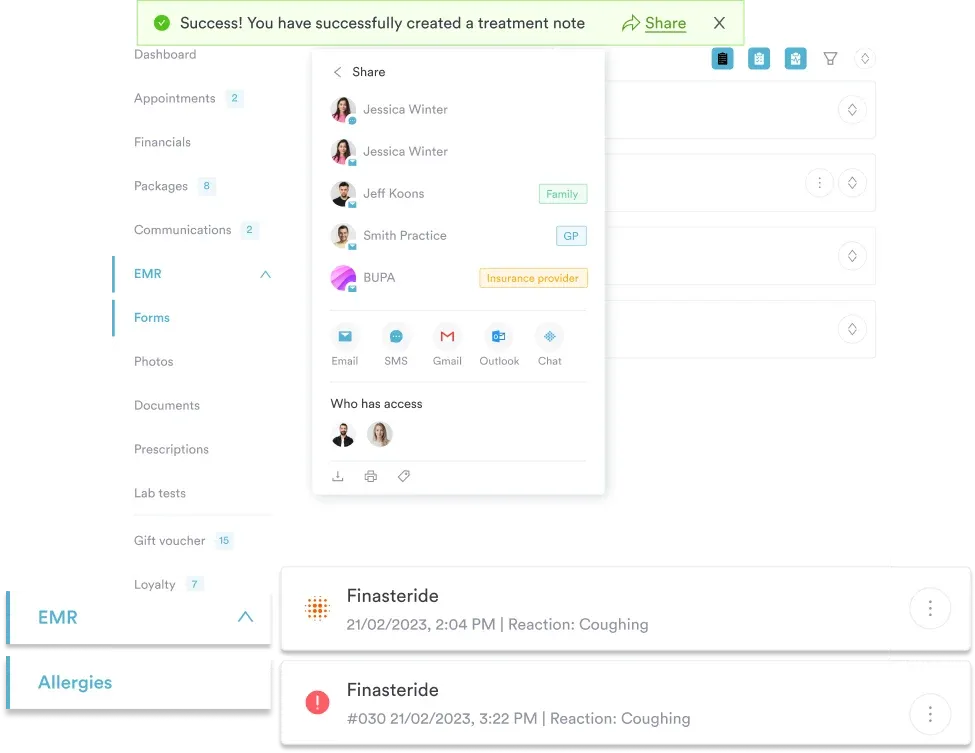
The trade-off is focus. Tebra’s Kareo-derived billing is built for high-volume US insurance claims, so a practice whose revenue runs mainly through commercial payers and Medicare should weigh that RCM depth carefully. Pabau is built around private-pay practice operations across aesthetics, wellness, and multi-specialty practices, wellness, and multi-specialty practices, with online booking, treatment records, payments, and marketing included in one subscription.

Book a demo to see how Pabau’s all-in-one platform handles clinical documentation, billing, and scheduling with no per-note fees and no module-reversion surprises.

Tebra pricing rewards a specific buyer: a US physician-led practice that needs deep insurance billing and can work within a custom-quote model with module bundling. For that practice, the Kareo-derived RCM infrastructure and PatientPop growth tools earn their cost.
The friction is everything around the headline number, from the opaque quote and the metered AI notes to the one-time EPCS and PDMP fees and a module-reversion policy that limits flexibility later.
Before you sign, get a 12-month total in writing, then put it next to a published-pricing option like Pabau so you know exactly what a transparent number looks like. Book a demo with Pabau to compare a flat, all-features-included price against the Tebra quote you are weighing up.

Comparing salon and spa software platforms? Meevo vs Vagaro compares Meevo’s enterprise features against Vagaro’s affordable, fast setup for salon and spa teams.
Need an EHR built for your specialty? ModMed vs DrChrono compares ModMed’s built-in workflows and RCM for surgical specialties against DrChrono’s iPad-native flexibility.
Evaluating billing and claims workflows? Claims Management Software shows how Pabau handles integrated billing without per-module pricing penalties.
Tebra does not publish fixed pricing tiers. Tebra’s own pricing overview cites $49 to $799 per provider per month, while community-reported quotes put the full bundle around $149 to $499 per provider per month depending on the modules selected. Individual modules may start lower. All figures require verification through a direct Tebra quote.
Yes. Tebra’s pricing is structured on a per-provider basis, and licenses are per prescribing provider (one MD, DO, NP, or PA per subscription). Non-clinical staff can use the system at no extra per-seat cost. For a provider active across multiple practices on one account, Tebra charges a single fee at the highest applicable module level.
According to Tebra’s official pricing policy, canceling any single module at any time causes all remaining modules to revert to their full individual prices. The bundled discount is lost permanently, not temporarily. This is a significant lock-in consideration for practices that may need to adjust their software stack over time.
Per Tebra’s pricing policy (Section II.F), AI Note Generation is offered under one of two alternative options per provider: a subscription rate of $99 per month including up to 400 notes ($0.25 per note over 400), or a per-transaction rate of a flat $0.99 per note. High-volume documenters benefit from the subscription, while lighter users may prefer pay-as-you-go. It is not included in any base subscription tier.
Beyond the monthly subscription, Tebra charges roughly $75 per provider for one-time EPCS setup, $500 per facility plus about $50 per user per year for PDMP integration, and a $150 monthly minimum for accounts with no active provider. Payment processing (2.75% + $0.30 card-present) and metered AI notes are billed separately. Ask for all of these in a written 12-month cost breakdown.
Tebra is built primarily for the US independent practice market. Its billing and RCM infrastructure is designed around US insurance clearinghouses, CPT coding, and Medicare and Medicaid workflows. Practices outside the US are better served by platforms built for international private-pay models, such as Pabau, which supports UK, EU, and international practice operations.