









Scalp regions explained: Layers, nerves, and donor zones
The four scalp regions and five layers decide which follicles survive, which ves...

Last Updated: August 11, 2026


Since June 2016, Bocouture’s MHRA licence has covered three upper-facial areas together or individually: glabellar frown lines, horizontal forehead lines, and crow’s feet, in adults under 65.
Genuinely off-label uses are bunny lines, gummy smile, and masseter (jawline) treatment. Your consent form needs to flag these separately from the licensed areas.
Reconstitute a 50-unit Bocouture vial with 1.25 mL of preservative-free 0.9% saline for a concentration of 40 units per mL (4 units per 0.1 mL); a 100-unit vial takes 2.5 mL for the same concentration.
A compliant Bocouture consent form covers patient history, contraindication screening, risk disclosure, off-label acknowledgement where relevant, and prescriber sign-off, in line with JCCP and Save Face standards.
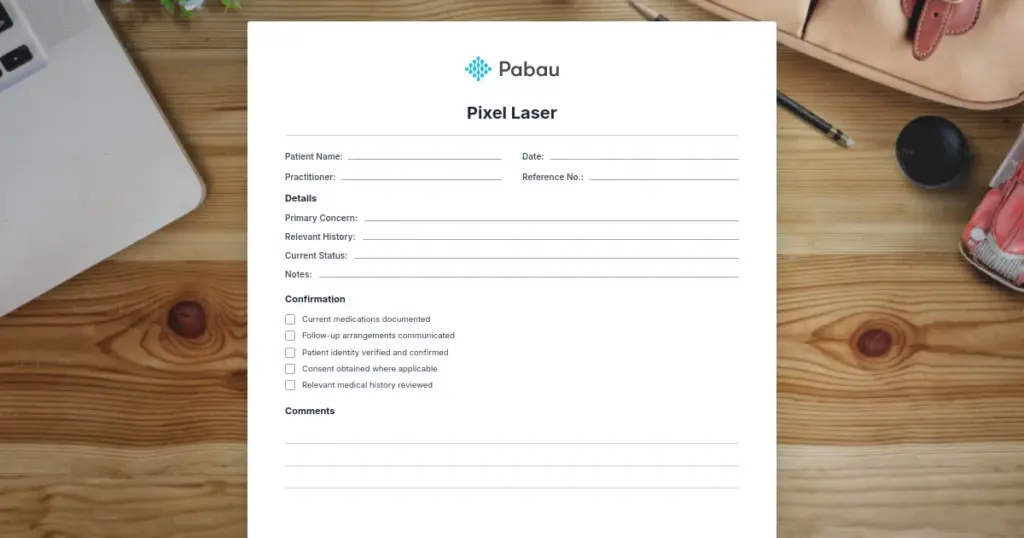
Grab a starting template you can adapt with your practice’s branding, prescriber details, and Bocouture-specific risk disclosures. Use the guidance below to build out the full consent record, from contraindication screening to the sign-off itself.
Download templateA Bocouture consent form only works if it matches what the product is actually licensed for, and that trips up more practices than you’d expect. Bocouture’s MHRA licence has covered three upper-facial areas since 2016, not just the frown lines between the brows, so a form that still treats forehead lines and crow’s feet as “off-label” is already out of date before a patient signs it.
Get the licensing wrong on paper, and everything downstream gets shakier: your risk disclosure, your off-label acknowledgement, even your confidence walking into a CQC inspection. Here’s what a properly built Bocouture consent form needs, area by area.
Bocouture is a purified botulinum toxin type A, made by Merz Aesthetics. Unlike some competing products, it contains no complexing proteins, only the active neurotoxin itself. That purity may lower the theoretical risk of antibody formation over repeated treatments, though the clinical evidence on this point is still mixed.
In the UK, Bocouture’s MHRA licence covers upper facial lines: glabellar frown lines (the “11 lines” between the eyebrows), horizontal forehead lines, and crow’s feet, treatable together or individually. That’s been the case since June 2016, when the MHRA expanded the original glabellar-only licence to all three areas for adults under 65. It’s a prescription-only medicine (POM), so a qualified prescriber has to sign off before a single unit goes near the patient.
It’s a common assumption, and an outdated one. Before 2016, the frown-line indication was the only one on the label, and some older training material still repeats it. Today, forehead lines and crow’s feet sit on the same licence as glabellar lines. Treating all three areas isn’t off-label use, it’s on-label practice, as long as the patient fits the licensed population and each area is documented on the consent form.
Skin practices administering Bocouture need to keep full consent documentation, prescriber records, and incident logs to satisfy CQC inspection standards and MHRA adverse-event reporting obligations.
Bocouture needs reconstituting immediately before use, and the process itself is simple. It only works, though, if the numbers are right. Get the dilution wrong and you either under-dose, which gives a disappointing result, or over-dose, which means more diffusion and more side effects.
The mistakes that come up again and again: using bacteriostatic saline instead of preservative-free, shaking the vial instead of rotating it gently, and storing reconstituted solution past 24 hours.
One more worth flagging: the 50 units is the freeze-dried content of the vial, and it doesn’t change with reconstitution volume. The volume you add only sets the concentration you’re injecting, not the total dose in the vial.
Screening for contraindications is where a consent conversation should start, not end. Per the Bocouture SmPC, the list of absolute contraindications is actually short. Everything else is a relative caution, meaning the prescriber weighs it up rather than automatically refusing treatment.
Practice management software like Pabau can hold a structured, date-stamped contraindication questionnaire in the patient’s file, so the prescriber sees flagged answers before they even start the consultation, rather than trying to remember what was said last visit.
Good aftercare advice is short and specific. Patients remember three or four instructions, not fifteen, so keep the list tight and back it up with a follow-up message they can refer to later.
Mild redness, small bumps, or slight bruising at injection sites are common and usually settle within a day or two. Results build gradually and are typically visible from day three, reaching their full effect by around two weeks. Advise patients to contact the practice if they notice drooping eyelids, difficulty swallowing, blurred vision, or any breathing difficulty, since these need prompt clinical review.
A simple, consistent example is to check in the same day to confirm the patient got home comfortably, again around day three to see how the treated area is settling, and once more around day ten to capture early results and flag anything that needs a review appointment. That’s just one workable cadence, not a fixed rule. Software like Pabau lets a practice set up its own campaign timing for these check-ins, so the schedule matches how that practice actually works rather than a generic default.
Any UK practice administering Bocouture needs documented, informed consent before treatment. That covers skin practices, medical spas, dermatology practices, and cosmetic clinics alike. Even a returning Botox patient needs a fresh Bocouture-specific form, since it’s a different product with its own licence, dosing, and risk profile.
The prescriber, whether that’s a doctor, nurse prescriber, or another independent prescriber within their scope of practice, has to review and sign off before treatment, confirming they’ve counselled the patient on risks and benefits.
Once signed, the form joins the permanent patient record, and it’s the first thing a CQC inspector, an insurer, or an adverse-event review will ask for.
A form is only as good as what’s on it. Regulators don’t specify an exact template, but JCCP, Save Face, and CQC good-practice guidance all point to the same core fields. Build your form around these, and you’ll be covering the ground a reviewer expects to see.
None of this needs to be complicated. It just needs to be complete, consistent, and easy to produce on request.
Picture a returning patient booking her first Bocouture treatment after two years of Botox elsewhere. She assumes the consent conversation will be identical. It mostly is, but not entirely.
The nurse prescriber starts with history: no neuromuscular conditions, not pregnant, no anticoagulants, one seasonal allergy noted and flagged for reference. Nothing here is an absolute contraindication, so the conversation moves to the treatment itself. The patient wants her frown lines and forehead treated together. Both are licensed indications, so that part of the form is straightforward, dose, area, expected timeline, and the standard risks.
Then she mentions she’d also like her crow’s feet softened. Also licensed, so it’s added to the same consent line, no separate off-label acknowledgement required. Later in the appointment she asks about a slight asymmetry she gets when she smiles, wondering if Bocouture could help.
That would mean treating a perioral area outside the three licensed indications, so the prescriber flags it clearly as off-label, explains why the evidence base is thinner there, and has her initial a separate line before agreeing to treat it. That’s the difference between a compliant form and a rushed one, and it’s a distinction worth training every injector to spot.
A structured form makes sure no step gets missed. It shows due diligence around patient safety, protects the practice legally by documenting an informed decision, and leaves a clear trail if a complaint or an audit ever comes up.
Dosing is always individualized to the patient’s anatomy and goals. The areas below split cleanly into what’s MHRA-licensed and what still needs practitioner judgement plus explicit off-label consent.
Key point: glabellar lines, forehead lines, and crow’s feet are all MHRA-licensed. Bunny lines, gummy smile, and masseter treatment remain off-label and need to be documented and acknowledged separately on the consent form. Echo AI, our AI scribe, won’t distinguish licensed from off-label areas for you. It does flag a patient’s recorded allergies and contraindications before a prescription is issued. It also auto-generates a structured clinical note from the consultation, so the documentation is there when you need it.
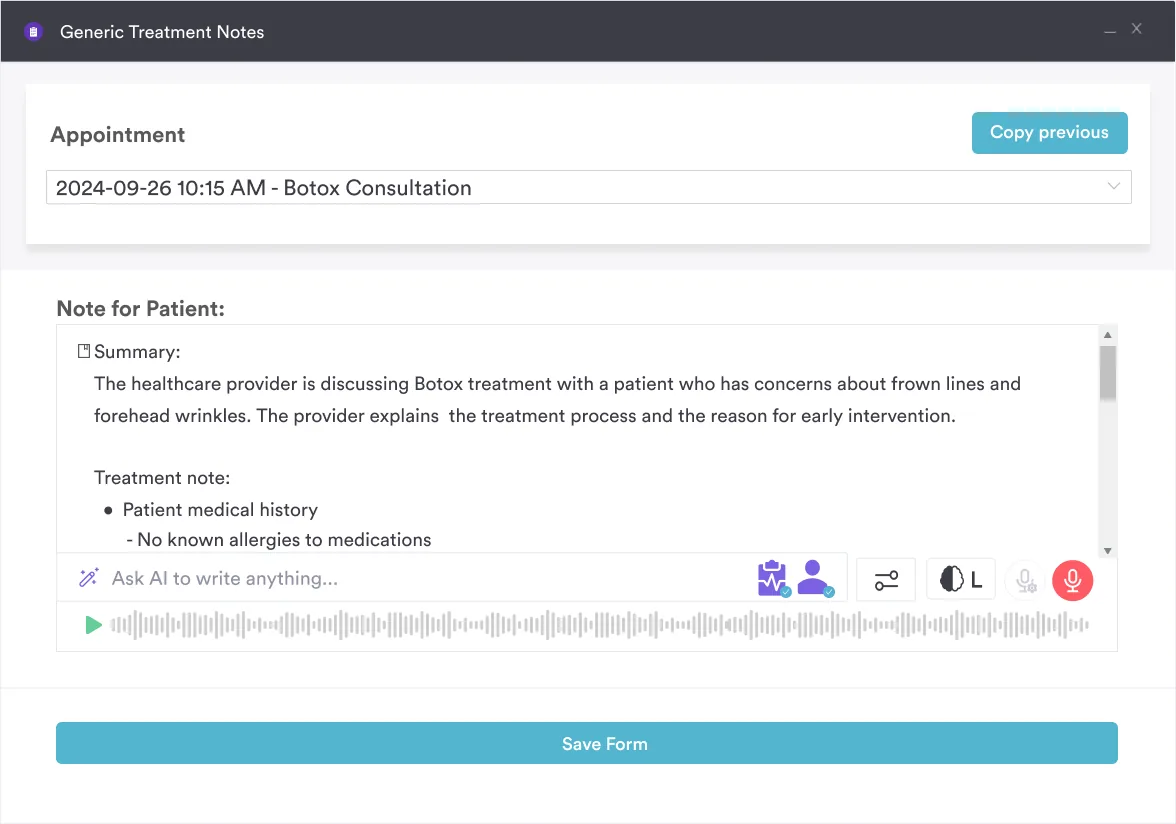
Practices using aesthetic EMR software can move the whole Bocouture workflow off paper. Build a custom consent form in Pabau’s digital forms builder, with contraindication checkboxes, risk disclosures, and a signature block already in place.
On treatment day, the patient completes it on a tablet, the system flags any red-flag answers, such as a reported neuromuscular condition, and a signed PDF saves straight into their client record.
After treatment, automated SMS and email campaigns can carry your aftercare instructions out on whatever cadence your practice sets, for example the same-day, day-3, and day-10 pattern covered earlier. None of this fires on its own by default; a member of staff builds the campaign once, and Pabau handles the sending from there.
That one setup step still saves a lot of manual follow-up, and it gives you a clean, timestamped record of what was sent and when.
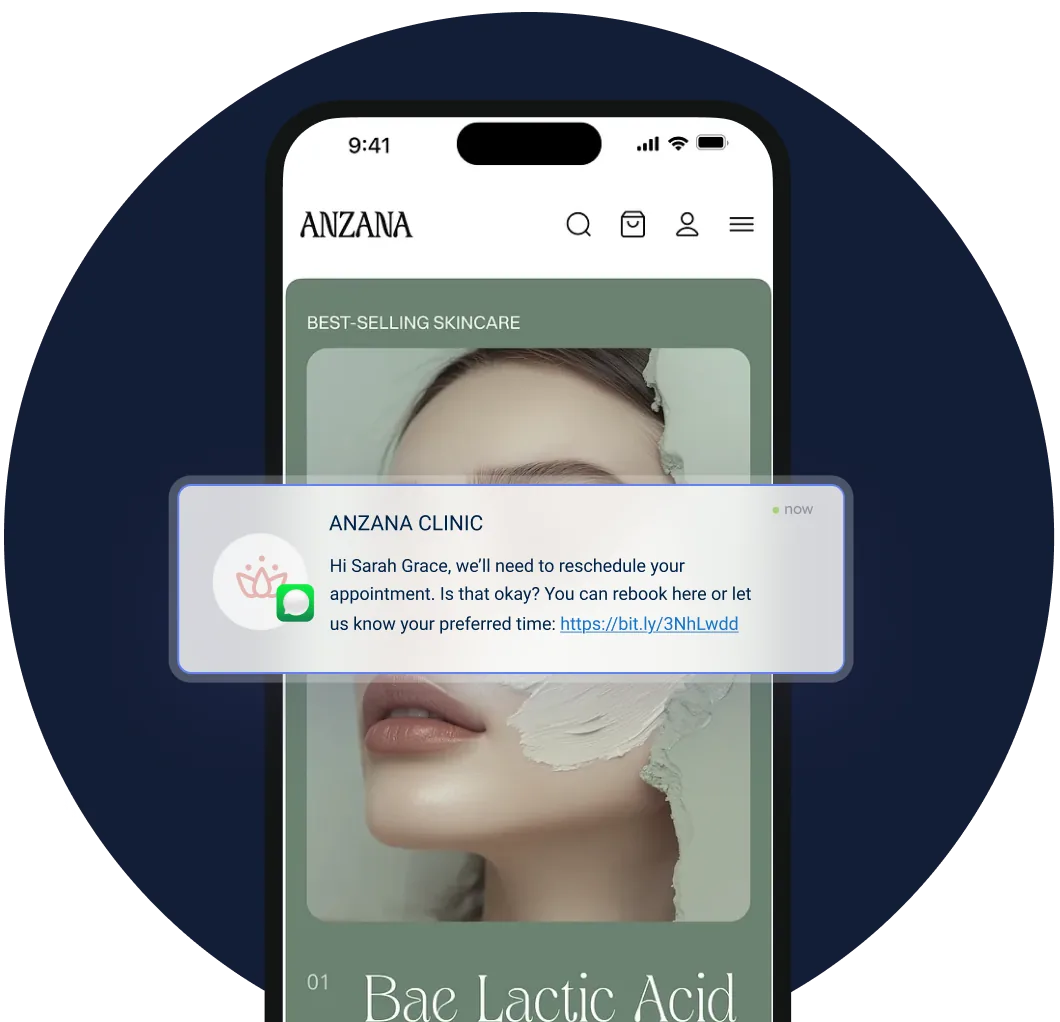

Automate patient consent forms, contraindication screening, and post-treatment aftercare with Pabau’s digital tools. Store signed consents in audit-ready patient records and send automated reminders to improve compliance and outcomes.

A short final check, right before the needle comes out, catches the mistakes that slip through a busy clinic day. Run through this with the patient in the room:
Bocouture is a purified, well-studied botulinum toxin, and its MHRA licence now covers three upper-facial areas rather than one. A consent form that still reflects the old, narrower licence is doing your patients and your practice a disservice.
Build the form around real contraindications, disclose risks in plain language, and get every off-label area acknowledged separately. Software like Pabau can hold that whole workflow, from the digital form itself to the signed record and the aftercare follow-up, in one place, so nothing depends on someone remembering to file a piece of paper.

Need automated aftercare messaging to patients? Email and SMS campaigns send timed post-treatment reminders and build patient confidence after Bocouture injections.
Want to centralise all treatment records in one place? Client records with injection plotting track every Bocouture treatment, dose, and outcome across your practice.
Looking for an alternative to paper consent forms? Digital consent forms and patient portals reduce admin burden and ensure every signature is audit-ready.
No. Bocouture and Botox are different botulinum toxin formulations, and there’s no official unit-conversion between them. Many practitioners find they behave similarly at similar doses, but never assume a straight swap. Follow the specific product’s SmPC and your own clinical judgement when switching a patient between brands.
Yes. Bocouture and Xeomin both contain incobotulinumtoxinA, made by Merz. Bocouture is the brand name used for aesthetic indications in the UK and EU, while Xeomin is used in the US and some other markets. The active substance is identical; only the regional branding differs.
Results usually appear from day three and build over about two weeks. Most patients see effects last three to four months, though this varies by individual. Book a review around the two-week mark to check the outcome and address any touch-up needs before it wears off.
Bocouture is prescription-only, so only a doctor, dentist, nurse independent prescriber, or pharmacist independent prescriber can prescribe it, and only after assessing the patient face to face. A trained practitioner can administer the injection under that prescriber’s direction, but a valid, patient-specific prescription always has to be in place first.
Cost varies by practice, region, and how many areas get treated, since it’s a private treatment rather than an NHS service. Most practices price per area or per session rather than per unit. Ask your practice for its current price list, since it usually reflects local demand and the prescriber’s experience.