Laser tattoo removal aftercare instructions template
Download your free laser tattoo removal aftercare instructions template A ready-...

24
Last Updated: Sep 4, 2026

Pixel is Alma Lasers’ fractional delivery brand, not a single laser. The handpiece may be ablative CO2, ablative Er:YAG, or non-ablative Er:Glass.
Fractional describes how the beam is split into micro-treatment zones. It says nothing about whether the laser ablates tissue.
Record the handpiece, wavelength, fluence, and number of passes in every treatment note, because the word pixel alone is not a treatment parameter.
Recovery follows the wavelength. Non-ablative 1540 nm settles in one to two days, while ablative CO2 resurfacing peels for roughly five to ten days.
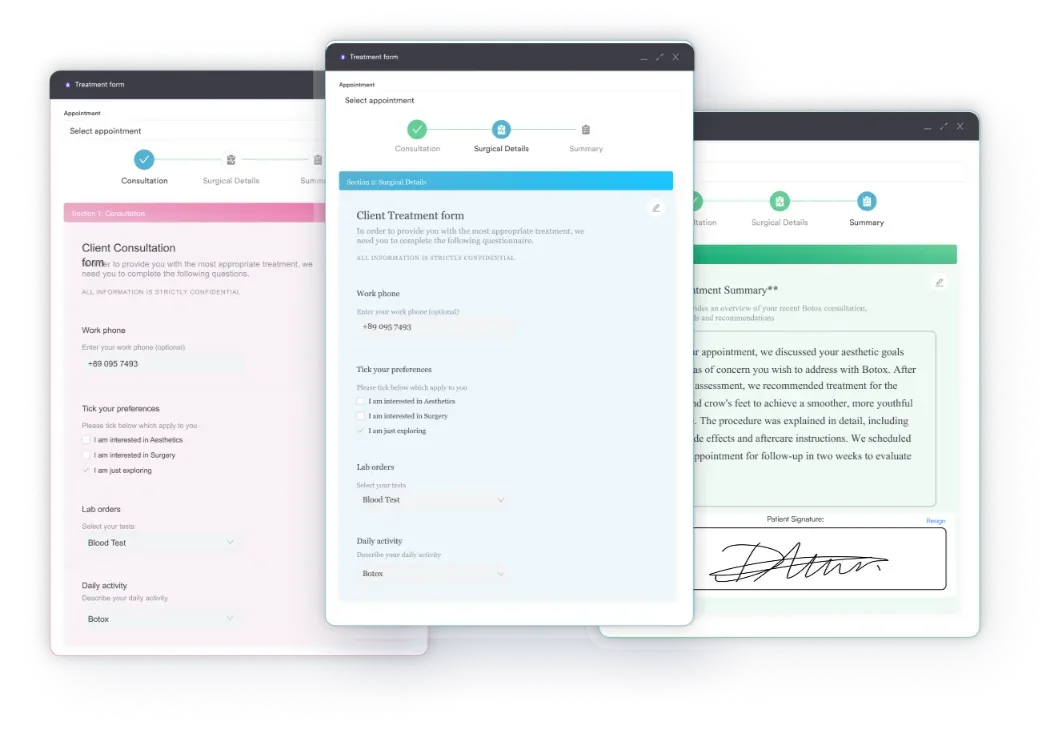
Practice management software like Pabau keeps consent, laser settings, and aftercare messaging together in one patient record.
A ready-to-use record covering patient assessment, Fitzpatrick typing, consent declarations, and pre-treatment preparation. It also captures the exact handpiece, wavelength, fluence, and pass count, plus wavelength-specific aftercare.
Download templatePixel laser is Alma Lasers’ brand of fractional resurfacing handpieces, and the name covers several different wavelengths. That matters for your records. An ablative CO2 treatment and a non-ablative 1540 nm treatment share the brand name. They do not share the recovery, the settings, or the consent conversation. Tracking those differences falls to your charting, which our roundup of software for med spas scores for all eight platforms.
This guide covers what each Pixel handpiece does and how to prepare patients. It also sets out what to record at the point of treatment, and the aftercare each wavelength calls for. The template below gives your practice one consistent form to work from.
Pixel laser resurfacing is fractional skin resurfacing performed with one of Alma Lasers’ Pixel handpieces. Pixel is a brand and a delivery platform rather than a single modality. The same name sits on handpieces that emit very different wavelengths and produce very different recoveries.
Fractional describes how the energy reaches the skin. A diffractive optical element splits one beam into a grid of narrow columns, so each pulse creates micro-treatment zones with untreated skin between them. Those untreated bridges are what speed up healing compared with treating the whole surface.
Fractional delivery is independent of whether the laser ablates tissue. Ablation depends on the wavelength and how strongly water absorbs it. A fractional laser can be ablative or non-ablative, and every Pixel handpiece is clearly one or the other.
Three energy sources carry the Pixel name, and your notes should always say which one was used. The manufacturer, Alma Lasers, also sells its 1540 nm module under the ClearSilk name on some platforms. Check the label on your own system before you write the protocol.
Whichever handpiece you run, the treatment note should name it alongside the wavelength, the fluence, the number of passes, and the treated area. Written that way, the record supports a follow-up practitioner, an insurer query, and any future comparison of results.
During treatment the handpiece delivers energy in a fractional pattern across the area. Each micro-treatment zone reaches the target depth while the surrounding tissue stays intact. That controlled injury triggers the wound-healing cascade, and collagen synthesis continues for weeks afterward.
What the patient sees next depends on the wavelength. Ablative handpieces vaporize tissue in each column, so the skin bronzes and then sheds. Non-ablative 1540 nm energy heats the dermis without breaking the surface, so patients get redness and swelling instead of peeling.
Setting that expectation is a consultation task, not an aftercare one. Record the recovery you described and the patient’s acknowledgment in a consultation form before treatment begins.
Fractional resurfacing suits skin concerns where collagen remodeling improves appearance and texture. Integrated patient records should document the specific diagnosis, the treatment goal, and the handpiece chosen before each session.
Contraindications and assessment. Absolute contraindications include active infection such as herpes simplex or impetigo, current isotretinoin use, and uncontrolled inflammatory acne. Relative contraindications depend on Fitzpatrick skin type and the risk of post-inflammatory hyperpigmentation, which matters most for types IV to VI.
Capture skin type, baseline pigmentation, and hypersensitivity history on the aesthetic intake form. Higher Fitzpatrick types need lower fluences and fewer passes, and many practices choose the non-ablative 1540 nm handpiece for them rather than an ablative one.
Pre-treatment preparation improves results and reduces complications. Give patients a clear checklist at least one week before their appointment. Add antiviral prophylaxis for anyone with a history of cold sores who is booked for an ablative handpiece.
Recovery tracks the wavelength, so give patients the timeline for the handpiece that was used on them. The table below covers the ablative handpieces, Pixel CO2 and Pixel 2940, where the skin bronzes and sheds.
Hand out written CO2 laser aftercare instructions after an ablative session, and swap the wording for the 1540 nm handpiece. One sheet cannot serve both, because one wavelength peels and the other does not.
Non-ablative 1540 nm recovery is much shorter. Expect erythema and swelling on the day of treatment, easing within 24 to 48 hours. There is no shedding phase, most patients wear makeup the next day, and sun protection still applies for two weeks.
What to avoid after any pixel laser treatment:
Results build over 8 to 12 weeks as collagen remodels. Texture and redness improve first, usually by weeks three and four. Scar depth, fine lines, and firmness keep improving for three to six months while new collagen matures.
Session counts follow the handpiece. Ablative fractional treatment typically needs one to three sessions spaced six to eight weeks apart. Non-ablative 1540 nm treatment usually needs four to six sessions spaced three to four weeks apart, because each pass does less per visit.
Some practitioners prefer two lower-fluence passes over one aggressive pass, particularly on sensitive or higher Fitzpatrick skin. Record the passes and fluence for every session, and take before-and-after photos at baseline and at weeks 4, 8, and 12.
Patients often ask how pixel laser compares with “a CO2 laser”, and the honest answer starts with the terms. Pixel CO2 is a carbon dioxide laser, delivered fractionally. The useful comparison is fractional delivery against full-field ablation, with the wavelength named separately.
Full-field resurfacing has largely given way to fractional devices in aesthetic practice, and Pixel CO2 sits on the ablative end of that shift. Choosing between Pixel handpieces is a wavelength decision, so write the reasoning into the treatment plan.
In many practices the laser settings and the consent live in different places. Parameters go in a paper log beside the machine, consent sits in a filing cabinet, and aftercare leaves as a printed sheet. Answering “what was she treated with in March” then means hunting through all three.
Practice management software like Pabau keeps all three together. In laser clinic software, the handpiece, wavelength, fluence, and pass count become fields on a digital treatment form. They are structured data rather than a scribble in a machine log, and consent is signed on screen against the same patient record.
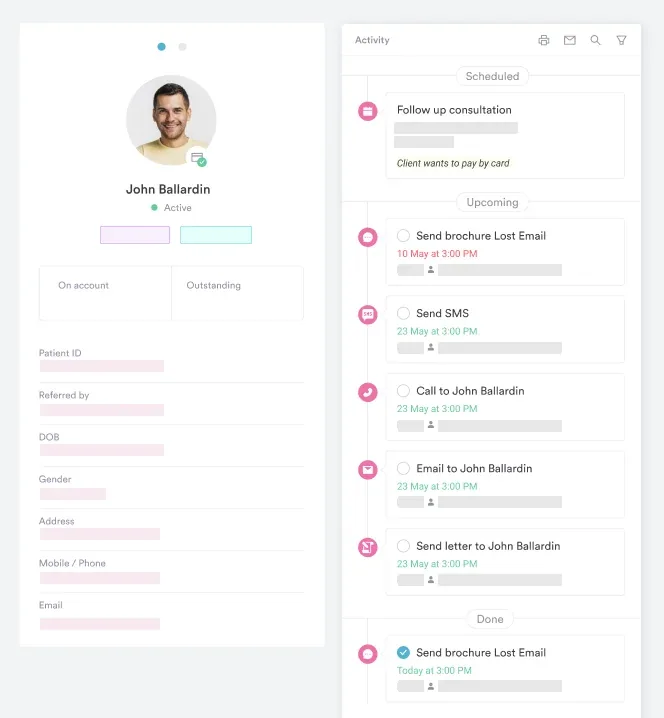
Aftercare then goes out on its own. Automated pre- and post-care messaging can send one sequence after an ablative session and a different one after a non-ablative session. Pabau Scribe, drafts the note while you talk the patient through their recovery.
Adapt the downloadable template with your own branding, machine settings, aftercare products, and emergency contact details. Store it in an aesthetic EMR as a patient handout, and send it the moment treatment ends. Practices running a wider skin menu can slot it into their skin clinic workflows alongside every other consent form.

Pabau’s digital forms, patient portal, and automated aftercare messaging keep the handpiece, wavelength, settings, and consent in one patient record. Your team can answer any question about a past session in seconds.

The single change worth making to your pixel laser paperwork is naming the device. A record that says “pixel laser, 3 passes” tells a colleague almost nothing. One that says “Pixel CO2, 10,600 nm, 3 passes” tells them what they need.
That precision costs one extra field at the point of treatment. It pays back whenever a patient reacts badly, changes practitioner, or asks why this course looks different from the last one. The trade-off is a slightly longer form for a far shorter investigation.
Download the template, adapt it to the handpiece you run, and let your software carry the consent and aftercare. Book a demo to see how Pabau keeps laser parameters, consent, and follow-up in one patient record.

Wondering which treatments patients ask for most? Most common cosmetic procedures sets out the demand behind resurfacing, injectables, and body treatments with current med spa figures.
Looking to market your laser hair removal services? Laser hair removal marketing guide shares 7 strategies for standing out as demand and competition both grow.
Offering CoolPeel laser resurfacing treatments? CoolPeel laser template captures consent, contraindication screening, and post-treatment care for CO2 laser resurfacing.
Curious what a laser hair removal practice earns? Laser hair removal income guide breaks down monthly revenue and the session volume that drives it.
Pixel is Alma Lasers’ brand of fractional resurfacing handpieces. The beam is split into micro-treatment zones that leave untreated skin between them, which speeds up healing. Depending on the handpiece, the wavelength is ablative CO2, ablative Er:YAG, or non-ablative Er:Glass.
It depends on the handpiece, because fractional describes delivery rather than ablation. Pixel CO2 at 10,600 nm and Pixel 2940 Er:YAG are ablative. The 1540 nm Er:Glass handpiece is non-ablative. Your treatment note should say which one was used.
Ablative fractional treatment usually needs one to three sessions spaced six to eight weeks apart. Non-ablative 1540 nm treatment usually needs four to six sessions spaced three to four weeks apart. Results keep improving for three to six months.
After Pixel CO2, expect roughly 5 to 10 days of bronzing and peeling, with pinkness for a few weeks. Pixel 2940 typically settles in 3 to 5 days. Non-ablative 1540 nm redness and swelling ease within 24 to 48 hours.
Avoid hot water, strenuous exercise, direct sun, and picking at peeling skin. Leave out retinol, vitamin C, and acid exfoliants for at least seven days. Skip makeup for 24 to 48 hours after an ablative session, and use SPF 50 daily.
Fitzpatrick types I to VI can be treated when the wavelength and settings are matched to the skin. Types IV to VI need lower fluences and careful monitoring for pigment change, and many practices choose the non-ablative 1540 nm handpiece for them.
The comparison mixes two different things. Pixel CO2 is itself a carbon dioxide laser, delivered fractionally. The useful contrast is fractional delivery against full-field ablative resurfacing, which treats the whole surface and needs 14 to 30 days of recovery.