Pabau vs SimplePractice: AI Patient Scheduling Compared
AI Patient Scheduling: How Pabau and SimplePractice Compare Missed appointments ...

May 4, 2026


Buy now, pay later is now available in Pabau

Fresha charges $19.95/month for an Individual plan or $14.95/month per bookable team member, plus a 20% commission on new client bookings from its marketplace (with a $6 minimum fee per booking).
Booksy charges $29.99/month for the first user plus $20/month per additional staff member, with Booksy Boost as a separate paid add-on starting around $49.99/month for extra marketplace visibility.
Neither Fresha nor Booksy supports clinical documentation, medical consent forms, or healthcare compliance workflows.
Pabau is the purpose-built alternative for clinics and med spas that need clinical records, compliance tools, and multi-practitioner scheduling.
Choosing between Fresha and Booksy comes down to one question most comparison guides avoid: what does your business actually need from its software? Fresha’s tiered subscription, paired with a marketplace commission on new clients, is built for solo practitioners and small salons growing through platform discovery. Booksy’s per-staff subscription trades higher monthly fees for access to one of the largest consumer beauty marketplaces available. Both are built for beauty and wellness scheduling. Neither was designed for clinical environments.
This guide covers the Fresha and Booksy comparison in full: pricing structures, marketplace reach, scheduling capabilities, staff management, integrations, and the specific use cases where each platform performs best. For aesthetic clinics, med spas, and any practice handling health data, there is a third option worth knowing.
Before diving into each platform, here is how the two stack up on the metrics that matter most for salon and wellness businesses. See also our three-way Booksy vs Fresha vs Pabau comparison if you want clinical software included in the evaluation.
Pricing is where choosing between Fresha and Booksy becomes genuinely complex. Both platforms use models with cost implications that only become clear once your booking volume grows. Understanding what each model actually costs at scale is critical before committing.
Fresha now charges a tiered subscription. According to Fresha’s pricing page, the Individual plan costs $19.95 per month for solo practitioners, and the Team plan costs $14.95 per month per bookable team member. The previously advertised “subscription-free” model has been retired (this change is also covered in The Salon Business’ February 2026 pricing review and Goodcall).
On top of the subscription, Fresha charges a 20% commission on new client bookings that originate from its marketplace, with a $6 minimum fee per qualifying booking. For businesses actively using the marketplace for growth, this can be a significant margin reduction. A client booking a $200 facial through Fresha’s marketplace would generate a $40 commission fee, while a $25 brow tidy would trigger the $6 minimum rather than a true 20% take. Repeat bookings from the same client are not subject to the same commission once they become a returning client.
Fresha also charges transaction fees on payment processing. The result is a model where the headline subscription is one of the lowest in the category, but the marketplace commission and processing fees can stack on top quickly for businesses leaning on Fresha for new client acquisition.
Booksy uses a per-staff subscription model. According to Booksy’s own pricing page, the base plan starts at $29.99 per month for the first user, with each additional staff member billed at $20 per month. There are no traditional “tiers” in the Fresha or Vagaro sense; the price you pay scales linearly with how many bookable practitioners you have on the account. For a deeper breakdown, see our Booksy pricing breakdown.
Booksy Boost is a separate paid add-on rather than a feature included in the base subscription. The standard Boost tier starts at around $49.99 per month, with Boost+ at approximately $79.99 per month, layered on top of the per-staff subscription cost. Unlike Fresha’s percentage commission, Booksy’s Boost fees are predictable flat amounts, which makes budgeting easier for established businesses, though the total monthly bill grows quickly once you add staff and turn Boost on.
For a solo barber seeing 15-20 clients per day, the monthly subscription is manageable. For a multi-chair salon with high new client acquisition through the marketplace, Fresha’s commission model can become expensive faster than Booksy’s flat rate. See our analysis of Booksy’s main competitors for a broader pricing landscape view.
Both platforms handle core appointment scheduling competently. The differences emerge in how each approaches the client-facing experience and multi-staff management.
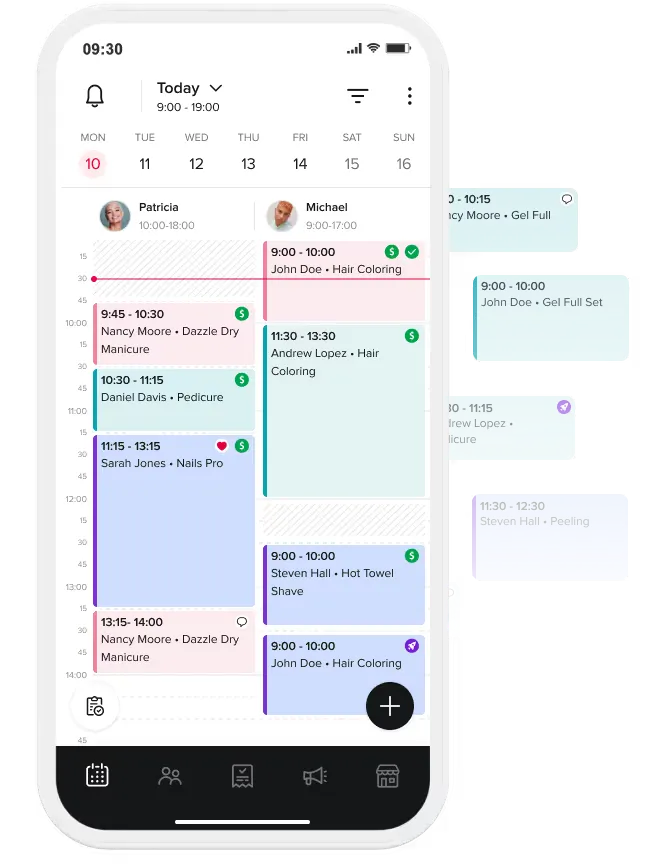
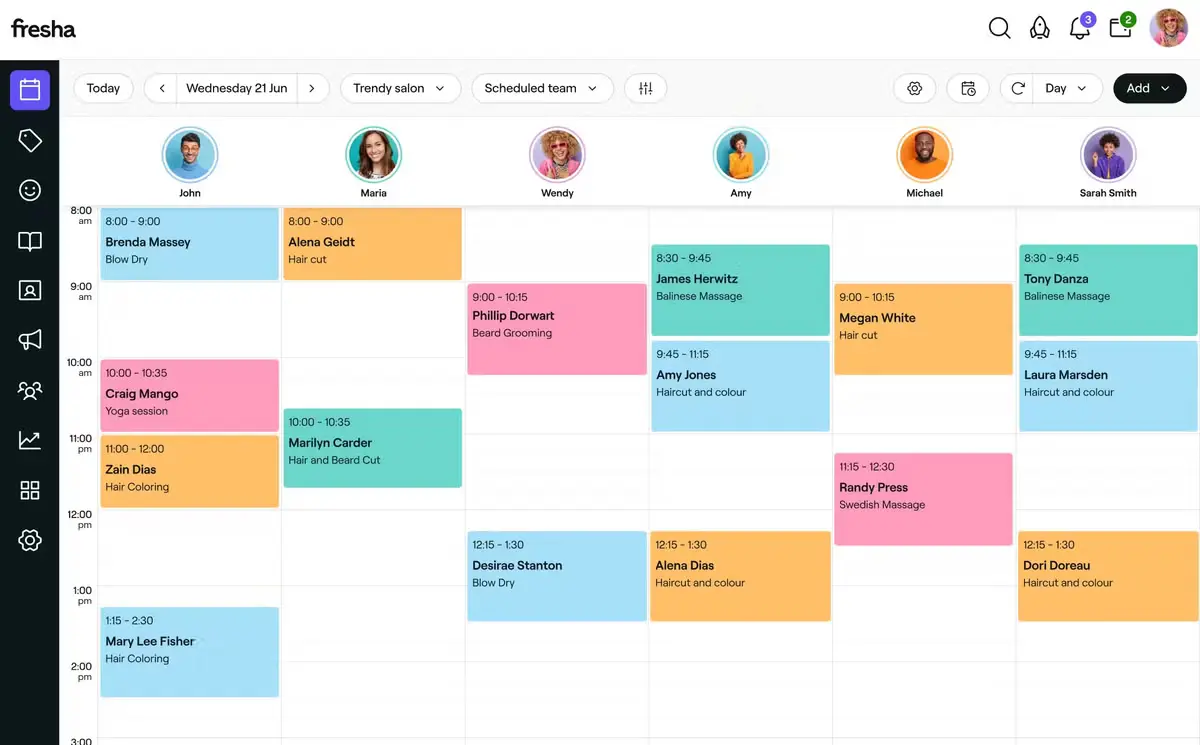
Fresha’s scheduling interface is clean and designed for ease of adoption. Small teams and less tech-savvy staff can get up and running quickly without extensive training. The calendar view supports multiple practitioners and services, and clients can book directly through the Fresha marketplace or via an embedded booking widget on the business’s own website.
Automated appointment reminders help reduce no-shows, which is particularly valuable for high-volume nail salons and hair studios where missed appointments directly affect daily revenue. Fresha also supports waitlist management, letting businesses fill last-minute cancellations without manual outreach.
Booksy’s booking experience is widely praised by users for its client-side usability. Real-time availability, instant booking confirmation, and a polished consumer app interface reduce friction for clients discovering and booking services. This is a deliberate product priority: Booksy is built around the consumer app experience as a discovery and conversion funnel.
For businesses with multiple staff members, Booksy supports individual stylist profiles within a single business listing. Clients can filter by practitioner, view availability, and book specific providers directly. This is a strong feature for salons where clients develop loyalty to individual practitioners rather than the business as a whole. The online booking workflow demands of a multi-staff salon are well served by Booksy’s model.
Marketplace reach is the most significant practical differentiator between these two platforms for businesses that rely on new client discovery as a growth channel.
Booksy operates a large consumer-facing marketplace. According to third-party review data, the platform has built a substantial user base of consumers searching for local beauty and wellness services. Booksy’s integrations with Google, Facebook, and Yelp extend this discovery surface further, allowing businesses to be bookable directly from search results and social profiles.
This is Booksy’s strongest competitive argument against Fresha: the volume of consumers actively using the Booksy app to find and book new providers. For a barber shop or nail salon opening in a new area, this marketplace exposure can meaningfully accelerate new client acquisition.
Fresha also has a consumer marketplace, though it tends to be positioned as secondary to the scheduling and business management features. The 20% commission on new marketplace bookings is a direct cost of this discovery channel. As one Reddit user in r/microblading noted, losing commission on new clients hurts most when a business is just starting out or actively building its client base.
Fresha positions this model as preferable to Booksy’s Boost programme, arguing it adds no friction for clients since there are no extra booking charges. From a consumer experience perspective, this holds. From a business margin perspective, the impact depends entirely on what percentage of bookings originate from the marketplace versus direct return clients.
According to Capterra reviewers, Fresha earns strong praise for its clean interface and ease of adoption. Small businesses report getting up and running quickly without training overhead. The Individual plan at $19.95 per month also keeps the entry cost lower than most salon platforms, which appeals to new businesses or sole practitioners testing software for the first time.
Booksy’s core advantage is its consumer marketplace and the discovery engine it provides. For businesses where new client acquisition is the primary growth lever, Booksy’s platform provides infrastructure that Fresha’s commission model cannot fully replicate.
Here is how the two platforms compare across the features most relevant to salon and wellness businesses weighing this comparison.
User sentiment across review platforms offers a useful complement to feature comparisons, particularly where day-to-day usability and support quality diverge from the marketing narrative.
According to Capterra reviewers, Fresha holds a 4.9 out of 5 rating, one of the highest in the salon software category. Positive themes centre on the interface quality, the low entry-level pricing, and customer service responsiveness. Critical reviews highlight the commission fee as a recurring concern, particularly from users who felt the marketplace cost was not clearly communicated at onboarding.
Community sentiment from r/microblading and salon owner Facebook groups reflects a mixed picture for growing businesses. Practitioners who relied heavily on the marketplace for new client acquisition reported that the 20% commission became unsustainable as their booking volume grew. Several noted switching to alternatives once the commission costs exceeded what a comparable subscription-based platform would cost.
Booksy’s verified review data on major platforms is limited in the research phase, making direct score comparison difficult. Community feedback from r/Barber describes the platform positively for businesses in high-footfall areas where marketplace discovery drives meaningful new bookings. One user noted: “We’ve had customers move into the area and choose us because we are on Booksy.” That describes the platform’s core value proposition accurately.
Support quality receives more mixed feedback. Complex setup scenarios, multi-location configurations, and billing disputes are recurring themes in negative community reviews. For straightforward single-location salons, support issues appear less frequent.
The answer depends on your business model, growth stage, and how you acquire new clients. Neither platform is universally superior. Each fits a specific operational profile.
Choose Fresha if you are a solo practitioner or small salon that wants the lowest entry-level subscription in the category and a clean scheduling system. If the majority of your clients are repeat bookings rather than marketplace discoveries, Fresha’s commission model costs you little while the $19.95/month Individual plan keeps fixed costs manageable. It also suits businesses where ease of adoption matters more than deep reporting or marketplace scale.
Choose Booksy if new client discovery is a primary growth driver for your business. Salons and barbers in competitive urban markets, where clients actively search for providers on consumer apps, will extract genuine value from Booksy’s marketplace reach and Google/Facebook integrations. The predictable monthly fee also suits businesses that want consistent cost forecasting without per-booking commission exposure.
For a deeper comparison of Fresha against another major competitor, see our Fresha vs Vagaro analysis.

Pabau gives aesthetic clinics and medical practices the clinical records, digital consent forms, compliance tools, and multi-practitioner scheduling they actually need. See why over 600 practices chose Pabau over beauty-only booking tools.

For pure beauty and wellness scheduling, comparing Fresha and Booksy is the right question. But a significant portion of businesses searching this comparison are operating in territory that neither platform was designed to serve: aesthetic clinics, med spas, laser clinics, IV therapy practices, and wellness clinics handling patient health data.
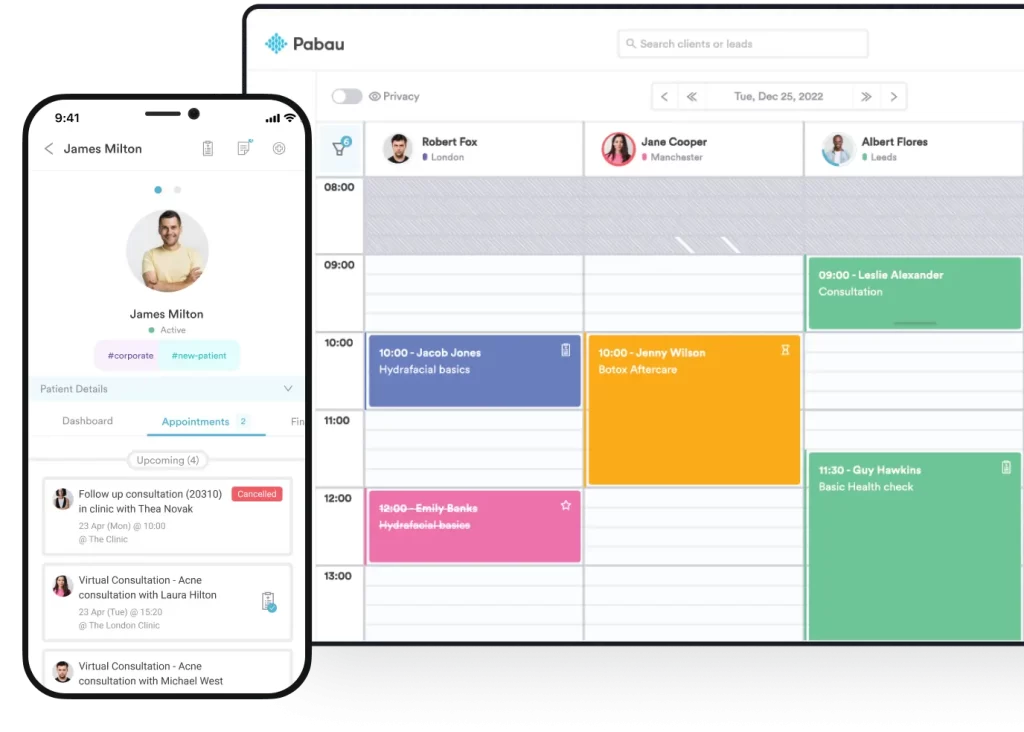
For those businesses, the absence of clinical documentation in both Fresha and Booksy is not a minor gap. It is a structural limitation. Performing aesthetic treatments without proper medical consent forms, treatment notes, and clinical history creates both compliance risk and operational inefficiency. Regulatory guidance from bodies including the UK’s Information Commissioner’s Office (ICO) makes clear that businesses handling health data must apply appropriate data governance standards that general booking software does not address.
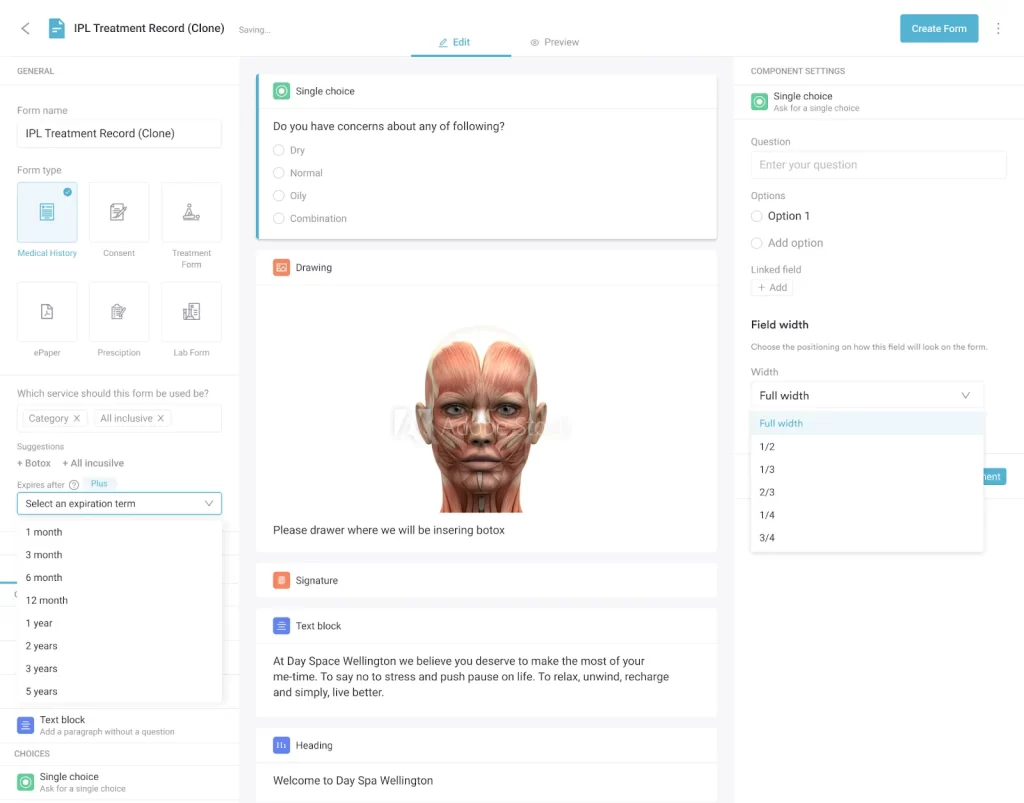
Pabau is built specifically for this space. It supports medical records, digital consent and intake forms, treatment notes, prescription management, before-and-after photo documentation, and multi-practitioner scheduling with resource management. It is not a beauty booking tool that added clinical features. It is a clinical management platform with scheduling built in.
Pabau starts from $65 per month. Unlike Fresha’s commission model or Booksy’s per-tier subscription, Pabau is priced for multi-practitioner clinical environments where predictable cost scaling matters. See full plan details at pabau.com/pricing.
According to Capterra, Pabau holds a 4.7 out of 5 rating from over 600 verified reviews. Positive themes consistently reference the comprehensive feature set for clinical and aesthetic practices, strong appointment and treatment record management, and suitability for multi-practitioner setups. Critical feedback notes the initial learning curve and some feature gaps for the smallest single-practitioner practices.
Before committing to any salon or clinic software, map your actual booking sources for the past three months. If more than 30% of new clients came through a platform marketplace (Fresha or Booksy), commission and subscription costs become a core business decision, not just a software feature. If most bookings are repeat clients or direct referrals, a low-subscription or clinically focused platform will serve you better than one with marketplace-driven commissions.
For a full side-by-side evaluation including Pabau, review our Fresha vs Pabau comparison and Fresha competitor analysis. For businesses specifically in the medical spa space, the best medical spa software guide covers the full category.

Evaluating Fresha against a specialist clinical platform? Fresha vs Pabau covers the full feature comparison for practices with clinical documentation requirements.
Looking at the broader medical spa software landscape? Best Medical Spa Software reviews the top platforms for aesthetics and med spa businesses in 2026.
Want to understand what Booksy alternatives exist? Booksy Competitors analyses how the main alternatives compare on pricing, features, and use-case fit.
Considering Fresha alternatives for a growing practice? Fresha Alternatives outlines the strongest options when the commission model no longer works for your business.
The Fresha and Booksy comparison ultimately reflects two different bets on how a beauty business grows. Fresha bets on a low entry-level subscription paired with a marketplace commission, recouping revenue from new client acquisition as businesses scale. Booksy bets on per-staff subscription pricing combined with marketplace reach, with strong consumer discovery infrastructure as the core value.
For beauty salons, barbers, and wellness businesses whose needs fit within standard scheduling, both platforms are competent options. For any business operating in the clinical space, handling health data, or performing treatments requiring documented consent and clinical records, neither platform is adequate. Pabau fills that gap directly, with clinical workflows, digital forms and consent management, and compliance tools built for regulated healthcare environments. If your practice has outgrown basic booking software, book a demo to see how Pabau handles clinical operations end to end.
For small salons with low new-client acquisition from platforms, Fresha’s $19.95/month Individual plan keeps fixed costs lower than Booksy’s per-staff subscription, since Fresha’s marketplace commission only kicks in on new bookings from its marketplace. For salons in competitive urban markets where consumer discovery drives growth, Booksy’s marketplace reach and Boost visibility tend to justify the higher per-staff subscription cost.
Fresha charges a 20% commission on new client bookings that originate from the Fresha marketplace, according to multiple independent review sources including Software Advice. Repeat bookings from returning clients are not subject to the same commission fee. Verify current rates directly with Fresha before signing up.
According to Booksy’s pricing page, the base subscription is $29.99 per month for the first user, with each additional staff member billed at $20 per month. Booksy Boost is a separate paid add-on for marketplace visibility, starting at around $49.99 per month for Boost and $79.99 per month for Boost+. Check Booksy’s current pricing page for the latest figures.
Neither Fresha nor Booksy is designed for medical spa or clinical workflows. Both lack medical records, clinical consent form management, treatment documentation, and healthcare compliance tools. Med spas performing regulated treatments should evaluate purpose-built clinical platforms such as Pabau, which includes all of these features natively.
Beyond the 20% commission on new marketplace bookings, users report additional costs tied to payment processing and certain premium features. The core scheduling product is free, but growing businesses using Fresha’s payment tools and marketplace should factor these transaction-level costs into their total cost assessment.
Booksy is generally regarded as having stronger marketplace reach, particularly through its integrations with Google, Facebook, and Yelp. Fresha also operates a consumer marketplace but is more frequently positioned around its free scheduling tools. For businesses where marketplace discovery is the primary acquisition channel, Booksy has the stronger infrastructure.