Tebra Pricing in 2026: Modules, Add-Ons, and Real Costs
Most independent practices evaluating EHR software run into the same wall when t...

April 30, 2026


Buy now, pay later is now available in Pabau

Pabau’s AI patient intake covers digital forms, consent automation, and clinical records in one connected workflow for multi-specialty clinics.
SimplePractice’s Care Aide synthesises intake documents and scored measures into session-ready summaries, optimised for therapists and mental health practitioners.
Both platforms are HIPAA compliant with BAA available, but Pabau also covers GDPR for UK and EU clinic operators.
Pabau is built for aesthetic, wellness, and multi-specialty practices; SimplePractice serves solo and small-group therapy practices.
Most clinic software treats patient intake as a form-filling exercise. Collect demographics, click send, done. But the practices seeing the biggest efficiency gains in 2026 are the ones where AI patient intake connects directly to clinical records, consent workflows, and appointment scheduling without a single manual handoff. The question is whether your platform actually delivers that or just automates the paperwork.
This guide is for clinic owners, practice managers, and practitioners evaluating Pabau and SimplePractice on their AI-powered intake capabilities. It covers form customisation, EHR data sync, HIPAA compliance, pricing, and which platform fits which type of practice. If you already know you need software and want a structured, evidence-based comparison rather than a biased roundup, read on.
Both platforms automate patient intake, but they do so for very different practice models. Here is how they compare across the criteria that matter most to clinic operators.
The phrase “AI patient intake” covers a wide range of capabilities depending on the platform. For some tools, it means a digital form sent by SMS before an appointment. For others, it means an AI layer that reads completed intake documents, synthesises clinical context, and surfaces structured data to the clinician before the session begins. Understanding which level each platform operates at is the foundation of this comparison. Deeper context on AI and patient experience outcomes is covered separately in Pabau’s clinical guides.
Pabau approaches intake as a workflow automation problem. A patient books online, triggering a sequence: pre-appointment forms are sent automatically, consent documentation is collected digitally, medical history is captured in structured fields, and all of this lands in the client record before the appointment begins. The clinician walks in with a complete pre-session picture without asking front desk staff to chase anything.
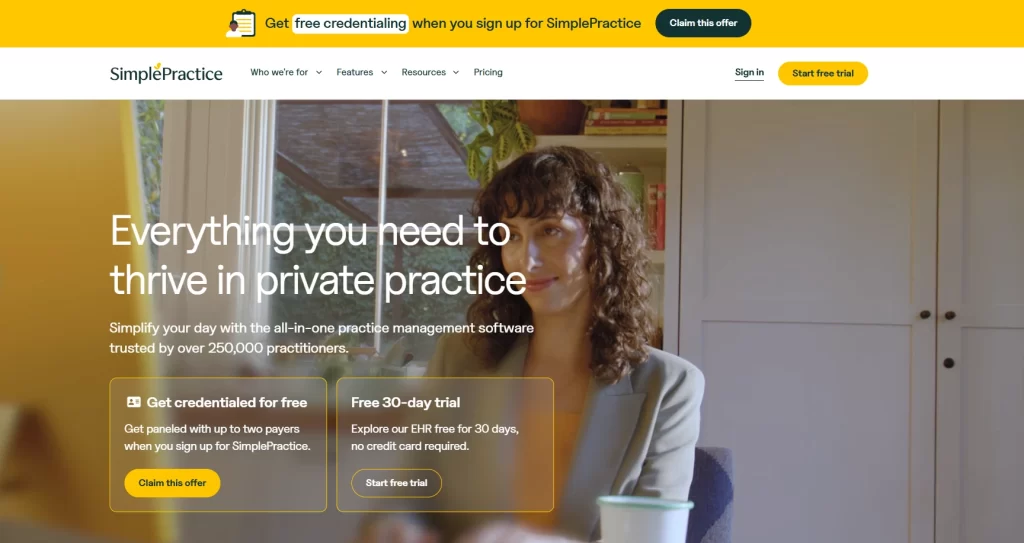
SimplePractice takes a different path. Its Care Aide feature, launched as an AI layer within the platform, offers Intake Summaries that synthesise information from completed intake documents, demographic details, and scored clinical measures. For a therapist seeing a new client, this means a consolidated AI-generated briefing that pulls from everything the client submitted during onboarding. According to SimplePractice’s official documentation, Care Aide produces these summaries by reading the full intake package, not just the demographics.
The distinction matters. Pabau’s strength is operational: intake data flows into scheduling, consent records, clinical notes, and billing in one connected system. SimplePractice’s strength is clinical synthesis: the AI reads what the client submitted and gives the therapist a ready-made briefing. These are different problems being solved for different practice types.
Form customisation determines whether the intake process actually fits the clinical workflow or forces practitioners to work around the software. Both platforms offer customisable templates, but the depth differs significantly by specialty.
Pabau’s digital forms builder supports conditional logic, meaning the form adapts based on what the patient enters. A patient selecting “yes” to a history of keloid scarring triggers a different branch of questions than one who selects “no.” This matters for aesthetic and dermatology clinics where contraindication screening is part of the intake process, not an afterthought.
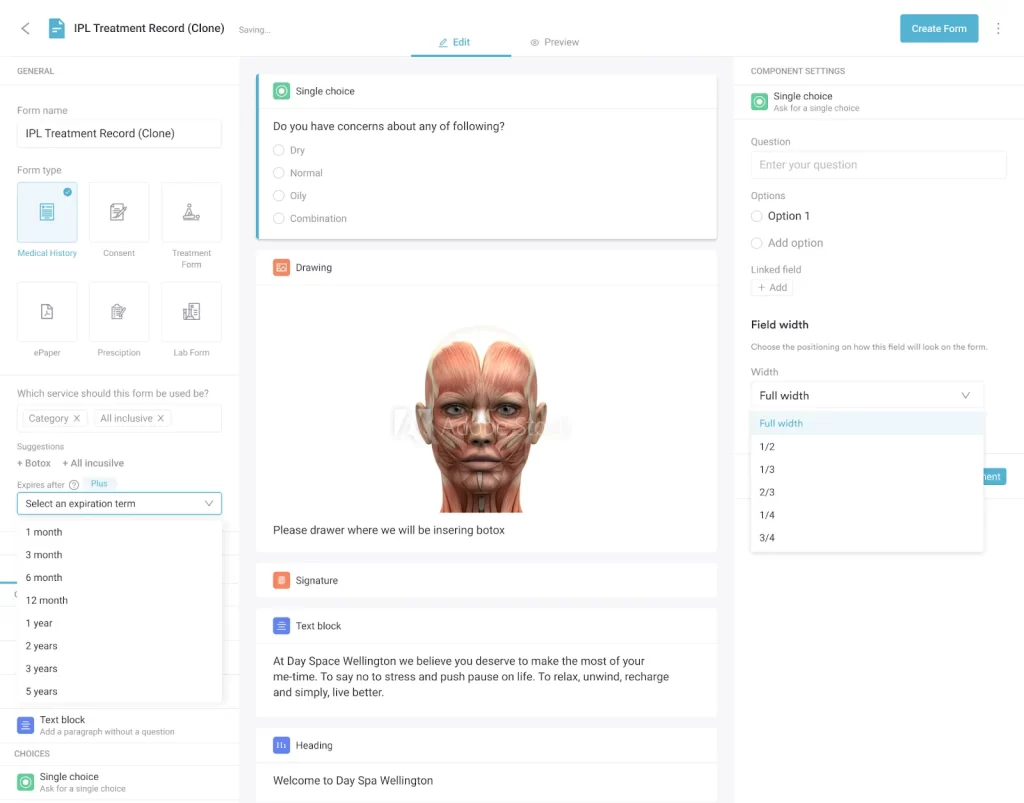
Consent forms are handled within the same intake sequence. Rather than a separate consent management tool bolted on, Pabau delivers consent documentation as part of the pre-appointment workflow via capture forms. Patients sign digitally before they arrive. The signed consent is stored in the client record alongside their intake responses, making the clinical file complete before the appointment begins. This is particularly important for aesthetic and cosmetic clinics where treatment cannot proceed without documented consent.
Pre-built templates cover aesthetics, physiotherapy, dermatology, and general practice workflows. For clinics considering going paperless, the breadth of these templates significantly reduces setup time.
SimplePractice offers a large template library with hundreds of pre-built options covering intake forms, SOAP notes, progress notes, and standardised clinical measures such as the PHQ-9 and GAD-7. For therapy and mental health practices, this library depth is genuinely useful because it covers the scored instruments that feed directly into Care Aide’s Intake Summaries.
The limitation emerges when clinics try to adapt SimplePractice forms for non-therapy workflows. Users in community reviews consistently note that customisation for specialties outside behavioural health requires significant workarounds. Consent automation integrated into the intake sequence is less prominent than in platforms built for clinical and aesthetic workflows.
How intake data flows into the clinical record is where the operational difference between the two platforms becomes most visible.
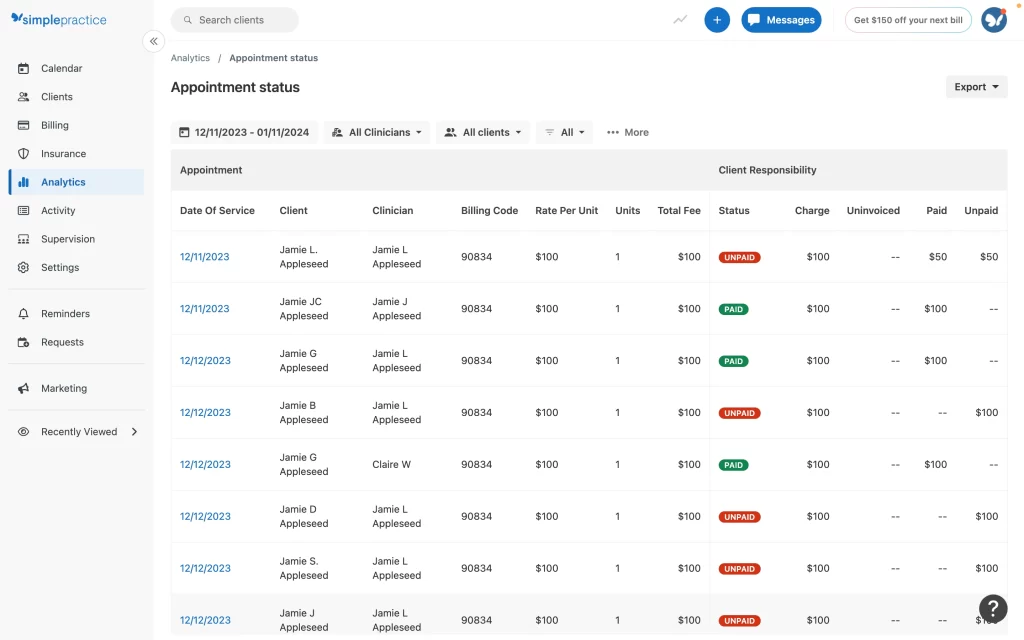
Pabau operates as an all-in-one platform where intake, scheduling, clinical records, billing, and consent are natively connected. There is no third-party EHR sync required because the data never leaves the platform. When a patient completes their intake form, the data populates their client record directly. The clinician can view medical history, signed consent, and appointment details in a single screen before the session. The client portal gives patients visibility into their own records and enables them to update information between appointments.
For multi-location clinics, this native integration means data is consistent across sites without manual synchronisation. A patient who attends one location has the same complete record available if they visit another. Pabau’s approach to AI in practice management positions intake as one piece of a unified operational system rather than an isolated module.
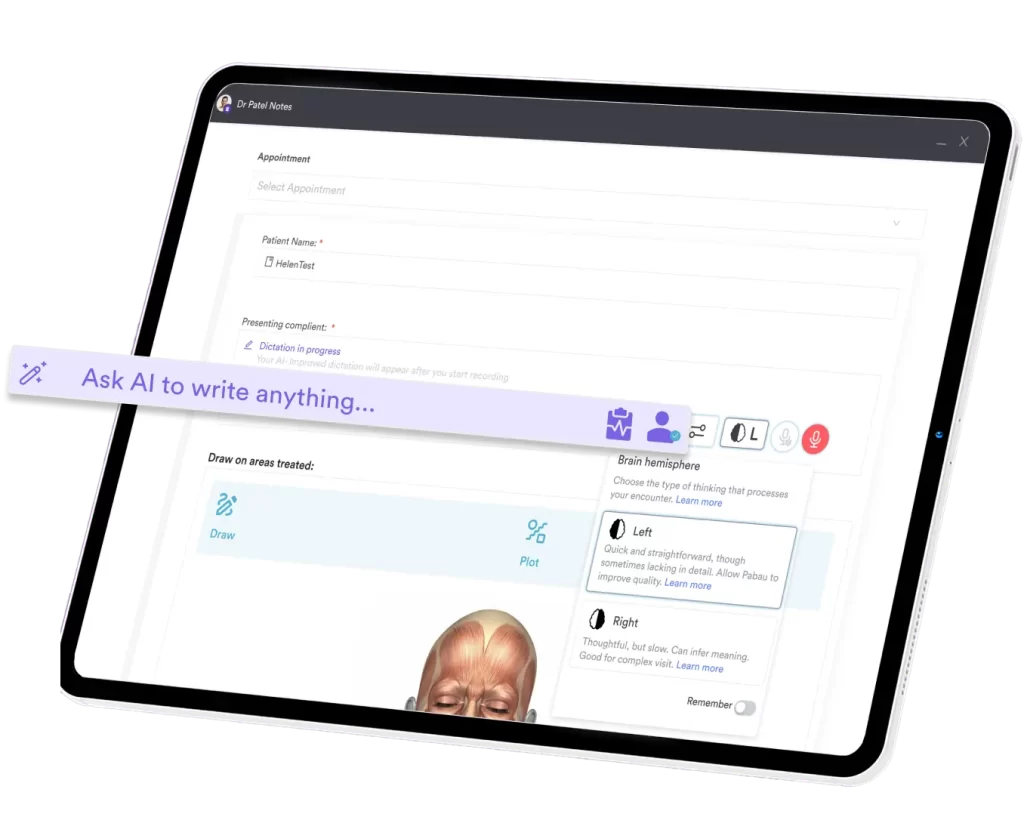
The platform also includes Pabau Scribe, an AI medical scribe that can generate clinical notes from consultations, adding another layer of automation after the intake phase is complete.
SimplePractice is also a self-contained platform. Client intake data submitted through the portal flows directly into the client record within the system. Care Aide then reads these completed records to generate Intake Summaries. For a solo therapist, this is a clean and effective workflow. The client submits their intake package, Care Aide processes it, and the therapist has a synthesised briefing ready before the session.
The platform is optimised for solo and small-group therapy practices. Multi-location or multi-specialty configurations are not SimplePractice’s primary use case, and the system is not designed for the operational complexity those environments require.

Pabau connects intake forms, consent management, and clinical records in one automated workflow. Book a demo to see how it works for your clinic type.

For any AI patient intake system, compliance is not optional. Both Pabau and SimplePractice are HIPAA compliant and offer Business Associate Agreements (BAA). However, the compliance scope differs in ways that matter depending on where the practice operates.
For US-only therapy practices, both platforms provide adequate HIPAA coverage. For aesthetic clinics, med spas, and practices operating in the UK or EU, Pabau’s broader compliance scope is a practical advantage. The Office for Civil Rights at HHS sets the standards for HIPAA enforcement in the US; both platforms’ approaches are aligned with those requirements. For more on building a HIPAA compliance for clinic software protocol, Pabau’s resource library covers the key obligations.
When evaluating any AI patient intake platform for HIPAA compliance, request the BAA before signing a contract, not after. Also confirm whether the AI features (note generation, intake summaries) are covered under the same BAA as the core platform or require a separate agreement.
According to Capterra reviewers, Pabau holds a 4.7 out of 5 rating from over 600 verified reviews, with users consistently praising the all-in-one platform integration and onboarding support quality. Pabau’s core strength is integration depth. Intake data, consent records, clinical notes, billing, and scheduling all operate within the same platform without requiring third-party connectors. For a clinic running 50 or more appointments per week across multiple practitioners, this eliminates a category of administrative errors that arise when data moves between disconnected systems.
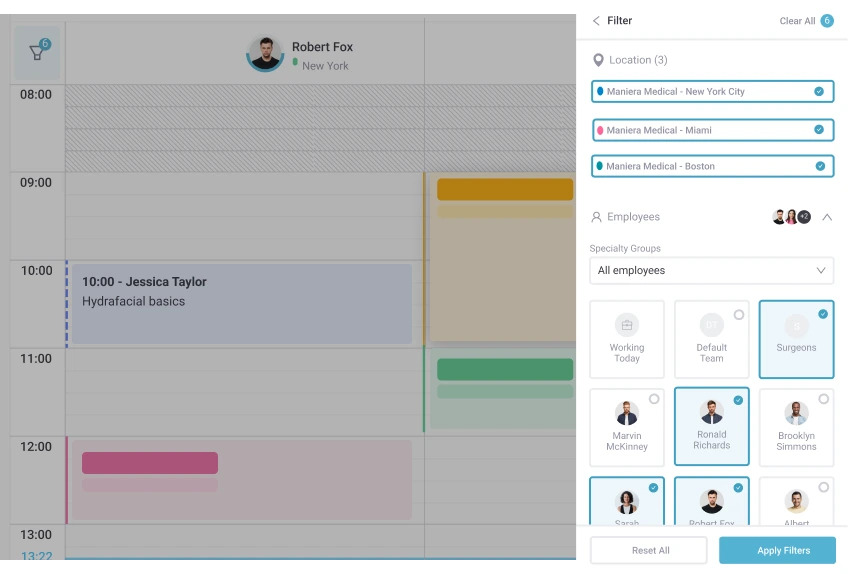
According to Capterra reviewers, Pabau’s all-in-one approach and customisable forms are consistently cited as key strengths. One reviewer described it as the platform that “finally connects our forms, notes, and billing without spreadsheets in between.” Community feedback also highlights the quality of onboarding support as a differentiator for practices switching from legacy systems. The patient portal software component is noted by users as reducing front desk workload for routine intake tasks.
SimplePractice has built a strong reputation among solo therapists and small mental health practices. The client portal is consistently praised for its clean interface, and Care Aide’s Intake Summaries deliver genuine value for practitioners who see multiple new clients per week and want to arrive at sessions informed without reading through every document manually.
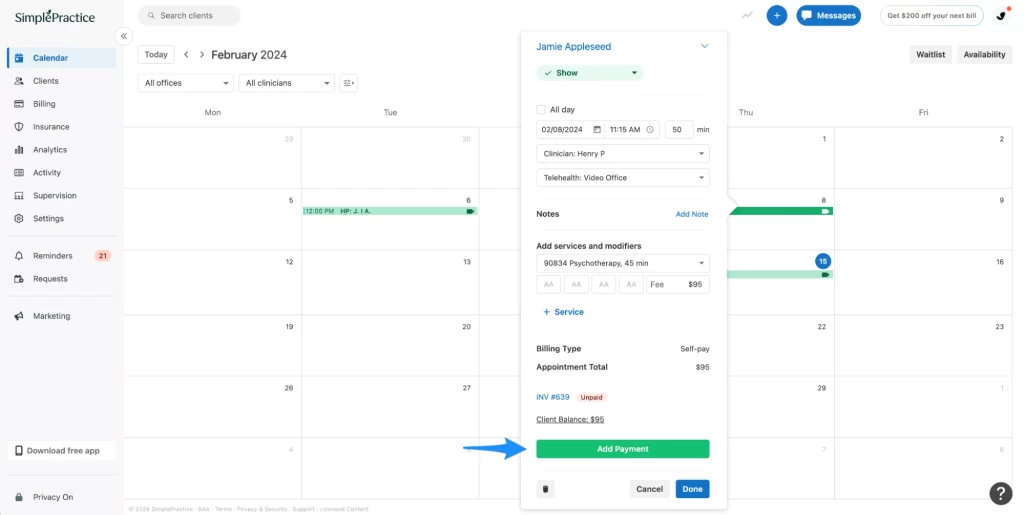
According to Capterra reviewers, SimplePractice earns 4.6/5, with users frequently praising its ease of use for solo practitioners and the quality of its intake and documentation templates. On G2, the platform holds 4.4/5, with users noting the portal experience as particularly strong for client-facing interactions.
Pricing transparency differs significantly between the two platforms. Pabau’s plans start from $65/month and scale with clinic complexity, team size, and feature set. SimplePractice uses tiered per-clinician pricing (Starter, Essential, Plus plans) that is publicly listed on their website. For current SimplePractice pricing, check simplepractice.com directly, as rates change periodically and some user reviews note pricing increases over time.
For solo therapists evaluating cost, SimplePractice’s published per-clinician pricing gives a clear entry point. For multi-specialty or multi-location clinics, Pabau’s all-in-one pricing model tends to provide better value because it eliminates the need for separate tools for consent management, clinical notes, and billing. Practices considering the full cost of ownership should factor in the additional tools SimplePractice does not include natively.
Before committing to either platform, map your clinic’s actual intake workflow: how many forms, which consent documents, and how intake data needs to connect to your clinical records. The right software is the one that eliminates manual steps in your specific process, not the one with the longest feature list.
Most of this article has focused on comparing the two platforms as equals across shared criteria. This section addresses why practitioners evaluating AI patient intake beyond therapy workflows should give Pabau serious consideration.
Pabau is not a therapy platform with intake features added. It is a clinic operating system built from the ground up to handle the workflows of aesthetic clinics, med spas, physiotherapy practices, dermatology, longevity medicine, and multi-specialty private practices. The intake automation is designed with these environments in mind: contraindication screening during intake, consent documentation before cosmetic procedures, and clinical record access that ties treatment history to future appointment planning.
For clinics that need medical spa software or those running multi-specialty models, Pabau’s intake workflow connects to scheduling, inventory, billing, and clinical records in one system. For practices where front desk efficiency directly affects revenue, eliminating manual form chasing and consent document handling has immediate operational impact. Practices managing therapy practice management alongside clinical specialties will find Pabau’s breadth more accommodating than SimplePractice’s therapy-centric design.
Pabau Scribe adds a post-intake AI layer, generating clinical notes from consultations and reducing documentation time after the appointment. Combined with automated pre-appointment intake, the result is a workflow where AI handles structured data collection before the session and note generation after it, with the clinician focused on the patient in between. For those evaluating the best EHR for private practice, Pabau’s breadth across specialties is a key differentiator.
The decision between these two platforms is not particularly difficult once the practice type is clear. Both do what they claim, for their intended audience.
The overlap is small. A therapist running a solo practice with standard intake needs will not benefit from Pabau’s clinical procedure workflows. An aesthetic clinic owner will find SimplePractice’s therapy-centric form library and lack of consent automation a significant limitation. Knowing your specialty and your workflow complexity resolves the choice.

Running a multi-specialty clinic and need to understand AI’s broader role? AI in Practice Management covers how automation is reshaping clinical and administrative workflows across practice types.
Thinking about going fully paperless with your intake process? Going Paperless in Your Clinic outlines the practical steps and time savings from eliminating paper-based intake.
Need to understand HIPAA requirements for your intake software? HIPAA Compliance for Clinic Software breaks down what your platform must provide and how to verify it.
The gap between manual intake and effective AI patient intake is not just about saving front desk time. It is about whether the data collected before an appointment actually reaches the clinician in a usable form, whether consent is documented before treatment begins, and whether the practice can scale without adding administrative headcount to manage the paperwork.
SimplePractice solves this well for therapy practices. Pabau solves it for the wider clinical world: aesthetic clinics, med spas, physiotherapy, dermatology, and multi-specialty practices that need intake, consent, records, and billing to function as one system. If that describes your practice, book a demo to see how Pabau’s automated intake workflow handles your specific specialty.
An AI patient intake agent automates the collection of patient information before a clinical encounter, including demographics, medical history, consent, and symptom data. Unlike a static digital form, an AI agent can adapt questions based on patient responses, route data directly to the clinical record, and in some platforms, synthesise the completed intake into a session-ready summary for the clinician.
Digital intake forms are electronic versions of paper questionnaires sent to patients before appointments. AI patient intake goes further: it may use conditional logic to adapt the form, apply natural language processing to capture unstructured responses, synthesise completed forms into clinical summaries, or flag contraindications automatically. The distinction is whether the system passively collects data or actively processes and contextualises it.
HIPAA compliance depends on the specific platform, not the category of technology. Both Pabau and SimplePractice maintain HIPAA compliance and offer Business Associate Agreements. Before deploying any AI intake tool, practices should confirm that AI-generated features (such as intake summaries or note drafts) are explicitly covered under the BAA, not just the core platform.
Integration approach varies by platform. All-in-one systems like Pabau store intake data natively within the same platform as clinical records, so no external sync is needed. Standalone intake tools typically use HL7 FHIR or API connections to push data into a separate EHR. Native integration eliminates sync errors and ensures real-time data availability, which matters most in high-volume or multi-practitioner settings.
AI intake automates the data collection and routing functions that front desk staff currently manage manually, but it does not replace the relationship and judgement roles that staff handle. Practices typically find that AI intake reduces administrative burden per patient rather than eliminating positions, freeing staff to focus on patient-facing tasks and exception handling rather than paperwork.