Mental Health Practice Marketing: 7 Strategies That Work
Approximately 58.7 million adults in the United States had a mental illness in t...

April 22, 2026


Buy now, pay later is now available in Pabau

Mental health practice marketing works best when it combines digital visibility, ethical positioning, and operational systems that reduce friction for new clients.
Therapist directory profiles on platforms like Psychology Today remain one of the highest-conversion discovery channels for private practices.
Practices that fail to link their marketing to their intake and booking workflows lose clients between first contact and first appointment.
Pabau’s online booking, automated reminders, and email/SMS campaigns turn marketing visibility into confirmed appointments.
Approximately 58.7 million adults in the United States had a mental illness in the past year, and nearly half did not receive any mental health treatment, according to NIMH mental illness statistics (based on SAMHSA NSDUH data). The gap is not purely about access or cost. A significant share of those untreated individuals simply cannot find a provider who feels right for them, in a format that works, at a moment when they are ready to reach out. That is a marketing problem. For therapists and mental health practice owners, mental health practice marketing is not a commercial exercise – it is how the right clients find the right clinician at exactly the right time.
This guide is for solo practitioners, group practice owners, psychologists, counselors, and psychiatrists who want to grow sustainably. It covers the seven highest-impact marketing channels for mental health practices, ethical considerations you cannot afford to ignore, and how your operational systems either support or undermine everything your marketing builds. Whether you are launching a new practice or filling gaps in an established caseload, the strategies here apply.
Most prospective therapy clients start their search the same way they find any local service: Google. A practice that does not appear in local search results for terms like “therapist near me” or “anxiety counseling [city]” is invisible to the majority of people who need it. Mental health practice marketing begins with making sure your digital presence can be found.
A therapy website does three jobs: it helps search engines surface you, it communicates who you help and how, and it converts visitors into inquiries or bookings. A 2024 mixed-methods study in BMC Health Services Research examining how college students engage with U.S. university mental health clinic websites found that sites which clearly describe service types, the evidence base for treatments, cost information, therapist backgrounds, and use lay language generated greater consumer interest and trust – findings that translate directly to private practice website design. Every one of those elements is a marketing and SEO decision.
Structure your site around the questions a prospective client actually asks: What issues do you treat? What does a first session look like? Do you take insurance? How do I book? Answer each question directly, without jargon. Clinicians who specialize (trauma, perinatal mental health, adolescents) should make that specialization prominent – both because it attracts the right clients and because it signals authority to search engines.
A verified and fully completed Google Business Profile is the single fastest way to appear in local search results and Google Maps. Practices that keep their profile updated with accurate hours, services, photos, and a consistent NAP (name, address, phone number) across all directories rank significantly better in local searches. Request Google reviews from satisfied clients – within HIPAA and ethics guidelines – because review volume and recency directly affect local ranking.
For telehealth-only practices, local SEO still applies. Target the geographic areas you serve in your page titles, meta descriptions, and body content. A therapist licensed in California who sees clients via video can still rank for “online therapist California” by clearly stating service area and modality throughout the site.
Therapist directories are a distinct discovery channel from search engines and deserve separate attention. Psychology Today’s directory is widely cited by practitioners as the highest-volume client self-referral source among directory platforms. TherapyDen and GoodTherapy offer smaller but more niche-aligned audiences. Optimizing your profiles on these platforms – compelling bio, clear specialty focus, updated availability, and a professional photo – is a relatively low-effort, high-return activity for most practices.
A common mistake: clinicians list every modality they are trained in rather than the 2-3 they most want to be known for. Directories reward specificity. A profile that clearly states “I specialize in OCD and anxiety disorders in adults” will outperform a profile that lists 15 approaches and 8 client populations. Specificity is both better marketing and better client matching.
Content marketing and social media marketing for clinics serve a different function from directory listings or paid ads. They build trust over time. A prospective client who has read three of your blog posts or watched your videos explaining your approach to grief therapy will arrive at their first session with a sense of connection that a directory profile cannot replicate.
Blog content compounds. A well-optimized post answering “what is cognitive behavioral therapy for insomnia” can generate organic traffic for years, attracting exactly the client population you want to serve. Write for the searches your ideal clients are already making – not for clinical peers. Focus on their questions, their concerns, and the language they use when they are trying to understand their own mental health.
One practical approach: document the five questions new clients most frequently ask during consultations. Each one is a blog post. Each blog post is a search-intent match. Each search-intent match is a potential new client who finds your practice through organic search rather than paid advertising.
Not every platform is right for every practice. Instagram and TikTok work well for practices targeting younger adult populations and willing to invest in short-form educational content. LinkedIn is more effective for practitioners building referral networks with HR departments, employee assistance programs (EAPs), and other healthcare professionals. Facebook Groups can be useful for reaching specific demographics or communities.
Consistency beats volume. A practice that publishes one high-quality, genuinely helpful post per week will outperform one that posts daily with generic mental health quotes. The American Psychological Association’s ethics code and equivalent professional standards (NASW, ACA) require that social media content does not exploit vulnerable populations, create false impressions, or blur the therapeutic relationship. Mental health professionals must apply these standards to every post, story, and comment.
| Platform | Best For | Content Type | Ethical Watch Point |
|---|---|---|---|
| Instagram / TikTok | Young adults, general awareness | Short educational videos, infographics | Avoid case-adjacent content |
| Referral partners, EAPs | Thought leadership, professional updates | Professional tone, no client stories | |
| 30-55 demographics, groups | Community education, Q&As | No unsolicited outreach | |
| YouTube | In-depth education, trust-building | Therapy explainers, FAQ videos | Clear disclaimers, not clinical advice |
Audit your social media content quarterly against your professional ethics code. Ask: could this post be misread as a therapeutic relationship or a clinical recommendation? When in doubt, add a clear disclaimer that content is educational and not a substitute for professional care.
Word-of-mouth and professional referrals remain two of the most reliable sources of new clients for established mental health practices. A systematic approach to clinic marketing treats referral development as a formal channel, not an informal hope. Your referral network should include general practitioners, pediatricians, school counselors, employee assistance programs, HR departments, and relevant community organizations.
The most effective referral relationships are two-directional. Rather than simply asking GPs to refer to you, identify the types of clients you cannot serve well (outside your specialty, waitlisted, requiring medication management) and refer them appropriately. This builds trust and reciprocity that sustains referral flow over the long term.
Group practices can assign a specific team member to referral relationship management, treating it as an ongoing business development function rather than an ad hoc activity. Solo practitioners benefit from joining local peer consultation groups where natural referral networks form organically around complementary specialties.
The biggest gap in most mental health practices’ patient acquisition strategies is not at the top of the funnel – it is in the space between first contact and first confirmed appointment. A prospective client who emails at 11pm on a Sunday and receives no response until Tuesday often books elsewhere. The practice spent marketing budget to generate that inquiry and then lost the conversion to friction.
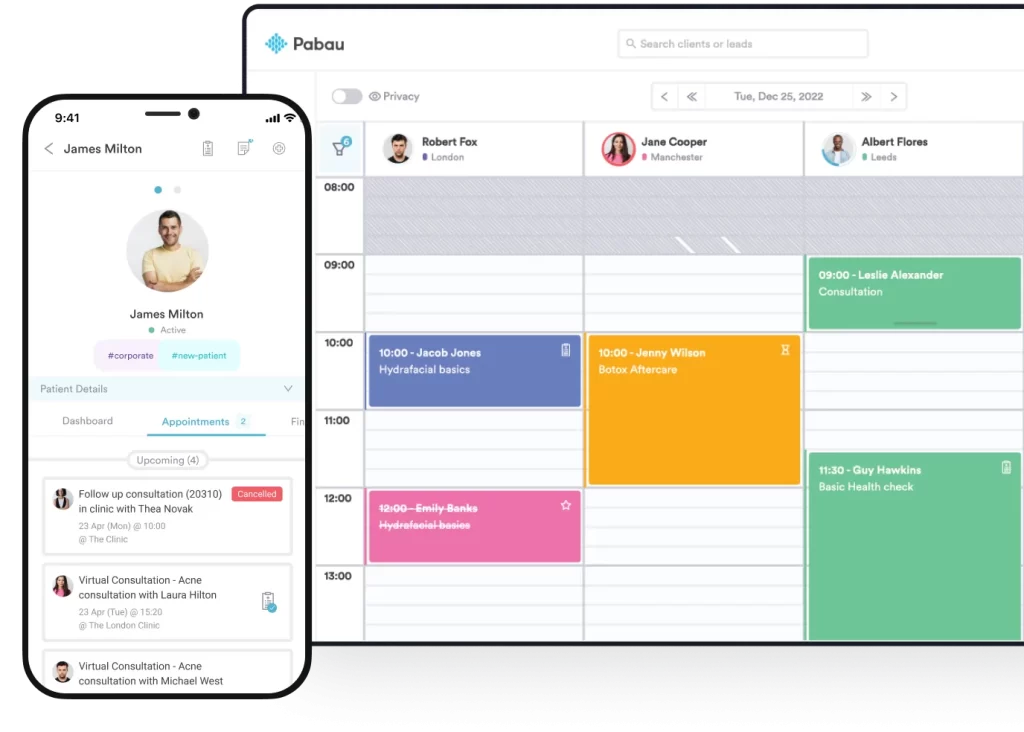
This is where practice management software directly enables marketing outcomes. Online booking that allows clients to self-schedule at any hour converts interest into appointments without requiring a staff member to be available. Automated confirmation and reminder messages reduce no-shows, which directly affects the revenue that funds your marketing. A practice with a 20% no-show rate cannot sustainably invest in client acquisition because it is constantly replacing lost appointments rather than growing capacity.
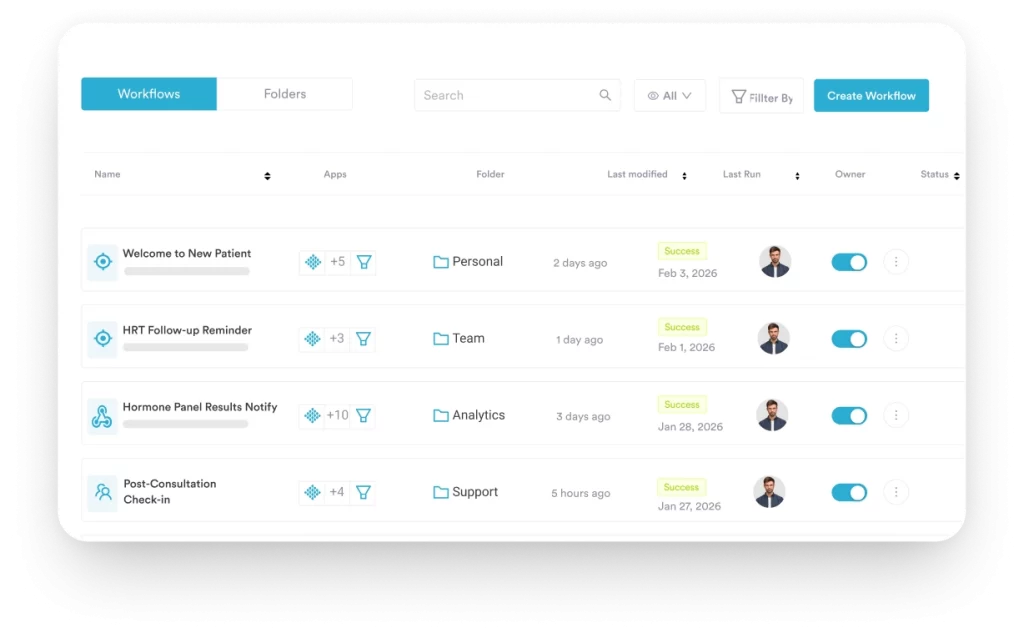
Pabau’s platform provides this infrastructure for mental health and therapy practice management: an embeddable booking widget for your website or social profiles, automated workflow sequences for appointment reminders and follow-ups, and email and SMS campaigns for client re-engagement. These tools close the conversion gap that most marketing guides ignore entirely.

From online booking that converts late-night inquiries to automated recall campaigns that bring dormant clients back, Pabau handles the operational side of practice marketing so you can focus on clinical care.

Retention is cheaper than acquisition by a significant margin. A therapy practice that reliably improves patient engagement and reduces premature dropout has a compounding revenue advantage over one that constantly cycles new clients. Retention-focused marketing includes everything that happens after the first appointment: communication quality, the ease of rebooking, how well the practice handles gaps in care, and whether clients feel seen between sessions.
A monthly newsletter to former and current clients keeps your practice present in their lives without clinical contact. Content that performs well for mental health practices includes: seasonal mental health topics (back-to-school anxiety, seasonal affective disorder in autumn), psychoeducation on common conditions you treat, and practical self-care strategies. The goal is to be genuinely useful, not promotional.
Under HIPAA, email newsletters to clients require opt-in consent and must be sent through HIPAA-compliant communication channels. For UK and EU practices, GDPR applies equivalent or stricter standards. The CAN-SPAM Act governs commercial email in the US and sets requirements for unsubscribe mechanisms and sender identification. Compliance here is non-negotiable – a data breach or consent violation can destroy the reputation that your marketing spent years building.
A client portal does more than handle administrative tasks. It creates a consistent, professional touchpoint between sessions that reinforces the client’s relationship with your practice. Practices that offer self-service rebooking, secure messaging, and easy access to intake forms through a portal report fewer administrative no-shows and higher rates of self-initiated re-engagement after a break in care.
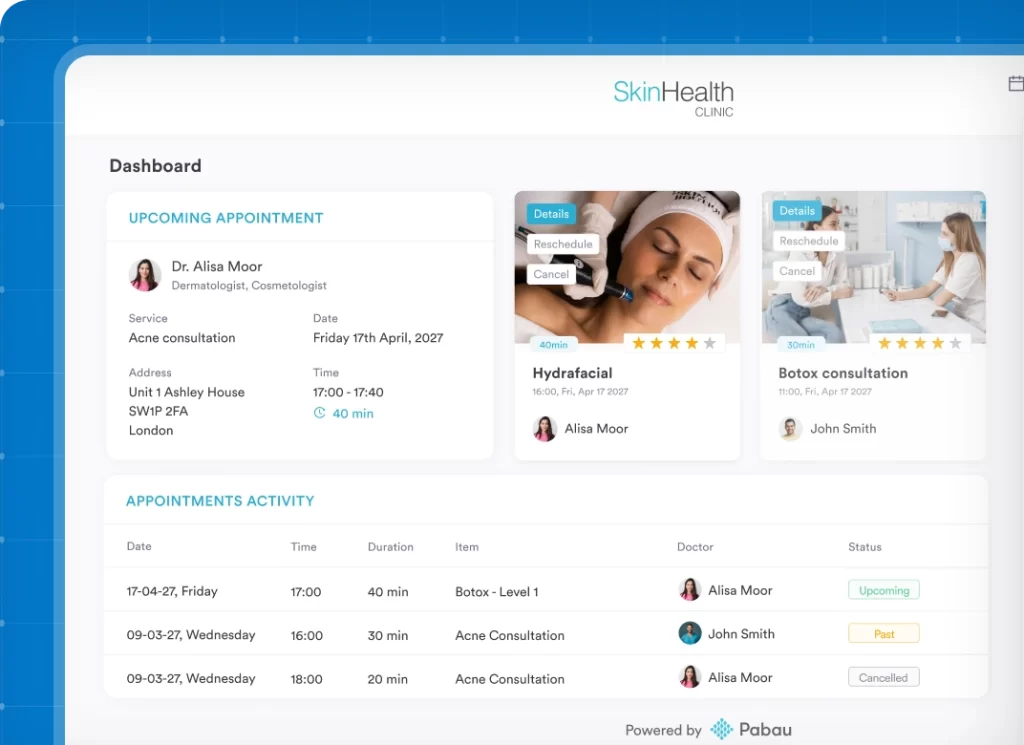
Combined with automated re-engagement campaigns that reduce no-shows and prompt clients who have lapsed to rebook, a client portal functions as a passive retention marketing channel. You are not spending on advertising to win back a client who simply fell out of the habit of booking – the system does it automatically.
Track client source data for every new intake. Ask ‘How did you hear about us?’ on your intake form and record it in your practice management system. After six months, you will know which marketing channels are actually converting – and which are costing money without results.
The APA Ethics Code, the NASW Code of Ethics, and the ACA Code of Ethics all address marketing and advertising standards for mental health professionals. The common thread: marketing must not be false, deceptive, or misleading; must not exploit vulnerable individuals; and must not create unrealistic expectations about outcomes. These standards are binding on licensed practitioners and their practices.
In practice, ethical mental health practice marketing means several concrete things:
Ethical marketing is also good marketing. Practices that communicate authentically, set realistic expectations, and demonstrate genuine expertise attract clients who are well-matched and likely to complete treatment. Overpromising attracts clients who leave disappointed – and leave reviews that damage the practice’s reputation.

Need to build a structured therapy intake process? Psychiatric Evaluation Template provides a step-by-step framework for comprehensive mental health assessments that support both clinical quality and professional credibility.
Looking to convert more inquiries into booked appointments? Converting Leads into Customers covers the operational and communication tactics that close the gap between first contact and confirmed booking.
Want to understand the full scope of practice management for mental health? Psychology Practice Software outlines the features and workflows that support psychology and therapy practices at every stage of growth.
Exploring how automation supports client retention? Clinic Automations for Revenue Growth details the specific automation touchpoints that reduce admin burden and keep clients engaged throughout their care journey.
Most mental health practices have better clinical outcomes than their marketing reflects. The gap is operational – potential clients who never find the practice, inquiries that go unanswered for too long, and retention systems that rely on clients to self-manage their own re-engagement. Mental health practice marketing addresses each of those gaps systematically.
Pabau’s combination of online booking, automated reminders, recall campaigns, and client portal gives practices the infrastructure to turn marketing visibility into confirmed appointments and confirmed appointments into long-term client relationships. Book a demo to see how Pabau handles the operational layer of practice growth.
Start with free and low-cost channels: fully optimise your Google Business Profile, complete your Psychology Today or GoodTherapy directory profiles, and publish two to three blog posts targeting questions your ideal clients search for. These three activities cost primarily time and can generate consistent organic inquiries without paid advertising spend.
For most practices, the combination of a well-optimised therapist directory profile and a targeted referral network with two or three primary care providers produces the highest and most consistent volume of new client inquiries. Digital content and social media build trust over time but typically take 6 to 12 months to generate meaningful organic traffic.
Most professional ethics codes, including those from the APA and ACA, prohibit soliciting testimonials from current therapy clients because of the inherent power differential in the therapeutic relationship. Former clients who independently choose to leave public reviews are generally treated differently, but practices should review their specific licensing board guidance and seek legal advice before using any client-generated content in marketing materials.
Local SEO is now a foundational channel for most private practices. Searches for “therapist near me,” “anxiety counseling [city],” and condition-specific terms generate millions of monthly searches in the US alone. A practice that ranks in the top three local results for its specialty and geography will typically see 30 to 60 percent of organic website traffic from those local search queries.
Optimise your website and directory profiles with explicit telehealth language and the geographic areas where you hold licensure. Target keywords like “online therapist [state]” or “telehealth CBT” in your content. Listing on telehealth-specific directories and ensuring your online booking system clearly accommodates virtual appointments reduces friction for remote clients at the point of conversion.