

Setmore Reviews: Scheduling Tool vs Clinical Platform (2026)
Setmore Reviews: What Clinics and Healthcare Practices Need to Know Most setmore...

April 16, 2026


Buy now, pay later is now available in Pabau

Setmore reviews highlight strong support and an easy-to-use free tier, but consistent gaps in clinical documentation and HIPAA posture limit its suitability for regulated healthcare practices.
Pabau includes integrated EHR, consent forms, treatment records, and prescription management – features entirely absent from Setmore’s scheduling-only platform.
Setmore’s free plan covers up to 4 staff members, while Pabau’s per-user pricing bundles clinical and administrative tools in one system suited to growing clinics.
Clinics requiring GDPR or HIPAA compliance, multi-location management, or clinical workflow automation should evaluate Pabau before committing to a general-purpose booking tool.
Most setmore reviews focus on ease of use and the free tier. Few examine what happens when a healthcare practice outgrows a general booking page and needs clinical documentation, compliance infrastructure, and multi-practitioner workflows. That gap is where this comparison starts.
Setmore is a legitimate scheduling tool with genuine strengths for small service businesses. Pabau is a purpose-built clinical platform for medical, aesthetic, and wellness practices. They solve different problems, and understanding that distinction could save a clinic owner significant time and cost when switching systems later.
This guide covers scheduling, clinical workflow support, HIPAA and GDPR compliance, billing, integrations, pricing, and user reviews – giving clinic operators a direct, evidence-based answer to which platform fits their needs. For context on how these platforms sit alongside other medical spa scheduling software options, see Pabau’s broader category guide.
Before the full analysis, here is how the two platforms compare across the criteria that matter most to clinic operators.
Setmore’s scheduling interface is where most positive setmore reviews concentrate. The platform offers a clean online booking page, support for multiple staff calendars, automated reminders via email and SMS, and two-way sync with Google Calendar and Microsoft Office 365. For a solo therapist or a small salon, that covers most of what daily operations require.
Where the platform runs into friction is at the edges of more complex booking scenarios. A community review from Reddit’s r/pilatesinstructors (July 2025) flagged that Setmore does not support different minimum booking advance times per service or class type. That limitation matters when a clinic runs injection appointments with a 48-hour lead requirement alongside standard consultations that can be booked same-day. The system treats all services identically, which creates workarounds for clinical teams.
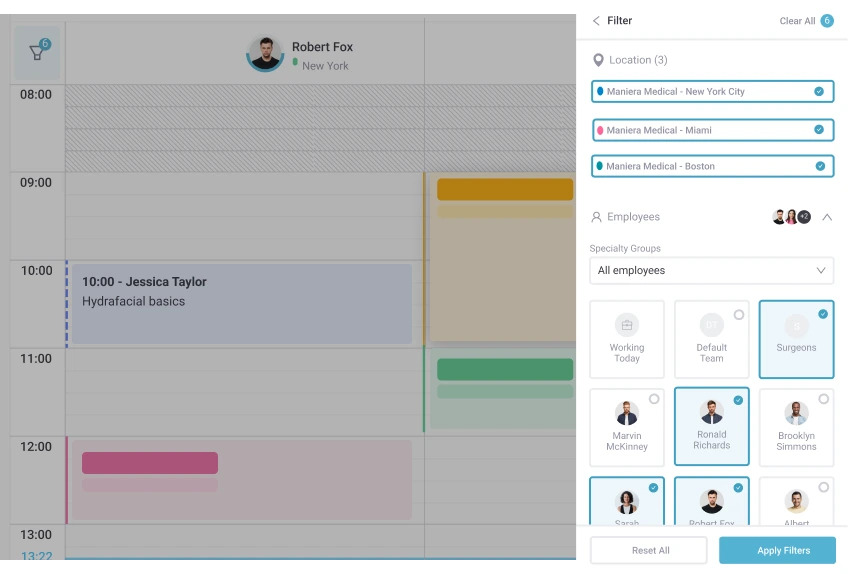
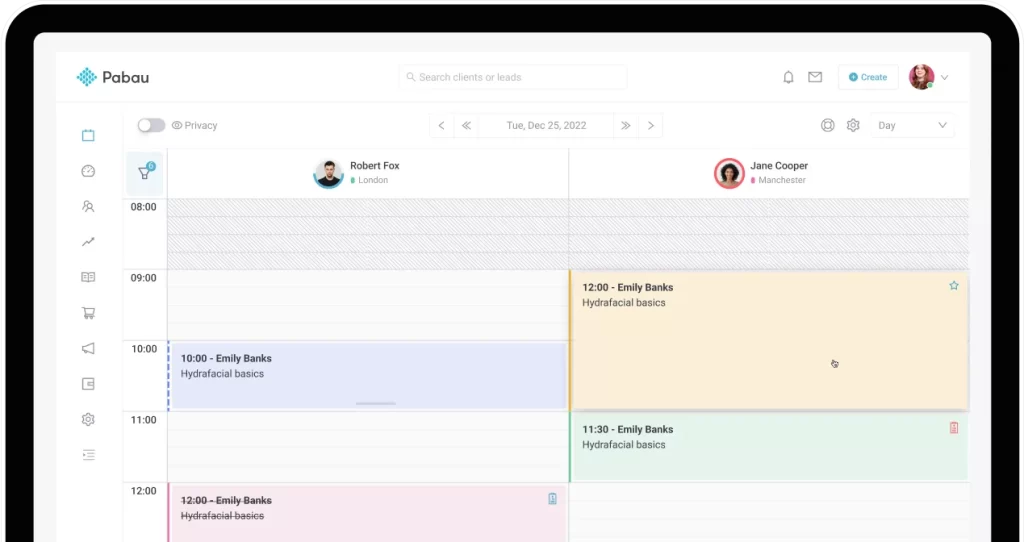
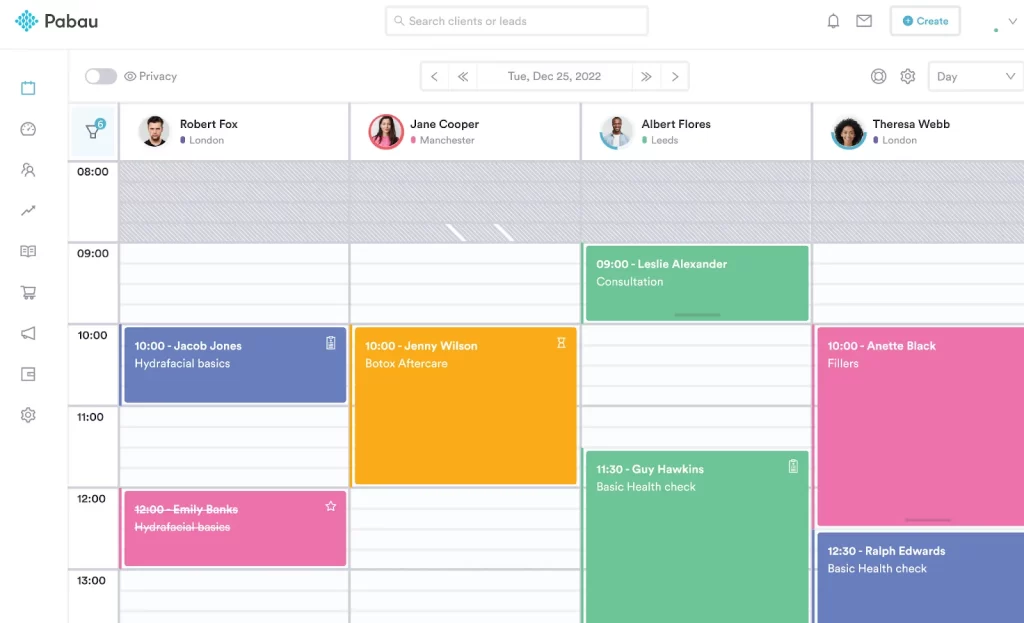
Pabau approaches scheduling as part of a larger clinical workflow. Booking is tied to patient records, consent requirements, and pre-appointment intake forms. When a patient books online, the system can automatically send relevant consent documents before they arrive. A practitioner viewing the calendar sees not just the appointment time but the full clinical context: prior treatment history, outstanding forms, and any contraindication flags.
For multi-location management, the difference sharpens further. Setmore supports multiple locations at the team plan level, but centralised oversight across sites, shared patient records, and cross-location reporting are areas where Pabau’s architecture has a structural advantage. A clinic group running three sites cannot easily see a unified view of capacity, revenue, and clinical activity in Setmore. Pabau is designed specifically for that operational model.
This is the most consequential difference between the two platforms. Setmore is a scheduling tool. It books appointments, sends reminders, and collects payment at checkout. It does not store medical notes, generate treatment records, manage consent documentation, or support prescriptions. For a business coach or a personal trainer, that is perfectly adequate. For a clinic administering injectables, managing dermal filler treatment histories, or running an IV therapy service, it is a critical gap.
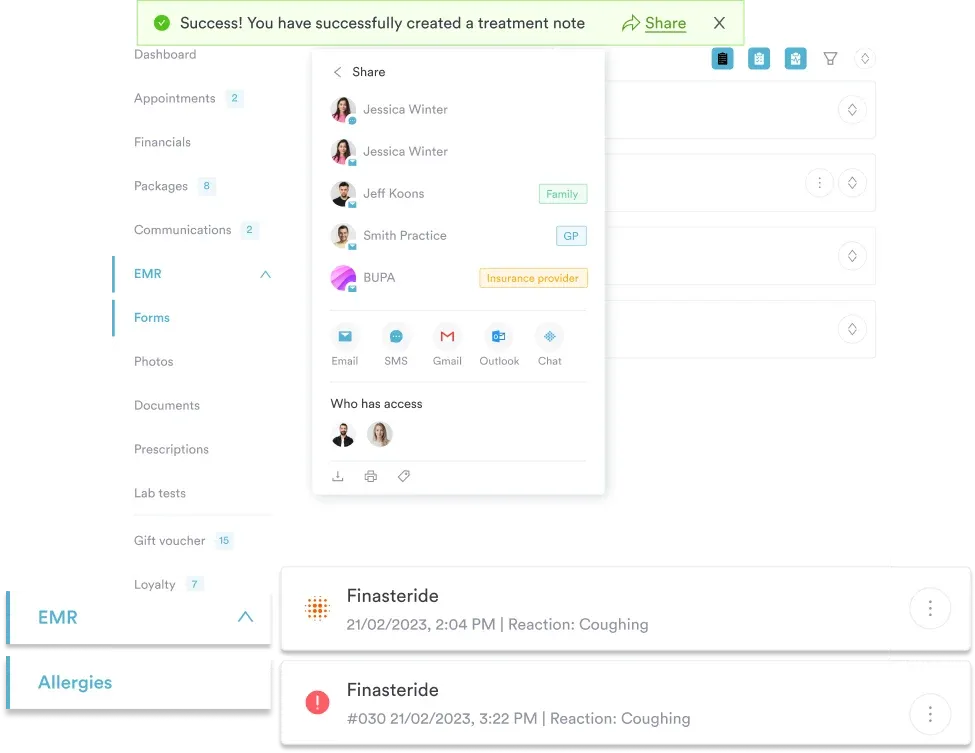
Pabau integrates clinical documentation directly into every patient record. Digital consent forms are sent and completed before the appointment. Practitioners write structured medical notes within the platform, linked to the treatment record. Prescriptions can be created and stored. Before-and-after photos are attached to the relevant treatment episode. Every clinical interaction is traceable from the patient timeline.
The practical consequence for a clinic using Setmore is running a parallel system: one tool for bookings, a separate EHR or paper notes system for clinical records, and potentially a third tool for consent management. That fragmentation adds staff time, creates data inconsistency risks, and complicates audit trails if the practice is ever reviewed by a regulator. Pabau removes that complexity by unifying the entire patient journey in one place.
Maintaining accurate client records is not just an operational preference for regulated healthcare providers. It is a regulatory requirement under CQC (Care Quality Commission) standards in the UK and equivalent frameworks in other markets. A booking tool cannot substitute for a compliant clinical records system.
Before committing to any scheduling platform, map out your regulatory requirements first. If your clinic operates under CQC, HIPAA, or GDPR obligations, a scheduling-only tool cannot fulfil your clinical records documentation requirements. List the specific record types your regulator requires and check whether each platform stores, links, and exports them correctly.
Compliance is where setmore reviews in healthcare contexts become cautious. Setmore’s HIPAA posture is not prominently advertised, and the platform is not primarily positioned as a healthcare compliance tool. Users on community platforms have flagged uncertainty about whether Setmore meets HIPAA requirements for protected health information (PHI). This concern is worth taking seriously: a booking tool that processes patient names, contact details, and appointment types is handling data that may qualify as PHI under US law, even without clinical notes attached.
Healthcare practices asking whether they need a HIPAA-compliant practice management system will find that the answer is almost always yes for any practice handling patient identifiable information in the US. The HHS Office for Civil Rights applies HIPAA requirements to covered entities and their business associates, which can include software vendors. A platform that does not have a signed Business Associate Agreement (BAA) process cannot legally be used to store or transmit PHI.
For UK-based clinics, the relevant framework is GDPR and, for regulated healthcare providers, CQC standards. Pabau is built with GDPR compliance as a core design principle. Data residency, access controls, and consent management are built into the platform rather than bolted on. For clinic operators reviewing HIPAA compliance for clinic software, Pabau’s documentation and compliance infrastructure provide a more audit-ready foundation than a general-purpose booking tool.
Setmore may be appropriate for a non-clinical business, a wellness coach, or a personal trainer who is not handling regulated health data. For practices that are, independent legal review of Setmore’s data handling agreements is advisable before deployment.
Setmore processes payments via Square and Stripe integrations at the point of booking. Clients pay when they book online, which reduces no-shows and simplifies deposit collection for small service businesses. That is a meaningful capability, and setmore reviews regularly cite it as a practical benefit for solo operators who want to remove phone-based payment friction.

A notable development flagged by community users (Reddit r/smallbusiness, December 2025) is that Setmore introduced additional application fees for Stripe payments. This reportedly frustrated some existing users who had calculated their processing costs without this fee layer. As of writing, this should be independently verified against Setmore’s current pricing documentation before making a decision based on payment cost projections.
Pabau’s payment processing is integrated within the clinical billing workflow. Invoices are generated from the treatment record, not from the booking alone. Package management, deposits, and outstanding balance tracking are all handled within the platform. For a medical spa running course-of-treatment packages, or a physiotherapy practice billing per-session against a pre-sold package, that integration eliminates reconciliation work that would otherwise require a separate accounts tool.
Setmore does not offer advanced invoicing, package management, or clinical billing workflows. Practices with these requirements typically find themselves managing a spreadsheet or accounting tool alongside Setmore, adding administrative overhead that grows with patient volume.

Pabau combines online booking, clinical documentation, consent management, and billing in one system built for healthcare and aesthetic practices. Book a personalised demo to see how it fits your clinic's workflow.

Setmore integrates with Google Calendar, Microsoft Office 365, Zoom, Square, Stripe, and several social platforms including Instagram and Facebook for direct booking. For a service business running primarily through social media and calendar-based scheduling, that integration set covers the essentials well. The Zoom integration makes Setmore a reasonable tool for virtual consultations in non-clinical contexts.
Pabau’s integrations are curated around clinic operations rather than general business tools. The platform connects with marketing tools including Mailchimp, payment gateways suited to healthcare contexts, and clinical system integrations relevant to UK and EU healthcare environments. The emphasis is on closing the loop between patient acquisition, clinical delivery, and financial reporting – which is a different integration philosophy from Setmore’s general-purpose connectivity.
Neither platform offers an unlimited integration ecosystem. Practices with specific third-party dependencies should verify compatibility before committing to either tool. Pabau’s integrations page lists current connectors; Setmore’s integration directory is available on their website. For practices considering alternatives, Setmore vs Fresha covers another direct comparison in the booking software category.
Setmore’s pricing is one of the most discussed elements in setmore reviews. The free plan supports up to 4 staff members with basic scheduling, which makes it genuinely attractive for very small teams testing appointment management for the first time.
Comparing the two on headline price alone misleads the analysis. Setmore’s cost looks lower at entry level because the platform does not include clinical documentation. A clinic buying Setmore also needs an EHR system, a consent management tool, and potentially a separate billing platform. When those costs are aggregated, Pabau’s per-user model often represents stronger value for an established medical or aesthetic practice. Practices exploring alternatives to general booking tools can review the full landscape in Pabau’s best booking software guide.
Across verified review platforms, setmore reviews consistently highlight several genuine strengths. According to Capterra reviewers, Setmore earns a 4.6 out of 5 rating based on 958 reviews, with users repeatedly praising customer support quality, ease of onboarding, and pricing accessibility. The platform’s support team receives unusually strong feedback for a software product in this category.
The same review sources that praise Setmore’s support also surface recurring limitations. According to G2 reviewers, where Setmore holds a 4.5 out of 5 rating based on over 265 reviews, users flag user management complexities for larger teams and limited flexibility in service configuration.
Pabau is rated 4.7 out of 5 based on over 600 verified reviews on Capterra. Reviewers consistently highlight the platform’s depth of clinical functionality and the quality of onboarding support for practices transitioning from paper records or legacy systems. As a platform built for medical spa software and broader clinical environments, it covers use cases that no general scheduling tool can match.
Capterra reviewers also note that Pabau has a steeper learning curve than simpler booking tools. Practices migrating from a basic system should plan for a structured onboarding period. The platform’s depth of configuration is an asset for complex clinical operations, but it requires investment to set up correctly. Setup complexity for multi-location practices is the most frequently cited operational challenge in reviews.
When evaluating Pabau, request a clinic-specific demo rather than a generic product walkthrough. Show the demo team your current workflow, including the clinical forms you use and the staff structure across locations. This helps the implementation team configure the system correctly from day one and reduces the learning curve substantially.
The right choice depends on what your practice actually does, not just how many appointments it books per week. Based on setmore reviews and Pabau’s track record across clinical environments, here is the clearest framework for the decision.
Choose Setmore if: You run a solo or very small service business with no clinical documentation requirements. You want a free or near-free tool to manage basic appointment scheduling. Your team is already embedded in Google Calendar or Office 365 and needs a lightweight booking layer on top. HIPAA and CQC compliance are not relevant to your specific operation.
Choose Pabau if: You operate a medical, aesthetic, or wellness clinic with clinical documentation requirements. You need consent forms, treatment records, and prescriptions integrated with your booking system. You manage multiple practitioners, multiple locations, or both. Your practice is subject to GDPR, HIPAA, CQC, or equivalent data and clinical standards. You want to reduce the number of systems your team manages and eliminate reconciliation work between tools. Pabau’s wellness clinic and multi-specialty capabilities make it particularly well-suited for practices that span multiple treatment modalities.
Setmore reviews across Capterra and G2 share a consistent narrative: users value the product for what it is, and the frustrations emerge when practices try to stretch it beyond its design intent. A representative Software Advice reviewer wrote: “Setmore guarantees flexibility and accessibility for both clients and businesses with its mobile app and connectivity with well-known calendar services.” That framing, “calendar services,” is telling. Setmore is positioned by its satisfied users as a scheduling tool, not a clinical platform.
Trustpilot hosts active Setmore reviews with recent feedback (as of writing) including a user managing multiple California locations praising the live support experience. Responsive support is a genuine differentiator for Setmore, particularly for small business operators who need quick help without a dedicated IT team.
Pabau’s Capterra reviews emphasise depth of functionality and onboarding quality. “All-in-one clinical and scheduling platform” and “comprehensive clinical documentation tools” are recurring themes in positive reviews. The negative reviews focus on setup time and the learning investment, which aligns with the more complex operational scope the platform covers. For practices considering how Pabau compares in adjacent categories, the practice management software guide covers the broader decision landscape.

Need a platform comparison grounded in clinical requirements? Setmore vs Fresha examines how both compare against a third booking-focused competitor across healthcare and wellness use cases.
Evaluating HIPAA compliance requirements for your clinic? HIPAA Compliance for Clinic Software outlines what regulated practices must look for when selecting a software platform.
Managing a multi-location practice and assessing scheduling complexity? Pabau Multi-Location details how centralised oversight, shared records, and cross-site reporting work in practice.
Setmore reviews reveal a product that delivers well within a defined and limited scope. For small, non-clinical service businesses, it is a cost-effective scheduling solution with genuinely good customer support. The problem surfaces when healthcare practices deploy it in contexts that require clinical documentation, compliance infrastructure, and integrated billing – none of which Setmore provides.
Pabau is built for exactly the operational environment where Setmore reaches its ceiling. Integrated EHR, automated consent workflows, multi-location scheduling, and GDPR-compliant data handling are not add-ons in Pabau – they are the product. For clinics ready to operate on a single unified platform, book a demo with Pabau to see how the system maps to your specific workflow.
Setmore is a capable scheduling tool for small service businesses. It handles multi-staff calendars, automated reminders, and online booking well. For healthcare practices requiring clinical documentation, HIPAA compliance, or integrated billing, it lacks the features needed to operate as a complete practice management system.
Setmore offers a free plan supporting up to 4 staff members with basic scheduling features. Paid plans (Pro and above) add payment integrations and additional functionality. Pricing is approximately $5 to $12 per user per month at the Pro level, though you should verify current rates directly at setmore.com/pricing as fees may have changed.
For healthcare and aesthetic clinics, Pabau is the most direct alternative because it combines scheduling with an integrated EHR, consent forms, and billing workflows. Other alternatives including Cliniko and Jane App are designed for allied health practices. The right choice depends on whether your clinic needs clinical documentation alongside booking capability.
Setmore is not prominently marketed as a HIPAA-compliant platform. Healthcare practices handling protected health information in the US should independently verify whether Setmore offers a Business Associate Agreement (BAA) before using it to store or transmit patient data. Practices with strict compliance requirements should consider platforms built specifically for regulated clinical environments.
Setmore covers online booking and automated reminders but lacks the clinical tools aesthetic clinics need: consent forms linked to treatment records, injection plotting, before-and-after photo management, and prescription documentation. Pabau integrates all of these within a single patient record, making it a more complete solution for practices delivering regulated aesthetic treatments.