Best Physical Therapy EMR Software in 2026: 7 Platforms Compared
Compare the 7 best physical therapy EMR software platforms in 2026. Pabau, WebPT...

May 6, 2026


Buy now, pay later is now available in Pabau

Pabau leads with multi-specialty flexibility, comprehensive clinical workflows, and transparent pricing across fertility and broader reproductive health services
Specialised IVF platforms like eIVF offer purpose-built embryology modules and automated SART reporting but lack multi-specialty scalability
Request demonstrations using your clinic’s actual patient scenarios – generic demos don’t reveal real operational limitations
Pricing models vary widely: Pabau uses per-user monthly rates while fertility-specific platforms quote custom pricing based on cycle volume
All platforms support patient portals and telehealth, but depth of embryology lab integration distinguishes specialist tools from general EMRs
Choosing the best IVF clinic management software in the US (2026) requires balancing specialised fertility workflows with practice growth needs. IVF clinics face unique operational demands: embryology lab coordination, cryopreservation tracking, donor management across locations, and mandatory SART registry reporting. A platform designed for general medical aesthetics won’t support these workflows without extensive customisation. Conversely, a fertility-only system may lock clinics into rigid templates that don’t scale as services expand into broader reproductive endocrinology or women’s health.
This guide evaluates five leading platforms used by US fertility clinics in 2026. We compare clinical documentation depth, laboratory information system integration, patient engagement tools, and compliance support for HIPAA, CLIA, and SART requirements. Pricing transparency, onboarding complexity, and multi-location coordination capabilities are assessed using data from clinic administrator networks and vendor documentation. Each platform receives a structured deep dive covering features, pricing, pros, cons, and target use cases to help practice managers make informed decisions.
Compare the five platforms at a glance before diving into detailed evaluations below.
Pabau positions itself as a unified clinic operating system supporting fertility services alongside broader women’s health, longevity medicine, and wellness offerings. Unlike fertility-only platforms, Pabau’s flexibility allows clinics to manage IVF cycles, hormone replacement therapy, metabolic health consultations, and aesthetic treatments within a single system. This multi-industry adaptability makes it ideal for practices expanding beyond traditional reproductive endocrinology or fertility centres adding complementary services like men’s health or sexual wellness clinics.


The platform’s customisable digital forms builder supports embryology intake workflows, donor screening questionnaires, and PGT result documentation. Clinics create service-specific templates without relying on vendor updates. Multi-location coordination features enable centralised donor database management across network sites, addressing a gap in smaller fertility-specific systems. The patient portal handles appointment scheduling, secure messaging, and lab result sharing, though it lacks fertility treatment timeline visualisations found in specialist platforms.
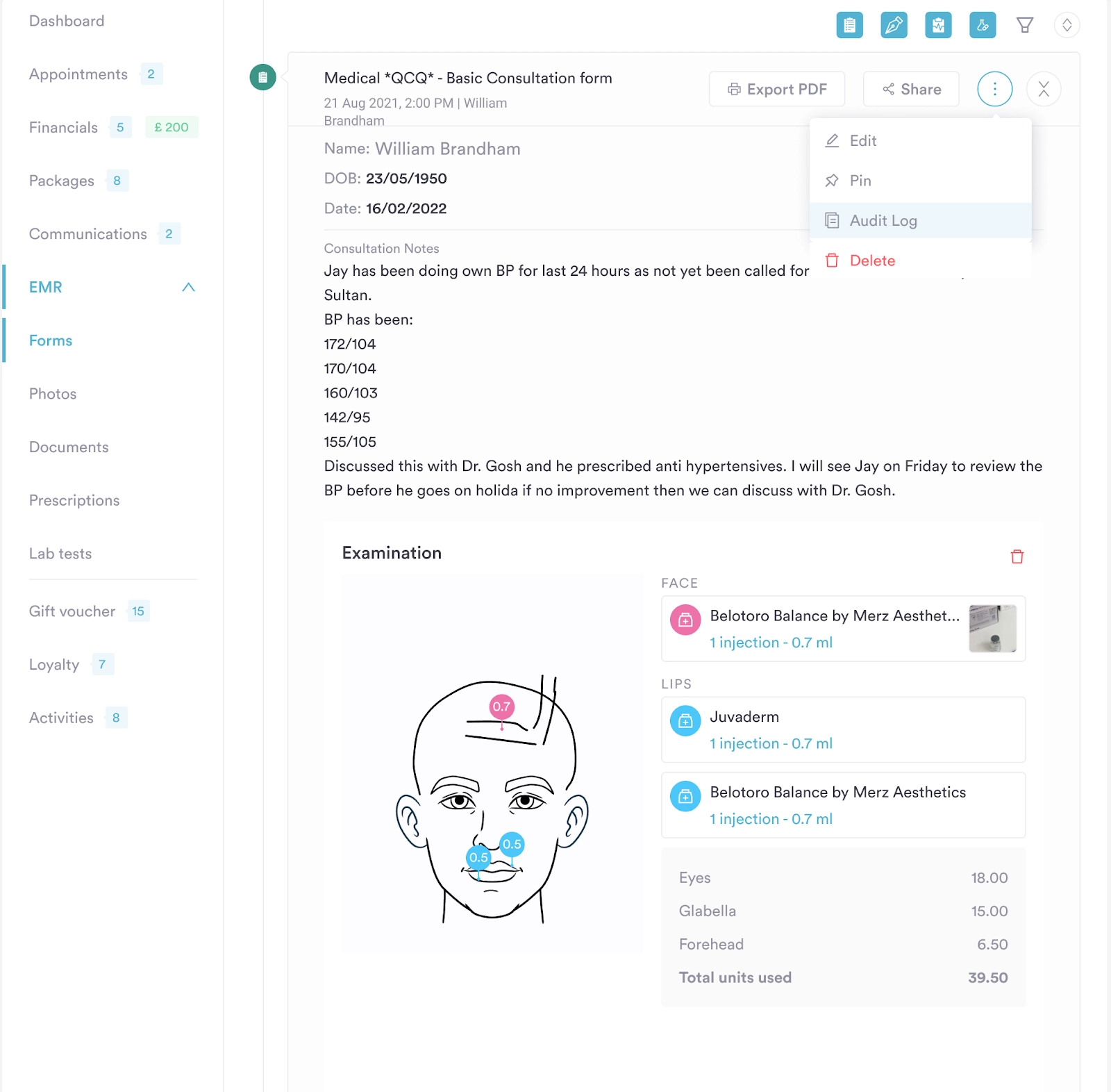
Pabau’s transparent per-user pricing ($62 / £49 monthly) contrasts with custom quotes typical of IVF software. This predictability suits growing practices avoiding surprise costs as staff scales. However, fertility-specific integrations-genetic testing labs, cryopreservation systems, SART registry automation-require manual configuration or third-party middleware. Clinics needing turnkey embryology module workflows may find Pabau’s general design trades depth for breadth.
Pabau holds a 4.5 out of 5 rating on Capterra across healthcare verticals, with users highlighting intuitive scheduling, customisable forms, and responsive support. While IVF-specific testimonials are still emerging, fertility clinics can explore real-world outcomes on the Pabau case studies page. Prospective users should request fertility-specific demonstrations during evaluation.
eIVF targets fertility centres prioritising deep embryology lab functionality and automated regulatory compliance. The platform’s strength lies in purpose-built ART workflows: embryo grading interfaces, cryopreservation tracking with tank location mapping, and pre-configured SART reporting templates. Clinics running high-volume IVF cycles benefit from the system’s lab-centric design, though this specialisation limits flexibility for practices offering broader reproductive health services.
Unlike general EMRs adapted for fertility use, eIVF’s embryology module integrates directly with laboratory information systems. Embryologists document grading, morphology assessments, and biopsy results within the EHR without toggling between platforms. The system generates SART registry submissions automatically, reducing manual data entry errors during annual reporting cycles. However, this depth comes at the cost of adaptability-clinics expanding into hormone therapy or sexual health may outgrow eIVF’s fertility-only framework.
Pricing follows custom quotes based on clinic size and cycle volume. Smaller practices report higher per-cycle costs than platforms like Pabau’s transparent per-user model. Genetic testing lab integrations (e.g., Igenomix, CooperGenomics) are pre-built, streamlining PGT result workflows. The patient portal includes treatment timeline visualisations showing patients their cycle progress, a feature absent in most general practice management systems.
Verified eIVF reviews on major platforms remain limited as of early 2026. Fertility clinic administrators should request reference sites and live demonstrations directly from the vendor before committing.

Explore customisable workflows, multi-location coordination, and transparent pricing designed for clinics scaling beyond traditional IVF services.

EMR Bear positions itself as an affordable fertility-specific EHR targeting smaller practices with limited IT budgets. The platform offers basic ART documentation templates, appointment scheduling, and patient charting at lower price points than enterprise solutions. However, this cost advantage comes with trade-offs: fewer pre-built integrations, limited customisation options, and a smaller support network compared to established players like eIVF or ModMed Fertility.
The system includes genetic testing lab connections for PGT result imports, addressing a key fertility workflow need. Donor management features support basic profile tracking and inventory allocation, though multi-location coordination capabilities appear less robust than Pabau’s centralised database approach. EMR Bear’s patient portal handles appointment requests and secure messaging but lacks the treatment timeline visualisations found in more sophisticated platforms.
Pricing remains custom-quoted, making direct cost comparisons difficult without vendor engagement. Smaller practices may negotiate favourable terms, but the lack of transparent per-user rates creates budget planning challenges. The platform’s fertility-specific templates reduce initial configuration time compared to adapting general EMRs, though clinics needing extensive workflow customisation may outgrow EMR Bear’s standardised approach.
No verified EMR Bear reviews were identified on major review platforms as of early 2026.
ModMed Fertility brings the vendor’s specialty-specific EHR philosophy to reproductive endocrinology. The platform embeds clinical workflows developed in collaboration with fertility subspecialists, offering deeper reproductive medicine context than general EMRs. Enterprise fertility networks benefit from ModMed’s revenue cycle management integration, connecting clinical documentation directly to billing and insurance verification processes within a unified system.
The EHR’s reproductive endocrinology templates cover IVF protocols, ovulation induction cycles, and recurrent pregnancy loss workups with specialty-appropriate terminology and order sets. This clinical depth suits larger practices where providers expect fertility-specific documentation tools rather than generic medical forms. ModMed’s patient engagement platform includes appointment reminders, lab result notifications, and educational content libraries tailored to fertility treatment phases.
Pricing reflects enterprise positioning with custom quotes based on provider count and practice complexity. Smaller clinics may find costs prohibitive compared to entry-level alternatives. ModMed’s revenue cycle management strength appeals to practices struggling with insurance verification and prior authorisation workflows common in fertility billing. However, clinics prioritising embryology lab-specific features may prefer platforms like eIVF with deeper laboratory information system focus.
ModMed’s broader platform holds a 4.0 out of 5 on G2, driven primarily by dermatology and ophthalmology users. Fertility-specific reviews remain scarce, so clinics should request reproductive endocrinology references and evaluate the fertility module independently from ModMed’s general reputation.
Practice Highway targets smaller reproductive medicine practices needing basic scheduling, billing, and documentation tools without enterprise complexity. The platform emphasises simplicity over comprehensive feature sets, appealing to solo providers or small groups managing outpatient fertility consultations and basic reproductive health services. Clinics running full-service IVF laboratories may find Practice Highway’s streamlined approach lacks the embryology module depth required for complex ART workflows.
The system’s billing module supports insurance claim submission and payment processing for consultation visits and diagnostic procedures. However, the platform’s fertility-specific capabilities appear limited compared to dedicated solutions like eIVF. Practices focusing on fertility consultations, ovulation induction, and basic reproductive endocrinology may find sufficient functionality, while high-volume IVF centres will likely require more robust alternatives.
Pricing information remains unavailable without vendor engagement, following the custom quote model common in medical practice management software. The lack of transparent rate cards makes budget planning difficult during evaluation. Smaller practices prioritising ease of use over advanced features may appreciate Practice Highway’s simplified interface, though limited online resources and community forums suggest a smaller user base than established competitors.
No verified Practice Highway reviews were found on major platforms as of early 2026.
When evaluating fertility software, request demonstrations using your clinic’s actual patient scenarios. Generic demos often showcase ideal workflows that don’t reflect real operational complexity. Test embryology documentation, donor coordination, and SART reporting workflows with sample data matching your practice volume and service mix.
Selecting fertility clinic software requires balancing specialised ART functionality against practice growth trajectory. A dedicated IVF centre running 500 cycles annually needs different tools than a reproductive endocrinology practice offering consultations, IUI, and limited IVF services. The decision framework below prioritises operational fit over feature checklists.

Define your embryology lab requirements. Practices with in-house labs need robust embryology modules supporting grading interfaces, cryopreservation tank mapping, and biopsy result tracking. Platforms like eIVF excel here. Clinics referring patients to external labs or focusing on consultation-heavy models may prioritise patient engagement and billing workflows instead. Pabau’s customisable forms and multi-specialty flexibility suit this second profile.
Assess regulatory compliance depth. SART reporting obligations affect all US fertility clinics. Evaluate whether automated registry submission (eIVF’s strength) justifies platform limitations elsewhere or if manual data export from a flexible system (Pabau) better supports your workflow. CLIA and CAP accreditation requirements apply only to practices operating embryology labs-verify the platform’s laboratory information system meets your certification needs.
Project service expansion plans. Fertility-only platforms constrain clinics adding hormone therapy, sexual health, or longevity medicine. Multi-specialty systems like Pabau accommodate growth without platform switching costs. However, practices committed exclusively to ART may prefer fertility-specific depth over breadth. Consider a three-year horizon: will you still operate solely as an IVF centre, or will reproductive health become one service line among several?
Evaluate pricing transparency. Custom quotes dominate fertility software, making budget planning difficult. Pabau’s fixed per-user rates provide cost predictability. Request detailed pricing scenarios from competitors: how do costs scale with cycle volume increases? What hidden fees exist for support, training, or integrations? Small practices may negotiate favourable terms with niche vendors, while larger operations benefit from enterprise contracts.
Test integration requirements. Genetic testing labs, cryopreservation vendors, and billing clearinghouses differ by practice. Verify the platform offers pre-built connections to your specific partners. General systems like Pabau require middleware development for fertility-specific integrations. Specialist platforms (eIVF, ModMed Fertility) provide established partnerships but limit vendor flexibility. Document your current and planned third-party tools before committing to any platform.

Need guidance on fertility clinic regulatory compliance? CDC ART Surveillance provides SART reporting requirements and national success rate data for benchmarking clinic performance.
Evaluating embryology lab software requirements? CAP Accreditation Standards outline laboratory information system criteria for reproductive medicine labs pursuing certification.
Comparing practice management platforms across specialties? Practice Management Software Guide explains core features and selection frameworks for multi-specialty healthcare operations.
No single platform dominates across all fertility clinic profiles in 2026. Pabau leads for practices prioritising multi-specialty flexibility, transparent pricing, and growth beyond traditional IVF services. Its unified approach supports fertility centres expanding into hormone therapy, sexual health, or longevity medicine without switching systems. However, clinics requiring turnkey embryology modules and automated SART reporting will find specialist platforms like eIVF better suited to high-volume ART operations.
Enterprise networks managing multiple locations benefit from ModMed Fertility’s revenue cycle management integration and specialty-specific clinical workflows. Smaller practices seeking budget-friendly entry points may evaluate EMR Bear or Practice Highway, though limited online presence and unclear scalability raise adoption concerns.
The best IVF clinic management software in the US (2026) depends on your practice’s operational reality. Define embryology lab needs, regulatory compliance depth, service expansion plans, and budget constraints before evaluating platforms. Request demonstrations using actual patient scenarios rather than vendor-curated workflows. Verify all genetic testing lab integrations, cryopreservation vendor connections, and SART reporting capabilities against your specific requirements. Software selection affects clinical efficiency, patient experience, and scalability for years-prioritise operational fit over feature lists during evaluation.
Essential features include embryology lab documentation (grading, morphology, cryopreservation tracking), patient portal with treatment timeline visualisation, HIPAA-compliant messaging, genetic testing lab integrations, SART reporting tools, appointment scheduling with cycle protocol reminders, billing with fertility-specific CPT codes, and donor management workflows. Platforms serving broader reproductive health should also support hormone therapy, sexual wellness, and telemedicine consultations.
Pricing models vary widely. Pabau uses transparent per-user rates starting at $62 / £49 monthly. Fertility-specific platforms like eIVF, ModMed Fertility, and EMR Bear quote custom pricing based on provider count and cycle volume. Small practices may pay $5,000-$15,000 annually while enterprise networks negotiate contracts exceeding $50,000 yearly. Request detailed pricing scenarios covering your projected growth to avoid budget surprises.
Support levels differ significantly. Platforms like eIVF offer automated SART registry submission with pre-configured templates, reducing manual data entry. General systems like Pabau require manual data export and formatting for SART compliance. Verify whether the platform generates required fields automatically or if your staff must compile reports manually during annual submission cycles.
Integration depth varies by platform. Fertility-specific systems like eIVF maintain pre-built connections to major PGT labs (e.g., Igenomix, CooperGenomics) for automated result imports. General platforms like Pabau support API-based integrations but may require custom middleware development. Confirm the platform connects to your specific lab partners before committing, as integration costs and timelines differ significantly.
Fertility-specific platforms (eIVF, ModMed Fertility) offer purpose-built embryology modules, SART reporting automation, and established genetic testing partnerships but limit service expansion. Multi-specialty systems (Pabau) provide flexibility for clinics adding hormone therapy, sexual health, or wellness services but require more customisation for fertility-specific workflows. Choose based on whether you prioritise ART depth or service line breadth.
Timelines range from 4-12 weeks depending on practice complexity and platform choice. Smaller clinics using standardised templates (EMR Bear, Practice Highway) may launch within 4-6 weeks. Enterprise systems (ModMed Fertility) with custom workflows and extensive training require 8-12 weeks. Multi-specialty platforms like Pabau fall mid-range at 6-8 weeks when configured for fertility use. Factor in staff training, data migration, and workflow testing when planning go-live dates.